Writing Wednesday: Prompt

WW Prompt

Here’s today’s Writing Wednesday Prompt:

event (5)

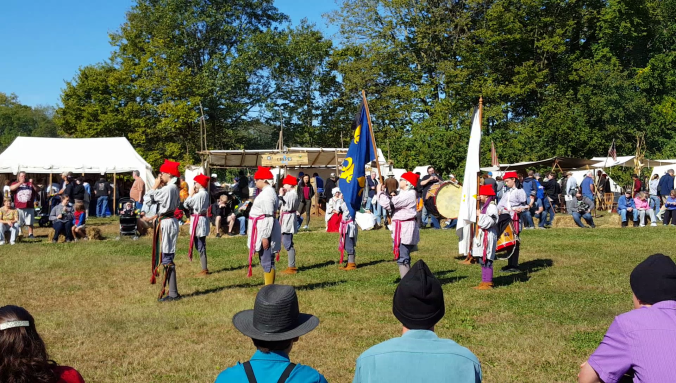
Write a scene from this image. What’s going on in this picture? Describe how the people watching are feeling at this moment. What is the atmosphere like? How does it feel to be at this event? What will happen next?

If you write something from this prompt, by all means let me know! Feel free to share what you wrote, if you want!

Writing Wednesday: Prompt

WW Prompt

Here’s today’s Writing Wednesday Prompt:

setting

Examples of ways to use this picture seed:

1. Write a scene that takes place in this setting.

2. Write a setting description based on the above picture. Try to include all five senses. Whatever your instincts or preferences for setting and detail, try to over-exaggerate the scene.

If you write something from this prompt that you want to share, by all means let me know! And if you have any favorite prompts (or prompt collections) of your own, feel free to share!

Writing Wednesday: Prompt

WW Prompt

I’ll try to be brief in my explanation, but I’m pretty terrible at brief (today’s prompt is near the bottom if “brief” is just too long). In the past, I have really enjoyed the times that I am able to do more than just post my daily writing check-ins. With 15 years of writing experience, I’m no professional, but I know I have advice to offer. I do have some new ideas for a couple of posts in my old “Write Every Day” series of posts, but I’d like to do something regular, and those posts have never really been regular (plus it’s been almost 4 years since I last posted one).

I’m starting this series of posts on Wednesdays that I will call “Writing Wednesday.” I will post something that might help others in their pursuit of writing. Now and then, this will be a post with some sort of thoughts or advice about writing. Most often, the post will simply be some kind of prompt.

Recently I have remembered how fun and helpful it can be to do some writing practice on a semi-regular basis, no matter what stage of working on a book/story/whatever I might be on. Writing practice for me usually entails starting with some kind of prompt and writing anywhere from 50 to 500 words (or more if I’m really into it) based on it. Whether the writing is directly related to the prompt, or just inspired by it, the trick is just to see what comes out.

I really enjoy doing this as often as I can, especially when I’m waist-deep in revision, but it’s really helpful any time I’m not actively writing, and instead am working on another stage of writing. Thus, I want to share prompts that have inspired me, or some of my own.

These might be single-word prompts, phrases, sentences, questions, word lists, or even visual prompts (or whatever else I may come up with). You can write from your own perspective, from the perspective of a character in a story of yours, or make up something completely unrelated to anything you’ve created. There may be specific directions that go with the prompt, to draw out the ideas, but you can always dismiss those and just go with whatever the prompt inspires. There are no rules in writing practice.

I’ll start with a prompt that has become a classic to me, one that inspired a scene I loved. Here’s the first Writing Wednesday Prompt:

You encounter an omnipotent being who says they will answer any one question.

If you write something from this prompt that you want to share, by all means let me know! And if you have any favorite prompts (or prompt collections) of your own, feel free to share!

Beautiful Books 2017, NaNo in Progress

bb-redone

If you don’t know what “Beautiful Books” is, click the above picture to find out!

1. Overall, how is your mental state, and how is your novel going?
I have been having a lot of fun writing so far! After a year and a half away from writing, just getting back into my story world and back to these characters has been so much fun. Because of that, my novel isn’t progressing very quickly.

For one thing, this novel takes place after five other plotlines that involve mostly the same characters, and are already either drafted or at least solidly planned. As the story goes on, various events that happened in other stories come up. And one character has been away for over five years, so he wants to know about those events, and the other characters tell him the story. (In some cases, he’s the one who was involved in the story and gets to share with others.)

So at least half of my words so far have been telling these stories. I know for certain that it won’t stay in the story when it’s edited someday, because this book would come after the others, so readers should already know all of this already. It will be redundant. But boy, has it been fun reminiscing with them.

2. What’s your first sentence (or paragraph)?
When my brother went on his first date, he asked me for advice. I’m more than a year younger than him, and had no experience with things like dating, but then, neither did he. It may have been because I’m friends with the girl he was taking out. It may have been because he frankly didn’t have much knowledge about the country outside of his town and the capital city. Or it may have been because he was simply nervous. Either way, I think I helped him come up with quite the wonderful first date.

3. Who’s your current favorite character in your novel?
It’s definitely Naolin. In my last Beautiful Books post, I said the thing I was most looking forward to about writing this was getting to write about Naolin again. And I have loved it.

4. What do you love about your novel so far?
I suppose I already explained that above. I’m coming to the end of stories that they can tell, and will have to really start into the plot. But I think that, after 1.5 years away from writing, this was a great way to start NaNo.

5. Have you made any hilarious typos or other mistakes?
I have so many typos. It’s how I’m able to write so much in the amount of time I do.
But there was this gem: Aeldrim’s face held a look of quizzicality(?) for a brief moment, and then he recognized his once-unit underling.
I realized as I was writing the word “quizzicality” that it wasn’t a word, and I had no idea what word might replace it. So I just typed in the question mark and moved on. I’m pretty sure it actually is a word though…it just seemed wrong to me at the time.

I also wrote: “There is more drama here than in a soap opera,” the author interjected. Everyone ignored her.
That was during one particularly high-drama story that started going even further into emo-town than I wanted. I wrote this line, at first thinking to attribute it to one of the characters, but soap operas don’t exist in their world, so…I just put myself in.

6. What is your favorite to write: beginning, middle, or end — and why?
Hmm, I’m not sure I’ve really thought about this before, but I think the end. I really like the climax, as it’s usually something I’ve been planning and looking forward to for a while. Sometimes I think that my excitement about the final scenes leads me to write them in a way that feels rushed, so that may be a down side. But I try to fix that in editing.

7. What are your writing habits? Is there a specific snack you eat? Do you listen to music? What time of day do you write best? Feel free to show us a picture of your writing space!
I write best at night. Sometime between 8pm and 3am. It’s quieter and my responsibilities are asleep. I sometimes listen to music, but the most consistent audible tool that I use is some kind of white background noise like from Coffitivity. As for snacks, during NaNo I tend to consume an unhealthy amount of day-after-Halloween-sale candy. Outside of November, I can’t keep up that habit due to both expense and it’s so unhealthy.

8. How private are you about your novel while you’re writing? Do you need a cheer squad or do you work alone (like, ahem, Batman)?
Sort of both. I would share every day’s writing with people if I could. But I know that anyone who is interested in knowing the story is better off reading it start to finish after it’s done. However, I have often used my husband as a sounding board when I’m stuck, or shared exciting break-throughs with him.

9. What keeps you writing even when it’s hard?
The knowledge that if I don’t keep going, I will never be able to share my stories with anyone else. I’m not looking to be a bestselling novelist; my aim is to find an audience, whatever size that might be, who will enjoy the complex and exciting plots I’ve weaved together as much as I do. But that will never happen if I don’t get them out (and then get them revised).

10. What are your top 3 pieces of writing advice?
Oooh, three? I’ve been happy in the past to come up with one. Let’s see here…
– “Write every day” is a nice goal to shoot for, but it can’t be something that you let rule you. If you have other full-time endeavors, whether that’s a job, kids to raise, or whatever else it might be, you have to write in your spare time. And sometimes spare time is hard to find. If you miss a day or two here or there, but don’t let it break your overall habit, you’re still making progress.
– Keep everything. As soon as you change a word in your first draft, save it as draft 2. If you take out an entire chunk while in the middle of a draft, consider saving it in a different file. You never know what you might wish you’d kept, what you might be thinking about later and wish you could remember what you’d written. Save it all.
– All of those writing tips and “rules” you’ve read? They don’t mean anything. They can be helpful, and if some of them work for you, then great! But don’t force yourself to stick to anything that doesn’t feel right or makes writing less fun. They’re not rules. They’re tips and helpful hints.


For anyone out there who is participating in NaNoWriMo, feel free to check out my series of tips and tricks for the month, and also to add me as a writing buddy! (Let me know you came from here, and I’ll add you back!)

Tips for NaNoWriMo, Part 5

crest-bda7b7a6e1b57bb9fb8ce9772b8faafb
In 2015, I wrote a series of posts about NaNoWriMo, covering things like tips for prep time, help in the actual prep work, tips for November, and even some of my favorite writing tools.

Earlier this month, I picked out some of my favorite NaNoPrep tips and boiled them down into a single post, and then I promised a post with tips about the actual writing. However, this time, I don’t want to re-hash my old tips, since I do actually have a few more to add to the list.

I will at least list the headers from 2 posts with tips about how to survive–and thrive–during NaNoWriMo, and suggest that if you want to read the details about any of them, you click the links that will take you to the two posts in which I first gave these tips:

Post 1
Break up the words.
Write in sprints.
Reward yourself.
Stay hydrated.
Back up your work.
Limit your time on the forums (and other online activities).
Don’t expect too much.

Post 2
DO NOT EDIT. (I can never stress this one enough)
Don’t go back and read.
Use placeholder words.
Take notes of things to fix later.
Stop in the middle of a scene.
Don’t be afraid to go off-script.
Dirty tricks to pad your word count (are not always a good idea).

Now to add a few more to those:

1. Don’t stop at 1667.
Sometimes my tips are a little hypocritical, but hear me out. If you reach the daily goal (1667 if you’re going the traditional route), but you still have some time left during whatever writing time you’ve carved out for yourself, don’t stop. Keep going until you have to make supper, go to bed, go to work, or whatever your end cap is. Those extra words will most likely be needed later in the month, and even if they’re not, hitting 50k early can be a lot of fun! Or who knows, maybe you’ll end up writing more than 50k this month!

In a similar vein, if you do write extra one day, don’t let that cause you to stop short the next day. I try to take each day as its own word count. No matter what my total is, I try to write 1667 each day (unless I’m behind, then I try to write more). Again, if you can build up a buffer, it will very likely come in handy later.

2. Plan your writing days & daily word counts.
Your daily goal does not have to be 1667 words. You don’t have to write every single day. Yes, that’s part of the benefit–using NaNo to build a daily writing habit. But for some people, despite all of the “rules” out there stating to write every day (yes, I have a series with that title, but I definitely don’t call it a rule, and…I definitely can’t always do that myself), it’s just not an option. So before November starts, figure out what days you don’t think you’ll be able to write. Are Saturdays always full of family time? Does a full work week always leave you drained, so you know you won’t write on Fridays? Do you want to try to write more on weekends, and less during the week?

Whatever your days off need to be, or even your overall pattern of writing, do the math and alter your daily word count. Print out a calendar and have those daily goals where you can see them. Make the month work for you.

3. Don’t panic if you get behind.
If you get off-track, don’t panic and think that means you have to write double for a few days to catch up. Figure out how many total words you have left, and divide that out by how many days there are left. That will up your daily amount by a little every day, rather than a lot for a few days. (If you keep your word count updated on the NaNo site, it will do this math for you.)

4. Check your official word count.
You can update your word count on the NaNo site by typing the number into the field at the top of the page. I would suggest that every so often, you actually go ahead and check your official word count. I do this at the end of every day, because if I’m 100 words lower than I’d thought, I want to know as soon as possible. The reason for this is that different word processors count words differently, and the NaNo site counts them differently than some of those word processors. By the end of the month, you could be even up to a thousand or more words off, and if you’re just barely getting to 50k, you don’t want to suddenly find out at 11:50 pm on Nov. 30 that you’re 1000 words shy. So just copy & paste your whole novel into the field that comes up when you click on “Check my official word count” under the “update” button.

5. Find helpful ways to procrastinate.
Is there such a thing? My favorite example is the NaNoMusical. Created by WETangent in 2012, it is a brilliant 6-part video series with themes and situations familiar to any Wrimo. The music is catchy and fun, and…well, you should watch it. Watch the first episode, and if you enjoy it, use the rest of the episodes as rewards for a certain amount of words written.

By the end, you'll either want to punch Rick or love him to pieces!

“It’s November 1st, thousands of people madly writing….I hope you’re up for crazy, ’cause NaNoWriMo has begun!”

There are many other helpful ways to procrastinate though. Go for a walk, read something pointless, take a nap (because odds are you could use the sleep)…you probably have your own ideas. The point is something that is light-hearted and gets your mind off of that novel that might be stressing you out.

6. Don’t give up.
That is probably the most important thing I can tell you. Whether you’re writing for fun, a creative outlet, to relieve stress, or to have a finished project to do more with, NaNoWriMo is a wonderful event and can be a lot of fun. It doesn’t have to be stressful, but I know it can be to some. The stakes aren’t exactly high, and losing is not the end of the world. You shouldn’t dread your writing time, or worry about how badly your writing is going.

If you find your story is going a completely different route than you’d expect, just follow it and see what happens. Maybe a side character is becoming more interesting to you. Give them all the time they need. Your main story will still be there later. If your words are lagging so badly, you don’t see how you could get back on track, make a new track! Set a personal goal of less words, or plan to keep going after November (though frankly, that is easier said than done). Come back in April or July for Camp NaNoWriMo.  Just don’t quit.

I had more new tips than I thought! And there are more out there floating around on the internet! In fact, here’s one just on NaNo Etiquette! The most important tip, though, is that when November 1st comes…just write.

We’re in the last week of NaNoPrep now, and this pretty much sums up how I’m feeling:

Jen

If you don’t know about NaNoToons, you’re missing out!

What about you? Are you ready for November 1st? Are you new to NaNoWriMo, or do you have tips of your own you can share?

Tips for NaNoPrep

crest-bda7b7a6e1b57bb9fb8ce9772b8faafb
In 2015, I wrote a series of posts about NaNoWriMo, covering things like tips for prep time, tips for November, help in the actual prep work, and even some of my favorite writing tools.

The problem now is that, though those things are all still helpful and relevant, there’s not a lot to add to them. I have picked up a few extra tips since then, sure, but those things I wrote about 2 years ago are still some of the most helpful advice I could give.

I could just reblog those posts throughout the month, but I don’t like that idea. Instead, I’m going to pick some of my favorite tips and share them in a few, boiled-down posts, while also suggesting that anyone who is interested in learning more visit the page where I’ve listed all of those posts from 2015.

1. Start writing now.
Take the next 2 1/2 weeks to learn what works best for you, so that by November, you know how to make the most of your writing time. Do you require absolute silence? If yes, when can you find that? Is your ideal time late at night when others are asleep? During your lunch break? First thing in the morning?

It doesn’t have to be the amount of time you will need to write 1667 words each day in November, but find maybe 15-20 minutes when you can sit down and write. For planners, work on the plot, characters, outline, or whatever you’re doing. For pantsers who are doing absolutely no planning before November 1, you can still make time every day to free write in anticipation of daily writing in November. In fact, free writing can be a great use of your time whether you’re a planner, a pantser, or somewhere in between.

Try to write every day, which is a good habit to have even outside of NaNo, but also keep in mind that if you can’t get to it one day, it’s not the end of the world. Just remember that if you’re like most of us, the longer you let yourself stay away, the less likely it is that you’ll keep the habit you’ve developed.

2. Find your space.
In a similar vein as figuring what when you work best, it can also be good to know in advance where and how you work best. Do you need a comfy spot? Maybe you work better at a desk or table with a straight-backed chair.  Where can you go to have the solitude you need? Or do you prefer some noise? Give coffitivity.com a try for a steady coffee shop background noise available anywhere you happen to be. Sometimes a little noise is good, but too much (people in the room, or even music with lyrics) can be bad.

Use your planning time to try out different locations and environments and see what works best. Do some work with pen/pencil and paper and some with a computer. Do you enjoy the tactile feel of writing by hand? Do you prefer the speed that typing can provide? This is the time to find out!

3. Gather your NaNo necessities.
Whether this includes consumables, physical tools, or making sure your laptop is set up and ready to use, make sure you know what you want to have handy for NaNoWriMo now, and procure as much of it as you can. When November starts, you don’t want to find yourself lacking.

4. Involve other senses.
I touched on sound above, so we’ll start there. Some people create a playlist for every story. I’ve read about people who will find music that matches the theme of their story, make a playlist from it (even if just on YouTube), and listen to it all month. Then, when November is over and they want to go back later and either finish the novel or revise it, they can listen to that music again, and it will put them right back in the mood.

Whatever your taste in music is, an alternative to creating an audio scene for your story is creating an olfactory scene. Scent memory is said to be very powerful. Go to the store and smell all the candles or all the scented wax (if you have or are willing to buy the wax melter to go with it). Think of your story, what it’s about, where it’s set, who the main character(s) is/are. Is it a romance? Maybe something flowery or sensual. Is it set in a tropical location? Something with coconut or tropical fruit, perhaps. There are outdoor scents if your story involves a lot of forest or other outdoor scenes. Not every story lends itself easily to a scent, but pick something that smells right and have it burning/melting near you while you write all month. Then later, you may just be able to immerse yourself back into the book by activating that scent again.

Check out this post for some NaNo-related music, comic strips, and even a musical!

5. The midnight sprint.
NaNoWriMo begins at midnight on November 1. That falls in the middle of the week this year, but if you’re the kind who stays up late, or can make an exception for one night, you can start writing right at midnight and get some words under your belt before going to bed. It’s purely a mental trick, getting a jump start on the day’s word count, but many people love to do the midnight sprint.

When November looms closer, I will post tips about the writing itself, and how to survive–and even thrive–during NaNoWriMo. If you’re don’t want to wait, by all means, here’s the link again to the series of posts I made 2 years ago, from which I’ll probably be stealing some those tips.

What about you? How are you preparing for NaNoWriMo? If you’ve done this all before, do you have any tips on how to get ready?

Daily Writing Check-in: October 12, 2017

Words/Time: 1047 words

I answered the first 17 questions from this list, with Vin in mind. I think he has sufficiently changed even from the realization I gained about him 2 days ago. I had motivation for his actions, but even those turned out to be shallow. Unfortunately, the more I discover about him, the more I fear that I will be unable to write him well.


For anyone out there who is participating in NaNoWriMo, feel free to check out my series of tips and tricks for the month, and also to add me as a writing buddy! (Let me know you came from here, and I’ll add you back!)

Beautiful Books 2017

bb-redone

If you don’t know what “Beautiful Books” is, click the above picture to find out! It’s a wonderful place, and if you’re a writer, it might just inspire you.

1. What inspired the idea for your novel, and how long have you had the idea?
It has been a long time coming. The inspiration (which feels more like necessity than inspiration) came from the adaptation of some old fanfiction of mine to a new, from-scratch story world. Some of the things that made sense in the fanfiction couldn’t be explained naturally and organically in the closer-to-real-life story world, and so the need for a very powerful, over-arching villain came to be.

I have a vast, intricate plan of up to (so far) 7 books that all take place in the same story world, in a smallish period of time, and with some of the same characters. This story, which encompasses most of the others, was always out there, but I figured it’d be one of the last story arcs in my list that I would get to writing. I think that was simply because I was scared of it. Until I committed to writing this story, and outlined it, gave Vin a real life, I didn’t have to think about what he was actually up to. But the truth is, I should have done this story years ago, because some of the other books hinge on this one, and if something in another story that involves Vin doesn’t actually work in his story, that affects the other book. And what if I’ve published it, and it’s out there now? I’m not really interested in doing the whole ret-con thing.

So that’s why it’s time to write this story this year.

2. Describe what your novel is about!

Vin cover

Novel title: Vin

I haven’t done nearly enough planning yet (just decided to write this 2 days ago), so all of this is subject to change.

First, you should know that this story takes place approximately 2000 years in the future. That part is not subject to change.

The story will show the inner workings of an obsessed man as he tries to become perfect—just like his father always wanted him to be. In his quest for perfection, he stumbles across a way to become incredibly, dangerously, illegally powerful—more powerful than anyone in his country, his region, and presumably, the world.

Then he learns about two men who have joined together to defeat a beast that was thought unbeatable, and he realizes that as he pursues perfection in the form of ultimate power, these self-righteous men might decide to oppose him. He decides that the first thing he must do is find a way to keep that from happening.

A subplot (how sub this plot will be, I don’t know yet) involves a man who had just begun to find happiness in a life tinged with tragedy and loneliness, who suddenly finds that everything he cared about has been stripped away.

3. What is your book’s aesthetic? Use words or photos or whatever you like!
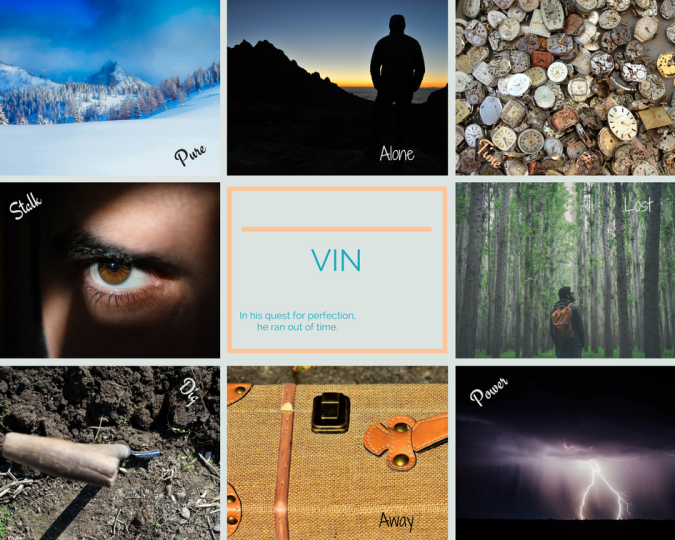
Vin moodboard

4. Introduce us to each of your characters!
Vin – He’s not trying to take over the world; he only wants to find some peace. His father died before Vin could reach the level of perfection that the older man wanted from his son, but his continued striving quickly reaches the point of obsession.

Rogan – He never expected to find “normal” in his life, but since he did, he certainly hoped to keep it. Now that he’s lost it, the loneliness feels familiar…almost comfortable. But maybe…just maybe, it doesn’t have to last.

Penny – It turns out that being stalked by a madman, who she is just learning had his hand in more events in her life than she could have realized, was just the beginning of her problem. She’s still recovering from a recent upheaval in her life, and the last thing she needs is to have someone making her feel guilty for her choices in life.

Drear – He is the narrator of the book. Though truthfully, he is not present for most of these events, he has compiled interviews, letters, journals, and anything else he can, to find the truth behind these events and to present them to the reader.

5. How do you prepare to write? (Outline, research, stocking up on chocolate, howling, etc.?)
Things like this, for one thing. Until 2 days ago, I still didn’t know what I was going to write. When I started thinking about doing this story, I wasn’t sold right away. I had some free time while waiting for a meeting to start at work, and decided to delve a little into the mind of one of the primary characters (Vin) to see if I could come up with motives for what he ultimately does, other than, “Because he has to.”

By the time I had finished that mere 500-word exercise, I had his main motivation (his dad driving him to be perfect). But it’s still a very shallow understanding of this man who, most likely, will drive the plot.

So I’ve filled out this questionnaire in the hopes of discovering more about this story. I’ll do free writing with Vin and the overall story in mind. I will possibly answer other question lists like this one, even if I do end up skipping some questions because they just don’t make sense for my character(s).

Even though we’re only 3 weeks away from November 1st, I’m still very much in the discovery period of this story, which is not where I need to be when NaNo starts. But I will do freewriting and brainstorming, fill out my timeline, and just…discover.

And then sometime during the last week of October, I’ll make an outline.

6. What are you most looking forward to about this novel?
I am most looking forward to being able to work with Rogan again. He’s far too important of a character in my mind to have been in only one book so far.

7. List 3 things about your novel’s setting.
Graveyards, underground lair, city streets

8. What’s your character’s goal and who (or what) stands in the way?
His goal is to reach perfection, and one single little girl stands in his way, albeit indirectly.

9. How does your protagonist change by the end of the novel?
It doesn’t take long before “perfection” morphs into “power.” He then has to do away with any threats to his power, a goal that he is still able to justify. But by the end of the story, his obsession has turned into a pure hatred for his nemesis, and then the only thing he cares about is destroying her life.

10. What are your book’s themes? How do you want readers to feel when the story is over?
There’s a major good vs. evil theme in my story. It is going to be a dark book in many ways. I want readers to feel shocked, amazed, maybe even confused?  (I’m really not good with themes, whether in my own writing or in others’.)


For anyone out there who is participating in NaNoWriMo, feel free to check out my series of tips and tricks for the month, and also to add me as a writing buddy! (Let me know you came from here, and I’ll add you back!)