Book Review: Asylum Murders

Asylum Murders
by Michael G. Colburn

My rating: 2.5 / 5
Genre: Historical mystery

Edie Black has a history as a thief, but she has a fresh start in Melbourne, Australia and hopes to help the local police investigate crime instead of committing it herself. She gets involved in the search for a missing government artifact, which leads her to a reunion with Britina, a young woman from her criminal past. Britina, now a nun in Australia, is assigned to work in a local asylum and quickly suspects foul play amongst some of the staff.

The setting and tone of this book are dark and gothic and provide a mysterious atmosphere for the story. The storyline that revolves around the asylum is intriguing, though not what I thought the focus of the book would be. The theft of a ceremonial mace used in Parliament and the beating of a woman on the same night are where the story starts, and the sections with Britina seem more like a departure for a while. The investigation into the theft and assaulted woman leads Edie to the asylum, but the two storylines are never really all that connected. I can’t say there’s really much mystery in this book, as the foul play in the asylum is laid bare to us in POV scenes from the bad guys’ perspectives. The perpetrators of the theft and assault do remain a mystery for most of the book, but again, that storyline takes a back seat, and thus so do the actual mystery elements. And only some of the theft/assault storyline is actually solved by the people investigating it, which is not normally how I prefer my mystery stories to end.

The first couple of chapters of this book set a content level that I wasn’t comfortable with, between the attempted rape of the assaulted woman described from her perspective (fortunately it’s brief and only a little of what I’d call graphic) and the orgy. Yes, that’s right…the orgy. On the night the ceremonial mace goes missing, it’s brought to an orgy before then disappearing completely. As you might imagine, then, much of the investigation into the mace involves Edie discussing with the attendees of the orgy their actions that night. I’m not a fan. At all. Again, nothing super graphic, but enough to make me uncomfortable.

On top of all of that, there is the dialog. Nothing reminds me more that I’m reading fiction (as opposed to being caught up in the story) than dialog where the characters constantly say each other’s names as they’re talking. People don’t like that in real life, and it’s a huge pet peeve of mine in fiction. So clearly I was the wrong audience for this book, since many of my issues are personal preferences. It’s also the 2nd book in a series, the 1st of which seems to have taken place quite some time before this (and in London). The major events of that book, which led to both Edie and Britina being in Australia, are briefly explained, but it was difficult for me to follow most of it. Sounds like it was a fairly complex plot. But maybe this book would be more enjoyable to people who’ve already read that previous book and become invested in the characters. To me, Edie (who calls herself “Lady Edith,” though apparently she doesn’t have any actual rank) is fairly bland, while Britina gets a little more characterization in the book. So while I have no plans to read the first book in this series or any that might come after, if the overall idea of this book, its setting, or its characters interest you, I’d suggest you consider reading the first book in the series first.

Find out more about Asylum Murders

See what I’m reading next.

If you’ve read this book, or read it in the future, feel free to let me know what you think!

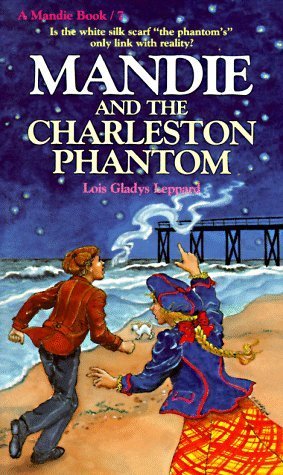
Book Review: Mandie and the Charleston Phantom

Mandie and the Charleston Phantom
Mandie #7
by Lois Gladys Leppard

My rating: 3 / 5
Genre: Children’s Christian historical fiction

I read a lot of this series when I was a kid/pre-teen, and I read some of them to my now-teen daughter when she was younger. Nostalgia definitely affects my reviews for this series, and I’m okay with that.

Most of my issues with the previous books in the series have to do with Mandie’s attitude or actions and sketchy theology (there was a bit of that here too). This time, my biggest issue is just the super weak plot. It’s obvious the entire time who’s behind the “ghost,” and the reasoning for it ends up being so flimsy, it’s easier to believe that the culprit only agreed with the suggested reason because it was at least a little better than just the real motive—plain mean-heartedness. There’s also too much focus on boys liking Mandie, thinking she’s pretty, even wanting to marry her someday, for a book about a 12-year-old girl. I’m sure I thought it was sweet or even romantic when I was a pre-teen, but it could definitely have at least been toned down. While I think these books can still be good for younger people to read, especially if you’re looking for something with Christian content, I strongly recommend discussing what’s good and bad in them with your kid(s) after they read it.

Find out more about Mandie and the Charleston Phantom

See what I’m reading next.

If you’ve read this book, or read it in the future, feel free to let me know what you think!

Book Review: Library of Forbidden Books

Library of Forbidden Books
by Mario Escobar

My rating: 2 / 5
Genre: Historical fiction

Helene Nathan is a librarian in Berlin, one of the first women to hold a management position in a major library in Berlin. As Hitler begins his rise to power in Germany, the Nazi party begins to confiscate books that are by authors they don’t like or that are seen as contrary to the German worldview. Helene and her fellow librarians will do what they can to protect as many forbidden books as possible, but it’s not easy to stay ahead of the Nazis.

One of my biggest issues with this book is that it tries to do too much and thus the main plotline suffers. Besides the premise above, Helene’s significant other, Derek, is the 2nd-in-command to Werner von Blomberg, who eventually becomes Minister of War. A lot of the book shares details about pre-war Germany, the Nazi party’s rise to power, and political and military machinations. Helene spends time in a women’s concentration camp, which is also a decent portion of the book. Spanning over 10 years, the narrative dips in to days or moments here and there and then speeds by other times. Though various different aspects of the book are interesting and informative, it wasn’t the kind of story I was expecting to read. I never felt all that connected to Helene, and in the end, I couldn’t help but wonder what the real purpose of the story is. Maybe it’s only meant to warn against the dangers of censorship, but it all felt fairly light, really.

The vast time frame of the story and the fact that Helene Nathan is based on a real person, the book does read like nonfiction, or at least a fictionalized version of a real story. But though of course real details about German before and during WWII were used in the book, very little of the story is real. Every side character that isn’t someone in the Nazi Party is fiction, and Helene’s life beyond her job as librarian and a stint in a Jewish bookstore is made up, including her time in a concentration camp and the hiding of forbidden books. I’m not saying I’m against any of this fictionalization, even with a real person as a starting point, but it brings me back to my issue with there being too much going on in the book. Maybe Escobar felt it would be too convenient if Helene was never arrested or simply wanted to show a concentration camp for part of his story. Maybe there just wasn’t enough for a whole book without the inclusion of these extra things, and it’s true that even feeling bloated, the book isn’t really all that long. I’m not sure there’s much in this book that I haven’t read in other books, fiction or non. Due to the publishing company being Thomas Nelson, I kept hoping for something to come out of Derek starting to have talks with a Christian pastor. But in the end, we’re left with more hopelessness than anything uplifting. The wins, at least to me, outweigh the losses. And sure, I guess that’s realistic, but since Escobar isn’t intending to stay true to a real-life narrative, I would have preferred an ending where the library isn’t the only winner.

Ultimately, this book missed the mark for me, but if you’re interested in the premise, don’t let my preferences dissuade you. Check out positive reviews at the link below and decide for yourself.

Thank you to Netgalley and Thomas Nelson for providing me a copy of this book to review.

Find out more about Library of Forbidden Books

See what I’m reading next.

If you’ve read this book, or read it in the future, feel free to let me know what you think!

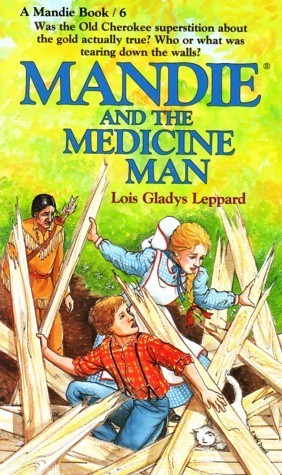
Book Review: Mandie and the Medicine Man

Mandie and the Medicine Man
Mandie #6
by Lois Gladys Leppard

My rating: 3.5 / 5
Genre: Children’s Christian historical fiction

I read a lot of this series when I was a kid/pre-teen, and I read some of them to my now-teen daughter when she was younger. Nostalgia definitely affects my reviews for this series, and I’m okay with that.

This book felt a like a rehash of book #2, Mandie and the Cherokee Legend, in several ways. Mandie and friends traipse around the Cherokee lands, some of the kids end up tied up by bad people, and Tsa’ni is a jerk. That last one is particularly odd, considering how he was suddenly kinder at the end of book #2. He actually has some POV scenes in this book, though, which I think could have been really good, if the author had delved just a little more into the reasonings behind his choices, rather than him just thinking about how he’d pretend to do nice things but not do them or lie about whatever he was asked but not ever really explaining his justifications for these things other than him not liking white people. Though I suppose that’s about as complicated as anything ever gets in this series meant for 9-12-year-old kids. Overall, though, this book is a decent one for the series. I didn’t care for Mandie’s continued disrespect for her mom, which she gets away with again and is probably something that kids who read the book should be made aware of as something they should not do. So while I think these books can still be good for younger people to read, especially if you’re looking for something with Christian content, I strongly recommend discussing what’s good and bad in them with your kid(s) after they read it.

Find out more about Mandie and the Medicine Man

See what I’m reading next.

If you’ve read this book, or read it in the future, feel free to let me know what you think!

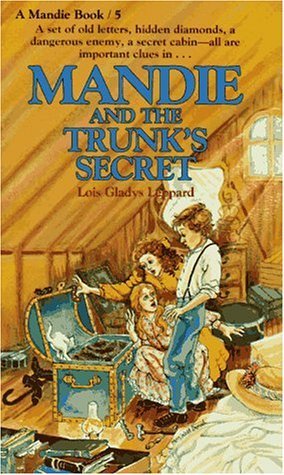
Book Review: Mandie and the Trunk’s Secret

Mandie and the Trunk’s Secret
Mandie #5
by Lois Gladys Leppard

My rating: 4 / 5
Genre: Children’s Christian historical fiction

I read a lot of this series when I was a kid/pre-teen, and I read some of them to my now-teen daughter when she was younger. Nostalgia definitely affects my reviews for this series, and I’m okay with that. It’s good to at least see some consequences from Mandie’s disobedience in the previous book, though of course the consequence ends up being fun for her and Celia and leads them into another mystery. I appreciate that they are trying to behave better here as well, though she questions whether she should really be meeting with Uncle Ned at night while still doing it anyway. Uncle Ned himself clearly thinks it’s important to adhere to the rules but still visits in secret. Overall, though, this book was better than the previous. While I think these books can still be good for younger people to read, especially if you’re looking for something with Christian content, I strongly recommend discussing what’s good and bad in them with your kid(s) after they read it.

Find out more about Mandie and the Trunk’s Secret

See what I’m reading next.

If you’ve read this book, or read it in the future, feel free to let me know what you think!

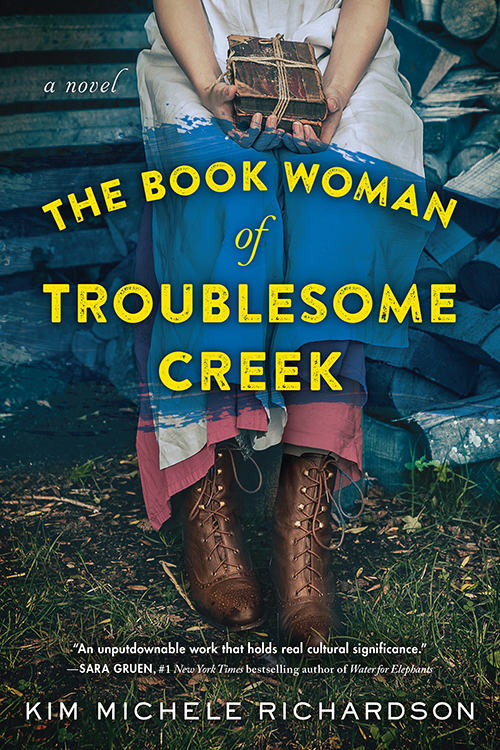
Book Review: The Book Woman of Troublesome Creek

The Book Woman of Troublesome Creek
by Kim Michele Richardson

My rating: 3 / 5
Genre: Historical fiction

In 1936, Cussy Mary Carter works for the Pack Horse Librarian Project in and around Troublesome Creek, Kentucky. Her father insists that she needs to quit her job and get married instead, but Cussy knows that the people of the hills need the books and other printed material that she brings to them.

There was a lot to like about this book, from the history that the author brings to life and the heartfelt moment between Cussy and some of her patrons. I’d never heard of the blue-skinned people, and for good reason, considering how people treat anyone who is different. The hardships faced by this community as the country strives to move out of the Great Depression are well-presented and heartbreaking. The way some of her patrons are as hungry for books, magazines, or newspapers as they are for food made me want to be more careful not to take for granted the overwhelmingly easy access we have to books and information in general these days (and in this part of the world in particular). I was really immersed in the setting throughout the book. There are even some real pictures of pack horse librarians and some of their patrons in the back of the book, which I was fascinated by.

On the other side, there were some things about the book that I didn’t like. I almost put it down in chapter 3 and walked away, when the main character had an abortion in such an offhand way that I wasn’t even sure at first that that was what had just happened. The author treats the murder of an unborn child so flippantly that I was appalled, and to make things worse, it’s barely mentioned again in the rest of the text. From that point, I knew that the author and I have vastly different views of the world, and that does come through at other points in the book as well. Beyond that, I struggled a bit with the narration style. It’s one thing for the dialog here to be full of the local dialect of the time period—that does make sense. But since the book is written in 1st person, but the author understandably didn’t want to have the entire book be written in that dialect, Cussy’s narration is mostly more modern and grammatically correct, but with the word “knowed” thrown in a lot. It was weird and sometimes jarring. Cussy’s arguments with her dad about whether she should be allowed to keep working as a librarian or be forced to get married becomes repetitive and drags on too long. I think that it might have been intended to lead to a nice payoff near the end of the book, but for me, it just added tedium.

I really did appreciate this book for the history it brought to life. Overall, though, I had too many issues. The book has a lot of high ratings, so if you’re interested in the story and aren’t bothered by what I mentioned above, you should certainly consider reading it and maybe even check out other reviews at the link below.

Find out more about The Book Woman of Troublesome Creek

See what I’m reading next.

If you’ve read this book, or read it in the future, feel free to let me know what you think!

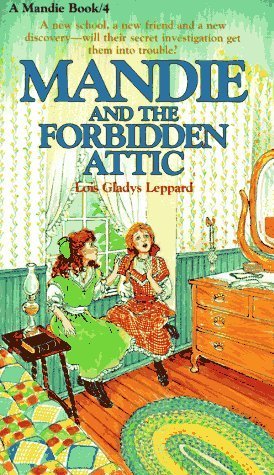
Book Review: Mandie and the Forbidden Attic

Mandie and the Forbidden Attic
Mandie #4
by Lois Gladys Leppard

My rating: 3 / 5
Genre: Children’s Christian historical fiction

I read a lot of this series when I was a kid/pre-teen, and I read some of them to my now-teen daughter when she was younger. Nostalgia definitely affects my reviews for this series, and I’m okay with that. Though I am also willing to admit the flaws in the books; for example, here we have another guy who is drawn to Mandie as soon as he meets her. Though to be fair, they’re sort of thrust together, and so far, he’s mostly just being polite. Mandie is particularly unruly in this book, breaking a rule at her new school over and over despite being caught and even punished. At least it’s one book in which Mandie isn’t just perfect, but in the end, her rule breaking produced a certain outcome that essentially ends up exonerating her, which isn’t a great lesson for the kids who read this book. It’s too easy for the reader to empathize with her and feel like the authority figures are simply being unfair or overbearing, and reading this as an adult, I kind of wish Leppard had been more careful with that. While I think these books can still be good for younger people to read, especially if you’re looking for something with Christian content, I strongly recommend discussing what’s good and bad in them with your kid(s) after they read it.

Find out more about Mandie and the Forbidden Attic

See what I’m reading next.

If you’ve read this book, or read it in the future, feel free to let me know what you think!

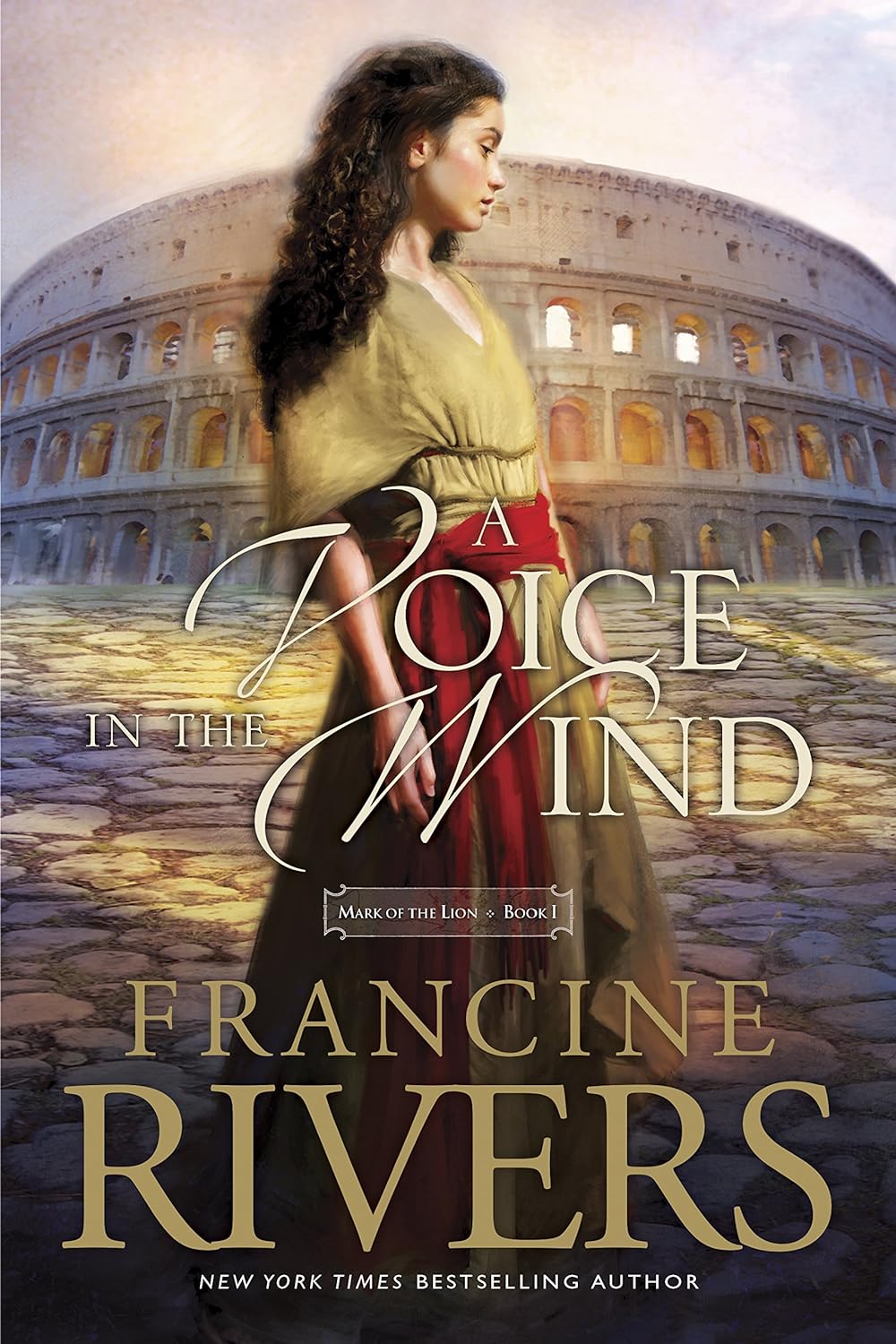
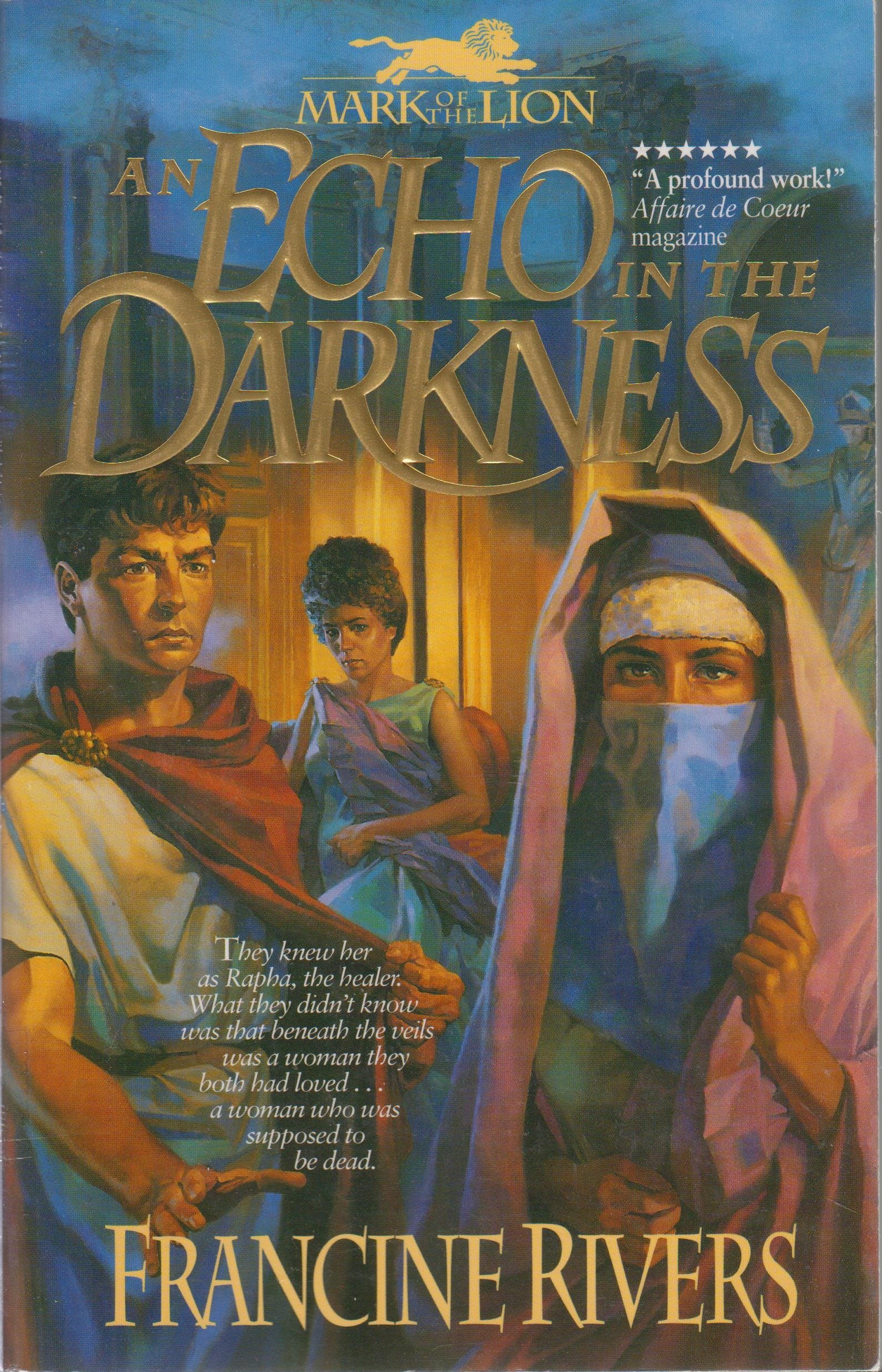
Book Review: A Voice in the Wind

A Voice in the Wind
Mark of the Lion #1
by Francine Rivers

My rating: 3.5 / 5
Genre: Christian historical fiction
When Jerusalem falls to Rome, Hadassah is taken as a slave after losing her entire family, and eventually ends up in Rome as a  personal maid for a young woman named Julia. Hadassah is Jewish by heritage, which makes her hated enough in Rome, but she also follows Christ, which is punishable by death. Julia and her family—mother, father, and older brother Marcus—become dependent on Hadassah, and she in turn falls in love with them, praying that she could somehow be a light in the darkness of their lives. 

I’ve heard of this book for a while but wasn’t sure about reading it, partly because the length was daunting. But since I ended up with a copy of the book (and the rest of the series), I figured it was time to give it a try. And yeah, I think the length was more than it needed to be. For one thing, I didn’t even mention an entire POV character in my synopsis, because he’s so far removed from the rest of story. He’s a Germanic warrior who was captured in battle and forced to become a gladiator, and he does intersect with the main story by the end, but it takes a long time, and I couldn’t help but wonder how much of his story was necessary. There’s also a lot of detail about the debauchery that pretty much all of the characters (minus Hadassah, of course) participate in throughout this book that I think was wholly unnecessary. I understand that this is a fact of life and was very common in Rome during this time, and I am not saying that even Christian writers should pretend it didn’t happen or shy away from it. But I also don’t think it needs to be focused on as much as it is in the book to get the point across. It made the book start to feel repetitive and was also at times unpleasant to read. Seriously, I brought the book to church when my husband had to be there early for worship practice, and as I saw reading in the pew, I thought about how awkward it would be if the pastor (or anyone, really) walked by and caught a glimpse of the page. I think there needs to a balance that this book is pretty far from.

Still, I was invested in the family fairly quickly. I expected to not care at all about Artretes whenever it went back to his POV (that’s the barbarian gladiator), but as long as I skimmed the bloody fight scenes, I was fairly interested in his parts too. Hadassah seems almost too perfect as a character, but I appreciated her fears and frustrations and don’t have too hard a time believing that her persecution helped her to be more than she otherwise might have been. It’s pretty clear that God can work that way. I was really rooting for Hadassah to realize that she was doing more than she thought, but to be honest, the book didn’t quite go how I thought it might and really wanted it to. I obviously didn’t love it, but I did like it enough to want to see how the lives of these characters play out and continue the series.

I am nowhere near an expert on this time in history (or any time, really), but I’ve read a few books set around this time, and this felt real to me. Except for the couple of times that Hadassah used more the modern Christian verbiage of having Jesus in our hearts, which is not only theologically muddy at best but almost definitely not an expression that would have been used in this time period. As for recommendations, fans of Christian historical novels or romance would probably enjoy this, but please keep content warnings in mind (there’s more than I mentioned, but here’s a review with more than I shared). It’s not something I’d recommend for teens, for sure.

Find out more about A Voice in the Wind

See what I’m reading next.

If you’ve read this book, or read it in the future, feel free to let me know what you think!
Book Review: Mists over the Channel Islands

Mists over the Channel Islands
Allegiance Under Pressure #3

by Sarah Sundin

My rating: 5 / 5
Genre: Christian historical romance

When the Germans invade the British Channel Islands, Dr. Ivy Picot is left trying to keep her dad’s medical practice afloat, with him and half of her family evacuated to England. Then Ivy is pulled into a ring of medical people who help treat hidden laborers who are in danger from their German taskmasters who are using forced labor to build fortifications on the island. One of those responsible for the new structures marring the beautiful landscape of her beloved Jersey is Gerrit van der Zee, a Dutchman who volunteered for the work in the hopes that he’d be able to help the Allies in some way. But even as he is captivated by the lovely young doctor, he can’t tell her that he is not one of the occupiers she so despises, that he’s actually on her side.

Again I’m struck by Sarah Sundin’s grasp on the history in this time period. I’ve read a few non-fiction books about (and in some cases written by) people who were involved in underground resistance rings during WWII, and Sundin’s writing here rings true for the most part. There is one character who never quite grasps the “don’t say anything to anyone ever” concept, but the codes that are set up and different ways they attempt to keep things hidden and secret kept me engage and in suspense. I kept watching the dates tick ever closer to D-Day, then to the date I knew the Channel Islands would be liberated, and wondering how badly things would fall apart as the Germans got more and more desperate. 

Sundin has a way of writing romance into her stories without making it the predominant theme or overwhelming the plot, and the same is the case here. I also really liked several of the side characters and was appropriately saddened by one particular story arc throughout the book. Then near the end, we get to reunite with characters from the previous two books in this series, and I really enjoyed that. I recommend this book to anyone who likes historical fiction from this time period in the Christian romance genre. Though this is the third book in a series, you don’t need really to read them in order. Though of course, since I enjoyed the whole series, I’d say there’s no reason not to start with the first book, Embers in the London Sky.

Thank you to Netgalley and Revell for providing me a copy of this book to review.

Find out more about Mists over the Channel Islands

See what I’m reading next.

If you’ve read this book, or read it in the future, feel free to let me know what you think!

Book Review: Mandie and the Ghost Bandits

Mandie and the Ghost Bandits
Mandie #3
by Lois Gladys Leppard

My rating: 4 / 5
Genre: Children’s Christian historical fiction

I read a lot of this series when I was a kid/pre-teen, and I read some of them to my now-teen daughter when she was younger. Nostalgia definitely affects my reviews for this series, and I’m okay with that. Though I am also willing to admit the flaws in the books. Fortunately, this one was less aggravating than the previous. As a parent now, I was particularly interested in Mandie’s mom’s difficulty in parenting her. With the gap in their relationship between the time Mandie was a baby and when they found each other again over a decade later, Elizabeth doesn’t really know how to be a mom and isn’t very good at standing up to her very willful daughter. It also gives Mandie an actual dimension beyond just coming across as perfect all the time, though it’s fairly subtle. On the other hand, Mandie definitely displays a personality shortcoming in this book, so there’s another flaw. It was a little difficult to understand why Tsa’ni was suddenly so kind and friendly at the end of the previous book, then here was rude again, though he never got quite as bad as he had been before again.

One of my biggest overall issues with this series so far is the theology. In my review of the first book, I mentioned that there seemed to be a salvation-by-works message. Here, I was bothered when Mandie tells the wife of a dear friend that they had to trust God to heal that dear friend who was badly injured, and there doesn’t seem to be any allowance for the possibility that God wouldn’t heal him. And then when he takes a turn for the worst, very soon after Mandie’s insight, Mandie herself falls to pieces and loses all semblance of trusting in God. She is supposed to come across as wise and full of faith, but she doesn’t follow her own advice, which is a bit lacking in understanding anyway. I can’t help but wonder what kind of impact this might have on kids who don’t have a full understanding of God yet. So keep that in mind if your kids might read these books. Outside of that, the story was good overall.

Find out more about Mandie and the Ghost Bandits

See what I’m reading next.

If you’ve read this book, or read it in the future, feel free to let me know what you think!