Book Review: Daughter of Cana

Daughter of Cana
Jerusalem Road #1
by Angela Hunt

My rating: 4 / 5
Genre: Biblical fiction

Daughter

At a wedding in Cana, Tasmin oversees the week-long feast, with the help of her twin brother Thomas. But Thomas becomes more interested in what a guest from Nazareth has to say than helping his sister. Then that guest appears to turn water into wine, though Tasmin isn’t convinced. And neither is the guest’s brother Jude. After the wedding, Thomas goes with the Nazarene to Capernaum, and both Tasmin and Jude follow, each determined to retrieve their wayward brothers. But it turns out the task is not so easy, and Tasmin’s and Jude’s lives are upset as they try to balance their own lives with still making their brothers see sense–and hope to prove that the Nazarene is not who he claims to be.

This was an interesting take on the ministry of Jesus (referred to by his Hebrew name, Yeshua, in this book) from the perspective of one of his half-brothers, who did not believe he was the Christ during his ministry on earth, and the perspective of a sister to one of the apostles. As Jesus himself put it, no man is a prophet in his own hometown, and that principle applies in some way to both of the main characters (in their view of Yeshua). Most of Jesus’s works are seen from a distance, and I expected that to become tedious, but I appreciated the way the miracles were told by those benefited by the miracles or even bystanders.

I was a little concerned early on, as it seemed Yeshua was being portrayed as lazy and even slightly belligerent to his parents, slacking off while his brothers did all the work, even before his ministry started. I came to see that as the perspective of a frustrated, even jealous, brother, though. There was also one point where Jude talked to his brother in private, and I mentally winced in anticipation of the words the author might choose to put in Jesus’s mouth. Fiction or not, that strikes me as an unwise thing to do. However, his dialog was still right out of scripture. Granted, he obviously said those things to a larger crowd in the Bible, but there is evidence Jesus repeated some parts of his sermons anyway. It was a good decision on the author’s part, I feel.

While Tasmin and Jude spent most of the book with little in the way of their own story, and even of their own personalities, they grew enough later in the book that I still felt some connection to them. The best thing about the book, for me, was that it gave me the ability to feel like I was there, back in Jesus’s day, hearing him speak, seeing him myself, even if from a distance much of the time. There were Hebrew words and phrases sprinkled here and there, and the meaning wasn’t always clear to me. I didn’t quite see the reason for most of that, but that’s a small down-side to an otherwise lovely book. I would recommend it to fans of Biblical fiction.

Thank you to Netgalley and Bethany House for providing me a copy of this book to review.

Find out more about Daughter of Cana

See what I’m reading next.

If you’ve read this book, or read it in the future, feel free to let me know what you think!

Book Review: Time Benders: The Machine

Time Benders: The Machine
Time Benders #1
by J.B. Yanni

My rating: 2 / 5
Genre: YA science fiction, Christian

When the four Fitzgerald children are orphaned, their aunt sends them off to boarding school. There, the four siblings grow closer than they had ever been before, as they rely on each other in their grieving and new, sudden situation. As the kids settle into life at the school, eldest sibling Ken begins to investigate the circumstances surrounding their aunt taking custody of the kids and excluding them from the will reading. Meanwhile, his brother Joe, a math and science whiz, finds a fascinating math problem, coupled with a machine. When he discovers that the calculation might just be the secret to time travel, the kids have to decide whether or not they should go back and prevent their parents’ death, and how they would even do that.

I have to say that this book was really not for me. There were two main areas that brought the story down the most for me, and sadly one of them was the plot itself. The other area was the writing style. I’ll explain a little:

Time travel plots can be difficult to do well, and since they always require suspension of disbelief, for some people, it doesn’t pay to be too picky about what you’re expecting from one. However, the assumptions the kids make in this book about how time travel would work for them and anyone who didn’t come along one the trip make no logical sense to me. And even when they see evidence that it doesn’t work that way, I don’t see them re-thinking their ideas. Also, they decide to go back and change a major point in history (won’t say what it is due to spoilers), because they feel that it will stop the beginning of a long progression of events that led to their parents death. And yet, they say more than once that they’re sure changing this major point won’t affect their friends’ families and lives. Even after saying that this event will potentially change another event in history, which affected millions of lives. It just makes no sense to me. And it’s not because they’re kids, since they’re generally shown to be smart (the oldest, who isn’t even one of the professed brains in the family, is going to Harvard). Oh, and I almost forgot that as the kids debate whether they even should go back to stop their parents’ deaths or not, their arguments actually make it seem like they’re against doing it…even as they decide to do it.

The writing itself seemed like it needed some more work. From the very beginning the dialog just felt stilted, and I realized that the kids don’t use contractions as much as an average person in America would. A lot of the story is told in a way that feels very zoomed out, rather than up close to the action. Conversations are told to the reader, rather than shown. For example, “she told him she wanted to go to the store, and he said he thought that was a good idea,” rather than seeing the actual conversations taking place. Coupled with these zoomed-out conversations having little to no explanation of what anyone was doing while talking, they felt shallow. A lot of the time, the story felt more like an outline (though granted, a really detailed outline) than a final draft.

I found the question of whether or not there was something sinister in the way Aunt Alicia handled the estate and kids she was charged with after her sister’s death more interesting than the time travel part of the story, which is sad, because it kind of fizzled out. The rest of the plot involved everyday life for the kids–they had classes, holidays away from school, got boyfriends/girlfriends, at least one lost a boyfriend/girlfriend, etc. I think far too much of that was shown, considering how little it affected the plot, but it probably wouldn’t have bothered me too much without the other issues I’ve mentioned, or if it would have at least served to show the kids’ personalities more. But there wasn’t much there.

I found this book when I saw the author was putting out the 2nd in the series, and wanted to see if it would be a good series to get into. Even though the first book ends on a huge cliffhanger, I don’t think it hooked me enough to put money into reading the next one. There may be an audience out there for this book, and it might just be the teenage audience that it’s meant for, though I personally wouldn’t recommend it to the YA group either. The book is in at least 1 Christian category on Amazon, and I could see where some of that was trying to come out. It might be brought out more in the next installment, but I can only speculate. I applaud the author for the work she’s put into this book, truly, but I think it needs quite a bit more work to be the great book it could be.

Find out more about Time Benders: The Machine

See what I’m reading next.

If you’ve read this book, or read it in the future, feel free to let me know what you think!

Weekly Writing Update: 5/10

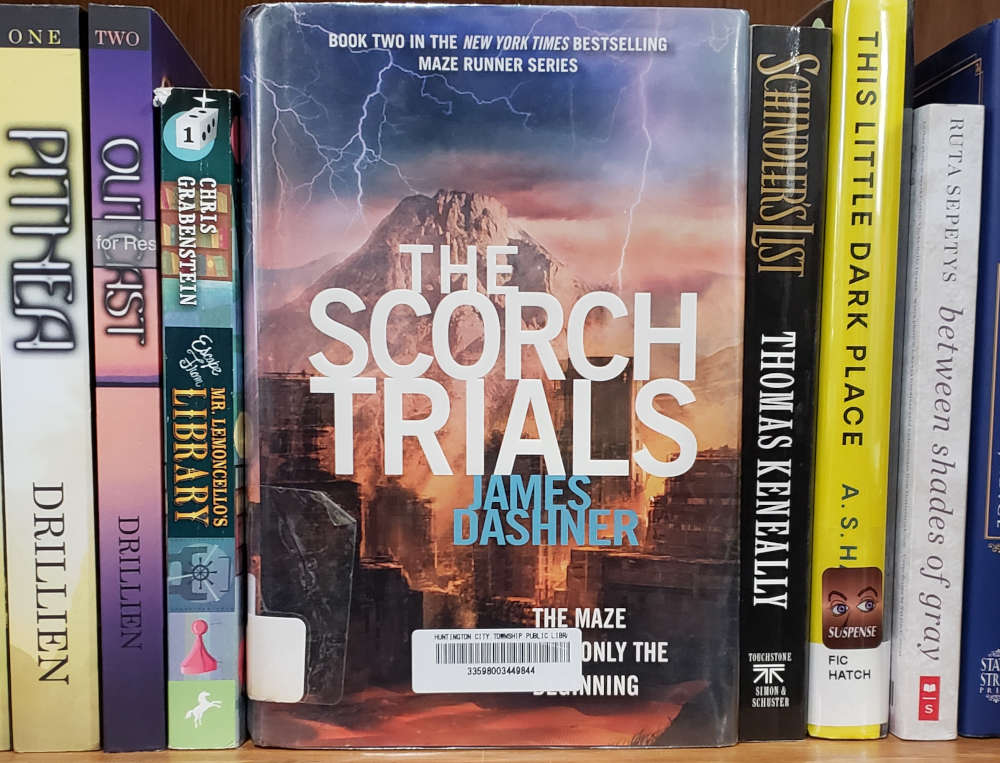
Last week, I finished reading “Outcast” aloud to myself and started transferring the notes from the proof copy to the computer. I was trying to decide if I want to do line edits with the proof copy, which means working around the marks I made, or if I should use the updated computer file. I’d rather use the proof copy, because I’ve discovered that when I read my writing in actual book format, I notice things I otherwise wouldn’t. However, I decided that to be safest, I need to use the updated file, because otherwise, I could miss a typo or mistake in the corrected sections of the file. So that is my next step.

I have plenty of time, because I checked in with my two advance readers, and they’re both still a ways from being done. I still have two months until my hopeful publish date, though, so I’ll do what I can, and then most likely dive into revision of book #3 in the meantime.

While I work on continuing the series, if you’re interested in reading where it all starts, Pithea is available on Amazon as both an e-book and paperback (it’s also on Kindle Unlimited).

Book Review: Deep State Stealth

Deep State Stealth
Nanostealth
#4
by Vikki Kestell

My rating: 3 / 5
Genre: Christian sci-fi thriller

Nano 4

Spoiler notice: The following review will contain spoilers for the previous books in the series–Stealthy Steps, Stealth Power, and Stealth Retribution.

Now that Gemma (make that Jayda) and Zander are both super-powered and married, they’re all set to save the president’s life (again). Tasked with rooting out the conspiracy that did not end with the death of the vice president, Jayda will go undercover in the NSA. Will she and Zander be able to root out the corruption and get out of the espionage business?

I struggled with this book quite a bit early on. I almost gave up on it after the first few chapters. But I stuck with it, and when the storyline about the conspiracy involving the president got going, the story picked up. In the end, though, this was the weakest book in the series, in my opinion.

This book has the odd distinction of being a bit too religious for me, and yet having some things that made me uncomfortable, especially in a Christian book. I’m not against Christianity in a book by any means. But in a book of this type, it’s much better off being spread out, rather than shoved at the reader all at once, which is how the beginning of the book felt. But even while that was happening, there were discussions of and references to the newlyweds’ “nap times” that were just too much for me–both near the beginning, and later in the book too (nothing graphic, but uncomfortable). And throughout the book, there was a lot of “bleeped” cussing. I know that Christian authors have to decide how to handle real-world language in their books, and Kestell’s approach isn’t a bad one, but there was a lot of it. And my mind does fill in the missing words, so I got a point where I was irritated by the amount of cuss words the book was putting into my head.

I don’t mean to imply that the book was bad, though. It provided more resolution to the rest of the series than I expected. There was a reveal later in the book that I thought was going to turn out to be anti-climactic, but was pretty interesting. And going into this book, I was really worried about the way the 2 clouds of nanomites behaved at the end of the previous book–almost like a form of sibling rivalry, and I was happy to see that that was largely downplayed in this book. Like with the previous book, the main plot was engaging, and I really liked the way Jayda and Zander utilized the nanomites.

One more thing–like with the previous book, this one is written in mixed perspectives. Most of it is 1st-person from Jayda’s point of view, with some 3rd-person if the author wanted to show things happening with other characters. For as strange as it was in the previous book, it was even more strange in this one, as more than once, Jayda herself was referenced in one of the 3rd-person sections, and it took me out of the story, since she’s the character whose eyes we view most of the story through. The writing style in general really isn’t for me.

Looking back at the series as a whole, it has its pros and cons. The story itself was good–I really liked the premise, especially the initial accidental invisibility, and Gemma learning to work with the mites. The author’s style and insertion of religion detracted from the series overall, but I think many other Christians wouldn’t be so bothered by the things that bothered me. Be sure to check out other reviews if you’re interested, as there are many positive ones for this series.

Find out more about Deep State Stealth

See what I’m reading next.

If you’ve read this book, or read it in the future, feel free to let me know what you think!

Book Review: Harry Potter and the Deathly Hallows

Harry Potter and the Deathly Hallows
Book #7
by J.K. Rowling

My rating: 4 / 5
Genre: YA fantasy

HP 7

Continuing with my first ever reading of the Harry Potter books, I’ve just finished the final book. As a reminder, my reviews will likely contain spoilers, as I’m not too worried about avoiding that, with as long as these have been out, and as well known as they are.

This is the hardest review yet, for me. I was so caught up in the book by the last half that I was excited to give it 5 stars. But then I thought back over the entire thing, and looked at the notes I’d written earlier on, and realized that there were some disappointing things that really were worth an entire star detraction. Rather than try to organize my thoughts in a way that flows well, I’m going to do bullet points for this review.

What I liked/loved

  • Dudley’s appreciation of Harry, which is touching, yet not overdone or out of character for him
  • 7 Harrys
  • Luna in general, but esp that she could see through Harry’s disguise at the wedding
  • Godric Hollow’s wizards’ monument to the Potters and the graffiti on the sign
  • Ron’s chance to save the day
  • The fruition of the DA was better than I could have hoped for
  • Harry getting to see his parents again, and 3 out of 4 of the Marauders (Sirius was one of my favorites before he died, after all)
  • Neville’s triumph
  • The final defeat of Voldemort, of course, and the knowledge that these people are finally free from his destruction
  • I felt the epilogue was pointless at first, but after a few days to let it rest, I appreciate being able to see how the characters moved on, that Hogwarts was restored, and that Neville was a teacher there

What I disliked

  • The middle really dragged with all of the moving around to camp, and a few little things happened that really didn’t advance the plot much, if at all
  • The Deathly Hallows seemed so out of place, like a tack-on to another otherwise solid-feeling plot, and ended up barely having any point (despite me liking Harry’s use of the stone, as I mentioned above)
    • It’s really hard for me to buy that the invisibility cloak is infallible…except where it needed to not be for the plots of past books (especially since, from my recollections, none of the times I can think of that someone did, or seemed to, see through it were necessary to the plot)
  • Lupin’s and Tonks’s deaths should really have been “on-screen.” I know everyone loves Dobby, but I think they were at least as important to the series and should have been given a bigger send-off.
  • The Battle of Hogwarts and most of the climaxes and falling action that occurred between them were exciting, except for one thing–there was just so much talking during all of it! After the battle we get pages of exposition about Snape, then an entire chapter of Dumbledore explaining things to Harry (some of which we already know or could easily have deduced from previous information). Then there’s rising action to the final stand-off with Voldemort…during which they talk…a lot. I wish Rowling had figured out a way to include more of this much sooner than during/between the epic battle and final stand-off.

Overall, I did like the book a LOT more than I didn’t, and probably a lot more than it looks like here. But it generally takes more words to explain a problem I had than to share the things I liked. I do think the book was longer than it needed to be, and wonder if that was on purpose–the previous books had gotten so long, Rowling and/or the publishers felt she couldn’t go back at this point. I don’t know. But as this is the final book in the series, I can say now that I do understand why it is so loved. I am already looking forward to starting back at the first book some day and reading through the series again with an understanding of how things play out, to find those things that I missed the first time around.

Find out more about Harry Potter and the Deathly Hallows

See what I’m reading next.

If you’ve read this book, or read it in the future, feel free to let me know what you think!

Book Review: Harry Potter and the Half-Blood Prince

Harry Potter and the Half-Blood Prince
Book #6
by J.K. Rowling

My rating: 4 / 5
Genre: YA fantasy

HP 6

Continuing with my first ever reading of the Harry Potter books, here’s #6. As a reminder, even though these books/movies have been out for a while and are really well known, I’ll still warn in advance that my reviews will likely contain spoilers.

Well…I don’t even know where to start with my review of this book. Normally, I take a few notes while reading–just things I want to make sure I remember when I’m writing the review–things I really liked or things I didn’t like. I didn’t write any notes for half of this book, because I was just so caught up in the ride. So suffice it to say: I liked it.

I enjoyed seeing Harry as team captain, really liked the luck potion fake-out, and even liked that the Gryffindor team was able to win without Harry (because of the common Harry-is-best-at-everything complaint some people have with this series). The romance with Ginny was expected, but I think that’s only because of spoilers I’ve seen over the last few years. Harry suddenly being jealous of her relationship with Dean and daydreaming about her being with him, with no indication that he liked her that way before, was actually pretty abrupt. I’m curious, though I’ll never know, about how I would have felt if I hadn’t been anticipating it, because it came out of left field in this book.

The formula throughout this series of Harry suspecting something and not being able to get anyone (except maybe his friends, but not even them this time) to believe him is getting a little tiring. It’s even worse if he turns out to have been correct about everything, so it leaves little mystery for us.

The ending was a bit unpleasant, not just because of the obvious, but because of the realization of how very different the next book is going to be. After 6 books that covered a year of school (with more and more shown of the summer each year), knowing we won’t be going back to Hogwarts was as sad for me as it was for the characters. I also felt really let-down by the explanation of the Half-Blood Prince, which was fairly anticlimactic.

The one biggest issue I had was not a fault of the book’s. Back when this book first came out, my husband showed me the video of some guy driving by a bookstore yelling, “Snape kills Dumbledore!” at a crowd of people waiting in line to buy the new book, or walking way after buying it. Even though my memory isn’t what it used to be, this has stayed in my mind for 14 years, even when I never had any plans to read the book. So it’s also tainted my thoughts, expectations, and theories as I’ve read the entire series. Because of that, and who Snape has been shown to be up until and through this book, I did truly expect there to be more to it than there was when it actually happened. But there wasn’t.

In my reading and book blogging over the last 10 months, I am making sure to continue with series at a decent pace, but have never read 2 books from one series back-to-back. However, when I finished this book, I just knew I had to keep going. So I’ve already started on book #7. That’s probably as much of a testament to how much this series has sucked me in as anything. In a similar fashion to how a lot of questions and mysteries are tied up at the end of each HP book, I’m expecting a lot of tying-up of things left a mystery (or misunderstood, etc.) throughout the rest of the series, at the end of Deathly Hallows.

Find out more about Harry Potter and the Half-Blood Prince

See what I’m reading next.

If you’ve read this book, or read it in the future, feel free to let me know what you think!
Book Review: Anne of the Island

Anne of the Island
Book #3
by L.M. Montgomery

My rating: 4 / 5
Genre: Children’s/YA classic, coming of age

Anne 3

See my review for book #1, Anne of Green Gables.

This book takes us through 4 years of college with Anne and her school and housemates. She makes new friends, experiences loss, runs from love, and finds comfort at home. Relationships form and blossom, and life continues on all around her.

There’s a lot to love about this book. The characters are written with the same heart as the previous books, and even Marilla has an outwardly loving moment. Davy is not as terrible as he was in the previous book, though Dora is still basically nothing. I will say that there has become a kind of repetition among the characters. Many newly introduced characters seem a lot like those that were larger in previous books. Phil, for example, is a lot like Ruby (and wow with what happened there). Even Patty’s Place has some similarities to Echo Lodge. However, the charm is still there.

There are some things that happen in this book that seem like a cliche, but I can forgive that, because this book was written before they became such cliches. Anne has started to become a little too perfect and loved by all, but it seems kind of natural, rather than forced. There are quite a few romances going on in this book, which I personally enjoyed quite a bit. 

Because of how quickly these books speed through time, I echo Anne’s sentiment that it’s sad people have to grow up. Characters come and go so much, it’s hard to get attached to any of them. Still, there are a few permanents, and at the end of this book, because of the writing and dialog style I was so immersed in by then, the word “sweetheart” seemed like a whole new word when it was used. I’m a little less excited about continuing the series than I was up to this point, but I’m still looking forward to seeing what happens to Anne next.

Find out more about Anne of the Island

See what I’m reading next.

If you’ve read this book, or read it in the future, feel free to let me know what you think!

Book Review: Storm

Storm
Swipe #3
by Evan Angler

My rating: 4 / 5
Genre: YA dystopian, Christian

Spoiler notice: The following review will contain some spoilers for the previous books in the series, Swipe and Sneak.

Unwitting leaders of a revolution for those who refused to pledge loyalty to the future global leader, Logan and the rest of the Dust are being pulled in multiple directions. While Logan, Peck, Erin, and Hailey head west to try to save Erin’s life and stop an epidemic, the rest of the Dust have a mission in the capital city of Beacon–continue to protest the leader’s minions while searching for their lost friend. Then Logan’s sister Lily brings him a new mission, as a brewing storm is about to be unleashed.

The continuing saga of Logan and the Dust ramps up in this book. The Dust continue to gain new members and allies, both Markless and Marked. The ending feels like a huge leap off the side of a cliff, but overall, the book was engaging.

In the first book, I really disliked both Tyler and Eddie. I know they’re kids, so of course their immaturity would be expected. But it’s taken to such an extreme, it just bugs me. I like both of them so much more in this book, even though they’re still goofy and immature. It’s like it has a purpose now.

There were a few oddball things that happened in the book, like horses showing up out of nowhere when two of the characters were traveling via the River, or a teenager being walked to the scene of his parents’ death, even to the point of them showing him their dead bodies. I just don’t know why the sheriff would do that.

By the end of this book, I had come to realize that Evan Angler is a pen name, considering that it turns out he’s actually a character in the book. I truly don’t understand why the author chose this plot device, though, as so far, it doesn’t add much to the book. I think that perhaps this could have been more fully utilized by having a narrator that was more connected to the reader throughout the series. I’ll be curious to see if this is expanded on in the next book though.

This story has really come into its own by this book. It’s uncommon, at least in my experience, for Christian end-times fiction to come in from this angle, as there’s very little in the way of Christianity even still now. One character did express his faith a bit more in this book and then left on some kind of pilgrimage, which I’m sure will come into play more in the next book. It did become clear in this book that the rapture had happened in the past though, which I’d been curious about. I’m not too optimistic about the next book, given reviews I’ve read, but I’m going in with an open mind, because I’ve disagreed with reviews plenty of times before. At this point, I’d still recommend this book to those who enjoy end-times fiction and YA books.

Find out more about Storm

See what I’m reading next.

If you’ve read this book, or read it in the future, feel free to let me know what you think!

Book Review: The Dandelion Killer

The Dandelion Killer
by Wanda Luttrell

My rating: 4 / 5
Genre: Christian mystery

Dandelion

When a town socialite is murdered and a 55-year-old mentally handicapped man is found with her dandelion pin, the police take him in for questioning, only for him to escape their grasp. It’s up to his best friend and sister-in-law of the victim, Elayna Evans, to try to prove his innocence before the police re-capture him. She has problems of her own, though, as someone seems to think the victim left something with Elayna before she died. Maybe she’d be wise to stay away from the investigation, but Elayna can’t leave her friend’s fate in the hands of the police…or the real killer.

I enjoyed this book overall. I think my favorite thing was the characterization of Jayboy, the mentally handicapped man. The mystery took some interesting turns, though there was a good deal of predictability in it too. I liked the added pressure of the rising river that threatened to flood the town.

The chapters generally alternated between Elayna’s POV and Jayboy’s POV (always 3rd-person though). Watching Jayboy’s progression through being suspected of murder, then escaping, and then where he goes from there, which I won’t say, was one of the more engaging things about the book. The repetition that I noticed in the author’s style was was prevalent throughout these parts too, but seemed a lot more natural.

Elayna herself was all right as a main character, but she began to grate on me a little. For one thing, there was the repetition I mentioned, which came out a lot in her thoughts about the murder and about her absentee husband (who had taken off one day and was gone for 10 years, but she refused to move on). She also was a bit too wishy-washy for my taste.

There’s a character introduced part way through the book who was another favorite of mine. His story has a unique angle to it, if not a little awkward and coincidental. He’s the main place that the Christianity comes into this book, though to be honest, I don’t know why he had to be a pastor. It seems pretty common in these kinds of books, but it’s not like everyone who has a strong faith has to be a pastor. I did find it weird that his full name was pretty much always used, both in narration and in dialog.

As for the mystery itself, I don’t want to be too specific about the ways that it was predictable, because that would give away a lot of the ending from early on. But it was almost like the author tried to make it less predictable by setting up the narration in a way that we get used to, and then changing it on us without us realizing it. However, I don’t know if that was intentional, or just something I read into it. And there’s a New Age angle that feels so against the tone of the book, and I think it’s mostly there as a vehicle for the Christianity.

One of my favorite things about the book was this one scene in a restaurant that was newly opened by the pastor mentioned above, where there was a guy singing a song that was described but not named. From the description, I knew the song was “The Touch of the Master’s Hand” by Wayne Watson, which is a favorite of mine. So that was pretty cool. Overall, I’m glad I read it (though it wasn’t the first time–I was given this book by a sibling and read it a few times after I got it, but that was at least 15 years ago), and would recommend it to people who enjoy Christian mystery books.

Find out more about The Dandelion Killer

See what’s coming up.

If you’ve read this book, or read it in the future, feel free to let me know what you think!

Book Review: The Cat Who Could Read Backwards

The Cat Who Could Read Backwards
Book #1
by Lilian Jackson Braun

My rating: 4 / 5
Genre: Cozy mystery

TCW 1-3

Jim Qwilleran is working his way back into the newspaper world after some personal struggles led to a dark time for him. He’s given the art beat, which has him completely out of his element, but at least it’s work. After meeting various members of the local art community, the death of one of those people has Qwilleran’s large mustache quivering. Accompanied by his landlord’s highly intelligent and quirky Siamese cat, Qwill does a little investigating while still reporting the news.

This first book in a 29-book-long series takes a while to really get started. Qwill is new in the area and has a lot of people to meet, and so do we. The murder comes quite a ways into the book, but it’s not like everything before that is pointless and boring. It’s a little slower than I might have liked, yes, but since I know this is going to be a murder-mystery, I’m guessing who the victim will be up until the point that someone dies (I was wrong, by the way…and then I was right). There were some downsides, especially near the end, but overall, I enjoyed the book.

I loved the way Qwill and Koko (the cat) began their relationship, how Koko was introduced by his owner, and Koko’s little visits to Qwill. Having read some of this series years ago, I knew that in every book, Koko has a new quirk, usually related to the title, that is somehow involved in the solving of the murder. This one was no different, though I felt it wasn’t as involved as I remember. Maybe that’s also due to it being the first book in the series, or maybe I’m over-selling it in my remembrance. Either way, it was still fun.

One downside is that one of the common elements of cozy mysteries, the way clues to the mystery are usually sprinkled into the story enough that the discerning reader could solve it before the detective, was not there in this book. I don’t think there was any real way to figure out who did it before it was suddenly revealed at the end. Though this book was published in 1966, and I doubt “cozy mysteries” were really a thing…Braun probably didn’t know she was supposed to follow a formula. It doesn’t bother me personally, as I’ve never been all that great at solving mysteries before being given the answer anyway.

Also being written in the 60s, there’s a definite vein of male chauvinism throughout the book. At first I thought it was strange, considering the female author, but the truth is, this is probably exactly what she was seeing back then.

As a stand-alone mystery, this book is lacking a bit. As the beginning to a series, it shows a lot of promise. I personally can’t wait to see what Koko (soon to be joined by another Siamese, but I can’t remember which book) gets up to in the future. At this time, I would recommend this book for fans of the classic whodunit & cozy mystery genres.

Find out more about The Cat Who Could Read Backwards

See what I’m reading next.

If you’ve read this book, or read it in the future, feel free to let me know what you think!