Book Review: The Men We Need

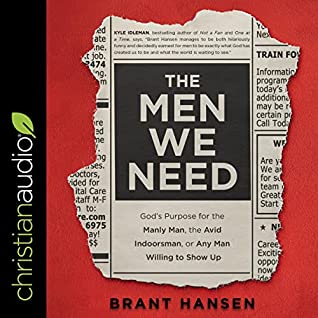
The Men We Need
by Brant Hansen

read by the author

My rating: 5 / 5
Genre: Christian living

At a time where men and masculinity are practically being vilified, radio show host Brant Hansen shares some insight on what it really means to be a man, at least from a biblical point of view. But that doesn’t mean this book holds nothing of import for women. More than simply what to look for in a man, or what to help our significant others or sons strive to be, some of what Brant discusses in this book can easily be applied to women, too.

I think that what sticks out to me the most is the idea that passivity isn’t as victimless as we might think. By living a life of lethargy, with no ambition, we can fail to be who God wants us to be for others out there. As Brant says, no one is exactly like me, with my life, my experiences, and my placement in the world; if I don’t do what I was meant to do, who will? It does make me re-think how I spend my time.

While, overall, I didn’t necessarily connect with this book as much as I did Brant’s previous books, that’s not surprising, given the topic. Still, I’m really glad I read it, and especially that I listened to the audiobook, as Brant’s humor comes out all the more when he’s speaking the words. I’ve long enjoyed Brant’s humor and greatly appreciate his wisdom and insight as well. I recommend this book for men and women alike, though I’d imagine it makes a lot more sense for Christ-followers. Not that it’s a requirement, by any means, and is especially not for Brant’s podcast, in his podcast, The Brant & Sherri Oddcast, which I also recommend.

Find out more about The Men We Need

See what I’m reading next.

If you’ve read this book, or read it in the future, feel free to let me know what you think!
Book Review: Night

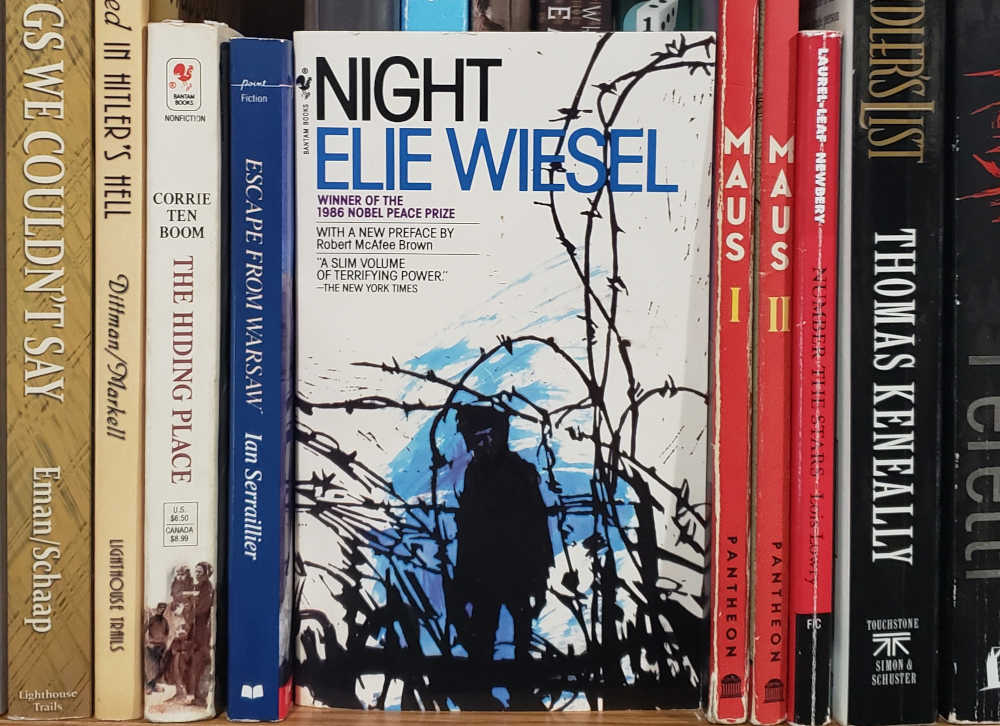
Night
by Elie Wiesel

My rating: 5 / 5
Genre: Memoir

Elie Wiesel’s account of his time in death camps during WWII is told simply, without unnecessary prose. As a teenager in an unthinkable situation, Wiesel clung to his father, while losing all faith in his God. One of the things that strikes me most after reading this book is the constant uncertainty the author and his fellow Jews were faced with—will it really get that bad before the war ends? Are the rumors we’re hearing of camps true? Where are we going? What will happen when we get there? Which is better, left or right? To stay with family or to go where directed? To fight to survive or to let it be over? To join the evacuation march or to be left behind in the hospital? Not that this hasn’t all come up in other Holocaust books I’ve read, but for whatever reason it stuck out more to me in this book. That Wiesel was struggling to come to terms with what happened to him and millions of others even in the writing of this book is evident, and it certainly makes the memoir raw and personal.

Reading this book was one of my earliest exposures to the horrors of the Holocaust, as I’m sure I read it around high school age. I even found a couple of notes that I’d written in the book back then, which I don’t remember doing. While there are a lot more books out there about the Holocaust, both fiction and non-fiction, than there were when this was first published, I think it is a classic in the genre, and a good starting point for anyone newly diving into the genre.

Find out more about Night

See what I’m reading next.

If you’ve read this book, or read it in the future, feel free to let me know what you think!
Book Review: I Can Only Imagine

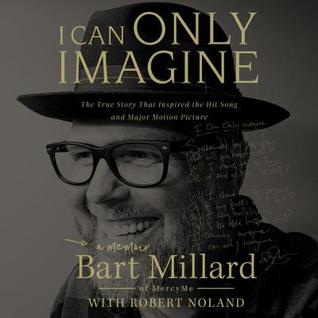
I Can Only Imagine
by Bart Millard
Read by the author

My rating: 5 / 5
Genre: Memoir

Singer and songwriter Bart Millard, lead singer of the band MercyMe, shares the full story of the band’s best-known song, “I Can Only Imagine.” Though this story was shared with the world through the movie by the same name, as Millard explains at the beginning of the book, a movie has time constraints that a book does not; thus, the book is able to go into more detail about Millard’s relationship with his abusive dad and his dad’s transformation shortly before his death.

You know how a song can be so popular, played so often, that you almost start to not care about it, even though you thought it was a great song when you first heard it. I won’t pretend I enjoy “I Can Only Imagine” as much now as I did when it was first released in 2001. But reading this book definitely puts the song in a whole new light. Though it sounds like Bart Millard has told the story about his abusive-turned-repentant dad many times over those years, I don’t recall ever hearing it, and I haven’t seen the movie. And wow, it is quite the heartbreaking story. From the physical and mental abuse to the (worse in some ways) checking out of his dad later, Bart Millard has every reason to be traumatized. And to know that it has continued to affect him in more recent years, even while playing music to large crowds, of which, at various times, I’ve been a part, only adds to the sadness.

I am incredibly grateful for so much of the music that Bart Millard has written and that the band has recorded, and I think it’s important for “fans” to keep in mind that these are real people with real problems. They often seem like they have it all together, like they have all the answers, to the degree where even when they’re standing on the stage telling us that they’ve had some rough times, we imagine those rough times to be over, because otherwise, how could they be standing there in front of us leading us in worship? We assume that whatever problems they have can’t be as bad as our own, and maybe by the time they get to writing a book like this, they’ve got it all sorted out. But most likely, Bart Millard will continue to struggle with PTSD and the feelings of inadequacy that his dad instilled in him, while thanking God that he had some good times with him before it was too late.

I listened to the audiobook, because I wanted to hear the words in the author’s own voice. I’m incredibly glad I listened to the book, and though I’ll probably never quite think of MercyMe songs the same way again, I don’t think that’s a bad thing.

Find out more about I Can Only Imagine and MercyMe

See what I’m reading next.

If you’ve read this book, or read it in the future, feel free to let me know what you think!
Book Review: Between Heaven and the Real World

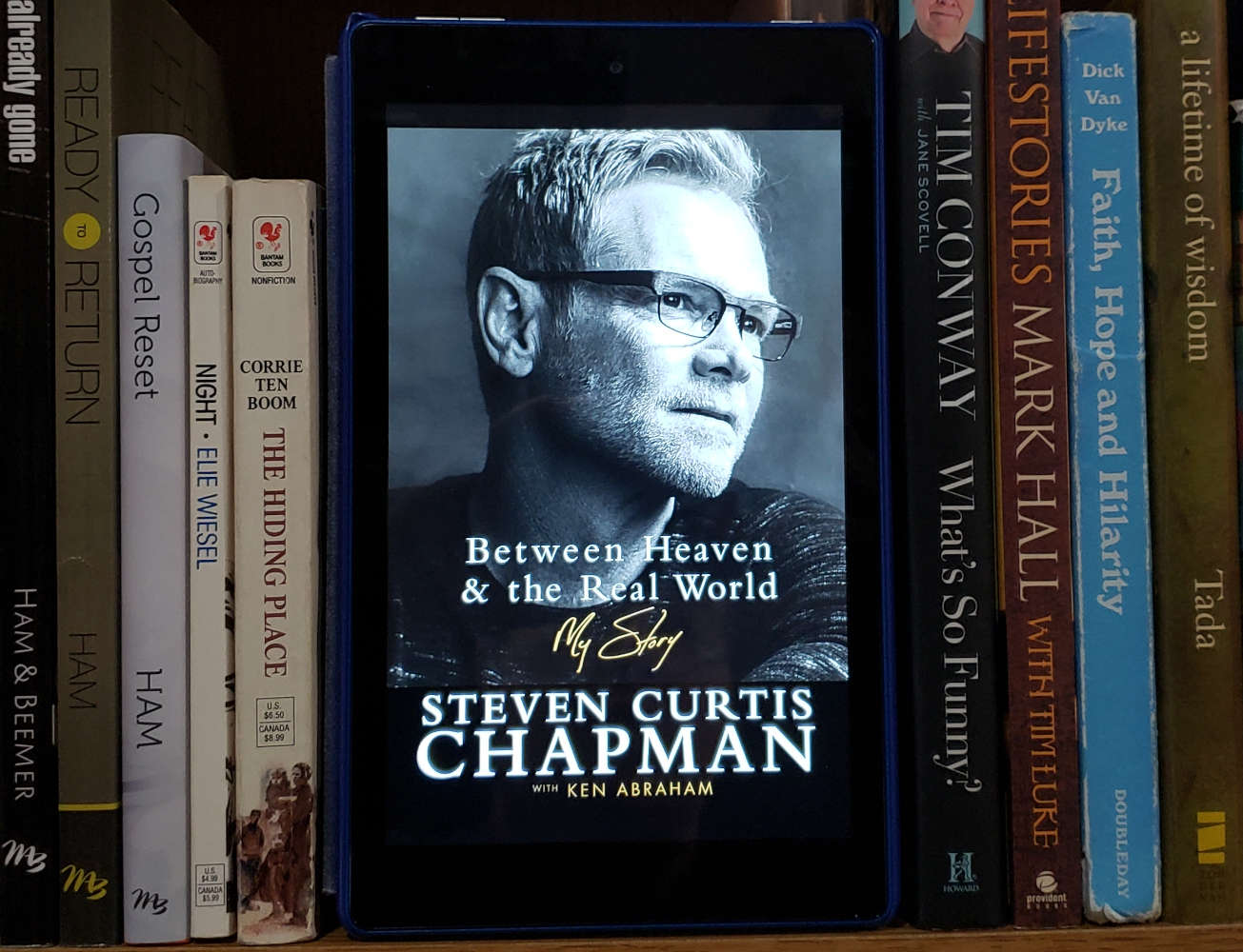
Between Heaven and the Real World
by Steven Curtis Chapman with Ken Abraham

My rating: 4.5 / 5
Genre: Memoir

Singer and songwriter Steven Curtis Chapman shares the story of his life so far—childhood, romancing his wife, the road to becoming a household name in Christian music, and the loss of his young daughter. Chapman does not hold back as he tells of doubt, uncertainty, even anger, but also of learning to trust God, to believe He’s working even when we can’t see it, and to let Him lead the way.

I went into this book knowing that there would be tears involved, considering the circumstances around his loss (I don’t know if spoilers are an issue for an autobiography, but I’ll still avoid it, just in case), and I’d imagine it would be even more difficult for those who have experienced a similar loss. The emotion is raw, unfiltered, and there’s no attempt to cover it up and say “God’s got this,” since that would be disingenuous to how they were feeling at the time. One thing Chapman points out in this book is that you can know and fully believe that God is good all the time, and that His plan and timing are perfect, but that won’t necessarily keep you from feeling completely devastated by a loss, especially when in the immediate moments, days, months, when you’re still in shock, reeling, trying to process and figure out how you even take another step forward. This book is certainly not a how-to on picking yourself back up after a devastating loss, trusting in God, and moving forward firmly in His plan, but more a picture of one family’s muddled, messy attempts at finding daylight in the utter darkness.

And of course, this was just one chapter of Chapman’s and his family’s lives (several chapters in the book, though). I appreciated reading about how his earlier life led him to be the man he is and write some of the songs he’s written. I was fascinated by some of the stories behind songs that are well known to me. I do wish some of the theology had been delved into a little more deeply, for example the foundational reason that a loving God allows bad things to happen, but in the end, he was sharing his life, not trying to preach a sermon. I was also often disappointed with the picture placement, because pictures would come too early and sort of “give away” something that was coming. It might have just been an issue with the Kindle version, but then some pictures came on time or a little later than the event was discussed, so who knows. (I fully enjoyed the pictures themselves, though.) Overall, it was a deep, at times dark, fascinating read, and think that fans of Steven Curtis Chapman’s music will enjoy it, as well as people interested in the behind the scenes of the Christian music industry.

Find out more about Between Heaven and the Real World and Steven Curtis Chapman

See what I’m reading next.

If you’ve read this book, or read it in the future, feel free to let me know what you think!
Book Review: Gospel Reset

Gospel Reset
by Ken Ham

My rating: 4 / 5
Genre: Christian living

Ken Ham explains in this book that, “The gospel message hasn’t changed, but the way in which it needs to be presented in a secularized culture does need to change.” Since reading Already Gone a few months ago, I’ve started to wonder how our church can better present the truth of the Bible to the youth that attend. Last month, my husband and I went to the Ark Encounter and Creation Museum and came back with some books that my husband wanted to read, including this one, and after reading Gospel Reset, he’s started to have similar thoughts to those I’ve been having.

The book rehashes some of the information presented in Already Gone, but obviously not everyone who reads it will have read the other book (my own husband, for example). To me, the value of the book lies in the comparison of Peter and Paul preaching to Jews and Greeks (respectively) in different chapters of Acts to the culture of America past to America present. Though many of us today already recognize that the culture is a lot less open to hearing about the Gospel than it has been in the past, it’s helpful to have this comparison to the Bible and the early church.

I found most of the illustrations unnecessary (and sometimes confusing), but overall, the viewpoint presented and resources at the end can provide some helpful insight into a big problem facing Christians today.

Find out more about Gospel Reset and Ken Ham’s ministry at Answers in Genesis

See what I’m reading next.

If you’ve read this book, or read it in the future, feel free to let me know what you think!

Book Review: Behind the Lights

Behind the Lights
by Helen Smallbone

My rating: 4 / 5
Genre: Memoir

Helen Smallbone is the mother of seven children who are all adults now, three of which are well-known in Christian music—Rebecca St. James and brothers Joel and Luke of for KING & COUNTRY. In this book, she shares the story of her family, from moving from Australia to the US where everyone pitched in to keep them all afloat, to working together to put on Rebecca St. James’s shows once she got into the music industry, and to how for KING & COUNTRY got started.

One of the things I liked about this book was that way it was so conversational, like she’s telling her story in person. And she’s not afraid to talk about the mistakes made by her or anyone else in her family. I appreciate the way she ties every lesson learned into God and the Bible. Though very little of her incredible life is very relatable to me, I was still quite immersed in the book and was carried along with the ups and downs.

I’ve seen hints of at least Joel & Luke’s involvement in Rebecca St. James’s concerts, but the overall story of the entire family working at their oldest sister’s concerts and growing into their roles was the most interesting to me. It gives a lot of insight into what I’ve said since pretty much the first time I saw fK&C in concert—they put on some of the best live shows I’ve ever been to. And now I can see how their talent as performers had early roots. I’m really glad I read this book, and think that fans of Rebecca St. James and/or for KING & COUNTRY will enjoy it, as well as people interested in the behind the scenes of the Christian music industry (though I was fairly disappointed by some of what I read about that).

Thank you to Netgalley and K-LOVE Books for providing me a copy of this book to review.

Find out more about Behind the Lights and for KING & COUNTRY
Publication date: April 12, 2022

See what I’m reading next.

If you’ve read this book, or read it in the future, feel free to let me know what you think!

Book Review: Journal 29

Journal 29
created by Dimitris Chassapakis

My rating: 2.5 / 5
Genre: Puzzle book

I was given this book as a Christmas gift by the owners of the escape room company I used to work for. They thought it would be right up my alley, and my husband and I were excited to go through it, thinking it would be like an escape room in a book. It was not, but to be fair, I don’t see anywhere that the book is actually stated to be like an escape room. However, even leaving that aside, there were some issues that made the book less enjoyable than it could have been.

The book starts with the beginning of a story, the same paragraph that is shown in the synopsis. But that story literally never came up again, never came to fruition, was simply forgotten about. There was no reason to include it, though I guess it gave a little starting point for the aesthetic and theming contained throughout the book. And I did like the look of the pages overall; a lot of things that seemed like pointless artwork even ended up being not so pointless by the end. I liked the way not every page was a self-contained puzzle.

The puzzles themselves, though, left a lot to be desired. There were some interesting ones that were fun to solve, some that took a little noodling and led to a thrilling “aha!” moment. However, far too many of them were just huge leaps in logic that you can only get if you happen to think like the puzzle creator. Or get help (more on that later). Many required outside knowledge, a lot of things we had to look up online, and sometimes we didn’t even know what to look up. And there were no official hints. It wouldn’t have been difficult to include at least some starter hints, help to get started, on the website where answers were entered, but instead, we had to find a forum online where other players were giving their own suggestions and hints.

I think, overall, the book needed further testing. As someone who has built a few escape rooms in the past and now builds another type of puzzle game for a living, I know that every puzzle I make needs to be tested and reviewed. I need to hear if it’s way too hard, too confusing, too big of a logic leap, or has mistakes (and yes, there was at least one puzzle in this book that had a mistake that made it harder to solve). And while I don’t want to imply that the rest of the world needs to cater to Americans, if we’d at least known from the start the creator wasn’t from the US, it might have helped us think a little differently for some of the puzzles (if you do decide to go through this book, just know that commas are used where we would put a decimal point in a number; that’s just the simpler one to explain). Again, it would have been simple to have a brief explanation of things like that on the web page for that puzzle.

I think the book was an interesting concept, and if you enjoy straight puzzles, you might want to check it out. If you’re looking for something more like an escape room, I’d suggest one of the many tabletop escape games instead.

Find out more about Journal 29

See what I’m reading next.

If you’ve read this book, or read it in the future, feel free to let me know what you think!

Book Review: Already Gone

Already Gone
by Ken Ham & Britt Beemer with Todd Hillard

My rating: 5 / 5
Genre: Christian living

The results of a survey of 1000 20-somethings who attended conservative Christian churches regularly growing up, but have since left the church, are here presented in a way that shed light on the traditions and teachings that are not working like we think they are. With a call to action for parents, Christian educators, youth pastors, and pastors, this book is an important read for anyone who has a heart for seeing young people continue to grow in their faith once they have more say over whether to attend church or not.

Though this book, and the survey it’s based on, is over 10 years old, I can’t imagine the results and impact are any less relevant today. In fact, I can say from my own personal life that the danger of a child growing up and not finding church relevant (and possibly, by extension, God) is still very real. With admonitions like not leaving it up to the church/Sunday school/youth group to teach your kids the fundamental truths of the Bible, this book should be an eye opener for many parents of children and teens. And I have to agree that while one’s individual salvation may not be dependent on whether or not they believe in a literal six days of creation, amongst other ways the the world is trying to undermine the Bible, the impact that an individual’s belief can have on young Christians (meaning young in age or simply new to the faith) can be devastating. Put simply: if you can’t trust the first chapters of Genesis, what makes you think you can trust the gospels? Is it really more believable that a man could be born to a virgin and then rise from the dead than that a supernatural being could create the world in 6 days?

I know that I was one who was really confused about things in this area when I was younger. I don’t remember it leading me to question whether God was real or the Bible was infallible, but I also think I learned the facts about Genesis early enough that I didn’t have the chance to question these things, and I thank God for that. In fact, it was Answers in Genesis that led me to the understanding that the existence of dinosaurs does fit with the Bible (that was the first eye opener for me, as I remember having this vague uncertainty about how what I learned in school about dinosaurs made any sense if Adam and Even in the garden of Eden was also true). But therein lies the issue the book addresses—my family attended church regularly when I was young; why did I not learn about this there?

Though I do wish I’d read it years ago, this book comes at a good time for me, as I’m poised to take over the VBS program at my church in a year or two, along with my husband. Though it’s only a week-long program once a year, we’ll definitely be taking this book and its admonitions to heart. And on that note, if you’re thinking about reading this book, understand that it makes the assumption that the reader believes the Bible 100%, including on matters like creation in 6 literal days, a young earth, the global flood, and…well, find out more about what the authors of this book believe at this link. If you do not believe the Bible is true, or to be taken literally, on all of these points, this may not be the book for you. Sadly, as Ham puts it, it has now become acceptable “to use man’s ideas to re-interpret the Bible, rather than to use the Bible to judge man’s ideas.” To put it bluntly, somewhere along the line, we decided that we knew more than the author of the Bible (God), Who was there when everything was made.

My only issue with the book is that it can be repetitive. I almost rated it 4 stars for that reason, but I think doing so would undermine the truth presented within. If you are interested in reading this book, you don’t have to purchase it, as you can find the entire contents online at this link (it can be purchased there, too, but scroll down the page to find each chapter linked).

Find out more about Already Gone and Ken Ham’s ministry at Answers in Genesis

See what I’m reading next.

If you’ve read this book, or read it in the future, feel free to let me know what you think!

Book Review: Things We Couldn’t Say

Things We Couldn’t Say
by Diet Eman with James Schaap

My rating: 5 / 5
Genre: Memoir

Diet Eman, along with her fiance Hein Siestma, watched as the Nazi’s occupied their country, started imposing rules and restrictions, and then began to persecute the Jewish people living there. What started as quiet, minor resistance turned into a movement, with Hein and his brother leading their own group. Both Diet and Hein were arrested and spent time in prison, and then concentration camps. Fifty years later, Diet tells her story in Things We Couldn’t Say.

This is the third book I’ve read now that centers on Dutch resisters during WWII and the Holocaust. I was fascinated to hear about the citizens’ reactions to the occupation and the royal family fleeing in advance of the invasion, followed eventually by the realization that the royal family’s decision hadn’t necessarily been as cowardly as first thought. Diet also talks about why it was so natural for people in her country to resist, as she explains how stubborn the Dutch tend to be, easily forming splinter churches if there’s a difference of opinion.

In 2015, upon receiving the Faith and Freedom Award from the Acton Institute, Diet Eman said, “…you think it’s something special. But when your country is taken—and Hitler had said he would respect our neutrality, and then he marches in and he starts killing all of the Jews—and we had so very many Jewish people in our country. So, you would have done the same there, when you had friends who were Jewish and they were in danger.” However, from this book, it’s clear that not everyone would do the same thing. Even as Diet tried to find people who would help her early in her work, she was disappointed in her Christian friends who valued their own safety over that of others.

Diet was in the same prison, and then later, the same concentration camp, as Corrie & Betsie ten Boom, and though she didn’t meet them at the time, her observances of these fellow Dutchwomen of faith only strengthen my admiration of the ten Boom family (their story can be found in The Hiding Place). It’s inspiring to read how Diet’s faith grew during the toughest times and how she continued with her resistance work even after suffering very difficult things. I highly recommend this book to anyone interested in true WWII resistance or Holocaust accounts, especially those from a Christian worldview.

Find out more about Things We Couldn’t Say and Diet Eman

See what I’m reading next.

If you’ve read this book, or read it in the future, feel free to let me know what you think!

Book Review: Lead Me

Lead Me
by Matt Hammitt

My rating: 5 / 5
Genre: Christian living, memoir

Former Sanctus Real lead singer Matt Hammitt talks about the difficulties he faced for many years trying to balance life on the road with life at home. With a wife and eventually 4 kids, he wanted to be the husband and father they needed while also following God’s calling on his life and providing for his family. In this book, he lays bare the doubts, anxieties, even depression he went through while his wife was at home simply wanting him to lead the family the way he was meant to.

This book really hit home to me in so many ways. My husband and I are at a good point in our 21-year marriage right now, but it hasn’t always been so, and I know it won’t always be so. When Sanctus Real’s song “Lead Me” came out, it spoke to me every time I heard it, and I used the lyrics to explain to my husband where I felt our relationship was lacking at the time. I’m sure the song spoke to countless others as well, just as I’m sure this book will speak to many hearts. Hammitt’s insights into what it means to be present in a marriage, even if you can’t be physically present (though that certainly helps) come from a place of experience, all of which he shares in this book. That his marriage survived some of what he describes is a testament to what can happen if two people refuse to take the easy way out and instead determine to do life together, even when it gets rough (really rough, from the sound of it).

I also found some insight into an issue my extended family is dealing with right now, and highlighted some quotes that apply to that situation. Though we all have our own stories that we’re writing as we go through life, we can certainly learn from each other along the way, even if circumstances don’t match up perfectly. And though I can’t fully connect with what Hammitt and his wife went through during and after the birth of their first son, my heart broke to read about the pain and uncertainty they went through.

My favorite thing about the book is that he points back to the Bible with every uncertainty he has, with every lesson he learns. It’s all right there for us to discover, and Hammitt lays some of it out in a way that could be beneficial to so many people who are struggling with their own families, marriages, or other relationships, whether their issue is trying to balance work and home or a plethora of other possible things that can cause a divide. Also, fans of Matt Hammitt and/or Sanctus Real might appreciate this peek into his life and why he left the band in 2015. I highly recommend this book to anyone who has interest for any reason. (Plus, any book that mentions Psalty the Singing Songbook, not once but twice, is a winner in my book!)

Thank you to Netgalley and WaterBrook & Multnomah for providing me a copy of this book to review.

Find out more about Lead Me and the band Sanctus Real

See what I’m reading next.

If you’ve read this book, or read it in the future, feel free to let me know what you think!