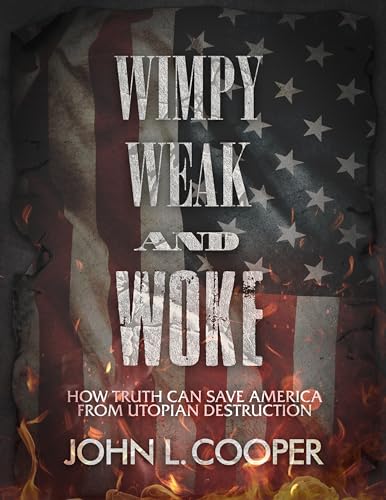
Book Review: Wimpy, Weak, & Woke

Wimpy, Weak, & Woke
by John L. Cooper

My rating: 4 / 5
Genre: Christian nonfiction

In this book, Skillet lead singer John Cooper dives into philosophies of the past that have led to the various mindsets of today, in which Christianity is reviled and immorality is revered. The amount of research and work put into this book is impressive, and I wish I could understand it better. As he says himself in the book, it’s deep stuff, but I was able to glean enough to follow his connections between ideas put forward by people like Hegel, Marx, and Freud and ideas that pervade society today. I wonder if some of what is in the book could have been summarized more, but Cooper does follow almost every direct quote with a more plain-speak paraphrase of what is being stated.

Most of what I took away from this is that people who hate God will try to justify their sinful lives by making up outlandish, unfounded ideas about reality, nature, and the very existence of man. And other people who also feel that God or “religion” is too restrictive are all too happy to follow along with these ideas that to a rational thinker make absolutely no sense.

The truth is that there is no “good” without God. There will be no perfect happiness on this earth, and denying that absolute truth exists that that the Bible provides that for us doesn’t make it not true. Trying to establish a life or civilization on shifting truth is lunacy, and it will not last long before everything crumbles. That’s what we’re dealing with in America now (probably other places too, but I’m not qualified to speak on that), and it can be a little scary if we don’t remember that God is in control, is never taken by surprise, and will absolutely win in the end.

Find out more about Wimpy, Weak, & Woke and Cooper’s band Skillet

See what I’m reading next.

If you’ve read this book, or read it in the future, feel free to let me know what you think!

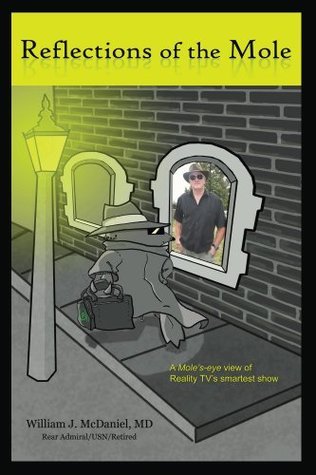
Book Review: Reflections of the Mole

Reflections of the Mole
by Bill McDaniel

My rating: 5 / 5
Genre: Memoir

My husband and I were huge fans of The Mole back in the day; it’s really the only non-cooking-related reality show I’ve ever watched. I actually watched the 2 regular seasons with my teenage daughter, and then I found out about this book, written by (spoiler alert) the Mole from season 2. The book is exactly what I was hoping for: a walk-through of much of the filming of season 2—the games, the suspicions, the twists. After each elimination, there’s even something about the eliminated player, a sort of “aftermath” section, including some written by those other players. McDaniel also talks about his life before The Mole, all the way back to his childhood. His style is conversational, and I really enjoyed being able to get a glimpse behind the scenes of the show and into the mind of the man who was placed into the game to cause trouble. I would say that if you are/were a fan of the show, you definitely might enjoy this book. Otherwise, I doubt you’d have much interest.

Find out more about Reflections of the Mole

See what I’m reading next.

If you’ve read this book, or read it in the future, feel free to let me know what you think!

Book Review: Nazi Architects of the Holocaust

Nazi Architects of the Holocaust
by Corona Brezina

My rating: 4 / 5
Genre: Middle grade nonfiction

I read this book to fulfill a nonfiction requirement for a reading challenge at my local library. It’s meant to give kids an understanding of the Nazi party’s rise to power in Germany and how the camps evolved to be part of the “final solution.”  Complete with pictures that shed some light on the situation without being too graphic for younger readers, one of the things that struck me as I read, as is also mentioned in the text, is how normal these men looked. Hitler, who has become the face of the Holocaust for many of us, brings to mind thoughts of darkness and evil. But other men who were just as much a part of the murder of millions wouldn’t be easily recognizable to me as being part of this atrocity. They’re just men, though their names bring to mind giants and monsters, at least in my mind.

As an adult, there is not a lot of information here I didn’t already know, but there are details given I’ve probably forgotten over the years and maybe some I didn’t know. I don’t know for sure the exact age group this is meant for, but I’d guess around 10-12. Though some of the information can be difficult to follow, and in general it would probably be good for a parent to be on hand to discuss some of the information in the book, I think it could be a good book for kids to learn some facts about this time in history. It’s also part of a series of other books related to the Holocaust, so they could all be worth checking out.

Find out more about Nazi Architects of the Holocaust

See what I’m reading next.

If you’ve read this book, or read it in the future, feel free to let me know what you think!
Book Review: We Bought a Zoo

We Bought a Zoo
by Benjamin Mee
Read by Gildart Jackson

My rating: 3 / 5
Genre: Memoir

Benjamin Mee tells the story of how he went from a DIY writer to a zoo owner, along with his family, and all of the difficulty that came with purchasing the zoo and getting the license to run it. Though normally, I don’t have a lot of negative to say about an autobiography or memoir, understanding that the author has shared what they wanted to share, whether I wish there was more or less of anything. I will say, though, that this book was quite slow and dry for a while. It picked up a lot when they actually acquired the zoo, and I especially enjoyed the various stories about the animals.

Various parts pertaining to Mee’s wife’s decline and death reminded me of my mom, who died just over a year ago from a quick-moving form of dementia. Mee’s enjoyment in spending time with her, even though that extra time was spent with him taking care of her in ways that aren’t so romantic, meant a lot to me. His difficulty with coping with his loss and the things that would remind him of his wife made me think of my husband—not that he’s gone, but how I think he’d be if he lost me, especially the part about various treats he would buy for her at the store. My husband does that a lot, and I can imagine just going grocery shopping being hard on him.

My least favorite thing about the book is Mee’s very strong evolution-as-fact worldview, which permeates most of the book. He even uses it to explain how people deal with loss, saying we’ve evolved to be used to the idea that a loved one might not come back from “hunting” or whatever. I’ve got news for Mee and anyone else with this mindset—we were not created to accept death. We were created to be eternal, and though man messed that up, God provided a way for us to live forever with Him through the sacrifice of his Son. I disagreed with a lot of Mee’s worldview, but I didn’t factor that into my rating. In an autobiography, I fully expect to get the author’s unadulterated worldview. Whether or not I would recommend this book for others, it’s hard to say, to be honest. Those who are interested in the business side of zoos may enjoy it, but as I said, it was a bit dry to me. If you’ve seen the movie and want to know if the book is similar, I haven’t seen the movie, but I’ve read that a lot of creative license was taken in making it.

Find out more about We Bought a Zoo

See what I’m reading next.

If you’ve read this book, or read it in the future, feel free to let me know what you think!
Book Review: Faith, Hope and Hilarity

Faith, Hope and Hilarity
by Dick Van Dyke

My rating: 3 / 5
Genre: Humor

Kind of a religious “Kids Say the Darndest Things,” I found this old book at a thrift store and thought I’d give it a try, since I’ve always liked Dick Van Dyke. It’s basically a collection of funny things kids think and say about various religious matters. Though the heavy focus is on Christianity/Catholicism, there are a few bits about kids in the Jewish faith as well. Van Dyke inserts his own thoughts about religion and its importance here and there, which I don’t really know how to reconcile with what he says in his much-more-recent book, Keep Moving, that basically no one can really know the truth about God. He seems a lot more certain about the truth about God in this book. Though I question some of the theology in the book. Note, most of it is information “presented” by kids and not meant to present theology, but there are still some clear statements made. For example, the one that really baffled me, is the statement that a kid got a question wrong on a quiz when she answered that God created light first. Since He did create light first, I’m not sure how that could have been a wrong answer.

Van Dyke’s personal faith aside, the book suffers from being out of date. Some references made are lost on me, due to not being around until over a decade after it was published (1970), and I found myself wishing he’d give just a little bit of context now and then. The topics of the stories are organized a little weirdly, and transitions are awkward. The illustrations provide a little extra humor now and then, but they’re pretty cartoonish and not necessarily needed in a book for adults. Overall, it’s a quick, amusing read, but nothing outstanding or hilarious and didn’t age well.

Find out more about Faith, Hope and Hilarity

See what I’m reading next.

If you’ve read this book, or read it in the future, feel free to let me know what you think!
Book Review: Beyond the Wand

Beyond the Wand
by Tom Felton
Read by the author

My rating: 5 / 5
Genre: Memoir

Tom Felton, who played Draco Malfoy in the Harry Potter films, shares experiences from his time on set as well as parts of his life before, during, and after the movies. I listened to the audiobook like I always try to do with books like this that are narrated by the author. The parts of his life that he chose to share are best heard in Felton’s own voice, with some chuckles now and then and a conversational style that brings the stories to life. 

To put my interest in Felton as Draco Malfoy into perspective, I only read the HP books for the first time a few years ago and have watched the movies once through (working on twice now with my daughter, who’s watching them after she reads each book for the first time). I’m actually not a huge fan of the movies overall, but that did not diminish my interest in and enjoyment of this book. The last section talks about Felton’s time in rehab for an alcohol…overindulgence (he’s reluctant to call it an addiction, so I certainly won’t contradict him), which really seems to boil down to a need for healthy relationships in his life. I appreciate that Felton was willing to include this in his memoir, since it could certainly make some people think poorly of him. Personally, I applaud him for recognizing his shortcomings and needs and his willingness to talk about these issues. Not to sound preachy, but I know that anything short of accepting Christ as his savior will be a shallow, temporary fix, but all I can do is pray that God will lead Felton to the truth in His way and timing. I’m really glad I read this book and recommend it for fans of the Harry Potter movies or Tom Felton in general.

Find out more about Beyond the Wand

See what I’m reading next.

If you’ve read this book, or read it in the future, feel free to let me know what you think!

Book Review: The Diary of a Young Girl

The Diary of a Young Girl
by Anne Frank

My rating: 4 / 5
Genre: Memoir

It’s difficult to rate or review a book like this, which was written with no intention to become something read by others. Though partway through her time in hiding, Anne heard that diaries and other writings kept by people during this time would be of interest to the world later and started to make some edits to her diary, it’s still mostly raw introspection and secret thoughts. I think also that the translation left a bit to be desired at times, as there were sections that didn’t really make a lot of sense to me. But overall, I would say that, though the Franks and others in the Secret Annex were in hiding during the Holocaust and that fear and pain permeates the diary entries, it’s really more a study of being in hiding and living in close quarters with a group of people who have vastly different (or sometimes too similar) personalities. These people did not get along, even within their own family. Anne discovered that her family wasn’t as close as she thought they were and feels completely alone almost all the time. Anne herself is almost painfully naïve and immature at times, even while she talks about how much she thinks she’s matured and learned. 

My thirteen-year-old daughter decided she wanted to read this book, so I thought it was a good time to re-visit it myself. She was incredibly uncomfortable during one particular part that was understandably omitted from earlier publishings of the diary, and I would say that it’s a wholly unnecessary section (Anne describing in quite vivid detail what a female’s genitalia looks like). I really can’t imagine why Anne felt the need to write about that in her diary, but again, she didn’t expect it to be read by millions of people over the next several decades. In the end, would I say this is necessary reading for teenagers or for those interested in learning about the Holocaust? No. I’d actually recommend quite a few other books before this one (The Hiding Place and Night for starters). But it certainly does provide some insight into something that a lot of people went through during a very dark time.

Find out more about The Diary of a Young Girl

See what I’m reading next.

If you’ve read this book, or read it in the future, feel free to let me know what you think!

Book Review: Tasty

Tasty: A History of Yummy Experiments
by Victoria Grace Elliott

My rating: 3.5 / 5
Genre: Middle grade nonfiction, graphic novel

This history of certain foods told by “food sprites” in a colorful graphic novel is a fun, unique book for kids. It may work better for the age group it’s intended for than it did for me, not that I didn’t enjoy it overall. However, I had hoped for a little more of the science promised at the beginning of the book, especially at certain points when a statement is made that leaves me wanting to know more (like how does the wheel shape help cheese stay dry and avoid spoiling?). It makes sense that this wouldn’t be a comprehensive look at the foods chosen to be included—cheese, pickles, gelatin, etc., but some of the information goes by so fast, it’s hard to absorb it all.

Outside of the history told, there’s (sort of) a story going on with the sprites, but it’s really confusing to me. The main sprite, Peri, seems to have some kind of rivalry with a water sprite that pops in to talk about liquids sometimes, but why? I have no idea. I guess the author felt that giving the sprites a little of their own story would make it more engaging to kids, but I paid little attention to their little asides, other than the bizarre contention between Peri and Maia, which stuck out quite a bit. And there’s a place in the pickles section where the characters cry, “THE SAUCE” like a battle cry, like something we’re supposed to “get”…but I don’t. Maybe some of this connects back to the pervious book by this author, Yummy: A History of Desserts, but not having read that one, I can’t say for sure. While I do think that kids who are interested in food or cooking would probably enjoy this graphic novel, I don’t know that I’d recommend it for adults, unless they’re really into food history. Though in that case, they probably already know all of, or more than, what this book provides.

Thank you to Netgalley and Random House Children’s Books for providing me a copy of this book to review.

Find out more about Tasty

See what I’m reading next.

If you’ve read this book, or read it in the future, feel free to let me know what you think!

Book Review: The Faithful Spy

The Faithful Spy
by John Hendrix

My rating: 5 / 5
Genre: Middle grade nonfiction, graphic novel

I read this book after my 13-year-old daughter, who read it for book club at the library. It’s an impressive mixture of information about Bonhoeffer, who was part of the conspiracy to stop Hitler before and during WWII, and a concise picture of how Hitler came to power in Germany and then went on to conquer lands around it. Bonhoeffer’s struggle to accept what was happening in Germany and then figure out how he should act in response is well presented, and I can really appreciate his (and others’) difficulty trying to reconcile his faith and God’s commands with wanting to do what he/they can to stop Hitler’s reign of terror. It presents the reader with the question of what he/she would do in the same situation.

Hendrix does a great job of presenting all of this in a way that is easy to follow, not just because of the artwork, but because of the clear, simple wording he uses. My daughter isn’t exactly a history buff, and frankly, neither am I, but we were both caught up in the book. I gained a lot of insight into the history around WWII, things that I either never knew or forgot from my school days. The artwork is stunning and poignant, with symbolism here and there like Hitler as a wolf or the Nazi party as rats invading the “cellar” of the German government. A few of the images are a little dark, not that the subject matter doesn’t lend itself to that, but it’s something to keep in mind for younger readers. While I’d recommend pre-reading for parents of younger kids or those prone to be sensitive, I highly recommend this book for teens and even adults.

Find out more about The Faithful Spy

See what I’m reading next.

If you’ve read this book, or read it in the future, feel free to let me know what you think!

Book Review: Talking as Fast as I Can

Talking as Fast as I Can
by Lauren Graham
Read by the author

My rating: 4.5 / 5
Genre: Memoir

Published around the time that the Gilmore Girls mini-series, A Year in the Life, came out, Lauren Graham talks briefly about what it was like the first time around and in depth about what it was like the second time around, as well as touching on other major projects and influences in her life.

I enjoyed listening to this collection of various stories and essays in Graham’s own voice (since I listened to the audiobook). As a fan and frequent binge-watcher of Gilmore Girls, I appreciated learning a little about Graham’s life and her thoughts about her time on the original show as well as her return for the mini-series. I wish I had liked the mini-series more, but that didn’t dampen my appreciation of that section of the book. It was a little sad, though, to hear about her relationship with Peter Krause (whose last name I have mispronounced for years now), knowing that that relationship has ended in more recent years.

I will say (with some sadness) that this is the kind of celebrity memoir that many people probably read and say that the author didn’t give us the true picture, because it didn’t talk about people she’s worked with in a bad light or go into deep detail on most subjects. I prefer not to expect more from anyone’s memoirs (celebrity or otherwise) than they are willing and able to share. The only detraction from the book, for me, was the recurring joke where Graham says “Hi” to various talk show or news show personalities, assuming they will eventually read this book. It was kinda amusing at first, but it started to feel way too much like unnecessary name-dropping, especially when there were 4-5 all clumped together. But outside of that, I’m really glad I read this book and recommend it for fans of Gilmore GirlsParenthood, or Lauren Graham in general.

(There are a few pictures throughout the book, so if you borrow a digital audiobook that doesn’t include the pictures, like I did, you’ll have to borrow the actual book if you want to see the pictures.)

Find out more about Talking as Fast as I Can

See what I’m reading next.

If you’ve read this book, or read it in the future, feel free to let me know what you think!