Book Review: What’s So Funny

What’s So Funny
by Tim Conway with Jane Scovell

My rating: 5 / 5
Genre: Autobiography

In this book, Tim Conway discusses his life, both before and after he broke into show business. Though his time in show business is most likely what most people want to know about, the chapters about his home life and his time in the Army were enjoyable to read about as well. Conway’s depiction of his father as a well-meaning but somewhat clumsy/dangerous man and his mother’s Romani ways are fun to read about, and it’s great insight to what made Conway the funny man he was.

I may be a bit too young to have watched The Carol Burnett Show, but I’ve seen clips, and I saw Tim Conway in movies and other things, especially growing up. I’ve always felt he was a true comic, and I loved reading about how he would purposely go off-script during The Carol Burnett Show just to make the others crack up. He even mentions a similar moment in the movie The Private Eyes, which holds a special place in my heart, since I watched that movie many, many times when I was younger. Conway manages to strike a balance between modest, kind, and funny in this autobiography that made it a joy to read. I recommend it for all of his fans, as well as anyone who is interested in celebrity memoirs in general.

Find out more about What’s So Funny

See what I’m reading next.

If you’ve read this book, or read it in the future, feel free to let me know what you think!

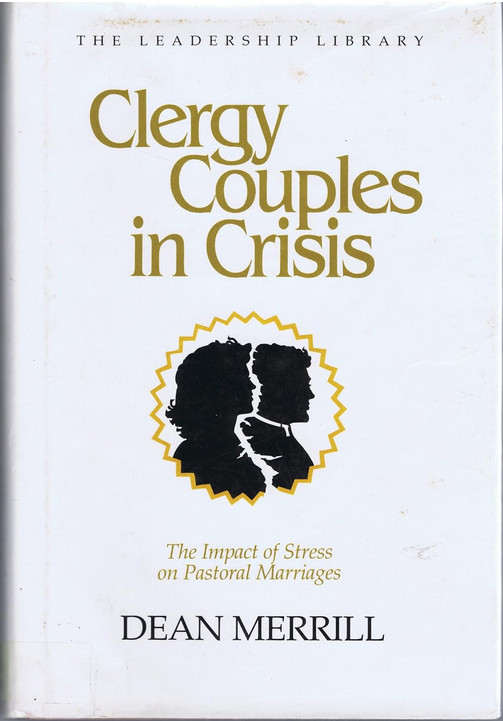
Book Review: Clergy Couples in Crisis

Clergy Couples in Crisis
by Dean Merrill

My rating: 5 / 5
Genre: Christian non-fiction

I never had any inkling of a thought about possibly being a pastor’s wife. My husband and I have been married for almost 25 years, so this is not something I was expecting to suddenly come into my life. While he goes through the schooling to become a pastor, there are no courses for me. But I’ve started to accumulate a list of books that might help, on a variety of topics, this time focusing on the relationship between a pastor and wife. This book is full of vignettes of clergy couples who have faced a variety of difficulties. Some were resolved at the time the book were published—both favorably and unfavorably—and some were still seeking resolution. Each account is followed by an analysis by a counselor who works with pastors and their families.

Taken as a whole, this book can be a little scary as a glimpse into a possible future as a pastor’s wife. And one thing I took away from the book is that, no matter how much we try to be deliberate with our relationship and spending time together, there may be some things that are simply out of our control. Not being a newly married couple might make some difference in some of the areas explored in this book. We’ll go into this with 25 years of experience in finding ways to resolve our issues, but also with 25 years of issues that could become exacerbated when the stresses of ministry are added.

There were stories that made me think of my younger sister and her husband, who lived in the Dominican Republic for 8 years, teaching at a school for troubled American teens. And one that I felt could benefit another sister and her husband, who aren’t in ministry, but some of the issues that arise in these stories aren’t specific to pastoral couples. Overall, I’m really glad I read this book. It may have been published 40 years ago, and some of the stories took place even a decade or so before that, but the truths and advice within are timeless.

Find out more about Clergy Couples in Crisis

See what’s coming up.

If you’ve read this book, or read it in the future, feel free to let me know what you think!
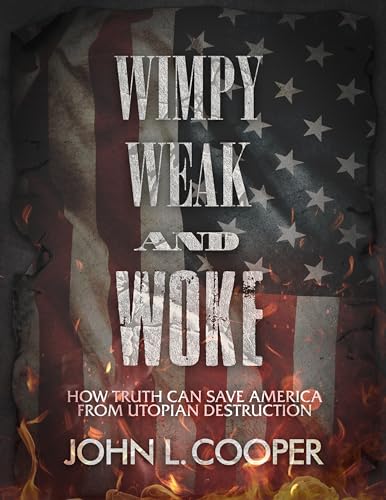
Book Review: Wimpy, Weak, & Woke

Wimpy, Weak, & Woke
by John L. Cooper

My rating: 4 / 5
Genre: Christian nonfiction

In this book, Skillet lead singer John Cooper dives into philosophies of the past that have led to the various mindsets of today, in which Christianity is reviled and immorality is revered. The amount of research and work put into this book is impressive, and I wish I could understand it better. As he says himself in the book, it’s deep stuff, but I was able to glean enough to follow his connections between ideas put forward by people like Hegel, Marx, and Freud and ideas that pervade society today. I wonder if some of what is in the book could have been summarized more, but Cooper does follow almost every direct quote with a more plain-speak paraphrase of what is being stated.

Most of what I took away from this is that people who hate God will try to justify their sinful lives by making up outlandish, unfounded ideas about reality, nature, and the very existence of man. And other people who also feel that God or “religion” is too restrictive are all too happy to follow along with these ideas that to a rational thinker make absolutely no sense.

The truth is that there is no “good” without God. There will be no perfect happiness on this earth, and denying that absolute truth exists that that the Bible provides that for us doesn’t make it not true. Trying to establish a life or civilization on shifting truth is lunacy, and it will not last long before everything crumbles. That’s what we’re dealing with in America now (probably other places too, but I’m not qualified to speak on that), and it can be a little scary if we don’t remember that God is in control, is never taken by surprise, and will absolutely win in the end.

Find out more about Wimpy, Weak, & Woke and Cooper’s band Skillet

See what I’m reading next.

If you’ve read this book, or read it in the future, feel free to let me know what you think!
Book Review: Someday, Someday, Maybe

Someday, Someday, Maybe
by Lauren Graham
Read by the author

My rating: 3.5 / 5
Genre: Fiction (minorly historical)

Fanny Banks is only 6 months away from the self-imposed deadline of really getting somewhere in her acting career. But she has no agent, no real connections, and really not much else going for her either. The only forward motion she really has is the upcoming showcase for her acting class, which has a precedence of getting the performers noticed by the right people. But will it be the break she needs?

Set in the 90s, though I’m not sure why, exactly—maybe because that was the time period that Graham herself was trying to break into acting, or maybe the acting scene in NY has changed enough since the 90s that she just preferred to stick to that time—this story meanders a bit more than I prefer. Fanny is fairly unfocused, despite her looming deadline, and it doesn’t really get any better as the book progresses. I’m certain I got a pretty realistic look at what trying to break into acting looks like, and I have to say I’m glad to have never been a part of this scene, or the big-city life in general. Graham unsurprisingly does a great job narrating, I just wish there had been more meat to the plot. Or maybe a slightly more solid ending. Though that may also be an accurate look at what trying to “make it” can feel like—as if one never really knows when one has “made it.” The book isn’t bad, by any means, and I’m sure there are people out there that it is much better suited for. If you think you might be one of them, by all means, check out reviews of those with whom the book resonated more at the link below.

Find out more about Someday, Someday, Maybe

See what I’m reading next.

If you’ve read this book, or read it in the future, feel free to let me know what you think!

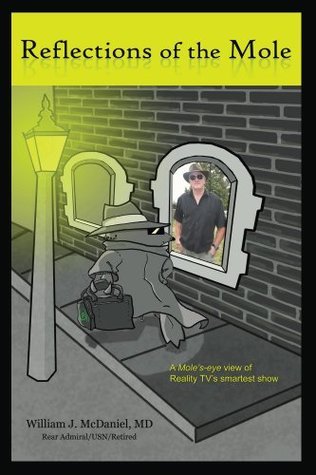
Book Review: Reflections of the Mole

Reflections of the Mole
by Bill McDaniel

My rating: 5 / 5
Genre: Memoir

My husband and I were huge fans of The Mole back in the day; it’s really the only non-cooking-related reality show I’ve ever watched. I actually watched the 2 regular seasons with my teenage daughter, and then I found out about this book, written by (spoiler alert) the Mole from season 2. The book is exactly what I was hoping for: a walk-through of much of the filming of season 2—the games, the suspicions, the twists. After each elimination, there’s even something about the eliminated player, a sort of “aftermath” section, including some written by those other players. McDaniel also talks about his life before The Mole, all the way back to his childhood. His style is conversational, and I really enjoyed being able to get a glimpse behind the scenes of the show and into the mind of the man who was placed into the game to cause trouble. I would say that if you are/were a fan of the show, you definitely might enjoy this book. Otherwise, I doubt you’d have much interest.

Find out more about Reflections of the Mole

See what I’m reading next.

If you’ve read this book, or read it in the future, feel free to let me know what you think!
Book Review: Nazi Architects of the Holocaust

Nazi Architects of the Holocaust
by Corona Brezina

My rating: 4 / 5
Genre: Middle grade nonfiction

I read this book to fulfill a nonfiction requirement for a reading challenge at my local library. It’s meant to give kids an understanding of the Nazi party’s rise to power in Germany and how the camps evolved to be part of the “final solution.”  Complete with pictures that shed some light on the situation without being too graphic for younger readers, one of the things that struck me as I read, as is also mentioned in the text, is how normal these men looked. Hitler, who has become the face of the Holocaust for many of us, brings to mind thoughts of darkness and evil. But other men who were just as much a part of the murder of millions wouldn’t be easily recognizable to me as being part of this atrocity. They’re just men, though their names bring to mind giants and monsters, at least in my mind.

As an adult, there is not a lot of information here I didn’t already know, but there are details given I’ve probably forgotten over the years and maybe some I didn’t know. I don’t know for sure the exact age group this is meant for, but I’d guess around 10-12. Though some of the information can be difficult to follow, and in general it would probably be good for a parent to be on hand to discuss some of the information in the book, I think it could be a good book for kids to learn some facts about this time in history. It’s also part of a series of other books related to the Holocaust, so they could all be worth checking out.

Find out more about Nazi Architects of the Holocaust

See what I’m reading next.

If you’ve read this book, or read it in the future, feel free to let me know what you think!

Book Review: We Bought a Zoo

We Bought a Zoo
by Benjamin Mee
Read by Gildart Jackson

My rating: 3 / 5
Genre: Memoir

Benjamin Mee tells the story of how he went from a DIY writer to a zoo owner, along with his family, and all of the difficulty that came with purchasing the zoo and getting the license to run it. Though normally, I don’t have a lot of negative to say about an autobiography or memoir, understanding that the author has shared what they wanted to share, whether I wish there was more or less of anything. I will say, though, that this book was quite slow and dry for a while. It picked up a lot when they actually acquired the zoo, and I especially enjoyed the various stories about the animals.

Various parts pertaining to Mee’s wife’s decline and death reminded me of my mom, who died just over a year ago from a quick-moving form of dementia. Mee’s enjoyment in spending time with her, even though that extra time was spent with him taking care of her in ways that aren’t so romantic, meant a lot to me. His difficulty with coping with his loss and the things that would remind him of his wife made me think of my husband—not that he’s gone, but how I think he’d be if he lost me, especially the part about various treats he would buy for her at the store. My husband does that a lot, and I can imagine just going grocery shopping being hard on him.

My least favorite thing about the book is Mee’s very strong evolution-as-fact worldview, which permeates most of the book. He even uses it to explain how people deal with loss, saying we’ve evolved to be used to the idea that a loved one might not come back from “hunting” or whatever. I’ve got news for Mee and anyone else with this mindset—we were not created to accept death. We were created to be eternal, and though man messed that up, God provided a way for us to live forever with Him through the sacrifice of his Son. I disagreed with a lot of Mee’s worldview, but I didn’t factor that into my rating. In an autobiography, I fully expect to get the author’s unadulterated worldview. Whether or not I would recommend this book for others, it’s hard to say, to be honest. Those who are interested in the business side of zoos may enjoy it, but as I said, it was a bit dry to me. If you’ve seen the movie and want to know if the book is similar, I haven’t seen the movie, but I’ve read that a lot of creative license was taken in making it.

Find out more about We Bought a Zoo

See what I’m reading next.

If you’ve read this book, or read it in the future, feel free to let me know what you think!

Book Review: Faith, Hope and Hilarity

Faith, Hope and Hilarity
by Dick Van Dyke

My rating: 3 / 5
Genre: Humor

Kind of a religious “Kids Say the Darndest Things,” I found this old book at a thrift store and thought I’d give it a try, since I’ve always liked Dick Van Dyke. It’s basically a collection of funny things kids think and say about various religious matters. Though the heavy focus is on Christianity/Catholicism, there are a few bits about kids in the Jewish faith as well. Van Dyke inserts his own thoughts about religion and its importance here and there, which I don’t really know how to reconcile with what he says in his much-more-recent book, Keep Moving, that basically no one can really know the truth about God. He seems a lot more certain about the truth about God in this book. Though I question some of the theology in the book. Note, most of it is information “presented” by kids and not meant to present theology, but there are still some clear statements made. For example, the one that really baffled me, is the statement that a kid got a question wrong on a quiz when she answered that God created light first. Since He did create light first, I’m not sure how that could have been a wrong answer.

Van Dyke’s personal faith aside, the book suffers from being out of date. Some references made are lost on me, due to not being around until over a decade after it was published (1970), and I found myself wishing he’d give just a little bit of context now and then. The topics of the stories are organized a little weirdly, and transitions are awkward. The illustrations provide a little extra humor now and then, but they’re pretty cartoonish and not necessarily needed in a book for adults. Overall, it’s a quick, amusing read, but nothing outstanding or hilarious and didn’t age well.

Find out more about Faith, Hope and Hilarity

See what I’m reading next.

If you’ve read this book, or read it in the future, feel free to let me know what you think!

Book Review: Beyond the Wand

Beyond the Wand
by Tom Felton
Read by the author

My rating: 5 / 5
Genre: Memoir

Tom Felton, who played Draco Malfoy in the Harry Potter films, shares experiences from his time on set as well as parts of his life before, during, and after the movies. I listened to the audiobook like I always try to do with books like this that are narrated by the author. The parts of his life that he chose to share are best heard in Felton’s own voice, with some chuckles now and then and a conversational style that brings the stories to life. 

To put my interest in Felton as Draco Malfoy into perspective, I only read the HP books for the first time a few years ago and have watched the movies once through (working on twice now with my daughter, who’s watching them after she reads each book for the first time). I’m actually not a huge fan of the movies overall, but that did not diminish my interest in and enjoyment of this book. The last section talks about Felton’s time in rehab for an alcohol…overindulgence (he’s reluctant to call it an addiction, so I certainly won’t contradict him), which really seems to boil down to a need for healthy relationships in his life. I appreciate that Felton was willing to include this in his memoir, since it could certainly make some people think poorly of him. Personally, I applaud him for recognizing his shortcomings and needs and his willingness to talk about these issues. Not to sound preachy, but I know that anything short of accepting Christ as his savior will be a shallow, temporary fix, but all I can do is pray that God will lead Felton to the truth in His way and timing. I’m really glad I read this book and recommend it for fans of the Harry Potter movies or Tom Felton in general.

Find out more about Beyond the Wand

See what I’m reading next.

If you’ve read this book, or read it in the future, feel free to let me know what you think!

Book Review: The Diary of a Young Girl

The Diary of a Young Girl
by Anne Frank

My rating: 4 / 5
Genre: Memoir

It’s difficult to rate or review a book like this, which was written with no intention to become something read by others. Though partway through her time in hiding, Anne heard that diaries and other writings kept by people during this time would be of interest to the world later and started to make some edits to her diary, it’s still mostly raw introspection and secret thoughts. I think also that the translation left a bit to be desired at times, as there were sections that didn’t really make a lot of sense to me. But overall, I would say that, though the Franks and others in the Secret Annex were in hiding during the Holocaust and that fear and pain permeates the diary entries, it’s really more a study of being in hiding and living in close quarters with a group of people who have vastly different (or sometimes too similar) personalities. These people did not get along, even within their own family. Anne discovered that her family wasn’t as close as she thought they were and feels completely alone almost all the time. Anne herself is almost painfully naïve and immature at times, even while she talks about how much she thinks she’s matured and learned. 

My thirteen-year-old daughter decided she wanted to read this book, so I thought it was a good time to re-visit it myself. She was incredibly uncomfortable during one particular part that was understandably omitted from earlier publishings of the diary, and I would say that it’s a wholly unnecessary section (Anne describing in quite vivid detail what a female’s genitalia looks like). I really can’t imagine why Anne felt the need to write about that in her diary, but again, she didn’t expect it to be read by millions of people over the next several decades. In the end, would I say this is necessary reading for teenagers or for those interested in learning about the Holocaust? No. I’d actually recommend quite a few other books before this one (The Hiding Place and Night for starters). But it certainly does provide some insight into something that a lot of people went through during a very dark time.

Find out more about The Diary of a Young Girl

See what I’m reading next.

If you’ve read this book, or read it in the future, feel free to let me know what you think!