Book Review: God Loves Me and I Love Myself!

God Loves Me and I Love Myself!
by Mark DeJesus

My rating: 1.5 / 5
Genre: Christian non-fiction

I’m not going to pretend that I went into this book with an open mind. The subject matter and the little bit I heard from the author in a video threw up so many red flags, but I read the book because my sister told me she was reading it to help her through some difficulties in her life. The author posits that a lack of self-love is at the root of many (even most) people’s mental health struggles and relationship issues. This is a super-boiled-down explanation, but I don’t want to take a long time to explain, nor do I want to spend much time on this review, lest it turn into a rant. The truth is, it is very difficult for me to put words to my concerns about this point of view and this book, but I felt uneasy throughout most of it. The author does quickly lay to rest the immediate thought that telling people that they need to love themselves more will lead them to become self-centered, but on the other hand, when he gets to the part about putting the ideas from this book into action, it’s very self-centered.

One of the biggest things I questioned by the end of this book is where God really fits into this. Sure, the author talks about God and about the Bible plenty, even quoting some verses. But it’s almost exclusively about God loving us (it’s right there in the title), and almost zero mention of us loving God. In fact, while I was reading, I highlighted this quote: “God will love you, even if you decide to never serve him!” and asked, “Though if that’s the case, does the person really love God?” Yes, God doesn’t require us to serve him in order for us to be saved—that’s the entire basis of salvation by grace vs. works. But if we truly love God, we will want to serve Him, and at no point is that really discussed in this book. It’s also contradictory, in that one of the ways the author says to start loving yourself more is by helping others, yet multiple times the book says that helping others when you don’t love yourself enough can lead to burnout.

The author also quotes Ephesians 5:28 (“In this same way, husbands ought to love their wives as their own bodies. He who loves his wife loves himself.”) but conveniently stops without ever addressing verse 29 (“After all, no one ever hated their own body, but they feed and care for their body, just as Christ does the church…”). The author maintains that it’s difficult to love others as we love ourselves when we don’t or don’t know how to love ourselves, yet Paul states that we generally love ourselves enough to keep ourselves alive. DeJesus actually sees the “as you love yourself” part as a command, but it seems more like a given to me. I understand that some people do harm themselves and that there are plenty of people with psychological issues that involve self-hate, but I think this whole thing is more nuanced than the author allows for in this book. In fact, so much of this book was repetitive and thus felt shallow.

I don’t know if the intended audience for this book is everyone or specifically Christians. It seemed like it was targeted at Christians most of the time, but when it tells us that we need to “[position] ourselves for being filled up with God’s love,” I question why I wouldn’t already be filled with God’s love, if I’ve accepted Christ as my savior. Maybe what the author means is that we need to let ourselves “feel” God’s love more, but that opens up a whole new argument for me, since “feeling” God’s love is not always possible or easy for me, but that doesn’t mean I don’t believe 100% that God loves me. I’m also not really sure where sin enters into this, since more than once, DeJesus posits that self-love means accepting yourself with no strings attached. While I understand that God doesn’t want us to constantly live in shame over past sins, I feel like this removes the conviction of current sins. Even “lawlessness” as referenced in Matthew 24:12, NKJV (“And because lawlessness will abound, the love of many will grow cold.”) is attributed to broken hearts that cause us to fall into “darkness and destructive behaviors.” Maybe I’m nitpicking, but it feels like we’re glossing over sin here.

Some of DeJesus’s suggestions for how to begin to love oneself more made alarm bells ring in my head, since it feels too close to being New Age practices for me. At the very least, the suggested meditating, breathing in the spirit while breathing out toxicity, even words of affirmation, almost completely leave God out of the equation, instead focusing on myself.

Sadly, I completely understand why this book speaks to some people in their need, but I would have a difficult time believing that this way of thinking can affect lasting change. There is a chapter or so that I thought made some good points, but for the most part, it just felt empty to me. Granted, I’m definitely not its target audience, because though I don’t think I’d ever have described myself as being full of self-love, when I struggle with feeling worthless or unloved, I don’t hesitate to seek God through prayer and Bible reading. This book reminded me a lot of what I don’t care for about modern worship music. Generally speaking, there are a lot of songs about how broken we are, how God loves us right where we are, etc., and while none of that is false, I don’t think we’re meant to camp in that mindset. It’s important to spend time loving God, praising God, not just for what He has done for us, but for who He is—the power, wonder, majesty of His being. Maybe focusing more on how awesome He is, is really what we need to put things into perspective and boost our own moods. Like Job said in the depths of his despair, wishing he’d never been born, after God put things into perspective for him: “I am unworthy—how can I reply to you? I put my hand over my mouth. I spoke once, but I have no answer—twice, but I will say no more.” Job’s circumstances hadn’t gotten better (yet), but he knew that God was so much bigger than he could ever understand, and maybe that’s something we have forgotten in our modern world.

I guess I did end up spending a while on this review. There was just too much I wanted to say, and this only includes a portion of the highlights and notes I made while reading. It probably goes without saying, but I don’t recommend this book to anyone; I simply don’t think there’s enough substance, or the right substance, to be worthwhile.

Find out more about God Loves Me and I Love Myself!

See what’s coming up.

If you’ve read this book, or read it in the future, feel free to let me know what you think!

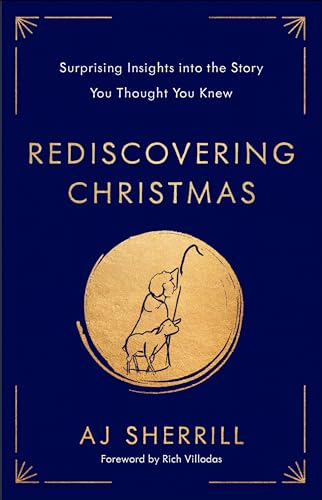
Book Review: Rediscovering Christmas

Rediscovering Christmas
by AJ Sherrill

My rating: 3 / 5
Genre: Christian non-fiction

After being a Christian for many years, it’s nice now and then to attempt to slow down and take a look at a well-known, often-heard or portrayed account from the Bible in a new light. That’s what this book promises to do. And indeed, are were several different deep dives into historical context and translation in this book that give insight to aspects of the “Christmas story” that most people may never have heard before. Much of it I have, however, from various sources, including my own recently retired pastor, in his attempts to not preach the same sermons every year at Christmas time. This is not a fault of the book or author, of course, it only means the book is probably better for someone who is newer to Christianity or has simply only viewed the surface of the events surrounding the birth of Christ.

The author makes some assertions about the intentions of biblical writers (Luke in particular) that I have never heard before; he may have taken some liberties and made some assumptions, but he often states some of these things as fact. I couldn’t help but question some things as I read (which of course we’re supposed to do as Christians). As an example, this quote from chapter 1: “Jesus is brought into being by the creative breath of God’s Spirit.” It seems to imply that Jesus did not exist before Mary conceived, but of course that isn’t true. He was/is God and has existed for eternity. Giving the author the benefit of the doubt, perhaps he only meant to say that Jesus was brought into “earthly existence” by the creative breath of God’s Spirit, and I was nitpicking without intending to. Whatever the case, between this and my notes in the previous paragraph, this book did not quite resonate with me like it was intended to. Because of some of the uncertainties I had about some of what I read, I don’t know that I could, in good conscience, recommend this book to anyone, but I will say that if you do read it, be sure to go to the Scriptures to verify anything you’re not certain of (which, again, you should do with anything that a fallible human professes about God or the Bible).

Thank you to Netgalley and WaterBrook & Multnomah for providing me a copy of this book to review.

Find out more about Rediscovering Christmas

See what’s coming up.

If you’ve read this book, or read it in the future, feel free to let me know what you think!

Book Review: Trust + Follow

Trust + Follow
by Maddie Joy Fischer

My rating: 4  / 5
Genre: Christian devotional

This book has 60 devotionals, which I read as intended, over the course of 60 days. The focus is on learning how to completely trust and follow Jesus, presuming that the reader is already a Christ-follower. I don’t have a lot to compare it to, since I haven’t read a lot of devotionals in the past (I generally prefer a more self-driven reading/studying of the Bible). I was surprised by how short the devotionals were, generally requiring only about 2 minutes to read each entry, but that might be common and certainly might be what some people prefer. They also seemed a bit shallow and repetitive for my taste. There were some here or there that hit home, though, so I don’t mean to sound like I didn’t appreciate the devotionals overall. Not that it’s her fault, but the author is a lot younger than I would expect, considering how much she talks about her experience and difficult things she’s gone through. I had no disagreements with any theology found in these pages, and overall, I’d say it would be a good daily devotional for a newer Christian or one looking to deepen their faith in Christ. I would, however, suggest supplementing it by reading more of the Bible yourself, maybe using one of the verses contained within each day’s devotional as a launching point.

I received a free review copy from the publisher in exchange for my honest unedited feedback.

Find out more about Trust + Follow

See what’s coming up.

If you’ve read this book, or read it in the future, feel free to let me know what you think!

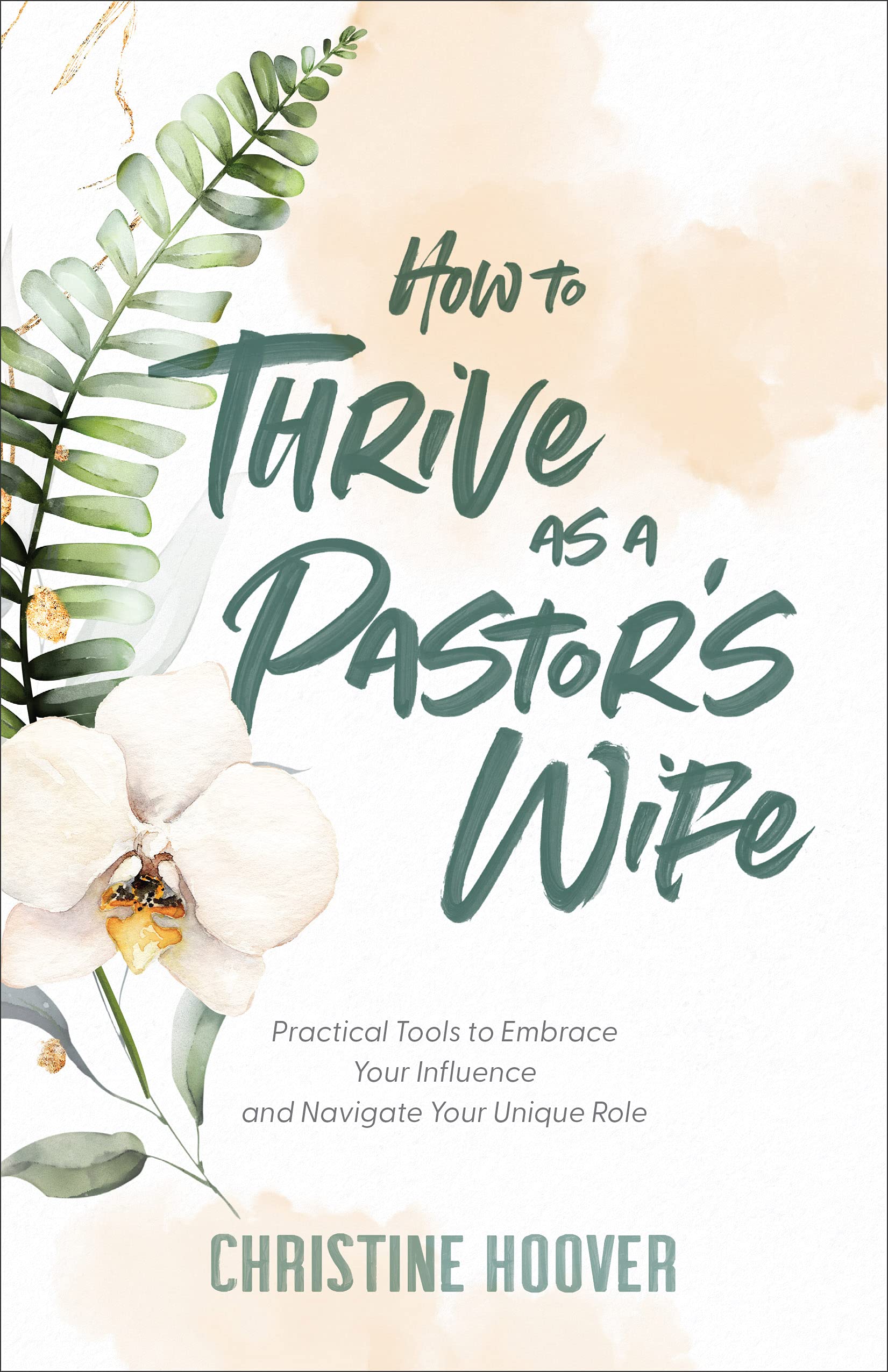
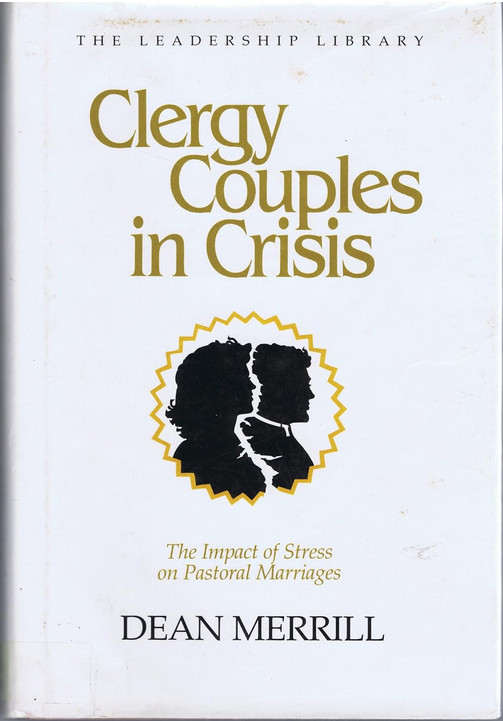
Book Review: Clergy Couples in Crisis

Clergy Couples in Crisis
by Dean Merrill

My rating: 5 / 5
Genre: Christian non-fiction
I never had any inkling of a thought about possibly being a pastor’s wife. My husband and I have been married for almost 25 years, so this is not something I was expecting to suddenly come into my life. While he goes through the schooling to become a pastor, there are no courses for me. But I’ve started to accumulate a list of books that might help, on a variety of topics, this time focusing on the relationship between a pastor and wife. This book is full of vignettes of clergy couples who have faced a variety of difficulties. Some were resolved at the time the book were published—both favorably and unfavorably—and some were still seeking resolution. Each account is followed by an analysis by a counselor who works with pastors and their families.

Taken as a whole, this book can be a little scary as a glimpse into a possible future as a pastor’s wife. And one thing I took away from the book is that, no matter how much we try to be deliberate with our relationship and spending time together, there may be some things that are simply out of our control. Not being a newly married couple might make some difference in some of the areas explored in this book. We’ll go into this with 25 years of experience in finding ways to resolve our issues, but also with 25 years of issues that could become exacerbated when the stresses of ministry are added.

There were stories that made me think of my younger sister and her husband, who lived in the Dominican Republic for 8 years, teaching at a school for troubled American teens. And one that I felt could benefit another sister and her husband, who aren’t in ministry, but some of the issues that arise in these stories aren’t specific to pastoral couples. Overall, I’m really glad I read this book. It may have been published 40 years ago, and some of the stories took place even a decade or so before that, but the truths and advice within are timeless.

Find out more about Clergy Couples in Crisis

See what’s coming up.

If you’ve read this book, or read it in the future, feel free to let me know what you think!
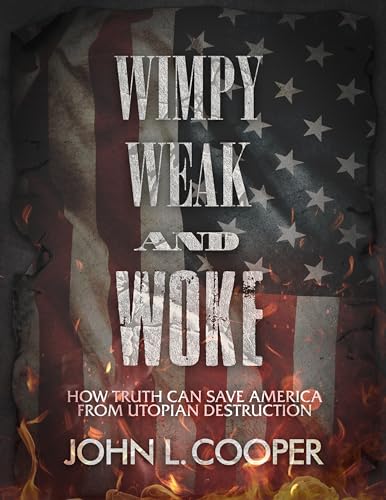
Book Review: Wimpy, Weak, & Woke

Wimpy, Weak, & Woke
by John L. Cooper

My rating: 4 / 5
Genre: Christian nonfiction

In this book, Skillet lead singer John Cooper dives into philosophies of the past that have led to the various mindsets of today, in which Christianity is reviled and immorality is revered. The amount of research and work put into this book is impressive, and I wish I could understand it better. As he says himself in the book, it’s deep stuff, but I was able to glean enough to follow his connections between ideas put forward by people like Hegel, Marx, and Freud and ideas that pervade society today. I wonder if some of what is in the book could have been summarized more, but Cooper does follow almost every direct quote with a more plain-speak paraphrase of what is being stated.

Most of what I took away from this is that people who hate God will try to justify their sinful lives by making up outlandish, unfounded ideas about reality, nature, and the very existence of man. And other people who also feel that God or “religion” is too restrictive are all too happy to follow along with these ideas that to a rational thinker make absolutely no sense.

The truth is that there is no “good” without God. There will be no perfect happiness on this earth, and denying that absolute truth exists that that the Bible provides that for us doesn’t make it not true. Trying to establish a life or civilization on shifting truth is lunacy, and it will not last long before everything crumbles. That’s what we’re dealing with in America now (probably other places too, but I’m not qualified to speak on that), and it can be a little scary if we don’t remember that God is in control, is never taken by surprise, and will absolutely win in the end.

Find out more about Wimpy, Weak, & Woke and Cooper’s band Skillet

See what I’m reading next.

If you’ve read this book, or read it in the future, feel free to let me know what you think!
Book Review: What If Love Is the Point?

What If Love Is the Point?
by Carlos PenaVega & Alexa PenaVega

My rating: 4 / 5
Genre: Memoir

Carlos Pena of Big Time Rush fame and Alexa Vega of Spy Kids fame, now married with kids, share the story of how they met, what transpired in their lives before that, and how Christ became the most important thing in their lives. Full disclosure before I start—I had never heard of Big Time Rush (as a show or a band) before reading this book and have seen the first Spy Kids movie once; it didn’t make a major impression, but I was basically an adult when it came out, so not really the target audience. The PenaVegas have a following on social media as well, though I’m not part of that sphere either. I was simply interested in hearing what they had to say about Living for Jesus in a Self-Consumed World (the subtitle of the book).

Overall, I was pleasantly surprised by this book. I anticipated fluff, but there really wasn’t much of that. While they don’t exactly go into the nitty gritty of sin, sacrifice, and redemption, it may not have been their intention to present the Gospel. On the other hand, they do seem to be addressing unbelievers, at least in part, and I’m not sure what is presented here is enough to really explain what one must to do have eternal life. This is the main reason I did not give the book 5 stars. As a memoir, though, it is pretty honest and vulnerable. Considering the fame that both of these two have had in their lives, it is no small feat to not be completely caught up in it, to see that there must be more to life than the emptiness that the world provides. I appreciated the way that Alexa, especially, pointed out the ways that she can look back and see God working in her life before she’d given it over to Him. It’s touching to me that she even admits that her first marriage might have been saved with a more full reliance on God, because even in the Christian culture today, many will justify their divorce as something that just couldn’t be avoided.

Carlos, on the other hand, is a really good example of someone who might be saved in the sense that they “said the words,” but the real relationship with God took years to develop to a point where he could trust Him more. These two have very different ways of responding to God, and I like how they view their marriage as complementary. My husband and I are much the same way, though in different ways. Though there will always be difficult times, a commitment to follow wherever God may be leading is important in a marriage, as well as in individual lives. That is one of the strongest messages that comes through in this book.

If you’re looking for a presentation of the Gospel message, you won’t really find it here. But you will find an open discussion of what it looks like to follow God and what it looks like to ignore Him. Though I’m sure single people can still get some insight from this book, it’s pretty heavy on wisdom for people who are married or in an otherwise serious relationship. Whether you’re a fan of one or both of the PenaVegas or have never heard of either, if the topic interests you, I recommend giving it a try.

Thank you to Netgalley and Thomas Nelson for providing me a copy of this book to review.

Find out more about What If Love Is the Point?

See what I’m reading next.

If you’ve read this book, or read it in the future, feel free to let me know what you think!

Book Review: Saint Patrick the Forgiver

Saint Patrick the Forgiver
by Ned Bustard

My rating: 5 / 5
Genre: Children’s Christian historical picture book (biographical)

I’m not Catholic, but then St. Patrick was never officially canonized as a saint either. I didn’t know much about St. Patrick, and what I did know was probably false. I appreciate that this book not only sheds light on a legendary figure’s true history, but does it in a way that kids can relate to, with simple, rhyming verse. I’ve never read anything by this author, nor have I seen his art before, but I did like the illustrations in the boo; they’re engaging and detailed. With a focus on Patrick first becoming a slave in Ireland and then later returning to preach the truth of the Gospel to them, it’s a great lesson on forgiveness. Specifically, Bustard explains clearly that true forgiveness, especially of one’s enemies, is only possible with Christ. I will never think of St. Patrick’s Day the same way again.

Thank you to Netgalley and InterVarsity Press for providing me a copy of this book to review.
Publication date: February 21, 2023

Find out more about Saint Patrick the Forgiver

See what I’m reading next.

If you’ve read this book, or read it in the future, feel free to let me know what you think!
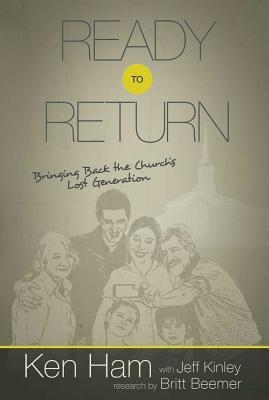
Book Review: Ready to Return

Ready to Return
by Ken Ham with Jeff Kinley

My rating: 5 / 5
Genre: Christian living

After exploring the phenomenon whereby a high percentage of 20-somethings who grew up in the church have left by college age in Already Gone, in this follow-up book, Ken Ham delves more deeply into why this happens and what we can do to try and stop it.

Though some of this book seems to be a rehash of the first book, that doesn’t make it any less important as a standalone book. The danger of a child growing up and not finding church relevant (and possibly, by extension, God) is still very real. I still agree that while one’s individual salvation may not be dependent on whether or not they believe in a literal six days of creation, amongst other ways the the world is trying to undermine the Bible, the impact that an individual’s belief can have on young Christians (meaning young in age or simply new to the faith) can be devastating. Put simply: If, in attempting to influence someone toward God, you put across to them that certain parts of the Bible can’t be trusted, why should they think any of it can be trusted? Is it really more believable that a man could be born to a virgin and then rise from the dead than that a supernatural being could create the world in 6 days?

One of the larger ideas this book pushes forward is that there is no such thing as a neutral stance. Not believing in God doesn’t make someone un-religious. It only makes them a believer in a different god, even if they don’t think of it that way. Ham points to Neil deGrasse Tyson and other prominent atheists who go as far as to state (or at least imply) that we should consider stardust our creator and savior, rather than God or Jesus Christ. This is not a neutral stance at all! And this is the kind of thinking that goes into school textbooks, which kids spend more time reading, being taught from, and being tested on than the very Word of God. And here is where the main focus of the book seems to lie—the danger of public education all week counterbalanced against one or two short sessions at church. It’s not enough.

As with the previous book (Already Gone), if you’re thinking about reading this book, understand that it makes the assumption that the reader believes the Bible 100%, including on matters like creation in 6 literal days, a young earth, the global flood, and…well, find out more about what the authors of this book believe at this link. If you do not believe the Bible is true, or to be taken literally, on all of these points, this may not be the book for you. If you do, and you’re concerned about diminishing Christianity in our time, this book is worth a read.

Find out more about Already Gone and Ken Ham’s ministry at Answers in Genesis

See what I’m reading next.

If you’ve read this book, or read it in the future, feel free to let me know what you think!
Book Review: Trapped in Hitler’s Hell

Trapped in Hitler’s Hell
by Anita Dittman with Jan Markell

My rating: 4 / 5
Genre: Memoir

Anita Dittman was a child living with her family in Germany when Hitler and the Nazis started to make life increasingly difficult for Jewish people. Anita, her mother, and her sister were Jewish, while her father was not. He abandoned them to save himself, and though Anita’s sister managed to escape to England, Anita and her mother were moved into a ghetto, and later, work camps. As a Christian Jew, Anita found comfort in her relationship with Jesus, even before she really understood what it meant to have that relationship. Her story is told in Trapped in Hitler’s Hell.

I have read accounts of Jewish people and resistance workers in countries that were occupied by the Nazis, but I believe this is the first I’ve read of a Jewish family living right in Germany. Anita and her mother had some protection because of Anita’s non-Jewish father and because Anita and, eventually, her mother were Christians, but life was still difficult and dangerous, and much worse lay ahead.

While books like this can often make the reader question, “What would I do if this happened to me?” the question this most brought to my mind was, “How can I be as trusting and faithful with my witness in my life right now as she was during such hard times?” Though often told to stop talking about Jesus, Anita just couldn’t help herself, so great was her love for God. And no matter what bad thing happened, she would always be the first to express that God was still in charge. I do wonder about the wisdom of her tendency to always assume that God would keep her and everyone she was with safe and intact, since God does not promise earthly safety, especially during times of persecution. Not that he doesn’t ever keep someone protected, alive, even healthy, against all odds, but if we believe that will always be the case and it’s not, will our faith be shaken? Despite that concern, this book is worth reading for anyone interested in Holocaust accounts, especially those from a Christian worldview.

Find out more about Trapped in Hitler’s Hell

See what I’m reading next.

If you’ve read this book, or read it in the future, feel free to let me know what you think!

Book Review: The Men We Need

The Men We Need
by Brant Hansen

read by the author

My rating: 5 / 5
Genre: Christian living

At a time where men and masculinity are practically being vilified, radio show host Brant Hansen shares some insight on what it really means to be a man, at least from a biblical point of view. But that doesn’t mean this book holds nothing of import for women. More than simply what to look for in a man, or what to help our significant others or sons strive to be, some of what Brant discusses in this book can easily be applied to women, too.

I think that what sticks out to me the most is the idea that passivity isn’t as victimless as we might think. By living a life of lethargy, with no ambition, we can fail to be who God wants us to be for others out there. As Brant says, no one is exactly like me, with my life, my experiences, and my placement in the world; if I don’t do what I was meant to do, who will? It does make me re-think how I spend my time.

While, overall, I didn’t necessarily connect with this book as much as I did Brant’s previous books, that’s not surprising, given the topic. Still, I’m really glad I read it, and especially that I listened to the audiobook, as Brant’s humor comes out all the more when he’s speaking the words. I’ve long enjoyed Brant’s humor and greatly appreciate his wisdom and insight as well. I recommend this book for men and women alike, though I’d imagine it makes a lot more sense for Christ-followers. Not that it’s a requirement, by any means, and is especially not for Brant’s podcast, The Brant & Sherri Oddcast, which I also recommend.

Find out more about The Men We Need

See what I’m reading next.

If you’ve read this book, or read it in the future, feel free to let me know what you think!