Book Review: Four Windows, One Jesus

Four Windows, One Jesus
by Chad Colter

My rating: 3 / 5
Genre: Christian devotional

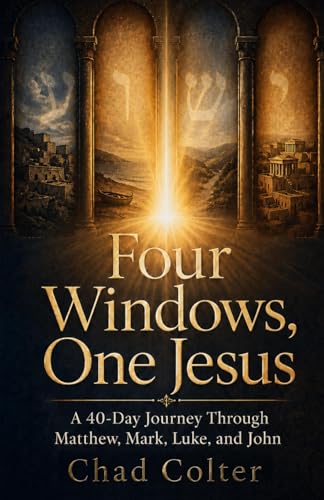
Four Windows, One Jesus is a 40-day devotional focusing on Jesus as portrayed in the four gospels. Each gospel is given 10 days (11, if you count the intro to each gospel’s section that is about as long as the daily devotional), with the intention to show the different facets of Christ that are provided by the 4 different gospel writers.

I think many will find a lot to appreciate in this devotional. I wrote down a few nuggets that I gleaned and that made me think about Jesus, myself, or my relationship with Jesus a little differently. The author pushes the reader to not just skim passages that are familiar or even thought of as boring, like the genealogy at the beginning of Matthew, but to slow down and try to focus on the text and why it has been included. As someone who has been a Christian for many years and has read/heard passages from the gospels many times over the years, I appreciate this slower approach. I also like that the reader is tasked with reading a passage for themselves and then reading the devotional about that passage, rather than 1) the devotional covering only a verse or two, which can be done well, but often ends up feeling a little shallow or out of context (though there are a few of these devotionals that cover only a verse or two as well) or 2) feeding you the passage instead of leading you to look it up in your own Bible.

However, I struggled with a few aspects of the devotionals along the way. There is a lot of repetition in each devotional, and the author’s overall literary style is not my preference. He weirdly seems to pit one gospel/gospel writer against another when the day’s passage is one that is also included in another gospel, comparing them in a way that, at least to me, seems to say that the other one has parts to it that aren’t worth thinking about right now (even though the idea here is supposed to be to bring the different views of Christ together). And in the same way, he seems dismissive of the Old Testament and other historical context, as he will vaguely reference something that would give a scene in the gospel more depth and meaning and tell the reader to not let that bog down the reading/understanding. But as my church’s pastor is fond of saying, “There’s no text without context.” Sometimes that context makes all the difference in understanding why what happened in the gospel matters or what it means! There were a few spots I noted that I think he may have interpreted something wrongly, but nothing I felt was theologically wrong.

I am not sure who the audience for this devotional is meant to be. I feel that some of his vague references to context would confuse newer Christians or those who don’t have a decent background with the Bible. More mature Christians might find enough of value here to make the book worthwhile, so I suppose that’s where the correct audience is best found. I could see a case being made for reading this with a group, because good discussion about what is brought up in the text (and even the question about whether or not the reader should ignore the context or whether one angle of an account is “better” in Mark vs. Matthew) could arise.

I received a free review copy from the author in exchange for my honest unedited feedback.

Find out more about Four Windows, One Jesus

See what’s coming up.

If you’ve read this book, or read it in the future, feel free to let me know what you think!

Book Review: Living Unoffended

Living Unoffended
by Brant Hansen

My rating: 4 / 5
Genre: Christian living

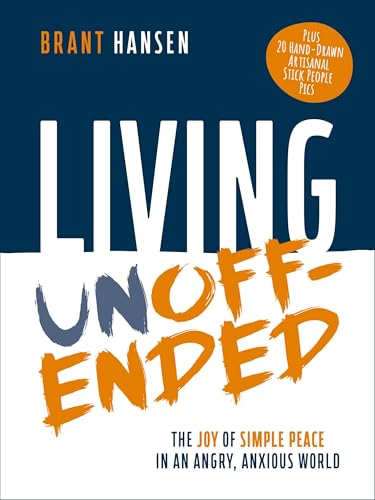
Radio show host Brant Hansen counters the common opinion that Christians are entitled to “righteous anger,” while also making a case about how learning to let go of our “right” to be offended can change our lives.

I read Unoffendable by Brant Hansen 6 years ago and found that it had a lot to offer; it helped me examine a lot in my life, not only about anger and anxiety but also hypocrisy and self-righteousness. As Brant says in the intro to this book, “We need to keep talking about this stuff.” Brant does a good job here of laying out why righteous anger doesn’t really make sense and how anger and worry mean we’re not trusting God like we should. He uses scripture as well as examples from both Christian and secular writers and thinkers to back up his claims, and he does it all with his signature humor. Brant also offers some practical advice for learning to let go of offense, becoming more humble and Christ-like, and trusting God more fully.

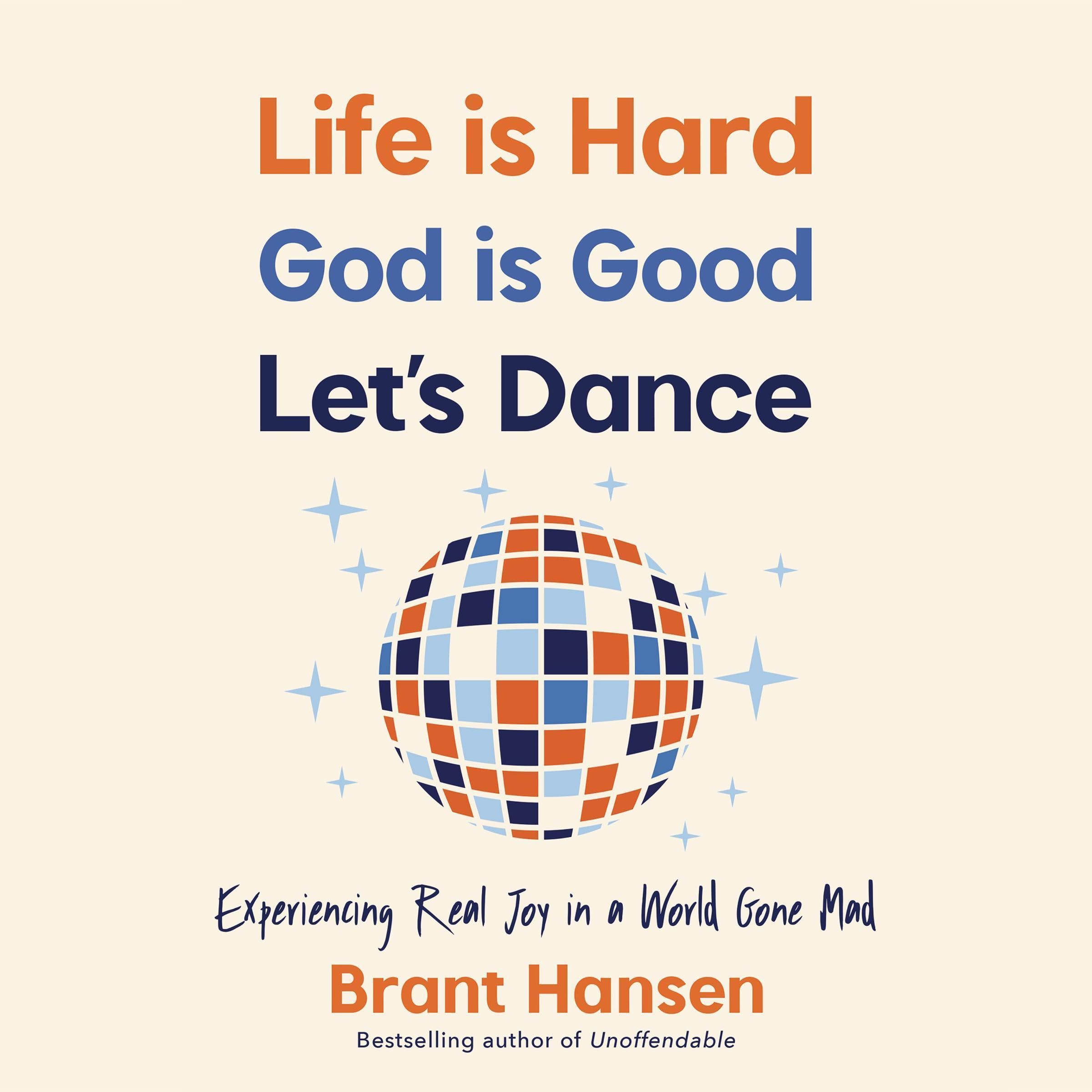
The book is basically a series of short essays, and some of the content comes from at least 2 of Brant’s other books (Unoffendable and Life Is Hard. God Is Good. Let’s Dance.). I haven’t read the 2nd of those books yet, and fortunately I read the 1st long enough ago that it didn’t feel like a repeat to me. However, if you have read either or both of those books, you may not feel the need to read this one. Not that there isn’t anything new here, but I’m not sure how much is new. I do recommend this book, as well all of Brant Hansen’s books, really, for Christians and non-Christians alike.

Thank you to Netgalley and W Publishing for providing me a copy of this book to review.

Find out more about Living Unoffended or The Brant & Sherri Oddcast

See what I’m reading next.

If you’ve read this book, or read it in the future, feel free to let me know what you think!
Book Review: Newsboy

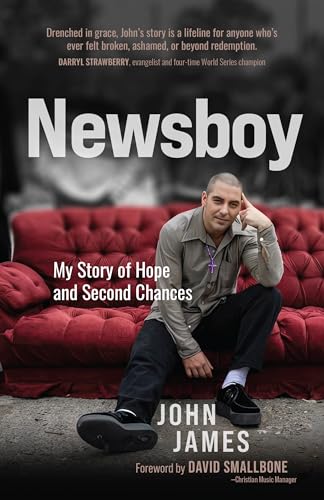
Newsboy: My Story of Hope and Second Chances
by John James

My rating: 5 / 5
Genre: Memoir, Christian non-fiction

When John James first stepped down as the Newsboys lead singer in the late 90s, I was in high school. I had no idea what had led to this decision, but the band kept making great music, so I was content enough. Then, I remember very well the Newsboys concert my husband, son, and I attended (it had to have been around 2009-2011, since it was soon into the band’s new era), when John James stepped out onto the stage to talk. I’m pretty sure most of the people around us had no idea who he was, but I did. I had been to at least one concert before he left, owned several cassette tapes or CDs of the early Newsboys, and had seen Down Under the Big Top many times (I even had several of his lines memorized from the movie—still do, in fact, and still have the VHS tape). I hadn’t seen him in a long time and was excited he was there! He began to tell his story, talking about his addictions and sinful behavior that had led to his departure from the band. He talked about the moment he thought about killing himself, making a joke about it, and the people around us laughed. I didn’t find any humor in it, though; my husband and I stood there with mouths agape. I’m pretty sure I was holding back tears. I’m really glad I didn’t know about any of that back when I was a teen and the Newsboys was fasting becoming my favorite band (especially since the info circulating at the time was largely worse than the truth), only hearing some of the details after James had allowed Christ’s redemptive work to change his heart and his life.

This book expands a lot on what he shared during that concert over 10 years ago, and James is transparent and vulnerable in the text, not hiding or sugarcoating his choices and downward spiral. He starts with his childhood, a foundation that shows that he wasn’t just paying lip service to Christian tenets when he first started writing songs and speaking on stage as the frontman of the band. But like all of us who are sinners saved by grace, he made wrong choices, which he then compounded with more wrong choices and the decision to hide those choices from friends and loved ones. He talks of danger points, like disconnecting from a local church and neglecting one’s personal time with God, and he ends the book with a very hopeful note. I don’t think I’d call it a “happy ending,” exactly, because he is still suffering some consequences from how he lived for a while. But the major theme here, which is infused throughout the book, is that God can redeem those that are lost and is waiting to do so, if we’ll turn and repent. This book is definitely worth reading for anyone who is a fan of the Newsboys (in any iteration), is interested in stories about the Christian music industry, or is in a position where you believe you’ve fallen too far to be forgiven by God.

Find out more about Newsboy

See what I’m reading next.

If you’ve read this book, or read it in the future, feel free to let me know what you think!
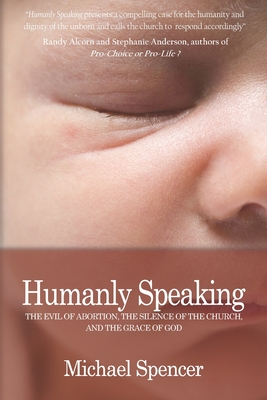
Book Review: Humanly Speaking

Humanly Speaking
by Michael Spencer

My rating: 5 / 5
Genre: Christian nonfiction

Michael Spencer’s heart for the unborn is palpable, and this book expands on the brief seminar he gave at my church a few months ago. It addresses what abortion really is and why we should care as much as most of us believe we would if another terrible event like the WWII Holocaust were to take place. He compares it to various times of major human rights violations in history and rightfully so. And all of this he does with an engaging style—often when I’m reading Christian non-fiction books, no matter how interested I may be in the subject, I have a difficult time understanding some of what’s being said due to the inclusion of large, theological words or even unnecessary pretension. This book has an easy style that is important to make the book accessible for more people.

It’s not enough to just be “pro-life” if you don’t act on it. And I say that as someone who has never acted on it, beyond donating money to a few organizations. While I do wish that there might be more suggestions in this book for how those of us who can’t feasibly make this a full-time campaign can still get in on the fight, it certainly inspired me to want to do something, which I’m praying about and brainstorming about. Michael Spencer calls out the church for being too quiet or lazy on the matter of abortion, and I think every Christian needs to read this book.

Find out more about Humanly Speaking

See what I’m reading next.

If you’ve read this book, or read it in the future, feel free to let me know what you think!
Book Review: The Grasshopper Myth

The Grasshopper Myth
by Karl Vaters

My rating: 2 / 5
Genre: Christian nonfiction

The idea that small churches and pastors of small churches don’t need to feel that they’re doing something wrong because small churches are just as important as big ones was interesting to me because my husband is currently in the process of becoming a pastor and most likely will end up in a pretty small church. That is mostly because he doesn’t want to pastor a large church, though, so maybe that already makes me/us the wrong audience for this book, which is geared toward helping small church pastors and leaders not feel the need to work unnecessarily toward growing a church that might just not be meant to grow.

Some of the content of the book really is good info, and actually gave me some insight into my current church’s situation. We got a new pastor last fall after our long-time pastor retired, and one of the things that was brought up during our transition period is that we want to grow. Our church has averaged maybe 120 attendees on a Sunday morning for a long time now, though our biggest weak spot was younger people—both young adults and children. I certainly understand a desire to bring in more younger people and even a desire to grow the church (though I’m really not a big-church person personally, but we do have some room to grow before I’d be uncomfortable). But I’m noticing some things that were really highlighted by this book, namely that the new pastor has said and done some things that lead me to believe he thinks that thinking and acting like a “big church” are the key to growth. But big church thinking just feels unnatural in our position, at least to me (I am certain I’m not the only one). I also appreciated a comment made in the book that if a pastor is getting push-back from other leaders or even just regular congregants in regards to something he wants to do or implement, maybe he needs to re-think doing that particular thing, rather than just telling himself that those naysayers aren’t part of the “vision.” I’m feeling that strongly in a few areas right now too.

On other other hand, though, I felt like Vaters doesn’t necessarily believe some of what he’s saying. He venerates megachurches a lot. When he goes on vacation, he finds a megachurch to attend (because he knows he’ll get good stuff there rather than rolling the dice on a small church…more on my thoughts about the “good stuff” at a megachurch later). He talks about how needed they are, how they fill the spiritual needs of many. I was left wondering if he really had come to terms with being “just a small church pastor” or if maybe he was still wishing he could be more. The way that he capitalizes the phrase “Small Church” every time it’s used in the book, which is a lot (and often it’s “New Small Church,” which I don’t even get, because he never really explains what’s “new” about them…unless this is just a way to promote his brand) makes me feel like he’s trying legitimize small churches as being as important as large/mega churches, because his statistics and personal anecdotes aren’t enough.

Vaters basically implies that thinking badly of megachurches or their pastors (in general or even specific churches/pastors) is only ever due to jealousy or an “us vs. them” mentality. A few times he does admit that large and megachurches have some flaws, but overall, they’re good. They fill the spiritual needs of many people. I would have to disagree with most of this. The flaws he mentions sound pretty important to me, not just something to be swept under a rug. If the majority of the people who go to a megachurch sneak in and out just to check off the box that they went to church in the hopes that their checklist will get them into Heaven, but they’re not challenged or convicted by biblical preaching, have no fellowship with other believes who could hold them accountable, and vice versa, and don’t do anything at all to serve God because their services aren’t needed at that huge church and they can live the rest of their week as if God doesn’t exist, what kind of spiritual life can they possibly have. I know I’m generalizing here and that large/mega churches tend to have small groups within the church where those who desire it can get a more personal touch similar to what small churches have, but I have a difficult time believing that large and especially megachurches aren’t more harmful than they are helpful.

Add to that the megachurch pastors that he brings up and quotes and clearly esteems that I know are off-base theologically, even to the point of being false teachers, but it seems like Vaters doesn’t allow for that possibility at all. No, if we don’t like megachurch preachers, we’re just looking for a theological excuse to hate them. I’m sorry, what? The Bible is clear that people will come in God’s name but be speaking lies! (One example: Matthew 24:11) It’s a truism that what is popular is not always right, and sometimes that the more widely liked something is, the more incorrect it is (at least in regards to the Bible and Christianity). In other words, it’s easier to believe in watered down truth or truth that doesn’t force us to change our lifestyles than in a convicting truth that forces us to examine our lives and admit that we might be doing things we shouldn’t be doing, and that, in a nutshell, is a large part of why at least some mega (and even large) churches exist. Again, I’m generalizing, and I’m definitely not an expert, but at the very least, these are things to address, and Vaters just does not.

Now, all of that being said, would I recommend this book for the content that I did find useful? No. To be honest, I started off with higher rating, because of the parts I did appreciate, and then lowered it to 2 while I wrote the above paragraph. Because I realized that, like megachurches in general, this book might be more harmful than it is helpful.

Find out more about The Grasshopper Myth

See what I’m reading next.

If you’ve read this book, or read it in the future, feel free to let me know what you think!
Book Review: Seven Things I Wish Christians Knew About the Bible

Seven Things I Wish Christians Knew About the Bible
by Michael F. Bird

My rating: 3 / 5
Genre: Christian nonfiction

In this book, Michael F. Bird explains how the modern Bible came to be, the need to take it in its proper context, and other nitty gritty details about the Word of God. It’s purported to be accessible to everyone, which means the fact that I struggled to understand some portions of it make me feel kind of stupid. Really, though, in a lot of ways it was similar to many other more intellectual, theologically deep books I’ve read, though not all the way through. Still, it makes me wonder why so many reviews talk about how easy it is to read.

As for the content, some aspects of this book were nothing new for me while others were quite new. For example, I’ve never before heard that the apostle John, the author of the 3 epistles named John, and the John who wrote Revelation might not all be the same John. My concern, though, lies in this book being read by new Christians or those who aren’t very strong in their faith. Even I, who 100% believe the complete accuracy of the Bible and the ability of God to protect His Word as it was handed down over the millennia, found myself beginning to question how accurate what I read can be when Bird gets into the details about how we got the Bible. Maybe that’s because he never quite touched on God’s sovereignty, that He had the power to guide the men who wrote, translated, edited, compiled, etc. the Bible and keep it intact to His wishes. On the other hand, He hasn’t stopped some translations and paraphrases from coming out that water down the truth, so therein likes the concern that this book could actually lead some people to question the Bible as a source of truth. His comments about learning about the historical and cultural context of the different parts of the Bible were intriguing though. I have no plans to try to read Josephus now, but there are more accessible options that I plan to look into. Overall, I can see the merit in this book, which my husband, who read a couple of chapters of it for one of his pastoral training classes, recommended to me, but I am not sure I’m the right audience for it. But I’m not really sure who is, since people who are newer to Christianity might not be able to follow some of it or might actually become confused about the authority of scripture and more mature Christians likely already know much of what is contained within.

Find out more about Seven Things I Wish Christians Knew About the Bible

See what I’m reading next.

If you’ve read this book, or read it in the future, feel free to let me know what you think!
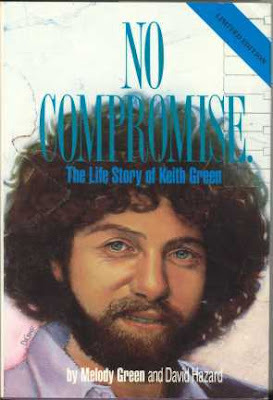
Book Review: No Compromise

No Compromise
by Melody Green and David Hazard

My rating: 4.5 / 5
Genre: Biography

Keith Green died a few months after I was born, so though his music wasn’t a huge part of my childhood, I do remember my mom liking his music when I was younger. I don’t generally base my rating of a biography on the content, because what the author chooses to provide about his/her (or in this case, her husband’s) life is really their choice. Based only on the writing and style here, the book is easy to read and gives some really interesting insight into the lives of both Keith and Melody Green before, during, and after their conversion to Christianity. She doesn’t sugarcoat their drug use and time spent following New Age or eastern mysticism practices as they both searched for spiritual truth. Lyrics of various songs written by Keith Green (again, before and after he became a Christian) as well as quite a few snatches of writing directly from his hand in the form of journal entries pepper the pages.

I have to admit that I didn’t agree with a lot of his philosophy or his approach to evangelism, but I appreciate how on-fire he was for God. As his own wife noted, when he became a believer, he didn’t hide away somewhere to learn about God before then presenting himself to the world as an evangelist. Maybe he should have, though, because some of the way he treated his audiences, both believers and nonbelievers, may have been more harmful than helpful. Going to a church, for example, and assuming that everyone there was a lukewarm Christian and needed to be confronted from the stage to repent of hidden sins really shocked me. I suppose if there were people in attendance who truly were right with God, they may not have been guilted by Green to confess unnecessarily, but it seems to me that Green made the assumption that every Christian he encountered (except select people he met in person and looked up to) was either a fake Christian or at least an apathetic one, simply because he could see that those types did legitimately exist in Christian communities.

Overall, I’m glad I read this book. Despite my concerns about both Keith and Melody Green’s understanding of God and the Bible, it was an interesting insight into the mind of someone who sought God before understanding exactly what it was he was seeking. Keith seemed to be working out his belief and understanding through his music, which might be a legitimate way to do so, except that by becoming more and more famous, he wrapped others up in his confusion. I do recommend this book to anyone who’s interested in biographies of famous musicians, especially fans of Keith Green, because I think knowing how he thought and believed might be an important lens through which to view his music.

Find out more about No Compromise

See what I’m reading next.

If you’ve read this book, or read it in the future, feel free to let me know what you think!

Book Review: Reclaiming Quiet

Reclaiming Quiet: Cultivating a Life of Holy Attention
by Sarah Clarkson

My rating: 2 / 5
Genre: Christian non-fiction

Ostensibly, this book is about turning our attention from the world—news, social media, etc.—and quieting our minds to focus more on God. I personally did not find it very insightful in that respect, though, for a few reasons. One is that I think Clarkson and I have a slightly different definition of the word “quiet,” as I found that what she talked about was more a focus on God, even in busy, chaotic times (for example, she has 4 young children, so she’s in a season of life where she doesn’t always have the ability to make or find quiet time in her day). She did, however, talk a lot about not letting her phone take so much of her time and focus. It seems like this is one of her biggest issues in her current life, whereas it is not really what distracts me from taking time to focus on God. It bothered me when she’d mention that she will sometimes only have time to read one verse out of the Bible before getting on with her day, but she seems to make reading poetry or other books a priority. That seems pretty backwards to me, and it’s also a segue to another issue I had with this book—very little scripture is referenced, but a whole lot of other authors are mentioned and quoted. If Clarkson hasn’t found the quiet (i.e. focus) she is looking for, maybe it’s because she’s looking in the wrong places.

I also struggled a lot with Clarkson’s style of writing. It’s often poetic or deep/complex, making it fairly inaccessible to someone like me and thus very difficult to follow. The book is also far more about the author’s personal journey than about giving actionable ideas for the topic at hand. Most chapters started with a page or two of some time in her life when she was really struggling to connect with God or to be content with her life. I usually skimmed those pages to get to the “epiphany moment” that would turn her thinking around, often instigated by reading a poem, book, etc., in the hopes of gleaning something helpful for my own life. I’m not sure that really ever happened, and part of it was due to not fully understanding what she was saying.

I am certain that some of this comes down to the author’s life and background being vastly different from mine. She’s educated in theology and a heavy reader of classics and theological books. She’s from America but lives in England, and her husband is a vicar in an Anglican church. I am quite plain and uneducated by comparison and have been an Evangelical Christian all my life. The traditions and sacraments are a bit lost on me, and I really can’t say I have ever connected much with prayers written by someone else. In the end, then, I think it’s safe to say I was the complete wrong audience for this book. You might be the right audience, though, especially if you can appreciate the following sentence, taken from one of the prayers that the author includes at the end of each chapter of the book: “Help us to nourish our inmost selves, to keep airy and clean that room where our dreams dwell and our hope waits and the doors to all creation are in our grasp. Help us to trust the great stories, to live the great songs, to fight the dragons and keep the feasts, through Christ, the Great Knight of heaven of our yearning hearts, Amen.

I received a free review copy from the publisher in exchange for my honest unedited feedback.

Find out more about Reclaiming Quiet

See what’s coming up.

If you’ve read this book, or read it in the future, feel free to let me know what you think!

Book Review: Made to Be She

Made to Be She
by Kristen Clark & Bethany Beal

My rating: 5 / 5
Genre: Christian non-fiction

In today’s culture, lines of gender and sexuality appear to be blurred, but that comes as no surprise at a time when truth is seen as relative and each person is told to follow his or her heart wherever it leads. But there is an absolute authority on truth, including a distinct line between man and woman. That absolute authority is the Creator of man and woman—and the entire universe—and He has given us everything we need to know about life, including the two different genders, in His written word (the Bible). In Made to Be She sisters Kristen Clark and Bethany Beal stand on that firm foundation as they share insight into how to sort through the noise and confusion to get to the truth of the question of what it really means to be female.

The first, and probably most important, thing I want to say about this book is that it is, indeed, completely biblically grounded. I really appreciate the authors’ commitment to the truth, unashamedly taking what will undoubtedly be an unpopular stand about gender, biology, and femininity. I believe this book could be a great resource for Christian women who don’t quite know how to respond to today’s culture or aren’t even sure what they should believe. I do not have any confusion about these matters myself, but I did still gain some valuable insight.

History of the feminist movements over the years is explored, and I found it interesting seeing how it plays a role in our modern culture, even when we don’t realize that some of what we think has its roots in feminism. Particularly fascinating to me was the idea that religion can also skew our view of womanhood, for example the way “purity culture” (a big movement in the 90s when I was a teen) gave young women a mission without a heart change or a biblical understanding of why they were keeping themselves pure. The authors challenge their readers to examine their own beliefs and possible feminist attitudes or ideals they may have without even realizing it. 

The Bible is not silent or unclear on gender or gender roles, and Christian women should not be either. I can see this book being read in church groups or other similar settings, even possibly mothers reading it and discussing it with their teenage daughters—though be aware that the authors go into some depth about sex and sexuality, completely within a biblical context. I considered suggesting it to my daughter and discussing it with her as she read, but as she is only 14, by the time I finished reading the book, I knew I’d prefer to wait a few years on that. With that in mind, I do recommend this book to every Christian woman, especially those who are overwhelmed by today’s tumultuous, truth-denying culture.

I received a free review copy from the publisher in exchange for my honest unedited feedback.

Find out more about Made to Be She and Girl Defined Ministries

See what’s coming up.

If you’ve read this book, or read it in the future, feel free to let me know what you think!
Book Review: How to Thrive as a Pastor’s Wife

How to Thrive as a Pastor’s Wife
by Christine Hoover

My rating: 5 / 5
Genre: Christian non-fiction

My husband picked up this book for me just based on the title, since he’s currently working toward becoming a pastor and I have told him, multiple times, that I don’t feel adequate to be a pastor’s wife. We’re both in our early 40s, and this was a sudden, out-of-nowhere decision on his part, at least initially. What we’ve come to see throughout the journey so far (8 months) is that God definitely put us on this path. And for me, that means that if He put my husband on this path…He must have meant for me to be on it too, since we’re a package deal.

This book definitely addresses more of the traditional pastoring journey—the young couple who are starting their lives together around the same time as the husband is starting his pastoring life—whether the reader is in the early stages of that life or the later, which makes sense, since it’s by far more common than our situation. However, much of Hoover’s advice and discussion about what a pastor’s wife’s life looks like is universal enough to be very helpful for me as I anticipate this future change. She does even mention at least once the very scenario I’m currently living. And actually, some of what she talks about addresses issues I’m having currently as the head of a particular ministry in my church (butting up against people with a different idea of how things should go, dealing with self-doubt and expectations of myself that are too high, etc.). That has actually helped me to step back and re-assess my initial, knee-jerk reactions and think through a better response to differing opinions.

The understanding that, though “pastor” has a pretty specific biblical job description, “pastor’s wife” really has none is a huge help to me, as I did question whether I’d be able to fill the role with my particular giftings. I’m sure many of us have a specific idea in mind of what a pastor’s wife is/does, usually based on a pastor’s wife at a church we attended at some point in our lives, whether one that we respected or perhaps didn’t. I even asked our church’s pastor’s wife about if she ever felt that she was expected to fill a role that she couldn’t (this pastor is retired now, and I asked her about this a few weeks before his last Sunday). She told me that she was blessed to be at a church that let her serve where she was best suited, and this book reinforced the idea that that is really how it should be. We don’t all play the piano, sing well, enjoy working with children, or whatever pastor’s wives might traditionally be thought of as doing well. But that shouldn’t be a source of friction, either on the part of the wife or of the congregation.

I may have spent a lot of my review on that one topic, but this book has so much more insight and useful tools than this. Creating boundaries to protect the home life, for example. The importance of not neglecting our own spiritual health while doing so much to help others with theirs. Not looking for a fellow broken human to fill the role that only God can. And so much more.

I also really appreciate the chapter that Hoover addresses to the pastor himself, the husband of the woman reading this book, giving him insight into what his wife is most likely going through and tips on how he can help her to thrive in her position alongside his ministry by creating boundaries and recognizing her difficulties. I will definitely have my husband read that chapter at some point in the near future as he finishes his schooling, gets licensed as a pastor, and looks for a position in ministry. This book makes it clear that being a pastor’s wife can be difficult but rewarding, and my hope is that going into it with some foreknowledge and a foundation of 25 years of marriage will help me to avoid some of the major pitfalls. Or at least provide tools to navigate them. I have no doubt I’ll revisit different parts of this book in the future as different situations arise, and I can see it being a great help to other women who are married or engaged to pastors or married to pastors-to-be.

Find out more about How to Thrive as a Pastor’s Wife

See what’s coming up.

If you’ve read this book, or read it in the future, feel free to let me know what you think!