The Cat Who Smelled a Rat Book #24 by Lilian Jackson Braun
My rating: 3.5 / 5 Genre: Cozy mystery
Former crime reporter Jim Qwilleran travels to a nearby town to investigate a “dark cloud” over a newly re-opened inn, using the guise of a vacation. As his vacations often go, a dead body leads to more intrigue than he anticipated.
I kinda feel like the author is putting more page time into Qwilleran getting content for his collection of short stories or his twice-weekly newspaper column than into the episodic mysteries. The mystery in this book takes leaps forward that don’t allow for much intrigue or suspense. Still, I do generally enjoy the happenings in Moose County, as well as the characters. What I did not enjoy in this book, though, was the side plot where Polly is on vacation with her sister and sends postcards back to Qwilleran hinting at a guy she met and is spending a lot of time with. Qwilleran and Polly’s long-term relationship has started to wear on me, since they tend to go back and forth being jealous of each other, and in between, are just super happy to be in this not-fully committed relationship.
Twenty-four books into the series, there is not much that hasn’t been done. And to be fair, when a book takes us away from Moose County and its citizens, I usually like it even less. But because of how many of these I’ve read, it’s also often easy to guess who’s going to be involved in the murder, whether victim or killer. Though in this case, I did have one guy pegged as being on the side of the bad guys, and instead he ended up being a victim, so I can’t say there isn’t still some unpredictability now and then. In the end, though, this installment in the series was okay, but not a stand-out.
My rating: 4 / 5 Genre: Children’s mystery, adventure
Spoiler notice: The following review may contain some spoilers for the previous books in the series, starting with The Maze of Bones.
Off to Australia to find more clues, Amy and Dan Cahill seek out a relative that isn’t involved in the hunt. As they travel around the country—and outside of it—they are trailed by other Cahills who are searching for the same clues. As one Cahill seems to be trying to help them, another Cahill has much more sinister schemes in mind.
I enjoyed the trip to Australia, both the more populated areas and the outback, and then to some islands of Indonesia. Though the Cahills, and thus us as well, are brief visitors to most of these places, they still gave me a chance to learn a little bit about somewhere I’ll never go. Plus, I was curious enough to look online at some maps of the islands involved, which gave me a nice visual. The story was similar in pacing, mystery, and intrigue to previous books in the series, and I didn’t notice any major differences in characterization either. Amy and Dan seem to be maturing, which one would expect, given when they’ve gone through so far.
I suppose it’s all on purpose, but I struggle a lot with a book series in which I truly cannot trust anyone except the two main characters. And more than that, even supposed deaths can’t be trusted in this series. This book in particular introduced a dangerous new character, (maybe) lost an existing one, and started to cast suspicion on someone that’s seemed trustworthy from the start. I do appreciate being given some insight into the death of Amy and Dan’s parents and assume more information about that will come in later books.
While I have had some frustrations with the series, and with this book in particular—for example, how do the other Cahills always seem to know where Dan and Amy are going to be? Sometimes it can be explained by saying they’re going to an obvious place to find clues, but randomly going surfing, spur of the moment, and being found by the Holts? Really? Who’s the mole in this outfit?—from past experience, I think they’re the kind of thing that kids won’t be as bothered by. There is a lot that I enjoy about this series, and now that I’m more than halfway through it, I’m pretty invested. I really do want to know what’s going to happen, especially since, as of this book, I have developed a theory and a prediction about the ending. It’s the kind of thing I feel like I should have been able to start guessing at sooner, but that kids of the age this series is meant for might not think of at all. I’m looking forward to seeing if I’m right!
It’s time for another Top Ten list from That Artsy Reader Girl, and today’s topic is “Books That Defied My Expectations.” I came up with more than 10 pretty easily when looking through the list of books I’ve read and reviewed in the last 4 years on this blog and narrowed it down to those that I felt most strongly about, one way or the other.
I am going both ways with this—books that I expected to like that I didn’t and books I didn’t particularly expect to enjoy that I liked a lot. I don’t generally read a book that I don’t expect to like, but it does happen, usually because it was recommended to me by someone I trust or am close to. And there are a lot of books I’ve read that I didn’t end up liking, but to make it on this list, I had to have good reason to suspect I would really like it.
I’m starting, though, with two books that defied my expectations of their purported genre:
Trace of Doubt and Facing the Enemy by DiAnn Mills These are the second and third books I read by this author, and I had liked the first one enough to give it 4 stars. So it was a shock to realize from both of these books that I don’t really like the author’s writing style…like, at all. The 2nd one made me question my sanity a little, since I noted so many confusing and disjointed dialog and narration in it, and yet, the book has almost exclusively 4- and 5-star reviews on Goodreads (it just released today). See my reviews for Trace of Doubt and Facing the Enemy here.
Lost and Found by Orson Scott Card When I was brand new on Netgalley, I was shocked and excited when I was approved to read an ARC by a big name like Orson Scott Card. I’d never read anything written by him, but had always extolled the greatness of Ender’s Game. Suffice it to say, when I did not enjoy the book much at all, it was a huge surprise and letdown. I was a little less surprised when I didn’t really enjoy Ender’s Game either. See my review here.
Click Here to Start by Denis Markell When my daughter (currently 13) recommends books to me, I always read them and I always want to love them. Between her recommendation and the story being about escape rooms, I was really expecting to love this book. Unfortunately, it was probably my love of escape rooms that made this book not really work for me. See my review here.
Books I enjoyed but didn’t really expect to:
Lock In by John Scalzi When I first started looking for sci fi and fantasy books to read to help me with my own writing, this was one of the first ones on my radar. My husband owned it, and I’d see it sitting around the house and know that it had some similarities to my own book. But at that time, I hadn’t read much sci fi, if any, certainly none written for adults. I thought it would be dry and that I would struggle to follow the worldbuilding, but it was quite the opposite. I thoroughly enjoyed it and plan to re-read it at least once in the future. See my review here.
4 Years Trapped in My Mind Palace by Johan Twiss As a self-published author, I never want to assume that other self-published books aren’t going to be good. But the sad fact is, so many of them really needed more work before they were published. So I don’t avoid reading self-published books, but I tend to go into them with low expectations. This one blew my expectations right out of the water! It’s creative and well-written, an unusual take on historical fiction with some fantasy thrown in. See my review here.
The Giver by Lois Lowry Knowing that this is a book read in schools (though I never read it in school), combined with the cover, I think I’d filed this book away in my mind as some boring drama. My sister bought the whole series for me for Christmas, so I gave it a chance. I guess it’s a classic case of not judging a book by its cover—not only was I completely wrong about what the book is about, it was anything but boring. I loved it! See my review here.
Dragon and Thief by Timothy Zahn My husband bought me this book (he hadn’t read it, but recognized the author as the writer of several Star Wars books that he liked), the first in a space opera series. Space opera is really not my thing, though, and based on that and the synopsis, I had made the decision to pass on reading it. Then I thought—I already own the book and it’s not exactly long; it won’t take long to give it a try. I’m so glad I did, because I ended up really enjoying it. See my review here.
The Hunger Games by Suzanne Collins From my review: “I didn’t want to read this book. I never planned to and was content with knowing nothing more about it than the basic premise. (I’ve never seen any of the movies either.) The main reason I stayed away is due to an aversion to heavy violence and death, and of course a book that involves a couple dozen teenagers being forced to kill each other is going to have plenty of that. I finally decided to read it after my son (who has seen the movies, but not read the books) tried to tell me that I might not be giving it a fair assessment, and of course, he was absolutely correct. And I did struggle still early on in the book, considering walking away because I was dreading what was to come. But I stuck it out, and boy, did I not expect to like it this much.” I have now read the entire series, including the prequel, and am already looking forward to re-reading it someday. I haven’t watched the movies yet and will probably wait until after I read them again to do so. See the rest of my review here.
Have you read any of these? What’s on your list this week?
The Ballad of Songbirds and Snakes The Hunger Games prequel by Suzanne Collins
My rating: 4 / 5 Genre: YA dystopian
Spoiler notice: The following review will contain some spoilers for The Hunger Games trilogy.
This is the kind of book that is difficult to rate and review, because it is a book that is meant to be at least somewhat disturbing, as we follow a major villain’s descent into the dark. I’m not normally one who’s interested in a villain’s origin story, and it was no different with President Snow, especially after reading the part in The Mockingjay about his ever-present floral fragrance covering up his rotting mouth. It made my disgust more literal. But I decided to read this book to finish out the series; it just felt like something would be missing if I didn’t. Keep in mind, though, as you read the rest of this review, that I only read The Hunger Games trilogy for the first time pretty recently. That almost definitely makes my view of this prequel different in some ways from those who’ve known and loved the series for a long time.
Through parts 1 and 2, I was invested in the story. I think Collins did a good job giving us a somewhat sympathetic protagonist who feels trapped by circumstances. And he’s really as manipulated in some ways as Katniss is in her story. I’m not sure I ever fully understood what gives Dr. Gaul so much power, but she’s Snow’s own version of himself to Katniss in some ways. The main difference, though, is that Snow actually does begin to see things from Gaul’s point of view, which is part of the indication that he’s beginning to lose his grip on morality. This book’s Hunger Games and the lead-up to them, while being totally primitive compared to those in the main series, provide a compelling backdrop to Snow’s beginning steps toward depravity—the deception, the cheating, his first kill—things that he can rationalize at first.
Part 3 took a large turn that involved a fairly steep drop-off in action and interest for me, but the psychology of the villain’s slide was still there. And while it looks like things could actually go well for Snow, of course we know it can’t end happily, because we know who he becomes later, and it’s not this family man he envisions himself becoming. In truth, I don’t think he ever had the capacity for a normal, happy life. I’ve read several reviews that say his downturn happened suddenly at the end, but I would maintain that those people weren’t paying close enough attention during the rest of it. Snow makes many decisions that he justifies as being out of love—for his family, for his tribute—but really, the most important decisions he makes are only for himself, for family pride, to maintain his standing in society, however you want to spin it, it’s all selfishness. I do think he cares about his cousin and loved his mom. But even his cousin he puts one over on in the end for his own selfish gain. Yes, there’s a turning point at the end of the book where he makes a more deliberate choice, but I can see the rest of the book pointing right to it.
So that’s why my rating is 4 stars. And when I re-read this series in the future, which I definitely will, maybe even soon, I will probably not always finish with this book, but I will read it again at some point, I’m sure. I don’t know that I ever felt the need to know what made President Snow the monster he is in the original trilogy, but I still really appreciated this book. It’s quite polarizing, though, so if you’re wondering whether you should read it or not…that’s up to you.
Ramona Quimby, Age 8 Ramona Quimby #6 by Beverly Cleary Read by Stockard Channing
My rating: 4 / 5 Genre: Children’s classic
I really felt for Ramona in this book. When her teacher calls her a show-off and uses the word “nuisance,” I literally gasped out loud and just felt so bad for the poor girl! Though, as an adult, I immediately began thinking through why the teacher would say that, but I can imagine kids reading this and thinking that is just a terrible teacher. Adding to that, it was almost too painful to see Ramona having so much responsibility put on her to make things work at the Kemps’ so her dad can keep going to school and her mom can keep working. That’s not even something Ramona blows up in her mind—it’s basically what her parents tell her. But the indignity of Mrs. Kemp being paid while Ramona entertains her granddaughter gets under my skin a bit. That really just shows how connected I’ve gotten to this little girl, though. I’ve been enjoying Stockard Channing’s narration throughout the series, too, and I recommend it for anyone who might be interested, young or old.
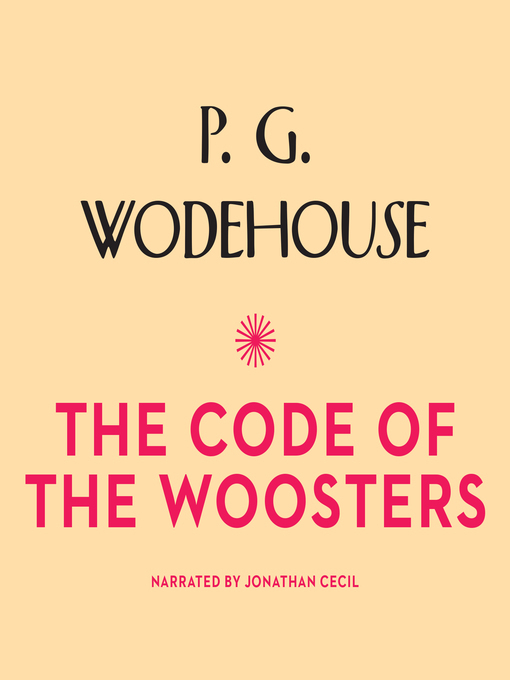
Thank You, Jeeves Jeeves #5 by P.G. Wodehouse Read by Jonathan Cecil
My rating: 4 / 5 Genre: Classic British humor
The short story collections I’ve read in this series so far do usually have some connection between some of the short stories. But this is a whole different feel, being the first full novel in the series. I mostly enjoyed that format, but I will say that some of the storyline went on a bit too long for me. But the continuity throughout and the setting being the same the whole time, did give the author room to expand on the humor, and he did a great job. It’s definitely something of a farce, complete with constables coming across random men in sheds and garages, Bertie being snuck off a yacht by Jeeves, and many other outlandish scenarios. And to start things off, Jeeves actually leaves Bertie’s employment because he can’t stand his boss’s playing of a banjolele. While I didn’t truly expect that situation to last, that does not mean the overall story was predictable. I listened to the audiobook narrated by Jonathan Cecil, who did a great job, and I’m really looking forward to continuing!
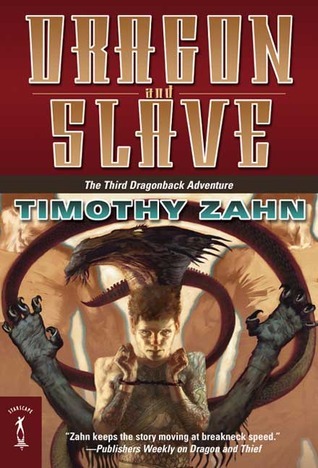
In an attempt to help Draycos, the dragon-like symbiont that uses him for a host, track down who killed his people, Jack enlists as an indentured soldier for a mercenary group. After meager training, he’s placed into a perilous situation, along with other soldier children, and must stay alive while also trying to find the information Draycos needs.
The unlikely duo of the boy trying to overcome his con-artist upbringing and the noble poet-warrior of a morally superior race is one of my favorite things about this series so far. But the plot in this book, though I didn’t think I’d care much for the soldier aspect, was also intriguing. When it became evident that there was more going on than met the eye, I speculated about what might be going on. In the end, it might not have been quite as exciting as I expected, but there were a couple of revelations that still made for a great ending and left me with a desire to read more.
I appreciate Zahn’s writing style worldbuilding, maybe more so because it’s meant for teens, so it’s not too dry or serious. The overarching story set up in the first book and continuing in this one definitely makes me want to know what’s going on. I look forward to continuing this series!
The Woman from Lydia The Emissaries #1 by Angela Hunt
My rating: 5 / 5 Genre: Biblical fiction
When Euodia, a Christ-follower in AD 51, sees a young slave girl being treated terribly by her master, she buys the slave to free her. But though the slave no longer brought a profit for her masters after a Jewish rabbi had robbed her of her “gift” of divination, one of her masters claims the sale was not done legally. He takes the girl back and travels to find someone who can restore her gift so she can continue to earn money for him. Euodia and her servants follow the master and slave in the hopes of rescuing the girl who should rightfully be free.
Hunt takes a couple of passages from the book of Acts and weaves them into a rich, heart-filled story that I absolutely loved! The bulk of the story is the journey east from Philippi, Euodia trailing behind Hector Hostilius, hoping to catch up to him before he manages to restore the slave girl’s gift with an unclean spirit or sells her for being worthless to him. Even before that, though, and throughout, I was caught up in the setting, from the work Euodia does making purple clothing to the travel on the Via Egnatia and so many other things. A warning for those who might be bothered by this kind of thing—Hunt doesn’t shy away from the harsh realities of life during this time period—violence, idol worship, sexual immorality, etc.
Euodia’s faith in Christ came from an encounter with the apostle Paul, who is also the rabbi that “cursed” the slave girl Sabina by casting a demon out of her (these are both of the parts that came from Acts). While most of us don’t face the kind of situation Euodia is in here, trying to literally free a girl in captivity, I mentally cheered her resolve and wholehearted trust in God. I was on the edge of my seat waiting to see how it was all going to play out. The book goes back and forth between Euodia and Hector for much of the book, and I’ll admit that that led me to expect a far different outcome to the book than it has. An unpredictable plot is a good thing, though, and there was not one thing about the plot or the ending that I would have changed. Well, maybe one thing, but it’s small and would be a spoiler to explain. And I did notice a few weird name discrepancies, wherein a slave was first given one name then later referred to by another and Hector’s business partner had 2 slightly different spellings for his last name. If either of these things was intentional, I didn’t pick up on it.
There is some romance in the story, but it also was not what I expected from early in the book, and it was my favorite kind—subtle and sweet. I appreciate that Hunt didn’t give us more than necessary in the way of physical interaction between the two involved, which I feel happens far too often in Christian fiction. Overall, I earnestly recommend this book for those who enjoy biblical fiction, especially from the time after Christ.
Thank you to Netgalley and Bethany House for providing me a copy of this book to review.
His Last Bow Sherlock Holmes #8 by Arthur Conan Doyle Read by David Clarke
My rating: 3 / 5 Genre: Classic mystery
This collection of short stories did not impress me overall. Based on synopses I’d read, I expected there to be more in the way of Holmes helping the British government during wartime than the one story, but there was only one. Most of the stories in the collection were either not particularly interesting to me or just felt too similar to many of the other Holmes stories I’ve read. However, the last two in the collection—”The Adventures of the Devil’s Foot” and the one for which the collection is named—were much more engaging and enjoyable. For those alone, I would probably have given the book 5 stars. The final one in particular, though I struggled to follow it early on, was quite different, being told in 3rd person and not really being a mystery.
All I have left to read in the entire series now is The Hound of the Baskerville, and I will feel quite accomplished having finally read this well-known series in its entirety. Whether I will re-visit any of the Holmes stories in the future…I probably will, but not all of them.
Regarding the audiobook, I started listening to the narration of Frederick Davidson, but it reminded me too much of Cary Elwes’s impression of Winston Churchill in Robin Hood Men in Tights, and I couldn’t take it seriously. So I switched to David Clarke, and it was much better.
It’s time for another Top Ten list from That Artsy Reader Girl, and today’s topic is a genre freebie. To come up with an idea for my post, I started by looking at the list of shelves on my Goodreads page, since mine is almost exclusively genres, hoping for inspiration. What stood out to me was how many audiobooks I’ve read, when a few years ago, I didn’t think I’d really like listening to audiobooks. Of course, “audiobook” isn’t a genre, but that did get me thinking about some of the more special audiobooks I’ve listened to—those that are narrated by the author or narrated by a notable actor. Sometimes, when I see a narrator like that for an audiobook, I decide to listen to it even if I didn’t otherwise have much interest in the book.
For example, I only listened to A Series of Unfortunate Events because Tim Curry narrated them (except 3 narrated by the author). It turns out I’m not a fan. And though I didn’t like The Great Gatsby when I read it in high school, the narration by Sean Astin compelled me to give it another try.
For the books in my list, though, I picked books for 2 specific reasons: 1.) The book is narrated by the author. 2.) The book is narrated by an actor in a movie or TV show related to the book.
As You Wish by Cary Elwes with Joe Layden (read by the author) What’s better than reading about Cary Elwes’s experience on the set of The Princess Bride? Hearing him tell about them himself! See my review here.
And on a related note, if you’re a fan of The Princess Bride and one of the “An Inconceivable Evening with Cary Elwes” events, where the audience watches the movie on a theater screen (quoting along with the movie) and Cary Elwes answers questions submitted by the audience in advance, is anywhere near you, consider going! It was so much fun!
I Can Only Imagine by Bart Millard with Robert Noland (read by the author) The story of Bart Millard’s relationship with his abusive dad and his dad’s transformation shortly before his death is emotional enough, but hearing it from his own mouth makes it so much more real. See my review here.
The Office BFFs by Jenna Fischer & Angela Kinsey (read by the authors) For fans of The Office, the audiobook is the best way to experience this behind-the-scenes look at the show. People like Rainn Wilson and Creed Bratton even make appearances. Though there’s something to be said for the text version, too, since there are pictures all throughout it. See my review here.
Keep Moving by Dick Van Dyke (read by the author) I have long been a fan of Dick Van Dyke, and I appreciate how much energy he has, even in his 90s. Though I’m not the target audience for this book, I still enjoyed hearing him talk about his life and growing old. See my review here.
The Wingfeather Saga by Andrew Peterson (read by the author) Andrew Peterson is ridiculously talented! Not only are these books amazing, but he does the most fun and engaging character voices when he narrates them. He started out reading the first book live on Facebook during the quarantine, a few chapters a week, and eventually went on to read them all. Though the pictures in the books are worth seeing too, the audiobooks are great! See my reviews here.
The Veritas Project series by Frank E. Peretti (read by the author) Full disclosure—I haven’t listened to these yet. I didn’t know he narrated them until today. I have, however, listened to his narration of some kids books he wrote. Peretti is my all-time favorite author, and I also really appreciate him in the various movie and kids’ show roles he’s done, so it’s not a surprise that I enjoyed his narration. I had tried to find versions of some of his adult books that I know he narrated in the past but didn’t have easy access to them. This series of young adult books are amongst my absolute favorites of his, so now that I know he narrated them and that I have access to them through my library, they’re near the top of my “to listen” list. See my reviews of the (print) books here.
The Princess Diaries by Meg Cabot (read by Anne Hathaway) I like the movie but never cared to read the books. But somehow, finding out that the first are narrated by by Anne Hathaway made me give them a try. I didn’t decide to continue past those 3, but they were fun to listen to. See my reviews here.
The Thousand-Dollar Tan Line by Rob Thomas & Jennifer Graham (read by Kristen Bell) I love Veronica Mars, so it was an easy choice to listen to this book when I heard about it and that it’s narrated by Veronica herself. She does a pretty good job imitating her fellow actors/characters from the show, too. It’s just too bad that the 2nd book wasn’t narrated by her too. See my review here.
The Hobbit by J.R.R. Tolkien (read by Andy Serkis) From my review: It’s no surprise that Andy Serkis does a great job with the different voices for different characters. Though I’ve only seen the movies based on this book a small handful of times, it seemed to me that some of his characters sounded similar to how they did in those movies. It may have been a coincidence (excepting, of course, for his portrayal of Gollum, which is just how you would expect), but Thorin sure did sound like Richard Armitage. Considering that this audiobook came out several years after the movies, I did go into it wondering how much from the movies might seep into it, and since my favorite thing about the movies (which were otherwise just kinda okay, to me) is the music, I was thrilled to hear a few familiar melodies in Serkis’s narration. See the rest of my review here.
Have you read any of these? What’s on your list this week?