Spoiler notice: The following review may contain some spoilers for the previous book, Lock In.
In the near-future world set up by Lock In, some of Earth’s population are paralyzed and are only able to interact with the world through robot bodies or by stepping inside another human known as an “Integrator.” In this world, a sport known as Hilketa becomes popular, which features these paralyzed people (known as Hadens) on the field in their robots (“threeps”) basically using weapons to beat each other up and score points by removing each others’ heads and running it through goal posts. When one of the players dies during the game, the FBI is brought in, which gives us a chance to see Haden FBI Agent Chris Shane in action again.
This book had a lot of what made Lock In so amazing, with the same easy-to-read and smoothly flowing writing and dialog, the same intriguing world where the prejudice toward Hadens emulates both racial prejudices and bias against disabled people, and the same complex conspiracies behind the initial death. I didn’t like it quite as much as I did the first book, but only subtracted half a star for this sequel.
In the first book, there was a major legislation on the horizon that would seriously financially hinder most Hadens, basically cutting off most government funding for them. The looming question of whether or not it will pass plays a role in the book. This book, set about a year later, shows some of the downfall after it did pass, and many Hadens–and by extension many companies that were involved with Hadens in some way–are worried about their financial future. It was interesting to see how the dust had started to settle after that decision.
We saw a lot more of the housemates that Chris first met in Lock In, and I really liked the way they added to the story. There were some fun scenes and conversations involving a cat that brought smiles to my face. And speaking of smiles, while I was reading this book, my husband made multiple “apply directly to the forehead” references, which made it all the more noticeable (and amusing) to me when I caught a reference in the book (I won’t presume to say for sure that it was intentional by Scalzi…but the way it was worded does not seem like it could be coincidence).
The mystery as a whole, and some of the rabbit trails the agents followed to solve it, wasn’t as enthralling to me as in the first book, which is the main reason for my slightly lower rating. However, overall, it was still a lot of fun to read. I would be quite happy if Scalzi decided to write a third book in this world. I would recommend this book for fans of near-future sci-fi and for mystery lovers, and while I will say that it’s probably very possible to read this book without having yet read the previous book, Lock In was really good and explained the whole Haden syndrome more anyway, so I’d still suggest starting there.
Finished Reading: His Name Was Zach by Peter Martuneac
My rating: 3 / 5 Genre: Dystopian
I’m going to preface this entire review with the explanation that zombie fiction is really not my thing. I chose to read this book to support a fellow self-published author, and I want to make sure that anyone reading this review knows up front that my thoughts on it are likely tainted by the fact that I just don’t care for zombie stories. It’s not just the zombies themselves, or the gore & violence, but the hopelessness and despair, and the fact that they’re so often the same basic story. That being said, on with the review.
Zach and Abby found each other during the worst possible circumstances–a zombie apocalypse. Zach is a former marine, and Abby is a 14-year-old whose parents are gone. They decide to stick together, forming a father-daughter relationship to rival those with blood connections. Through many different kinds of threats, from zombies to dangerous humans, imminent starvation, and even overwhelming loneliness, they take care of each other. Will they ever find the rest they’re longing for?
Zombie apocalypse or not, I didn’t hate this book. But I didn’t enjoy it very much it either, and that’s not just because of the genre. The book has two main things going for it–a lot of heart and the realism regarding the main character’s marine background, due to the author being a former marine himself. However, there were many things that detracted from the book for me; in the end, I wasn’t the best audience for this book.
The book probably could have been cut down at least 25%, if not close to half, and told the same story. There was a lot of repetition, including many flashbacks that showed something we’d already been told, with nothing new to add, not to mention the pages-long Rev War daydream. There was unnecessary recap of past events, and a lot of repetition of dialog.
Some other issues I had were pockets of narration styles that didn’t fit with the rest (like a few paragraphs from a bird’s perspective and one time when the author/narrator informally addressed the reader); two female characters whose names started with A, which caused me to be confused about who was doing what, who was in peril, etc. during fast-paced scenes; grammatical issues and typos often enough to pull me out of the story.
I’ll pause here for a quick warning for those who are like me when it comes to content that makes them uncomfortable: the book is very graphic. There is more language than any book I’ve read (if it had been a movie, I would have had to turn it off…apparently it bothers me more to hear it out loud than to read it), and there is one particularly gory scene that made me very uncomfortable. Sexual situations (both consensual and non–and let that be a trigger warning for those who need it) were handled much more tastefully by comparison.
I think, though, that what bothered me the most was how the writing has a very YA feel, which I am certain was not the intention. And even with that, Abby talks like someone way beyond her years much of the time, while other times acting like a child. (This may have been intentional, given the traumatic experiences she’d gone through and the super-smart characterization given to her, but I didn’t get that impression.) Abby was probably my least favorite non-villain character, which is sad, since the (not-yet-released) sequel is titled Her Name Was Abby. I don’t know that I’ll have an desire to read it, though I’m not committing to that yet. There are a lot of ways the sequel could improve on the original.
For someone who doesn’t take in a lot of zombie apocalypse fiction, I felt like I’d seen many of the events from this book done before. Common tropes certainly can be used and feel fresh and unique, but they didn’t in this case. Though to be fair, there were plenty of things that happened that didn’t seem so cliche too. Overall, I think what I saw in this book was a lack of experience with writing. With more revision and feedback from other experienced writers, I think it would have been a better overall read. And I know that plenty of what I mention in this review is personal preference. If it seems interesting to you, please be sure to check out others’ reviews for this book.
Spoiler notice: The following review will contain some spoilers for the first book in the series, Stealthy Steps.
Picking up immediately where the previous book left off, Gemma hides out in a safe house while planning to rescue Dr. Bickel, along with another monumental task that presents itself as the story goes on. The only trouble is…she’s still invisible. She must learn the best ways to navigate a visible world, while also learning to co-exist with the nanotechnology that she has so far fought against, if she’s going to accomplish her goals—and get her life back.
I definitely enjoyed this book more than the first. Most of the information is out there (being dumped into the first book), and we’re left with just the continuing story of Gemma and the mites (good band name, no?). The relationships that we were introduced to in the first book were continued enough to make me happy, with the addition of a new character who became one of my favorites. The writing style isn’t my favorite, but in the end, I was glad to have read this, and look forward to seeing where the story goes from here.
Gemma herself bugged me during a lot of this book. I mentioned in my review of the first book that she came across like a petulant child, and that only got worse in this one. The sections from her POV (which is most of the book) was immature, and I didn’t always enjoy it. I know there was a lot of really unpleasant stuff happening to her, but even while she was growing stronger in many ways, boy, did she whine a lot. There were also a lot of verbal tics in this book that I don’t remember from the first one—a lot of “um”s in the dialog. It only led to a further frustration with Gemma, and there’s a reason most authors don’t write dialog that realistically. It’s annoying to read.
The associate pastor, Zander, was probably my favorite character from the first book. That took a small turn for me in this book, as his character came across as simply a vehicle for preaching Christ to the other characters, and to the reader. I’m not saying there aren’t people in real life who would have talked exactly as he did, but he became a bit confrontational when talking to Gemma’s evil twin sister, and I felt it was a bit much. My favorite character in this one, then, was the new guy in this book, an FBI agent.
My favorite thing about the first book was Gemma trying to communicate with the mites, and that really expanded in this book. Even while she groused at and about them, I really liked them. Maybe that’s the under-emotional side of me, to identify more with the computer than the human. My least-favorite thing about the first book was the exposition, and Gemma’s repeating of the exposition, and there was some of that in this one, but not nearly as much. The author did, however, have a tendency to recall back to a previous conversation later on, and she would pretty much always include twice as much of the original conversation as was needed.
In the end, I think it’s really the writing style that detracts the most from this series for me so far. The characters and plot I am enjoying more than enough to make up for that though. I need to try to put less time between this one and the next one than I did the first book and this one, though, because there was little in the way of reminders to what happened before. I started out really lost! Like with Stealthy Steps, I would recommend the book to fans of Christian mysteries & thrillers and lovers of this type of sci-fi.
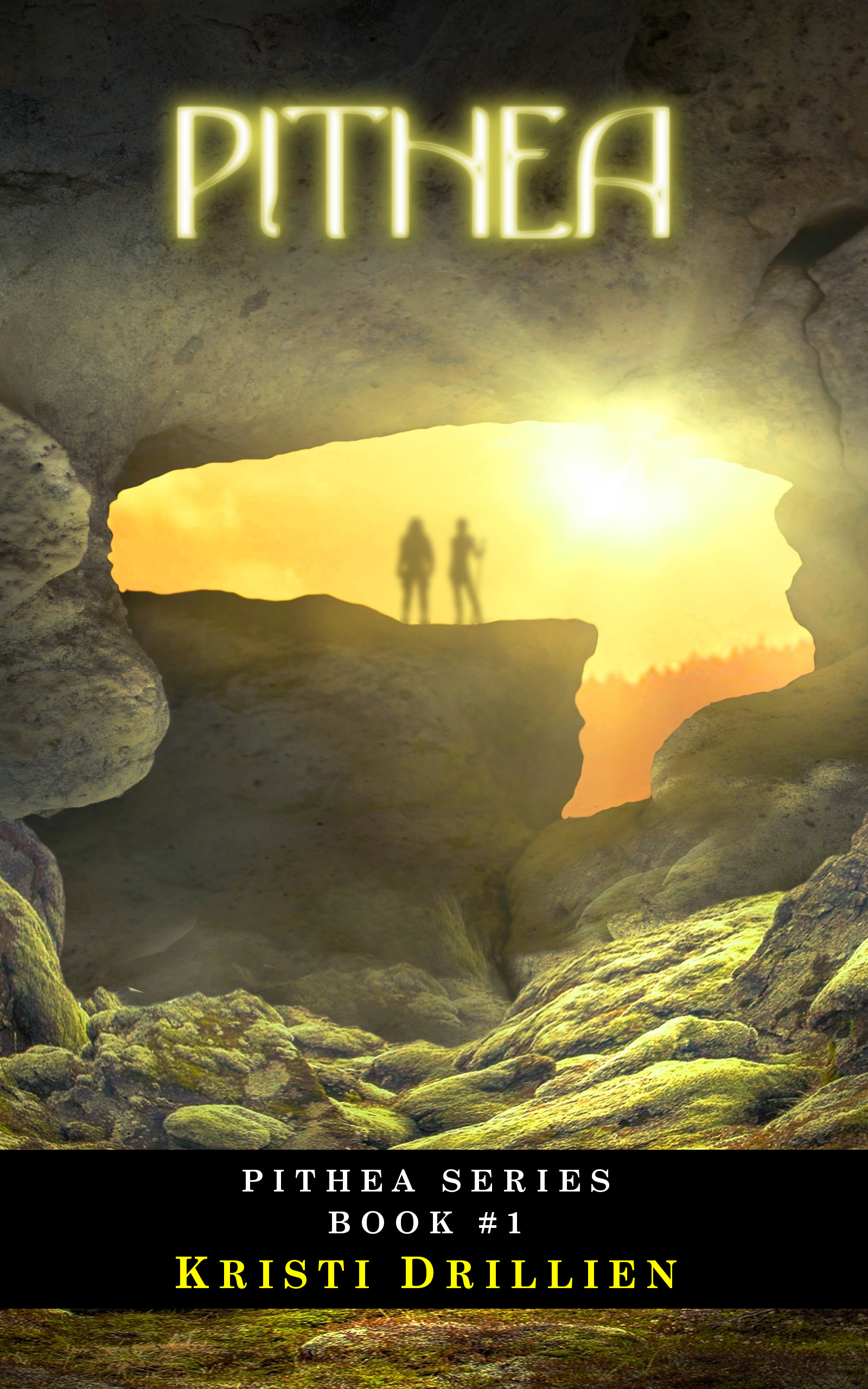
My first full-length novel, book 1 in a series of futuristic speculative fiction with a Christian worldview, is now available to purchase as both an e-book and a paperback! What a momentous occasion for me, which I’ve been building toward for 10 years! See synopsis below and go here to buy the book.
In the near future, a devastating global war leads to a worldwide ban on the use of all technology. A few hundred years after the war, a sort of magic—called the Power—manifests in every living person. Thousands of years later, the Power has become a part of everyday life in the country of Pithea.
Missy Seeger is struggling to find her place in the world. She reluctantly decides to follow in the footsteps of her well-known and well-respected father. As other options begin to call out to her, she can’t let go of the need to please him.
Naolin Dark knows exactly what he wants to do with his life. He finds the adventure and excitement of life in his local militia, with a sword strapped to his side, to be the only worthy path. The primary goal of Pithean militias is to protect the country’s citizens from animals afflicted by the Madness, and Naolin is eager for his chance to prove himself.
In this account told by Naolin’s brother and spanning over two years, Missy’s and Naolin’s abilities, ideals, and even bodies are put to the test in many ways as they are forced to deal with villains and monsters that are made possible—and all the more dangerous—by the Power and the Madness.
My first full-length novel, book 1 in a series of futuristic speculative fiction with a Christian worldview, is now available to pre-order as a Kindle e-book! Both the e-book and the paperback will be released on January 10th, but if you want to get ahead of the game, you can pre-order the e-book here.
PITHEA
In the near future, a devastating global war leads to a worldwide ban on the use of all technology. A few hundred years after the war, a sort of magic—called the Power—manifests in every living person. Thousands of years later, the Power has become a part of everyday life in the country of Pithea.
Missy Seeger is struggling to find her place in the world. She reluctantly decides to follow in the footsteps of her well-known and well-respected father. As other options begin to call out to her, she can’t let go of the need to please him.
Naolin Dark knows exactly what he wants to do with his life. He finds the adventure and excitement of life in his local militia, with a sword strapped to his side, to be the only worthy path. The primary goal of Pithean militias is to protect the country’s citizens from animals afflicted by the Madness, and Naolin is eager for his chance to prove himself.
In this account told by Naolin’s brother and spanning over two years, Missy’s and Naolin’s abilities, ideals, and even bodies are put to the test in many ways as they are forced to deal with villains and monsters that are made possible—and all the more dangerous—by the Power and the Madness.
This book was really not for me. Based on other reviews, I think I can safely say that it was personal preference that led to me deciding not to continue reading this book. The style of prose is not my preference, and up to chapter 9, I was having a difficult time caring about the characters or understanding what I was even reading half the time. I also didn’t care for the child-bride angle, and even moreso, the description from her perspective of physical contact with her husband (it wasn’t exactly graphic, but still uncomfortable for me). I have decided not to continue, but perhaps someday I will try it again.
In a future where self-driving cars are becoming the norm, a mysterious Hacker takes control of 8 different vehicles, each with Passengers inside. These eight people are told that they will likely be dead in just over two hours. The Hacker than forces a jury of 5, alongside the entire world watching from their electronic devices, to decide which one of the eight should be saved.
I was really into this book for for the first 80%, which were parts 1 and 2. If I gave a rating just on that much of the book, it would be a solid 4 stars. Then part 3 came along, and everything just fell apart for me. The writing was good, for the most part, and some of the characters were interesting. Some were major stereotypes, but to be honest, with that many characters, it doesn’t surprise me. But the thriller aspect just died in the last 20%, even with a push to bring it back.
To be honest, the hacking done on the cars might have been wholly unrealistic, but I don’t really care. I’m blessed to be someone who can just enjoy it for what it is, because I don’t really know a lot about software, AI, or electronics in general. It was pretty clear that some of the Passengers were only in the book so that the Hacker could show how serious he was, as the number quickly dwindled from 8 to 5. Each of those 5 Passengers has their secrets, which are unveiled as the Hacker hurtles them to their doom.
While this is happening, the protagonist, a woman named Libby, is one of the 5 on the jury that is being forced to decide these people’s fate. While there were some things that she did that really bugged me, it was a good perspective to watch the events from. The very end of part 2 was a bit confusing to me, and unfortunately, in the mess that was parts 3 & 4, the book didn’t really give a satisfying reason for what happened.
Parts 3 & 4 are messy and mostly unnecessary. They felt like a tack-on, and frankly, soured the mysterious nature of the Hacker. I felt like there were too many attempted twists, and I quickly got to a point where I just didn’t believe anything, which makes it difficult to enjoy a book.
In the end, I am glad I read this book. Enough of it was enjoyable that I would recommend it for fans of sci-fi, especially people who enjoy books that show horror stories about the direction our technology is heading. Because of the many higher ratings this book has gotten, definitely check it out if you think you might enjoy it.
**Side note: One of the characters in this futuristic story mentioned that Facebook peaked in 2020. The idea of this was really funny to me.
Thank you to Netgalley and Berkley Publishing Group for providing me a copy of this book to review.
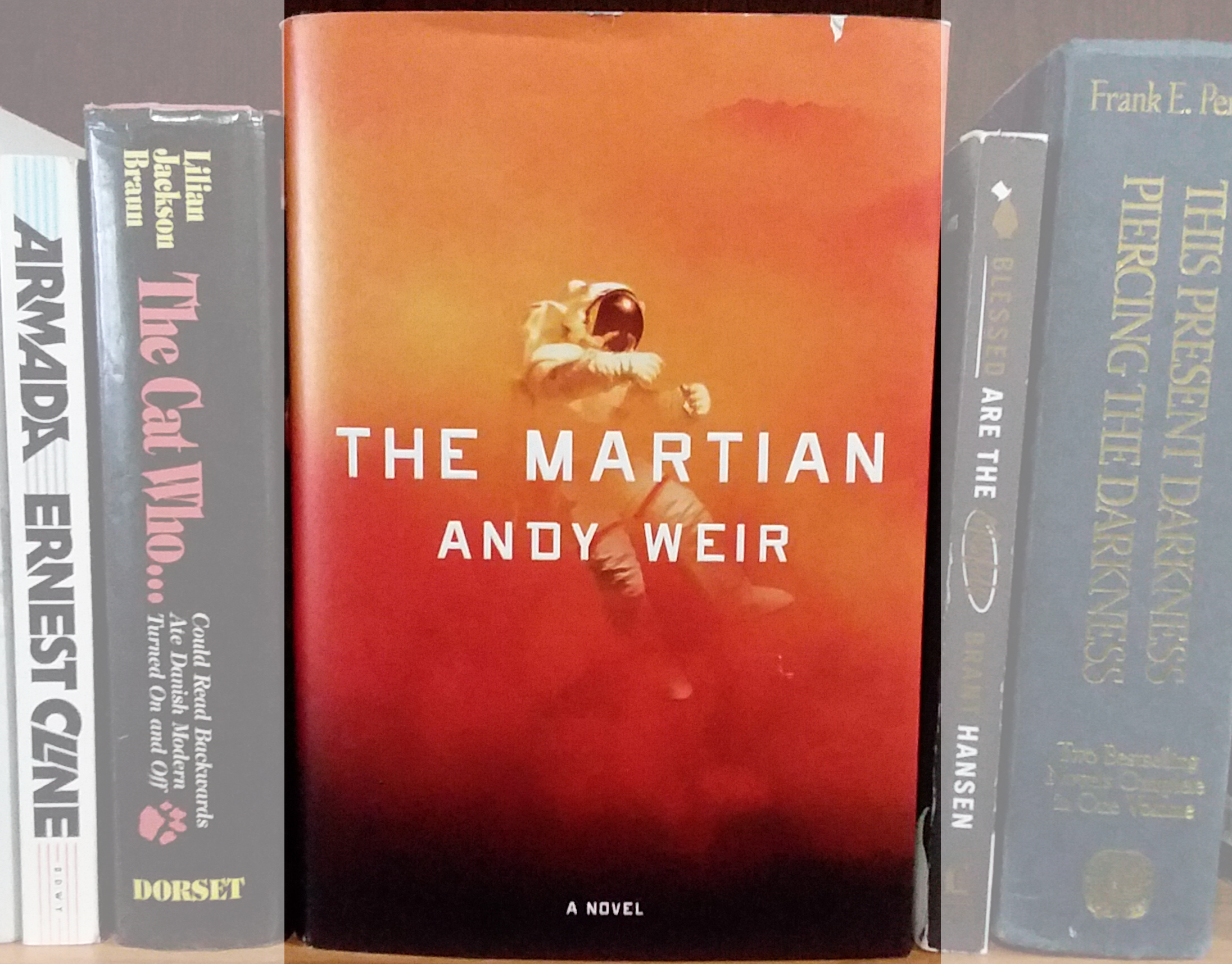
Following a dust storm that forced an evacuation from the surface of Mars, astronaut Mark Whatney is left behind, presumed dead. But he’s very much alive, and must now figure out how to survive alone on Mars while back on Earth, they work on how to bring him home.
I watched this movie a few years ago (as research for a mini escape room I helped build), and I really liked it. The book is even better! Whatney is resourceful and determined. The repertoire between him and the rest of his team is fun and touching. The determination of those back on Earth to do whatever they can to help him survive is really interesting too.
The book has a lot of explanation about the different sides of what Whatney needs to survive. Ideas are thrown out and dismissed for better ones. It has such a real feel to it, as if it were any other modern space mission that went wrong. The genre is sci-fi, and it’s obviously a bit in the future, but the science isn’t far out there. It’s just a bit past what we have now.
The format of the book was interesting. Much of the narration comes from journal entries by Whatney, so it basically reads like 1st person. Then there is the 3rd person narration of what happens back on Earth. There are other formats, but explaining that would be a bit spoilery. I enjoyed feeling like Whatney was sharing his experience directly with us.
I watched the movie again a few days after finishing the book. I still think the movie is good, but like with many adaptations, they weren’t able to reach the depth of characterization that the book did. Plus, some harrowing moments and difficulties that Whatney faced were completely written out for the movie. Still, a good movie, and a great book!
Synapse by Steven James My rating: 3.5 / 5 Genre: Christian sci-fi
Set at a time in the future when robots (or Artificials) have been taught to not only think for themselves, but to have emotions, and even the option of pain, there is still a lot that is unknown about how similar robots are to humans. Do they have souls? Can they believe in and worship God? Kestrel Hathaway doesn’t know, and neither does her Artificial, Jordan. Amidst their discussions of these concepts, Kestrel is pulled into a plot to put an end to the advances in AI by people known as Purists. Working with federal agent Nick Vernon, Kestrel and Jordan do their part to help prevent a deadly attack.
This book was an interesting mash-up of theology exploration and sci-fi elements. For much of the book, Kestrel is simply trying to cope with a fresh tragedy, while being slowly dragged into a deadly cat-and-mouse game between federal agents and terrorists. Jordan was probably my favorite character, as he tried to figure out what hope there was for him, especially in eternity. And there were some twists near the end that I enjoyed. But overall, the book was mostly just okay.
The very beginning of the book shows Kestrel delivering a stillborn baby (that she didn’t know was stillborn). It’s told in 2nd-person perspective, so it’s describing the events as if they happened to you. I think this is important to know for those who have gone through this or something similar. She is a pastor, and spends most of the rest of the book idly questioning her faith in God. I say idly, because it’s as if she’d forget her questions now and then, and have to remind herself she was still uncertain about if God existed, or he was actually all-powerful, or if he cared about her. She also carries some PTSD from a tragedy 9 years old, and I was surprised by the way some of that played out as well. But I suppose PTSD is not a consistent syndrome (meaning it’s not the same from person to person, and probably difficult to pin down and define). I would say that maybe the way she does respond shows her strength, but I didn’t really get that characteristic from her otherwise.
I believe Jordan’s role in the book was to parallel humanity’s question of an afterlife. How can we ever know for sure if Heaven exists, if no one who has been there can return to tell us about it? Artificials are told that there is a manufactured afterlife where their consciousnesses will go when they “die.” Jordan’s mother “died,” and he is desperate to know if she’s in the afterlife. Where this parallel falls apart, though, is that Artificials are guaranteed this afterlife by a fallible man, while humans who follow Christ are guaranteed their afterlife by an infallible God. Some of the discussions that arise between Jordan and Kestrel about afterlife and the ability to believe in and worship God are interesting though. Except for the times that Kestrel is just mean to Jordan about his inhumanness.
As for the twists near the end, they did mostly catch me off guard. But there was a weird thing that happened that got my heart pumping about a possible twist coming, but instead, it turned out not to be true. It was a huge letdown, and I can think of a few ways that some dialog could have been written to avoid this letdown. I had some questions that were left unanswered–about Jordan’s mom, about some of the Purists’ involvements and questionable actions, and some other things that came out during the climax, but are never given any kind of explanation.
I think the sci-fi plot were simply a vehicle for the theology discussed in the book, which is why the plot was fairly weak. And for me, at least, some of the theology was weak too. Kestrel’s brother, an atheist, asks her some very good questions about God, and her replies are the type I often see from the token “religious character” in TV or movies. She does go deeper than the stereotype sometimes, but I still found myself wishing for more. And very likely, this can all be chalked up to the author and me having different views on some theological aspects, which will certainly happen. I just found myself very sad about Kestrel’s brother’s view of God, and wished her responses had been more fulfilling.
One more thing that adds to my lower rating, which I almost forgot, was the way the story was told. As I mentioned above, it starts out in 2nd person (“you”), then switches to 1st person out of the blue (“I”), but is only 1st person when the perspective is on Kestrel. When it’s on a plethora of other characters, it’s 3rd person. And to make it even more confusing, when the perspective is on Jordan, it’s 3rd person and present tense, when it’s past tense the rest of the time. There’s a reason jumping POVs, tenses, and even character perspectives is meant to be kept simple, and while it’s not completely impossible to try something different…it was just confusing in this case, and made the reading disjointed.
In the end, I would recommend this book for those who are interested in the exploration of how humans approach God and the afterlife, and what it means to have a “soul,” and understand that there is some sci-fi around that. I don’t think I’d recommend this for readers of sci-fi, unless they are willing to wade through the theology.
I received a complimentary copy of this book. Opinions expressed in this review are completely my own.
Find out more about Synapse Publication date: October 8, 2019
My rating: 3.5 / 5 Genre: Christian sci-fi thriller
I didn’t fully understand the premise of this book going into it, because the synopsis is more like a boiled-down excerpt from part of the book, with a little extra character introduction. Most of the information is there, but it’s cryptic. Here’s my synopsis though: Gemma Keyes is a young woman fresh out of college, and takes a job as a project manager at a top secret lab. She mostly organizes things and takes meeting notes, but this makes her privy to some classified information. When she hears the wrong information (not her fault), she is fired. Months later, after an accident in the same lab claimed the lives of the 2 top scientists she was working for, she’s contacted covertly by one of those scientists, Dr. Bickel (obviously not dead). She ends up being asked to help him continue his work, which he’s keeping secret from everyone at this point. This work is in nanotechnology. When the government, and in particular, a nasty military general who has no scruples about how she gets information & technology for her military, closes in on Gemma and the man she’s helping, an unexpected incident leaves her invisible. Literally. (Some people see the invisibility aspect as a spoiler, but it’s how the prologue ends, so I see it as part of the set up.)
So…now Gemma has to figure out how to live life completely invisible, which presents all sorts of problems, especially since she practically lives in a fish bowl. Half of the book is about this, as well as her concern about being discovered by the general who went after Dr. Bickel. This half of the book is entertaining and interesting. I liked the relationships Gemma developed both before and after her invisibility. My favorite thing was the ways she tried to communicate with the nanotechnology that is responsible for her uncontrollable invisibility.
The first half of the book had some interesting parts as well–especially the relationships that began and/or developed between Gemma and Dr. Bickel, Gemma and the associate pastor of her old church (more on that below), and an established relationship between Gemma and an older neighbor. However, the first half of the book was bogged down heavily by a lot of exposition and repetition.
First, there is a long and tedious description of how Gemma first got into the secret, abandoned military based where Dr. Bickel directed her to meet him. It might not have been so bad, had we not already given given those steps (most of them), but backward. Then there are the 37-8 pages of Dr. Bickel talking and explaining. Explaining how he avoided dying in the lab explosion, explaining how he got himself set up in this mountain base, and longest of all, explaining how the nanotechnology works. In detail. That most of us reading aren’t going to really follow. Some of it did prove to be important to the rest of the story, but honestly, much of it wasn’t. (At one point, after about 33 pages of explanation, Bickel says, “‘Would you like to hear more about the nanomites before you go, Gemma?'” And I literally thought, “I wish I could say no.”) Since the book is told in 1st person, and Gemma didn’t understand a lot of what he said, I have a very difficult time believing that when she wrote this account some weeks or months later, she could remember all of the science that he spouted. It could have definitely been boiled down for us, and even more so, would have then fit in with the style of narration that the rest of the book has.
Much of the information in the first half of the book would have been okay on its own, but since it was all told together in the first half, it made it difficult to keep reading. I totally understand why the prologue is a long description of the point when Dr. Bickel is discovered in his secret lab by the general, ending with Gemma finding herself invisible. It needed that action and intrigue to get people hooked. Still, if I hadn’t been recommended this book series by my mom who has recently been very anxious for me to read it so she could hear what I thought, I might have at least set it down and come back to it later. As such, once you’re past that half of the book, it does get more interesting. It’s the first book in a short series, so some of the expositiony first part can be explained as set-up to an entire series, and it does have an ending that left me wanting to know more. Still, I think setting up an entire series isn’t an excuse for so much info-dump all at once.
The associate pastor I mentioned above, named Zander, is where the Christian aspect of the book comes in, for the most part. He’s invited to visit Gemma by her older neighbor, and he is a good example of a Christian in fiction. He is generous, compassionate, flawed, and complicated. Gemma sees a lot of sides of him, some of which draw her to him, but others of which push her away. His very Christianity is the biggest obstacle to their developing relationship, though, because Gemma is quite against Christianity. He speaks the truth in love, and shows Christ’s love through his action, while still being a believable human being. I look forward to seeing how this develops in the rest of the series.
I was particularly bothered by some of Gemma’s actions in this book, and the way she excused them, but I think that was intentional. She also got angry, or at least upset, at weird things, which made her seem like sort of a petulant child to me sometimes. I don’t know if that part of her personality was intentional or not. There were a few inconsistencies that stuck out to me (like why Dr. Bickel let Gemma take pictures in his secret lab, after the intense precautions he’d asked her to take in getting there, and in their communications). Also, I feel the need to give some trigger warnings: domestic abuse, child neglect and endangerment, descriptions of or allusions to gang violence.
So to sum up, yes, the first half of the book was slow, but the rest was good enough, and I have faith that the following books will pick up the pace, that I felt the book was worthy of 3.5 stars. I would recommend the book to fans of Christian mysteries & thrillers and lovers of this type of sci-fi.