Book Review: The Infinite Glade

The Infinite Glade
The Maze Cutter #3
by James Dashner

My rating: 1 / 5
Genre: YA dystopian

Not only did this book have a lot of the same problems as the previous two—too many characters, too little to care about, too many factions and no clear understanding of who was good or bad—but on top of all of that, there was far too few answers given. Elements that were touted as super important throughout the trilogy (like the Cure and the Evolution) are seriously downplayed here and never come to fruition of any kind. More characters are added that end up being completely pointless and a POV character added in the previous book also really had no point by the end. I struggle to understand what Dashner was going for in general or why these books didn’t get stopped before publication. But here’s the thing that is probably important for anyone reading this review to know: I didn’t particularly care for the first trilogy either. I liked the first book and truly wanted to know more about the world set up within it. But it felt like Dashner had written himself into a corner and proceeded to pants his way through the rest of the series, which ended up a convoluted, shallow mess. It was probably my mistake to read this follow-up trilogy, but I really hoped that it would be more of a call back to The Maze Runner, something that could possibly redeem the world for me. Instead, it deteriorated even further. This means that I obviously don’t recommend this trilogy to anyone. And yes, a lot of people enjoyed the first trilogy more than me and thus might enjoy this follow-up more too. Beware, though, that the overall rating, at least on Goodreads, of this trilogy is quite a bit lower than for the original trilogy, and reviews I’ve read indicate that plenty of people who loved the original didn’t like these books nearly as much.

I received a free review copy from the publisher in exchange for my honest unedited feedback.

Find out more about The Infinite Glade

See what I’m reading next.

If you’ve read this book, or read it in the future, feel free to let me know what you think!
Book Review: The Godhead Complex

The Godhead Complex
The Maze Cutter #2
by James Dashner

My rating: 2 / 5
Genre: YA dystopian

The Flare, the Cure, Cranks, the Maze, the Remnant Nation, the Godhead, the Evolution, pilgrims, villas, Orphans…I don’t know what is going on in this series anymore, it’s just so convoluted and bloated with characters and plot threads. The pacing is slow enough that even in this 2nd book in the trilogy, I feel like nothing really happens until near the end. That’s not to say that actually nothing happens, but it all felt so underwhelming. By the end of the previous book, I knew so little actual information, and then in this book, almost everything I thought I knew turns out to be either wrong or at least suspect. I still am not entirely sure who the good guys and bad guys are (maybe they’re all bad? or neutral? or just trying to survive?). And I really don’t care about any of the characters enough to want to hang in there to figure out what I don’t understand when everything is so messy.

I really wish that someone had explained to Dashner or any of his proofreaders that every single use of “god(dess)” in this book should have been a lowercase G. It’s a minor detail, but it grated on me that Alexandra, the our main connection to the Godhead (at least this is something of a title, so I guess the capital makes sense) in these books, is always referred to as a God with a capital G, amongst other uses of the word. I’m going to finish this series, but only because I jumped the gun and requested an ARC of the 3rd book in the trilogy. Considering my track record with this series, I can’t imagine the final book is suddenly going to make everything better. At this point, I wouldn’t really recommend this continuation series to anyone, whether you’ve read the original trilogy or not. (On the other hand, if you enjoyed the entirety of the first trilogy, that probably means that what bothered me about it doesn’t bother you, so there’s a decent possibility that you’ll enjoy these newer books more than me.)

Find out more about The Godhead Complex

See what I’m reading next.

If you’ve read this book, or read it in the future, feel free to let me know what you think!
Book Review: Sunrise on the Reaping

Sunrise on the Reaping
The Hunger Games prequel #2
by Suzanne Collins
Read by Jefferson White

My rating: 5 / 5
Genre: YA dystopian

Spoiler notice: The following review will contain some spoilers for The Hunger Games trilogy and The Ballad of Songbirds and Snakes.

I’m just going to say up front that I did not expect to care about this book. Similar to the other prequel, I didn’t think it was necessary. Why do we need to see Haymitch’s games? We already know he wins and we even know how. Why do we need to be shown yet another reaping, another Hunger Games? And hearing my daughter call it “Sunrise on the Weeping” over and over didn’t endear it any more to me—she hadn’t read it yet but had seen that online. I’m not a particularly emotional person, and I dislike it when I feel an author is trying to manipulate my emotions, which is what I anticipated here. I am here to say that I was mostly wrong in all of my assumptions. I even teared up a few times while listening to the audiobook, though still not as much as my daughter did when she read it.

I expected a rehashing of the same basic elements from the first book in the trilogy, but the reaping was different; the training time was different; the Hunger Games were very different. It really is its own story overall, while being connected to the main series and the previous trilogy in ways that I absolutely loved. I’ve seen many TV shows where there’s an episode that shows some time in the past, and the connection between characters that know each other in the main timeline of the show is shown earlier than it should have been and feels awkward and forced. In this book, there are several characters from the main trilogy that show up, and none of it feels awkward and forced (except one, but I can live with that). I really liked seeing everyone that appeared, and their roles brought events from the main series to light more. After my daughter read it, we discussed so many nuances that we both had found in it, and I just really appreciate the continuity and detail that Collins included.

I have to admit that the last part of the book dragged a little for me, but I think that was one of those areas where there was emotion that didn’t affect me like it does others. The epilogue, though, was brilliant! Overall, any issues I had with the book were minor enough that I can’t even bring the rating down half a start. I really liked it and look forward to reading the series again some time to be reminded of some of the related details. I did listen to the audiobook, and Jefferson White was an overall good narrator (though maybe if I’d read it instead of listening to the audiobook, I could have glossed over some of what dragged so much at the end). If you’ve read the main series and aren’t sure about reading this prequel, I’d definitely recommend it, though I highly recommend reading The Ballad of Songbirds and Snakes first if you haven’t yet.

Find out more about Sunrise on the Reaping

See what I’m reading next.

If you’ve read this book, or read it in the future, feel free to let me know what you think!

Book Review: The Maze Cutter

The Maze Cutter
Book #1
by James Dashner

My rating: 2 / 5
Genre: YA dystopian

Spoiler notice: The following review will contain spoilers for the series that precedes it: The Maze Runner series.

Seven decades after the events at the end of The Death Cure, the final book in the previous series, the lives of the descendants of those who were sent to an island to live in peace and safety are disrupted. A ship appears bearing a woman who insists that some of them need to come back to the mainland with her. Meanwhile, the 3 parts of a mysterious authority group called the Godhead are at odds with each other.

I don’t think I’ve ever finished a book and felt like I was given so little info as I did at the end of this book. Things happened, but ultimately, nothing happened. It was a 250-page set-up for whatever is going to come later, but all that happened here is that we’re given little tiny bits of info that don’t really amount to a whole picture of anything. People are taken by one faction, then another, then another, and in the end, I have no idea who is with who and who is good or bad.

I don’t actually remember a lot about the end of the main series, but I remember that I felt like James Dashner had gone off the rails. The first book was good, but things just went all sorts of weird directions after that. This is basically a continuation of that. I decided to give this continuation series a try because of how much I liked The Maze Runner (the first book, not the entire series) and hoped maybe we could get back to those somewhat simpler roots. That is definitely not what we have here. One good thing, though, is that this first book makes it pretty clear that Dashner has plotted the entire continuation trilogy from the get-go, which is not at all what I feel like happened with the first trilogy. It seemed like he wrote the first one, was pleased it went well, and then just pantsed the rest of the trilogy. This feels like the opposite so far, but the first book doesn’t seem to have its own story goal that gets resolved, at least nothing I can pick out, which explains why I felt like nothing really happened.

I’m going to continue this series, but only because I jumped the gun and requested an ARC of the 3rd book in the trilogy. Since it’s one long story, I can’t exactly just skip the middle book. I do hope it gets better, but at this point, I wouldn’t really recommend the book to anyone, whether you’ve read the original trilogy or not. (On the other hand, if you enjoyed the first trilogy, that probably means that what bothered me about it doesn’t bother you, so there’s a decent possibility that you’ll enjoy this book more than me.)

Find out more about The Maze Cutter

See what I’m reading next.

If you’ve read this book, or read it in the future, feel free to let me know what you think!
Book Review: The 5th Wave

The 5th Wave
Book #1
by Rick Yancey
Read by Phoebe Strole & Brandon Espinoza

My rating: 2.5 / 5
Genre: YA sci-fi

After the alien mothership appeared, there were 4 waves of disasters that left very few humans alive. Those that are left don’t know who to trust. And they don’t know when the 5th wave might come.

I was there for part 1; I was in it. Cassie is alone, trying to survive the harsh, cold winter, with no idea if any other humans are even left alive or not. In disjointed flashbacks, she tells us the story of the first 4 waves. Then comes part 2, where we switch to another POV: Zombie (just a nickname), who just managed to survive the wave that killed the largest number of humans. The story shifts gears here, as Zombie is living on a base with a lot of other people. He doesn’t seem to know what Cassie knows, though, which is not to trust anyone. I started to get a little confused about who was really good or bad at this point too, but I was still there, still engaged. Then part 3 takes another turn, a short section with a new, more mysterious POV, and the follow-up to that is part 4—back to Cassie. There begins my least-favorite aspect of the entire book: the romance.

To be fair, I often don’t like romance in YA books, because they’re too immature for my tastes. But here we have Evan, who is mentioned in the official synopsis but doesn’t appear until 1/3 of the way into the book. Evan is kind of creepy, lurking around outside of doors and disappearing for chunks of time with no explanation. But he’s good-looking, and Cassie has been alone for a while, so…romantic, I guess.

Then part 5 comes. I haven’t mentioned it yet, but Cassie has a 5-year-old brother who was taken away by soldiers and whom Cassie is determined to find again. And that’s where we go with part 5. Fortunately, it’s only 25 pages, but having the 5-year-old as a POV character felt like taking a huge left turn. And I’m not really sure it was necessary. From there, we go back and forth between Zombie’s and Cassie’s POVs, as Zombie is turned into a soldier and Cassie makes plans to look for her brother, with Evan acting as an anchor holding her back. Zombie’s parts are generally fine, and serve to propel the reader’s understanding of the world forward more than Cassie’s do from this point on, since she’s mostly just focused on 2 people—Evan and Sammy (her brother). I hated Cassie’s sections (and pretty much Cassie herself) from this point on, because she keeps finding more and more reasons not to trust Evan and yet talks herself out of letting it make a difference. Because she’s falling for him or something? I just didn’t care anymore. And then to make things worse, the romance turned into a potential triangle at the end of the book, in a way that I really didn’t like.

I listened to the audiobook, and the narrators were good, but even there, since there are technically 4 POVs by the end, splitting the extra 2 smaller ones between the narrators of the main characters is a little weird. Plenty of books have both male and female POV characters and use only one narrator, so maybe this one would have been better off with just one. That’s the least of my issues with the book though.

In case it’s not clear, I don’t really recommend this book to anyone. I was telling my 15-year-old daughter about it as I went along (without spoilers), and most of the things that bothered me as I went didn’t concern her. By the end, though, a few of the romance-related things did make her decide not to read it, but that means that other teens, at least, might find more to like here than I did. For me, there ended up being too much focus on romance and not enough on plot.

Find out more about The 5th Wave

See what I’m reading next.

If you’ve read this book, or read it in the future, feel free to let me know what you think!
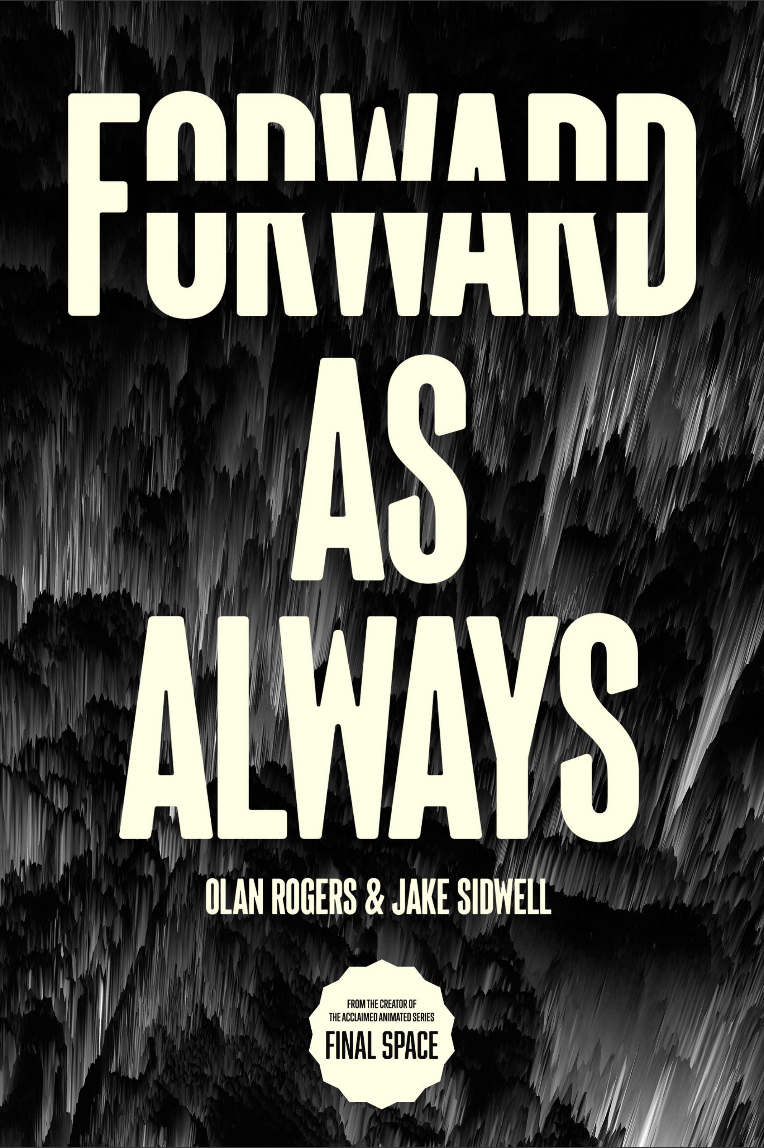
Book Review: Forward As Always

Forward As Always
by Olan Rogers & Jake Sidwell

My rating: 3 / 5
Genre: Sci-fi

After surviving a malicious fire as a child, Gaius feels compelled to investigate other such fires, even though he’s training as a messenger, not a fighter. Now the fires are occurring more often, and it’s clear that the people behind them are building toward something. What that something might be, though, no one knows.

I really wanted to like this book, and it wasn’t bad overall. But for the most part, I felt like it didn’t live up to its potential. I enjoyed a lot about the setting, in particular the Tempest, deadly storms that come every 3-5 days. It adds a lot of urgency to even the slower parts of the plot, and the way it is incorporated into the plot and the lives of the characters is well done. Overall, a lot of creativity went into this world, even if I was confused by what was going on for a lot of the time. 

Much of the book involves Gaius trying to track down the man that set fire to his home when he was a child, while learning that he’s been kept in the dark about a lot of things, and when he goes on what he hopes is a mission to confront that man, the plot suddenly turns into a zombie story. I was thrown for a loop, even more so because I had no idea how these “zombies” really worked. I felt like I was missing some kind of backstory, and in the end, I don’t think it was ever explained much more than what little is said at the time the plot takes this turn. Then at the end of the book, there’s a large amount of explanation and answers given about the state of the world, but it still didn’t answer all of my questions.

I do not know if my lack of much previous experience with sci-fi of this type meant I was the wrong audience for it, but I do at least feel that the pacing could have been better. And maybe information I wished to have just wasn’t intended to be had by the reader, and that’s certainly the prerogative of the authors. I didn’t dislike the book; it was just a little slow in pacing, and I didn’t feel very satisfied by the ending. But I think that other sci-fi fans that are interested would probably like it more than me, and I would still be interested in reading future books by these authors.

Find out more about Forward As Always

See what I’m reading next.

If you’ve read this book, or read it in the future, feel free to let me know what you think!
Book Review: Lava

Lava
by E.B. Roshan

My rating: 4 / 5
Genre: Children’s sci-fi graphic novel

Lava is a short graphic novel the E.B. Roshan made with her kids in mind. It’s the story of a  medical doctor from a large organization trying to earn the trust of the locals on an out-of-the-way planet, but an unfortunate turn of events causes a rift. I have to admit, I wish the author delved a little more deeply into the background of the doctor or shown more of an ending. I don’t know if there will be a continuation for Kone or not, but I hope so. The interesting thing about the story is that, though there seems to be a villain and a victim, it’s not really that simple. And I might have wished for more in a reconciliation, but what is shown here is probably much more realistic. I do wonder if Roshan intends for kids to choose sides, and if so, which side. The graphics were well-done, especially when taking into account that this graphic novel is self-published. I appreciated the way that flashbacks were made clear with a sort of hazy look to the panels. It allowed the author to show more in a smaller space of time. I could definitely see this being a book that young readers (maybe around 8-10 years old?) would enjoy and a nice early delve into space-based sci-fi.

I received a copy of this book for free from the author in exchange for an honest review.

Find out more about Lava

See what I’m reading next.

If you’ve read this book, or read it in the future, feel free to let me know what you think!

Book Review: The Guard

The Guard
Lorien Legacies: The Lost Files #12
by Pittacus Lore

My rating: 3 / 5
Genre: YA sci-fi

Spoiler notice: The following review may contain spoilers for the main series, starting with I Am Number Four.

While the Garde hide and grow, Lexa waits in the shadows, doing whatever she can to help them from a distance, until such time as they might need her. Since Lexa has always felt a bit mediocre to me, this book was mostly mediocre too. There isn’t much new here or particularly interesting. It’s really just a way to re-visit the world of the main series and possibly get excited for the next book of the series. For those who have already read the main series, you can probably skip this one unless you just love the books so much you want to read everything that was written.

Find out more about The Guard

See what I’m reading next.

If you’ve read this book, or read it in the future, feel free to let me know what you think!

Book Review: Stellar English

Stellar English
by Frank L. Cioffi

My rating: 4 / 5
Genre: Grammar guide / sci-fi story

Part grammar guide, part sci-fi novel, Stellar English was a very different kind of read. For a few years after high school I often consulted a grammar guide I was given by my high school AP English teacher, and I definitely only opened it when I needed to remind myself of certain grammar rules while writing. (I guess books like that are pretty obsolete now, when one can simply look online for answers to grammar questions, assuming that one cares enough about their grammar to ask a question.) In some ways, this book reminds me of that guide that I had, but where that guide used sentences from other published works, this guide’s example sentences were written to form a new work of fiction—the story of an alien invasion on Earth.

Understandably, I never read the entirety of the grammar guide I got in high school. However, Cioffi seems to have a strong desire for people, even in our present age of the internet and AI, to have a good grasp of grammar, so the sci-fi narrative throughout the guide is intended to entice a reader to read through the entire book, not just look for info on an as-needed basis. I read the book as intended, though I have to admit to skimming some of the grammar section when the information was something I feel I have a good grasp on. Still, I picked up a few helpful tidbits and felt justified in having ignored the “don’t end a sentence with a preposition” rule that I have long felt makes little sense to follow so strictly anymore. The somewhat conversational tone made the grammar part of the book not as tedious as it might sound.

As for the narrative told in the example sentences, it is easy to follow and overall a brief, somewhat shallow story. Aliens land on Earth, and the focus is more on the human reaction to the perceived invasion than on the aliens themselves. At times the pace is very slow, and at times it jumps ahead quickly. Considering the nature and context of the story being told, I can’t really fault the pacing choices though. The story of the invasion and the aliens themselves were inventive, though a little less exciting in the end than I might have hoped for. And there was some unnecessary political commentary in the story that bugged me a little. Overall, though, the story did its job in giving me a reason to read through the book in its entirety (minus some skimming). Anyone who is interested in improving their grammar or simply in reading a unique take on a grammar guide or a sci-fi story should considering picking up a copy of Stellar English.

I received a copy of this book for free from the author in exchange for an honest review.

Find out more about Stellar English

See what I’m reading next.

If you’ve read this book, or read it in the future, feel free to let me know what you think!
Book Review: Misplaced Threats

Misplaced Threats
by Alan Zimm

My rating: 4 / 5
Genre: Sci-fi

From the official synopsis: Decades after The Shift, 17 Systems were locked into an entrenched authoritarian government ruled by gene-selected elites. ‘The 35 ‘royal’ Families and 50 Great Corporations control the Federated government, as a self-centered tyranny, the very definition of fascism.

Mike just wants to open a restaurant to earn some money. Ghost just wants to be left alone to live his life and breathe oxygen without being fined. But they, along with many others, learn that the system is not set up to work for them, to help them in any way, or to care about anyone but the elite.

I struggled to write the synopsis for this book, because I struggle to explain the main plot. A lot of characters are introduced early on, though eventually Mike and Ghost rise to the top as the two biggest characters (Mike being the main, in my mind). Almost everything else in the book was some kind of support to their stories, minus one side plot that I think could have easily been cut and the book wouldn’t have lost anything. Even though I wasn’t sure what the main plot was though, I enjoyed the book overall. I’m not a space opera expert by any means, but I really appreciated the world building in this book. Major and minor details worked together really well, and I felt immersed in the overall setting. More specifically, Mike’s restaurant is amazing! There’s a lot of creativity there, and it’s one of the reasons I was always happy to go back to Mike’s POV.

The author is great with characters and dialog. Conversations, especially between patrons of Mike’s restaurant, feel completely realistic. Part of that is also involved in the world building I mentioned earlier—being futuristic and set far from Earth, there would have to be a lot of different terminology, and there is, yet I never felt bogged down by it. In fact, there are even quite a few pop-culture references in the book, and even some more obscure references (one of which particularly amazed me), and they actually fit in really well.

My biggest issue with this book, aside from the one side plot I mentioned earlier than didn’t seem like it added much and was pretty anti-climactic and unsatisfying, is the heavy sci-fi elements. This type of sci-fi is not something I normally read, so it may be completely normal, but I did a lot of skimming throughout the book when piloting of ships, specifics about the mechanics of the food delivery in the restaurant, things like that, got too detailed. I knew I wasn’t going to follow it anyway. But overall, I enjoyed the book and hope that the author is going to continue the series (the first one was originally published in 2023) so I can read more about these characters and (fingers crossed) maybe a little more about the side plot that I felt went nowhere. And one more thing—this book is self-published, and though I’d imagine a publisher may have made some changes to the style and flow, it avoids many of the annoyances that I often find in self-published books. If you’re interested in reading this book, I’d recommend it.

I received a copy of this book for free from the author in exchange for an honest review.

Find out more about Misplaced Threats

See what I’m reading next.

If you’ve read this book, or read it in the future, feel free to let me know what you think!