
In episode 54, we review The Sky Above Us, book #2 in Sunrise at Normandy, a Christian historical fiction book set during WWII written by Sarah Sundin.
Also available on Spotify:
In episode 54, we review The Sky Above Us, book #2 in Sunrise at Normandy, a Christian historical fiction book set during WWII written by Sarah Sundin.
Also available on Spotify:
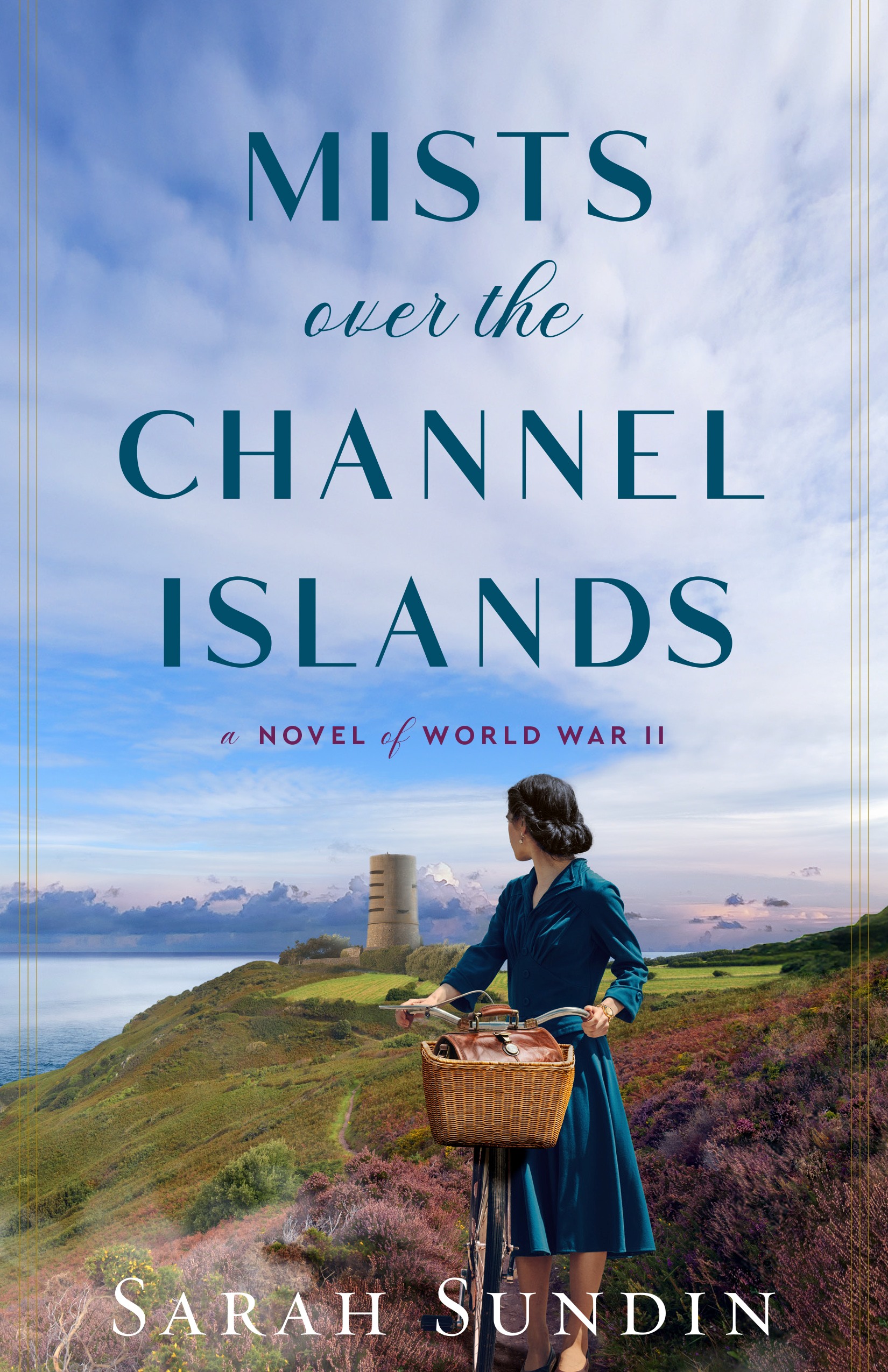
When the Germans invade the British Channel Islands, Dr. Ivy Picot is left trying to keep her dad’s medical practice afloat, with him and half of her family evacuated to England. Then Ivy is pulled into a ring of medical people who help treat hidden laborers who are in danger from their German taskmasters who are using forced labor to build fortifications on the island. One of those responsible for the new structures marring the beautiful landscape of her beloved Jersey is Gerrit van der Zee, a Dutchman who volunteered for the work in the hopes that he’d be able to help the Allies in some way. But even as he is captivated by the lovely young doctor, he can’t tell her that he is not one of the occupiers she so despises, that he’s actually on her side.
Again I’m struck by Sarah Sundin’s grasp on the history in this time period. I’ve read a few non-fiction books about (and in some cases written by) people who were involved in underground resistance rings during WWII, and Sundin’s writing here rings true for the most part. There is one character who never quite grasps the “don’t say anything to anyone ever” concept, but the codes that are set up and different ways they attempt to keep things hidden and secret kept me engage and in suspense. I kept watching the dates tick ever closer to D-Day, then to the date I knew the Channel Islands would be liberated, and wondering how badly things would fall apart as the Germans got more and more desperate.
Sundin has a way of writing romance into her stories without making it the predominant theme or overwhelming the plot, and the same is the case here. I also really liked several of the side characters and was appropriately saddened by one particular story arc throughout the book. Then near the end, we get to reunite with characters from the previous two books in this series, and I really enjoyed that. I recommend this book to anyone who likes historical fiction from this time period in the Christian romance genre. Though this is the third book in a series, you don’t need really to read them in order. Though of course, since I enjoyed the whole series, I’d say there’s no reason not to start with the first book, Embers in the London Sky.
Thank you to Netgalley and Revell for providing me a copy of this book to review.
Find out more about Mists over the Channel Islands
If you’ve read this book, or read it in the future, feel free to let me know what you think!
In episode 39, we review The Sea Before Us, a Christian historical fiction book set during WWII written by Sarah Sundin.
Also available on Spotify:

Tired of only being used as a saleswoman in her job and wanting to be useful to the war effort, Tess Beaumont joins the newly established Navy WAVES program for women. She knows her tendency to be outgoing and peppy makes her look shallow to someone like Lt. Dan Avery, a deeply serious man who hopes to make admiral someday. Unfortunately, he’s been taken off the sea and assigned to a position that he doesn’t feel is as helpful to the Navy or to his own career advancement. As both Tess and Dan struggle to make themselves more useful, they also struggle to not be distracted by each other.
I’d put this book somewhere between the first (3 stars) and the 2nd (4.5 stars) in the series. Tess is a fun, energetic character, though difficult for me to identify with, since she’s far more outgoing than I am. I appreciated her desire to be known as more than just a pretty face (though again, I can’t identify, because that’s not an issue I’ve ever had) and actually be useful. Dan drove me crazy for a while with his strict workaholic ways, but I think that just made his character’s progression in the book that much more satisfying to me. I liked the emphasis on rest and integrity in his arc.
The mystery in this book was less engaging than the mysteries in both of the previous books. I think that was at least partly because it’s really just Tess alone working it out. Dan helps a little when he’s on land, but I like the way the mystery stretched across both MC’s stories in the previous book, and that didn’t happen here at all. In fact, after a while, I tended to start skimming during the scenes when Dan was at sea. I struggled to understand or frankly care about the work being done to help the Allies be able to find and combat German subs–not that that wasn’t super important work during WWII, but I’ve known Sundin to make history much more interesting in the past than this book did. That’s probably just personal preference though.
Overall, this is not my favorite of Sundin’s books or series. Still, I think many others wouldn’t be as bothered by those things that detracted from the book for me, so I do recommend it for fans of Christian romance, especially those set during WWII.
Find out more about When Tides Turn
If you’ve read this book, or read it in the future, feel free to let me know what you think!

When staying in the Netherlands becomes too dangerous for Cilla van der Zee, due to her connections with the Dutch resistance, she sees a way out in becoming a spy for the Nazis, who will send her to Britain, where she can disappear. But in these dangerous times, nothing is as simple or safe as she hopes, and she’s captured upon landing. Naval officer Lt. Lachlan Mackenzie believes her to be the German spy she’s portraying and turns her into the proper authorities. As thanks for his actions, Lachlan is forced to work alongside the spy when she becomes a double agent for Britain’s MI5.
There was a lot for me to like about this book. The uncommon setting of the Scottish shore during WWII was brought to life well; the storyline about double agents was exciting and well-researched; and I genuinely liked both of the main characters, their personalities, backgrounds, and dynamics. So many heroines in books like this are demure, self-conscious, uncomfortable, etc., which is the exact opposite of Cilla. Not that the other type is bad, it just seems so common. Cilla may be a bit on the silly side, but given her situation and that of the world around her, that silliness is often just what was needed. And her transformation was one of the things I loved most about the book. Lachlan has his own journey, which I also loved.
Even though the connection between Cilla and Lachlan is inevitable, given the genre, I felt that the obstacles they had to overcome were greater than usual and found the progression (mostly) natural and enjoyable. I appreciated that it wasn’t the main focus of the story. This book is the second in a series, but you really don’t need to read the first book, Embers in the London Sky, (which I liked but not quite as much as this one) before reading Midnight on the Scottish Shore. I recommend this book to anyone who likes historical fiction from this time period in the Christian romance genre.
Thank you to Netgalley and Revell for providing me a copy of this book to review.
Find out more about Midnight on the Scottish Shore
If you’ve read this book, or read it in the future, feel free to let me know what you think!

When Lillian Avery moves to Boston to be a pharmacist in 1941, she has a long way to go to overcome her boss’s prejudices against her as both a woman and a handicapped one at that. She’s determined to win him over, but her task is made more difficult when suspicious prescriptions come in to be filled. Arch Vandenburg, naval ensign serving aboard a battleship, has some questions of his own when some of the men on his ship are acting drowsy on duty. Lillian and Arch will have to work together to get to the bottom of what’s going on in Boston.
After finding the first book in this series only okay, I was pleased to enjoy this one all the way through. Arch was in the previous book, the best friend of the male main character. He came across as a bit of a player, at least to me, but Sundin was already setting up his backstory, his baggage. As the heir to a fortune, Arch tends to attract the wrong kind of woman, which has led to trust issues. Lillian has her own version of the same, having been hurt badly in the past by a man who was controlling and at least a little abusive. The progression of their relationship is mostly natural and sweet, though it also becomes a little predictable about halfway through the book. Despite some clichés (and more kissing than I need in a romance book), the backstories and personalities are well set up, and I enjoyed the follow-through.
My preference when reading romance is that it not be the only focus of the plot, and I got my wish with this book. The mystery side, while not exactly a twisty whodunit, was intriguing and kept me engaged. When the romance went the way of cliché, the mystery sped up a bit, which evened things out for me. I was really caught up in it by the end. I also want to mention that Arch’s best friend Jim, the male MC of the previous book, is also Lillian’s brother. And there is a moment in the book where Arch does/says something really stupid and Jim reacts exactly how I wanted to react. I practically cheered! I recommend this book for fans of Christian romance, especially those set during WWII.
Find out more about Anchor in the Storm
If you’ve read this book, or read it in the future, feel free to let me know what you think!

Mary Stirling enjoys her job as Boston Navy Yard secretary, as long as it never puts her in the spotlight. When she encounters Jim Avery, an old friend who is now an naval officer, the two renew their friendship, bonding over some curious incidents that happen in the shipyard and aboard Avery’s ship, acts of sabotage that escalate in severity.
After reading and enjoying all of Sarah Sundin’s most recent works, I wanted to go back to some of her older books. This was not my favorite, for multiple reasons, though I did still enjoy Sundin’s style and the research and history she puts into her writing. However, the romance is heavily focused in the physical department for a while. There’s nothing graphic, but I don’t personally care for a lot of leering and pointing out of muscles and curves in Christian fiction. It’s always felt like a crutch, to me, a way to push the romance without having to put too much thought into what would attract two people to each other mentally or emotionally.
Also, both of these characters had some kind of major (maybe not so major in Mary’s case) trauma in their past that affected their lives so heavily, they both have a sort of mantra that they live by—”don’t hoist your sails.” For her, this means not to make too much of herself and become prideful. For him, this means not to stick his neck out or make a bold choice, but instead to “float” through life. They both have taken this to an extreme by this point in their lives, and while this does give both characters a chance to be dynamic throughout the story, it becomes a bit ridiculous and repetitive. Add to that the mystery that had way too many names involved and became convoluted and a bit far-fetched in the end, and this book was just okay. Fans of WWII stories, especially in the Christian romance genre, might enjoy this, especially if you’re not bothered by my complaints.
Find out more about Through Waters Deep
If you’ve read this book, or read it in the future, feel free to let me know what you think!

While fleeing the Netherlands that has just been invaded by the German army, Aleida’s abusive husband sends their son with strangers, shortly before losing his own life to the Germans. Once in London, she starts a long, difficult search for her son. There, she meets Hugh Collingwood, a BBC radio correspondent trying to inform the public and boost morale while reporting on the Blitz. When his uncle and friend are murdered, it looks like the bombs falling on the city every night aren’t the only danger.
In a way, this book almost seems like two different stories. The first is a combination of Aleida searching for her son while also trying to shine light on the way some of the kids are treated as they’re evacuated out of London during the Blitz and Hugh trying to maintain integrity in his reporting while struggling against the threat of censorship. This main part of the story kept me engaged, and I liked seeing these different sides of London during this part of history. Then the book turns into a murder mystery as Aleida and Hugh, both apart and separately, try to solve a series of murders. I’m a fan of mystery, and the rest of the story was interesting enough that I didn’t need the mystery angle to be expanded on. Still the pacing of the mystery being in the background for a long time to then suddenly jump into the foreground threw me off just a little.
I appreciated the development of the relationship between Aleida and Hugh and that it didn’t come across as the main point of the story. I prefer a subtle romance, and Aleida and Hugh developed a great foundation of friendship first. Though some of the drama involving their relationship felt too much like it was thrown in there just to prolong the inevitable declarations of love. I look forward to the next book, which appears to be about Aleida’s cousin, who is still in the Nazi-occupied Netherlands, and I recommend this one to anyone who likes historical fiction from this time period in the Christian romance genre.
Thank you to Netgalley and Revell for providing me a copy of this book to review.
Find out more about Embers in the London Sky
If you’ve read this book, or read it in the future, feel free to let me know what you think!

American physicist Else Jensen is living in Denmark, working at a lab when the Germans invade the country. After several years of occupation, she is recruited by a local resistance group to help print an illegal newspaper. Inspired by the local legend of the Havmand—the merman—who is said to ferry news to and from neighboring, neutral Sweden, Else does what she can to help. Meanwhile, she has no idea that the Havmand himself lives at her boarding house and is the very man she has a crush on. Henrik is hiding many secrets and has never wanted to share them more than when he begins to fall for Else.
The third book in a sequence (not officially a series) about men and women in various parts of Europe who work to resist the Germans in their area, I’ve liked every book along the way, and this one is no exception. There were a few moments when I struggled to fully understand the main plot, times when an aspect of the plot seemed to be tied up, and I’d wonder what else was meant to happen in the time that was left in the book. I enjoyed the story enough that it didn’t bother me, maybe just confused me a little. I should have realized that the final goal was basically safety (and that’s as much as I’m saying).
I appreciated the development of the relationship between Else and Henrik and that it didn’t come across as the main point of the story. I prefer a subtle romance, not that this one was super subtle, but it was more to my liking. After reading several books in recent years written by people who were part of a resistance group in their country (the main ones being in Holland), I seriously questioned Henrik’s decisions about how he kept his secret, or rather when he revealed it. And for the same reason, I was bothered by how Else acted at one point when Henrik insisted on continuing his work, though that was more an intentional aspect of the character than a flaw in the characterization or plot. But that part of it didn’t quite have the same feel as the memoirs I’ve read, which caused a little dissonance in my mind. Still, it may not have made for the best fiction if it was too realistic. In the end, I enjoyed the overall story, and recommend it to anyone who likes historical fiction from this time period in the Christian romance genre.
Thank you to Netgalley and Revell for providing me a copy of this book to review.
Publication date: February 7, 2023
Find out more about The Sound of Light
If you’ve read this book, or read it in the future, feel free to let me know what you think!
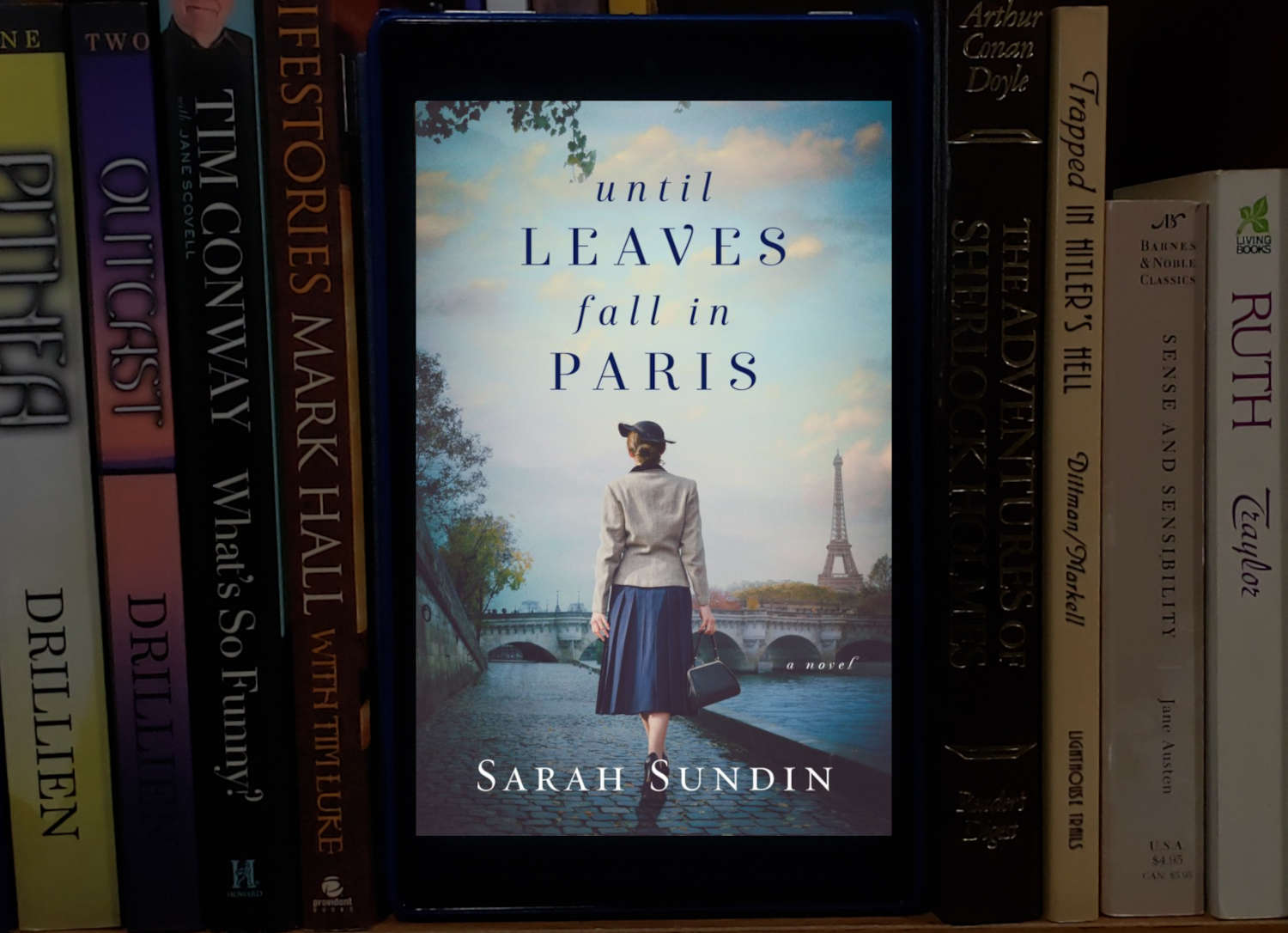
Lucie Girard, American ballerina living in Paris, decides to quit ballet and buy the English-language bookstore run by her Jewish friends, allowing them to escape to America before Hitler’s noose closes around them. While she struggles to keep the store running with so many English speakers fleeing France or being interned, she discovers that members of the local resistance are using her store to pass messages, and she wants to help. Meanwhile, Paul Aubrey, widower with a very creative 4-year-old daughter named Josie, runs a factory that produces trucks for civilian use. Because he sells those trucks to the Germans, he’s seen as a collaborator by all of his friends, who shun him and his daughter. He can’t tell them about the work he’s doing to help the US military, especially after it grows into other work for the local resistance. When the time comes for American’s to flee or be interned as well, Paul and Lucie will have to trust each other in order to get themselves and little Josie to safety.
This book was beautiful and touching, heartbreaking and uplifting, and I don’t think I can say enough about how much I loved it. The symbolism of leaves and the color green is woven throughout the entire book in a way I enjoyed—not always subtly, but I still appreciated how the author built a theme around it all. I adored Josie and the relationship between her and Lucie, as well as Paul’s attempts to understand his daughter better. Josie and Feenee are a major highlight of the book.
It seems like it’s been a while since I’ve given a fiction book 5 stars, but this one deserves it. The two main characters are both likeable and interesting. The ballet angle was a new one for me, and while it’s not something I know much about, I really enjoyed reading about it. Paul’s integrity, even in the face of undeserved hatred, and the way he relies on God to help him through it, is wonderful. The relationship between the two builds in a believable way, without much angst, and it’s not the only focus of the book, all of which I appreciate. The first meet between these two is one of the best I’ve ever read.
Tension builds as the war ramps up, and the last third or so of the book is filled with pulse-pounding, tear-jerking scenes. I loved everything about it, and know without a doubt I will re-read this book in the future. My only real complaint is that Lucie and Josie’s names are similar enough in style and appearance that a few times I was confused about what was going on in a scene or who was talking. But other than that, this book has cemented Sarah Sundin as one of my favorite authors (a distinction I don’t assign easily). And though it doesn’t appear to be part of any series, it is clearly connected to Sundin’s previous release, When Twilight Breaks, as the two MCs from that book appear briefly in this one. And it appears that her next book, which I’m excited to read, will be connected as well! In case it’s not clear, I definitely recommend this book to anyone who likes historical fiction from this time period in the Christian romance genre.
Thank you to Netgalley and Revell for providing me a copy of this book to review.
Find out more about Until Leaves Fall in Paris
If you’ve read this book, or read it in the future, feel free to let me know what you think!

