Book Review: Facing the Enemy

Facing the Enemy
by DiAnn Mills

My rating: 2 / 5
Genre: Christian suspense, romance

The sudden death of her previously estranged brother leaves FBI Special Agent Risa Jacobs reeling and questioning her responsibility in the tragedy as well as her faith. Her partner, Gage Patterson, doesn’t understand when she resigns from the FBI to go back to teaching creative writing at a college, but he vows to keep working her brother’s case. But when a student turns in a writing assignment that is a spot-on eyewitness account of her brother’s murder, Risa finally has a lead to pursue and won’t be staying away from the FBI long.

This is the third DiAnn Mills book I’ve read, and though I did liked the first one, I’m starting to notice a trend in which I don’t get along well with her writing style. I often found myself confused and unable to grasp the meaning in the author’s choice of words. Dialog felt unnatural or stilted, especially during interviews with people involved in the investigations, and characters’ words didn’t always quite line up with each other’s. And sometimes, it seems like there’s subject-verb confusion that should have easily been caught by an editor. It’s a little difficult to explain, but I’ll share one quote that I think is a good example of what I mean. Said by a character: “Running didn’t keep them safe. But fear took over. Still am.” I promise, I’m not leaving anything out that would explain what the “Still am” refers to, or if I did, it’s because what it refers to is so separate from the rest of this quote that I didn’t realize that’s what it was supposed to connect with. And maybe plenty of people will read that line and just keep going, because the intent is clear enough (still am…running, I guess?). But for me, I can’t help but stop short and think, “Huh? Still am what? Huh?” And that takes me right out of the story. And since this is just one example of a lot of different lines that made me scratch my head, hopefully that gives a good enough understanding of why I struggled to get into this story.

The message in the book is good, though, and the main reason I gave it two stars is for the conversation with the psychologist, who I felt asked some good questions and really got to the heart of Risa’s grief, doubt, and self-blame. I wish it could have come a little earlier in the book to spare us some of the angst, but it was still appreciated. The relationship between the two MCs, on the other hand, also confused me. They’ve been partners for five years and are both already in love with each other (secretly) at the start of the story, yet sometimes it seems like they really have a lot to get to know about each other still. The writing assignment angle, which is what really caught my attention in the synopsis and made me want to try another DiAnn Mills book, hoping it would be more like the first one I read than the second, was a pretty big let-down for me. I also struggled with consistency issues in various places. I really dislike giving this low of a rating to any book, and I’ve found myself questioning my own ability to read and comprehend what I’m reading correctly, since I’ve so far been in the vast minority with my thoughts of this book and the previous one I didn’t care for. Please check out other reviews for different opinions, as most of them are positive so far, if you’re interested in the synopsis and/or genre.

Thank you to Netgalley and Tyndale House Publishers for providing me a copy of this book to review.
Publication date: September 5, 2023

Find out more about Facing the Enemy

See what I’m reading next.

If you’ve read this book, or read it in the future, feel free to let me know what you think!
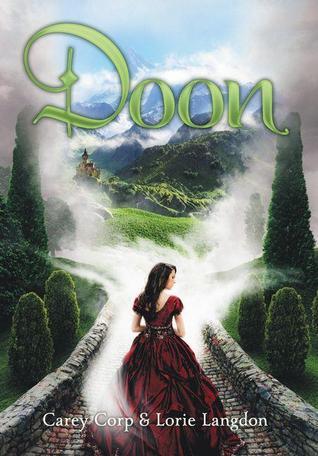
Book Review: Doon

Doon
by Carey Corp & Lorie Langdon

My rating: 1 / 5
Genre: YA fantasy romance

When Veronica starts seeing a blond man in a kilt in various places, including in Scotland, where she travels with her best friend, she is certain there’s more going on than her mind playing tricks on her. Then she begins to hear about a mysterious land that is only accessible to those who learn the secret, and she just knows her visions are leading her there. Taking her best friend Mackenna along, she stumbles into the mythical land of Doon, where medieval meets modern, the blond man she’s been seeing is a prince, and an evil witch threatens to destroy the land.

Before I discuss plot or characters, I want to address the content. You may have seen in some places that this is a Christian book, though it’s not strongly advertised to be such. My first clue was the publisher, which is listed as Zondervan in some places. It’s actually published by Blink, a YA imprint of Zondervan, which purports to publish clean books. I would not call this book clean. It’s not explicit, but it’s way more graphic than I prefer, and there is even some language. After several references to “hot” and “delicious” guys, I knew this wasn’t going to be quite what I was expecting, but it really bothered me to see the references to “girly parts.” And then it got worse… I won’t go into more detail myself, but I think this review on Amazon is very comprehensive, even to the point of pointing out things that didn’t bother me.

As to the plot and characters, if the above paragraph was my only issue with the book, I might have given it 3-4 stars (though it’s hard to say, especially since it really is billed as Christian in some places, and that is a huge problem for me). But to make it worse, I didn’t like the characters at all. Veronica is far too concerned about the possible romance with Prince Jamie, to the point where it distracts her from way more important matters. The book is written in 1st person POV, mostly from Veronica’s perspective, but it switches to Mackenna sometimes. There’s barely any difference in their voices, so it’s really hard to remember when the switch has been made. The main difference is that Mackenna is super into musical theater, so much so that she often thinks and speaks imperatives like, “Sweet Baby Sondheim!” and, “For the love of Lerner and Loewe!” (who, by the way, made the musical Brigadoon, of which this book is a retelling, though I really know nothing about that). It’s a bit over the top, really…real people don’t talk like that. As for the supposedly swoon-worthy princes, as much as I dislike that term, the only way I can really say that they are such is because I’m told. Literally. Right there in the book, it tells me that Prince Jamie makes all of the girls swoon. Okay, so he’s unnaturally good-looking…being “swoon-worthy”, to me, is about much more than that, and Jamie is mostly just a jerk for much of the book. He has his reasons to keep Veronica at bay, but he also leads her on only to shut her completely out when he remembers that oh, she might be in league with the witch!

And so, that leads me to the issues with the plot. The evil witch has been banished from Doon, but is always looking for a way back in to destroy it. Every hundred years (real time), the bridge between the real world and Doon (the Brig o’ Doon) opens to allow people from the real world who have been called to Doon to enter and decide whether they want to stay. Because Veronica and Mackenna came 2 weeks before that time (though how the people of Doon know when it’s going to open, I don’t know, since the amount of time that passes between each Centennial fluctuates in Doon), most of the people of Doon assume they’re working for the witch. They used magical rings to get in, rings that had been used to pass through the barrier outside of the Centennial before, but that doesn’t matter. The possibility that they might be working with the witch is too high for them to be trusted. Except that while they wait for the bridge to open naturally, so the two newcomers can leave Doon and let everyone feel safe again, they take them on tours of the kingdom, let them spend time alone with the nation’s princes, and conveniently forget that they might be evil, so that the romances can progress. And why did no one take note of the incredibly obvious transformation taking place right under their noses?

Add to that the “Calling” angle that is equated to soulmates finding each other, which leaves me a bit puzzled. Are they saying that if two people are brought together by a Calling, then they will have a perfect marriage? Never have to work on it? Never even consider divorce. I don’t necessarily have a problem with the general idea of soulmates, as I believe God can and does bring two people together as part of his will (though it’s generally much less obvious in real life than the Calling is here, and we can more easily decide not to follow that leading). But it seems to me that two people who meet through a Calling could easily become lazy in their relationship because it was “meant to be” and end up even unhappier than two people who met the normal way. It’s a huge flaw in what is supposed to be a romantic story, if you ask me, but I suppose the reader isn’t really supposed to think too much past the “happily ever after” at the end of the current story. On the other hand, this series goes on to further books, so maybe the authors will delve into that more. I won’t be reading more though, so I’ll never know.

I learned long ago that I should avoid contemporary romance, because I rarely like it. Though part of this book takes place in a sort-of-in-the-past land, it’s still completely contemporary. Veronica and Mackenna both make sure the reader knows that the other is beautiful and adored by men, while each thinks of herself as plan, hideous, or whatever, which made me roll my eyes. All of the people of Doon have the same accent, yet whenever Jamie says Veronica’s name, it’s written as “Verranica,” yet everyone else just says her name normally…I guess because it’s supposed to be romantic? I don’t get it, and I didn’t really get this book. And I really don’t get why it was published by a company that is said to publish clean fiction and is associated with a Christian publisher.

Find out more about Doon

See what I’m reading next.

If you’ve read this book, or read it in the future, feel free to let me know what you think!

Book Review: The Escape Game

The Escape Game
Heroines of WWII #9
by Marilyn Turk

My rating: 2.5 / 5
Genre: Christian historical romance

Beryl Clarke is doing her part in England during WWII, working as an air raid warden and helping her mom get through the devastation of her husband’s recent death during a bombing. More bad news comes when they learn that Beryl’s brother James has been captured by the Germans. The women will do whatever they can to help, even if it’s just packing Red Cross boxes and their own care packages for James and his friend Kenneth, who is also in the camp. But then Beryl learns of an escape kit disguised as a Monopoly game that is headed to various POW camps and knows she has to try to give the prisoners a heads up about it.

This book promises intrigue, adventure, and romance, but I found very little of any of those things. Most of the story was just showing life in Leeds during WWII, as well as life in a POW camp. James’s friend Kenneth is actually the second MC and is captured and taken to a POW camp before James is. He attempts to escape several times, unsuccessfully, but more detail is given to his time in the camp than the actual escapes. Kenneth and Beryl knew each other before the war started, when the two of them and James all attended Oxford University, and Kenneth and Beryl both thought fondly of each other at that time. This is what we’re told. So when Kenneth starts writing letters for his crippled friend James, Kenneth and Beryl remember each other fondly and start to hope for more some day. This we’re also told. The romance doesn’t really develop as much as it is just there for us to be told about. Maybe some flashbacks to the time they knew each other before would have helped, but overall, it just felt forced and empty.

The story of the Monopoly game being sent to POWs with an escape kit hidden inside is such a tiny part of this book. I feel like the story would have been better to have been more focused on the camp and less on Beryl’s life, but then, the series is called “Heroines of WWII,” so clearly she needed to be a main character. I also think it would have been better if Kenneth had been a stranger that Beryl met and got to know through letters he wrote for her brother, and then maybe the romance could have been more of a budding one by the end of the book, rather than what it was. Also, the epilogue was completely unnecessary, and that reminds me of the incredible coincidences that happen throughout the book. After several of these moments, I still thought for sure that my suspicion about the identity of a certain character’s relative would turn out to be wrong, because there was no reason I could think of to have such a huge coincidence. But sure enough…well, I won’t give away any spoilers. And the truth is, most people probably won’t be bothered by most of this. If you’re a fan of WWII-related Christian romance and aren’t bothered by the things I mentioned in my review, please do give the book a try. It does have plenty of good reviews.

Thank you to Netgalley and Barbour Publishing for providing me a copy of this book to review.

Find out more about The Escape Game

See what I’m reading next.

If you’ve read this book, or read it in the future, feel free to let me know what you think!

Book Review: The Sound of Light

The Sound of Light
by Sarah Sundin

My rating: 4.5 / 5
Genre: Christian historical romance

American physicist Else Jensen is living in Denmark, working at a lab when the Germans invade the country. After several years of occupation, she is recruited by a local resistance group to help print an illegal newspaper. Inspired by the local legend of the Havmand—the merman—who is said to ferry news to and from neighboring, neutral Sweden, Else does what she can to help. Meanwhile, she has no idea that the Havmand himself lives at her boarding house and is the very man she has a crush on. Henrik is hiding many secrets and has never wanted to share them more than when he begins to fall for Else.

The third book in a sequence (not officially a series) about men and women in various parts of Europe who work to resist the Germans in their area, I’ve liked every book along the way, and this one is no exception. There were a few moments when I struggled to fully understand the main plot, times when an aspect of the plot seemed to be tied up, and I’d wonder what else was meant to happen in the time that was left in the book. I enjoyed the story enough that it didn’t bother me, maybe just confused me a little. I should have realized that the final goal was basically safety (and that’s as much as I’m saying).

I appreciated the development of the relationship between Else and Henrik and that it didn’t come across as the main point of the story. I prefer a subtle romance, not that this one was super subtle, but it was more to my liking. After reading several books in recent years written by people who were part of a resistance group in their country (the main ones being in Holland), I seriously questioned Henrik’s decisions about how he kept his secret, or rather when he revealed it. And for the same reason, I was bothered by how Else acted at one point when Henrik insisted on continuing his work, though that was more an intentional aspect of the character than a flaw in the characterization or plot. But that part of it didn’t quite have the same feel as the memoirs I’ve read, which caused a little dissonance in my mind. Still, it may not have made for the best fiction if it was too realistic. In the end, I enjoyed the overall story, and recommend it to anyone who likes historical fiction from this time period in the Christian romance genre.

Thank you to Netgalley and Revell for providing me a copy of this book to review.
Publication date: February 7, 2023

Find out more about The Sound of Light

See what I’m reading next.

If you’ve read this book, or read it in the future, feel free to let me know what you think!

Book Review: Ruth

Ruth
by Ellen Gunderson Traylor

My rating: 5 / 5
Genre: Biblical fiction

I’m going to skip the synopsis in my own words this time, because if you don’t have at least a basic understanding of the story of Ruth from the Bible, you probably won’t be paying much attention to this review anyway. Ruth is my favorite book in the Bible, and the account of Ruth and Boaz has long held a kind of romance for me, so I have been picky about fictionalized versions of it. This is my favorite of any I’ve read or watched so far. I think the author did a good job remaining true to the biblical account and to the spirit of it.

Traylor had to attach real motivations to some of the actions and dialog in the account, and both Ruth and Boaz came across just right, in my opinion. Naomi was decent overall, too, though I might have preferred a little more build-up to her comments about being bitter when she first returns to Bethlehem. Orpah, on the other hand, had no love for her mother-in-law, yet wept when she turned back. Even with those notes, though, I thoroughly enjoyed the book and will most likely read it again more than once in the future. In the end, it’s clear to me that this is a love story not only about the romance between a man and woman but between God and man. I can’t recommend this book enough for those who enjoy biblical fiction, and especially those who appreciate the book of Ruth as much as I do.

Find out more about Ruth

See what I’m reading next.

If you’ve read this book, or read it in the future, feel free to let me know what you think!

Book Review: The Captured Bride

The Captured Bride
The Daughters of the Mayflower
#3

by Michelle Griep

My rating: 3 / 5
Genre: Historical Christian romance

Mercy Lytton’s keen eyesight makes her a great scout for the British during the French and Indian War. When she’s tasked with pretending to be the wife of a Frenchman who has been condemned by the British as a traitor on a perilous journey to deliver a load of stolen gold to a British stronghold, the nearby, antagonistic Wyandot warriors may threaten Mercy’s life, but the condemned Elias Dubois will threaten her heart.

I’m finding it difficult to rate and review this book. It’s been a few weeks since I finished it, and I wish I hadn’t waited so long to review it, because now I’m struggling to remember much of it. That is probably an accurate enough reflection of the book. Overall, it wasn’t bad, but it wasn’t great either. I spent the first few chapters really confused about a lot of things, like whose loyalties lay where and how certain people were related or connected to each other. Some of it gets answered by the end of the book, but I think certain aspects would have been much better off explained earlier on, so that I didn’t spend the first third of the story so confused. I re-read the first few pages after getting into it a little, thinking I might just have missed something, but it didn’t help.

I think this is yet another book in this series that suffers from having too much going on, and not all of it ends up being explained in the end. There was a lot of action, and it was done pretty well. A lot of side characters popped in and out, not necessarily adding enough to the story to make them worth taking the space they did. And something that really detracted from the story, for me, were the physical aspects of the building romance. Though there is clearly mutual respect between the two leads, and the relationship does build in a somewhat organic way, the author still puts more of an emphasis on physical attraction and nearness than I like to see in this type of story (though I have read worse in Christian fiction). Again, the book isn’t terrible, but I didn’t enjoy it as much as I would have preferred. I think this will be the last book in the series that I read.

Find out more about The Captured Bride

See what I’m reading next.

If you’ve read this book, or read it in the future, feel free to let me know what you think!

Book Review: Freedom’s Song

Freedom’s Song
by Kim Vogel Sawyer

My rating: 3 / 5
Genre: Christian historical romance

When an escaped indentured riverboat singer and a widowed homesteader with a young child to care for meet, they seem to have just what each other needs—she a place to stay and earn some money for a trip to her family in New York and he someone to care for his toddler so he can work. But will it be that simple, especially when a sinister force are lurking out there somewhere?

That synopsis doesn’t cover everything going on in this book, but it is the bulk of it. There are also the escaped slaves that Fanny travels with for a time, but since they are gone by around 30% of the way through the story and don’t have much of a conclusion, their part in the story feels a bit like it’s disconnected from the rest. In the end, I can’t help but wonder exactly why Sawyer chose to include them. I guess to add to the theme of “freedom” throughout the story, but it seems a bit heavy-handed at that point. None of that is bad, necessarily, and it does give the reader some early insight into Fanny’s character, so at least there’s that.

As for the main characters, Fanny and Walter, both of them seemed a little too “good.” Neither of them really had any faults that were brought out in the story, aside from the faux faults perceived only by themselves, that anyone with a more objective view would easily tell them they were silly for considering a fault. Walter was a little less confident than he’d once been, and I suppose Fanny doesn’t know how to be a homesteader, but it’s more endearing than anything. Both of them drove me nuts with the periodic mental berating over mistakes and bad choices that they thought must mean that God wouldn’t want to hear from them anymore.

There was also a 3rd perspective in this story, that of the riverboat owner who had indentured Fanny, as he tries to track down a singer to replace her. I don’t think his story really added to the book, and it culminated in a climax that was far too easily resolved. And speaking of Fanny’s indentured state, I think maybe the author should have spent some time going over some of the less-known and less-quoted parts of the Bible, like the book of Philemon.

Kim Vogel Sawyer does write very well, and I really enjoyed the glimpses at different parts of life and parts of the country in 1860 that were presented in this book. However, various parts of this book just didn’t sit right with me, though I’m sure that many other readers of Christian historical romance will be less bothered by what stuck out to me and will enjoy this book.

Thank you to Netgalley and WaterBrook & Multnomah, for providing me a copy of this book to review.

Find out more about Freedom’s Song

See what I’m reading next.

If you’ve read this book, or read it in the future, feel free to let me know what you think!

Book Review: The Pirate Bride

The Pirate Bride
The Daughters of the Mayflower
#2

by Kathleen Y’Barbo

My rating: 3 / 5
Genre: Historical Christian romance

Twelve-year-old Maribel Cordova, daughter of a Spaniard with a questionable background, is brought by her father on a voyage across the ocean. When their ship is accosted by a privateer ship helmed by the infamous captain Jean Beaumont, Maribel decides she wants to be a privateer too. But Beaumont’s ship is not destined to remain unhindered, and Maribel is left with only her memories of her time on the ship until years later, when a series of events lead to a chance encounter between Maribel and the captain.

There was a lot going on in this book, which proved to be its downfall. I was really into the first part. Maribel reminded me of Anne from Anne of Green Gables, and I appreciated the friendships she so quickly cultivated. Several of the smaller side characters I really liked all the way through the story. However, it was difficult to see the captain in a sort of fatherly capacity to her, knowing that this is a romance story, and that based on the (just utterly terrible and confusing) synopsis of the book, this 12-year-old girl and the 20-something captain are going to end up falling in love by the end of the book.

Still, the captain was interesting, and I was curious to see how it would all play out. But then in part 2, we have developments in the captain’s life and developments in Maribel’s life that sort of coincide, but not really, and that end up bloating the story far too much. I think the book would have been better overall if the captain’s side of things was the focus. Add to that the lackluster development of romantic feelings between the two main characters, and the feeling I was left with at the end of this book was…”meh.” I did like it more than the previous one in the series, but I’m still hoping for better in the books to come.

Find out more about The Pirate Bride

See what I’m reading next.

If you’ve read this book, or read it in the future, feel free to let me know what you think!

Book Review: Distant Stars

Distant Stars
by Kassandra Garrison

My rating: 3 / 5
Genre: Christian romance

After aging out of the foster system, a time during which brothers Will and Kane Rutledge ran away as often as they could, they decide to continue to stick together. And they decide that they need a fresh start, and that the best way to get it is to kidnap Hannah Cole, daughter of a wealthy man, and get a nice payday. But things start to go wrong from the first moment of this kidnapping, and the worst flaw in the plan is that Will didn’t expect himself to be so drawn to their victim.

The premise of this story is what drew me to it—a romance that begins as a kidnapping is intriguing to me, even while being a bit of a stretch in believably. But I knew it could be done and be a romance I would enjoy, especially under the banner of Christian fiction. The Christianity, though, is quite light and mostly involved with Hannah being angry at God for a fairly recent loss. Will has some early religious roots too, but I would have liked to see all of that drawn out a lot more, especially given the plot. Add to that the romance being mostly about physical looks (and smells…what does sunshine smell like, anyway?) for a while, and I didn’t really get into the romance aspect of the story much at all. Plus, I didn’t really buy Will’s softy act, for various reasons.

When I read a self-published book, it is my intention not to let things that a professional editor would help with affect my view too much. I’m not saying that there is no burden of responsibility here, but it’s harder for self-published authors. So while it did not affect my rating, I will at least mention that there were punctuation errors throughout this book, as well as other issues or confusions an editor would/should have caught. It can detract from the book for some, so let that be a warning.

On the positive side, the descriptions of the setting(s) made me feel like I was there, probably helped a bit by my own memory of a recent trip to a beach in the Dominican Republic, and I really like the depth to backstories the author came up with for the main characters. The story has a lot going for it, and I think that with some polishing and less tropes in the plot, it could be a sweet, enjoyable read. Given the way that others have responded to this book, it’s possible I’m simply not the right audience for it, so please check out other reviews at the link below if the book sounds interesting to you.

I received an advance review copy for free, and I am leaving this review voluntarily.

Find out more about Distant Stars

See what I’m reading next.

If you’ve read this book, or read it in the future, feel free to let me know what you think!
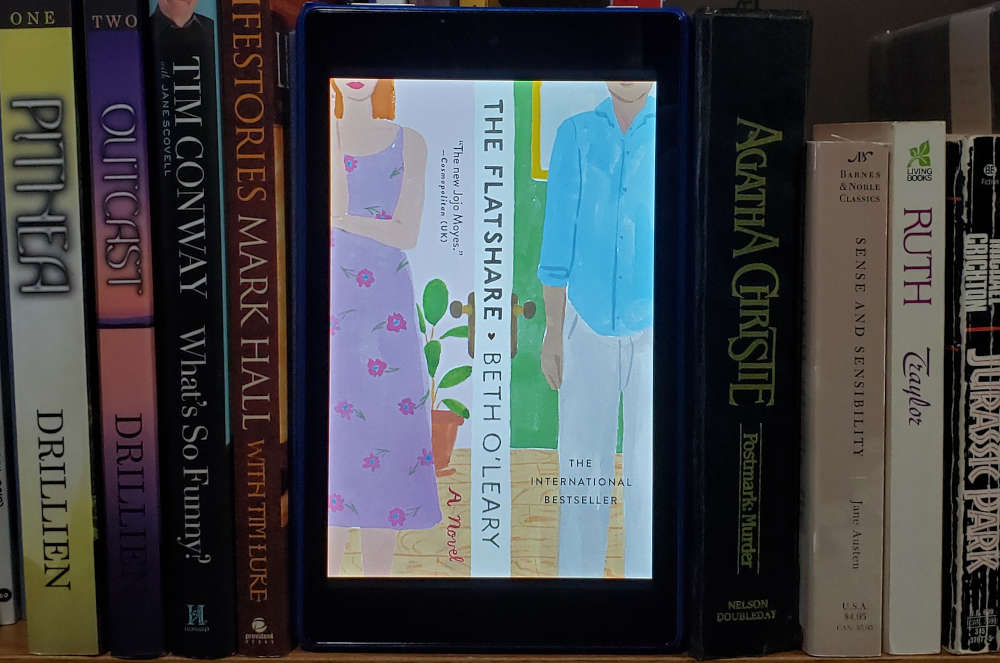
Book Review: The Flatshare

The Flatshare
by Beth O’Leary

My rating: 2 / 5
Genre: Romance

To solve their individual money problems, Tiffy and Leon enter into an agreement to share his 1-bedroom flat, sharing even the bed. Leon works nights and Tiffy days, so they will each have the flat to themselves (Leon plans to be completely gone on weekends). What starts as a simple note about leftovers turns into a friendship between these two people who have never met, yet know details about each other due to sharing a bedroom.

Oh, my goodness, I’m not quite sure how to start this review. When I decided to read this book, I knew the premise was pretty outlandish, but I was ready to suspend my disbelief for a fun, light story. That’s not really what this is, but that isn’t even the issue, really. For one thing, there’s just too much going on in this book. Besides the developing relationship between the two MCs and their everyday lives they have to deal with, Leon has a brother trying to appeal a conviction, a personal quest to help one of the patients at the hospice where he works, and a girlfriend. And Tiffy has a stalker ex-boyfriend and the trauma from emotional abuse he inflicted on her to deal with. Though I appreciated parts of how Tiffy’s storyline went—first identifying the abuse and then trying to move on from it—I think the author didn’t really have room to treat something that serious as well as one would hope to.

Several of the pet peeves I’ve recently begun to identify in fiction reared their ugly heads in this story. The main one is when someone can mouth an entire sentence, and it’s perfectly understood by whoever they’re mouthing it too. Honestly, how easy is it, really, to understand if someone mouths more than “thank you” or “I love you”? And this happened at least 2-3 times. Another is the amazing ability a character has to know exactly what someone else is thinking, simply based on micro expressions on their face. We’re not talking two people who’ve known each other since childhood, but work friends. Both of these things, to me, are just lazy writing. And don’t even get me started on the fact that Leon is in a fairly serious-seeming relationship at the beginning of this book. I have never cared for that kind of scenario in romance.

Now for my last major gripe (and a warning to those who don’t like a lot of physical contact in books they read): The descriptions in this book, while not graphic by most standards, went way too far for my preference more than once. Besides, to me, a relationship does not need lots of physical interaction to be romantic. In fact, I prefer as little of it as possible, because then the author has to make sure that there is romance and chemistry in other ways, which are much more impactful, in my opinion. Nothing spoils a nicely budding romance in any medium of fiction for me than the couple jumping into bed as soon as they feel that it’s socially acceptable.

In the end, if only one of the side plots had been focused on, I might have enjoyed the overall story more, though it would still have been far from a 5-star read for me. I, personally, would not recommend this book to anyone, and I think this book effectively ends my desire to ever read a contemporary romance again.

Find out more about The Flatshare

See what I’m reading next.

If you’ve read this book, or read it in the future, feel free to let me know what you think!