Mists over the Channel Islands
Allegiance Under Pressure #3
by Sarah Sundin
My rating: 5 / 5
Genre: Christian historical romance
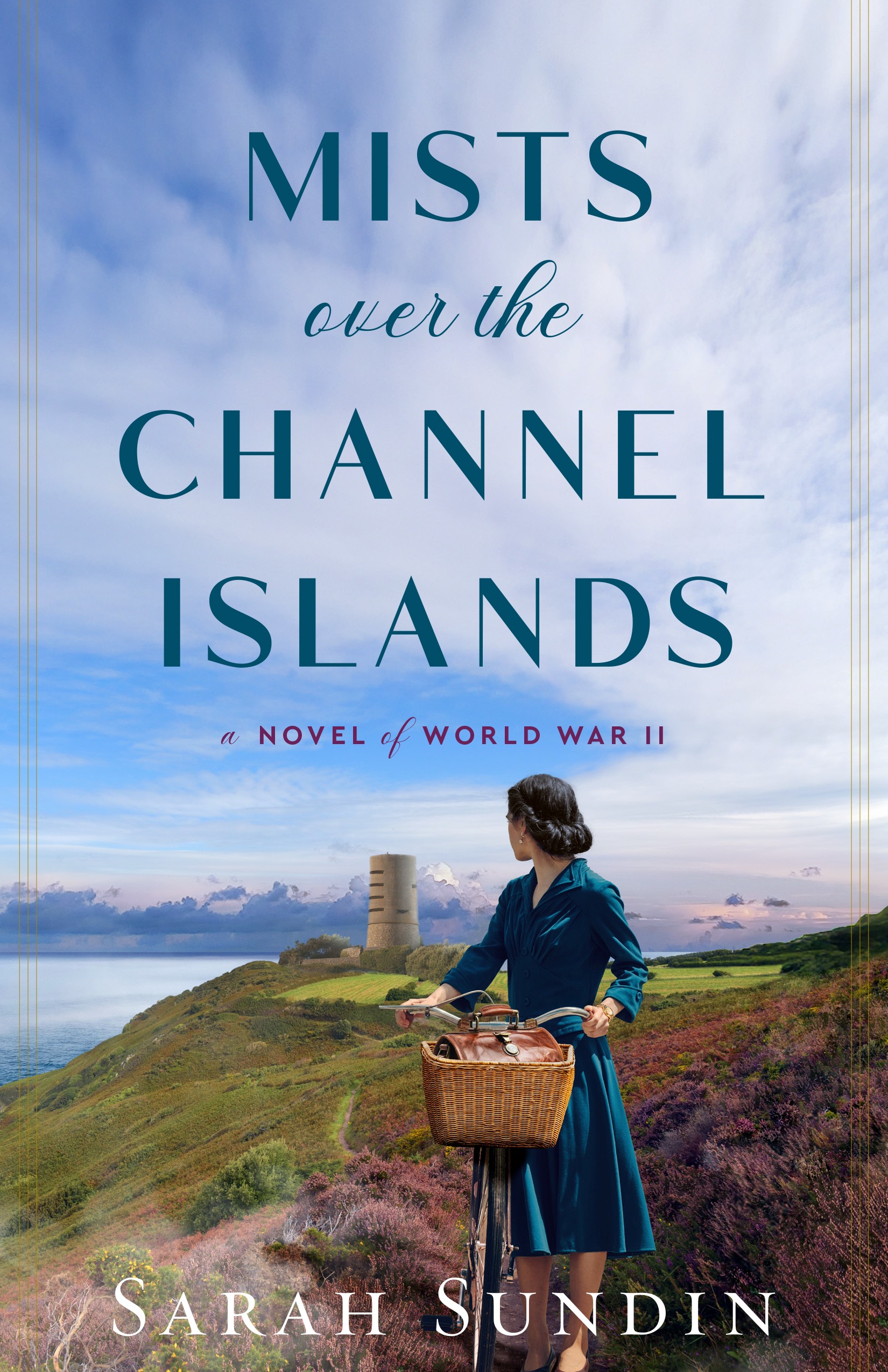
When the Germans invade the British Channel Islands, Dr. Ivy Picot is left trying to keep her dad’s medical practice afloat, with him and half of her family evacuated to England. Then Ivy is pulled into a ring of medical people who help treat hidden laborers who are in danger from their German taskmasters who are using forced labor to build fortifications on the island. One of those responsible for the new structures marring the beautiful landscape of her beloved Jersey is Gerrit van der Zee, a Dutchman who volunteered for the work in the hopes that he’d be able to help the Allies in some way. But even as he is captivated by the lovely young doctor, he can’t tell her that he is not one of the occupiers she so despises, that he’s actually on her side.
Again I’m struck by Sarah Sundin’s grasp on the history in this time period. I’ve read a few non-fiction books about (and in some cases written by) people who were involved in underground resistance rings during WWII, and Sundin’s writing here rings true for the most part. There is one character who never quite grasps the “don’t say anything to anyone ever” concept, but the codes that are set up and different ways they attempt to keep things hidden and secret kept me engage and in suspense. I kept watching the dates tick ever closer to D-Day, then to the date I knew the Channel Islands would be liberated, and wondering how badly things would fall apart as the Germans got more and more desperate.
Sundin has a way of writing romance into her stories without making it the predominant theme or overwhelming the plot, and the same is the case here. I also really liked several of the side characters and was appropriately saddened by one particular story arc throughout the book. Then near the end, we get to reunite with characters from the previous two books in this series, and I really enjoyed that. I recommend this book to anyone who likes historical fiction from this time period in the Christian romance genre. Though this is the third book in a series, you don’t need really to read them in order. Though of course, since I enjoyed the whole series, I’d say there’s no reason not to start with the first book, Embers in the London Sky.
Thank you to Netgalley and Revell for providing me a copy of this book to review.
Find out more about Mists over the Channel Islands
If you’ve read this book, or read it in the future, feel free to let me know what you think!







 A Journey of Words