Book Review: A Hero’s Guide to Deadly Dragons

A Hero’s Guide to Deadly Dragons
How to Train Your Dragon #6
by Cressida Cowell
read by David Tennant

My rating: 2 / 5
Genre: Middle grade fantasy

In order to prove that his group of Vikings are better burglars than another group, Hiccup and his friends sneak into a Viking library to steal a book. Things go wrong, of course, in fairly predictable ways by this point in the series. Unfortunately, there’s not enough new here to make it particularly enjoyable. Hiccup is ridiculed, as always, but manages to pull off the unexpected, as always. This book feels more like the author is trying to get a not terribly subtle message across—books are important. Libraries are important. Banning books is bad. And alongside that message, she feels the need to talk about a woman’s breasts more than I’d be comfortable with in adult book, and this book is for kids! The leader of a mostly friendly rival tribe is named Big-Boobied Bertha, and she’s been in several of the previous books as well. I was a bit taken aback by the name before, but she had a pretty small role in the past and I guess I passed it off as a British quirk. In this book, not only is she involved a lot more, her “gigantic” breasts are described and referenced several times. It is absolutely unnecessary and just plan ridiculous in a book meant for 10-12 year olds. So though I’m probably in the minority of being bothered by this, let this be a warning for those who are like me. Maybe skip this one.

Find out more about A Hero’s Guide to Deadly Dragons

See what I’m reading next.

If you’ve read this book, or read it in the future, feel free to let me know what you think!
Book Review: Isle of Ever

Isle of Ever
Book #1
by Jen Calonita

My rating: 2.5 / 5
Genre: Middle grade fantasy

Twelve-year-old Everly Benedict (who goes by Benny) is presented with a series of clues and riddles to solve in order to inherit a large estate from an ancestor who lived 200 years ago. Since she isn’t sure how her mom is going to pay this month’s rent, it seems like an answer to all of their problems. But she only has 2 weeks to finish the game and is warned not to be careful who she trusts. And soon enough, it becomes clear that there’s more than an inheritance on the line.

Right up front, whatever else I thought about this book, the ending was a huge let-down. Not just a cliffhanger, but a full-stop that I see all too often in self-published books but don’t expect in traditionally published books from established authors. As an author myself, I firmly believe that not resolving an obvious story goal within that same book is a huge no-no, and unless I seriously misjudged what Calonita intended the story goal to be here, it was definitely not fully resolved. Even the final riddle was only partially solved. And though Benny is out of time, somehow she’s going to have to play a whole new game in order to “win”? Maybe the time will be extended, but either way, the ending was just so underwhelming for me.

Up to that point, the book was okay. Not stellar, but not interesting enough to make me curious about what was going on. The story is told from Benny’s POV with journal entries from her ancestor, Evelyn Terry, thrown in throughout. Those journal entries were written in 1825, though they did not sound like that to me much at all. The main downside (other than the ending) for me is that there are a lot of fantastical elements that either don’t make sense or don’t seem consistent. And very little, if anything, is explained, though that may just go along with the lack of resolution. I don’t think we were given enough chance to feel connected to the characters in that timeline to care as much as we should have about what happened to them. And quite frankly, I didn’t feel that the catalyst for the main story-propelling incident in Evelyn Terry’s timeline had enough urgency to it. 

So in the end, will I read the next one when it comes out? Probably, since it comes out in a few months so I hopefully won’t have time to forget everything about this book before diving right in where this one left off. But do I recommend it? Well…it really depends a lot on how you feel about a lack of resolution. Once the 2nd book comes out in March, you can “binge read” them and maybe it won’t seem so bad, especially knowing that this first book will end this way. But since I don’t know if some of the unclear elements or inconsistencies will be cleared up in the 2nd book, it’s really difficult to say whether I recommend the book or series as a whole yet. Stay tuned…

Thank you to Netgalley and SOURCEBOOKS Kids for providing me a copy of this book to review.

Find out more about Isle of Ever

See what I’m reading next.

If you’ve read this book, or read it in the future, feel free to let me know what you think!
Book Review: Silent Bite

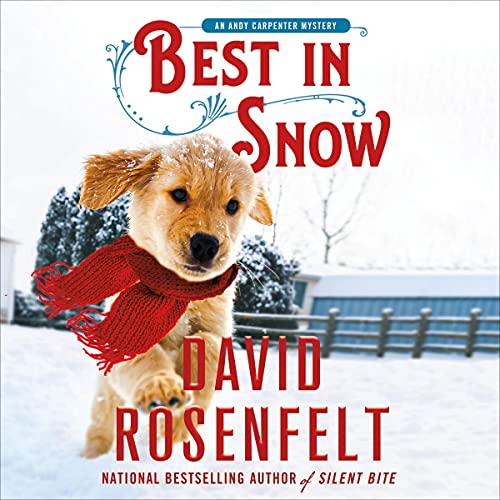
Silent Bite
Andy Carpenter #22
by David Rosenfelt
read by Grover Gardner

My rating: 4 / 5
Genre: Mystery

When semi-retired defense attorney Andy Carpenter’s friend Willie Miller brings him a defendant in need, it’s hard for Andy to say no. But an ex-con who is accused of murdering some old enemies won’t make for a simple case.

This book has some differences compared to other books in the series. The case seems a little weaker to me (from the prosecution’s side), yet the mystery itself was involved and interesting. It’s most common for Andy’s cases to end up involving grand conspiracies, often reaching across the nation or even to other countries, so it’s nice to have a divergence from that, in some form.

A large part of why I enjoy this series is due to Andy’s team, and in this book, there is a change-up in the team. However, it happens in an amusing way, and it means the series gets a fresh addition, which can be nice this far in. So far, though, at least to me, the new guy doesn’t have quite as good of a “shtick” as the one we’re losing, but I’ll reserve judgement for now (I’ve listened to later books in the series and recognize the name from them, but I don’t really remember anything about him, which might be telling in itself). Listening to this book with Grover Gardner as the narrator is like slipping back into a comfortable pair of shoes after wearing dress shoes all day. It may be a strange analogy, but it’s just so nice. If it’s not clear, I recommend this book (especially the audio) for fans of mystery, crime fiction, and courtroom dramas, as well as the books that precede it in the series (and probably all that follow it, but I’m still working my way through).

Find out more about Silent Bite

See what I’m reading next.

If you’ve read this book, or read it in the future, feel free to let me know what you think!
Book Review: The Grasshopper Myth

The Grasshopper Myth
by Karl Vaters

My rating: 2 / 5
Genre: Christian nonfiction

The idea that small churches and pastors of small churches don’t need to feel that they’re doing something wrong because small churches are just as important as big ones was interesting to me because my husband is currently in the process of becoming a pastor and most likely will end up in a pretty small church. That is mostly because he doesn’t want to pastor a large church, though, so maybe that already makes me/us the wrong audience for this book, which is geared toward helping small church pastors and leaders not feel the need to work unnecessarily toward growing a church that might just not be meant to grow.

Some of the content of the book really is good info, and actually gave me some insight into my current church’s situation. We got a new pastor last fall after our long-time pastor retired, and one of the things that was brought up during our transition period is that we want to grow. Our church has averaged maybe 120 attendees on a Sunday morning for a long time now, though our biggest weak spot was younger people—both young adults and children. I certainly understand a desire to bring in more younger people and even a desire to grow the church (though I’m really not a big-church person personally, but we do have some room to grow before I’d be uncomfortable). But I’m noticing some things that were really highlighted by this book, namely that the new pastor has said and done some things that lead me to believe he thinks that thinking and acting like a “big church” are the key to growth. But big church thinking just feels unnatural in our position, at least to me (I am certain I’m not the only one). I also appreciated a comment made in the book that if a pastor is getting push-back from other leaders or even just regular congregants in regards to something he wants to do or implement, maybe he needs to re-think doing that particular thing, rather than just telling himself that those naysayers aren’t part of the “vision.” I’m feeling that strongly in a few areas right now too.

On other other hand, though, I felt like Vaters doesn’t necessarily believe some of what he’s saying. He venerates megachurches a lot. When he goes on vacation, he finds a megachurch to attend (because he knows he’ll get good stuff there rather than rolling the dice on a small church…more on my thoughts about the “good stuff” at a megachurch later). He talks about how needed they are, how they fill the spiritual needs of many. I was left wondering if he really had come to terms with being “just a small church pastor” or if maybe he was still wishing he could be more. The way that he capitalizes the phrase “Small Church” every time it’s used in the book, which is a lot (and often it’s “New Small Church,” which I don’t even get, because he never really explains what’s “new” about them…unless this is just a way to promote his brand) makes me feel like he’s trying legitimize small churches as being as important as large/mega churches, because his statistics and personal anecdotes aren’t enough.

Vaters basically implies that thinking badly of megachurches or their pastors (in general or even specific churches/pastors) is only ever due to jealousy or an “us vs. them” mentality. A few times he does admit that large and megachurches have some flaws, but overall, they’re good. They fill the spiritual needs of many people. I would have to disagree with most of this. The flaws he mentions sound pretty important to me, not just something to be swept under a rug. If the majority of the people who go to a megachurch sneak in and out just to check off the box that they went to church in the hopes that their checklist will get them into Heaven, but they’re not challenged or convicted by biblical preaching, have no fellowship with other believes who could hold them accountable, and vice versa, and don’t do anything at all to serve God because their services aren’t needed at that huge church and they can live the rest of their week as if God doesn’t exist, what kind of spiritual life can they possibly have. I know I’m generalizing here and that large/mega churches tend to have small groups within the church where those who desire it can get a more personal touch similar to what small churches have, but I have a difficult time believing that large and especially megachurches aren’t more harmful than they are helpful.

Add to that the megachurch pastors that he brings up and quotes and clearly esteems that I know are off-base theologically, even to the point of being false teachers, but it seems like Vaters doesn’t allow for that possibility at all. No, if we don’t like megachurch preachers, we’re just looking for a theological excuse to hate them. I’m sorry, what? The Bible is clear that people will come in God’s name but be speaking lies! (One example: Matthew 24:11) It’s a truism that what is popular is not always right, and sometimes that the more widely liked something is, the more incorrect it is (at least in regards to the Bible and Christianity). In other words, it’s easier to believe in watered down truth or truth that doesn’t force us to change our lifestyles than in a convicting truth that forces us to examine our lives and admit that we might be doing things we shouldn’t be doing, and that, in a nutshell, is a large part of why at least some mega (and even large) churches exist. Again, I’m generalizing, and I’m definitely not an expert, but at the very least, these are things to address, and Vaters just does not.

Now, all of that being said, would I recommend this book for the content that I did find useful? No. To be honest, I started off with higher rating, because of the parts I did appreciate, and then lowered it to 2 while I wrote the above paragraph. Because I realized that, like megachurches in general, this book might be more harmful than it is helpful.

Find out more about The Grasshopper Myth

See what I’m reading next.

If you’ve read this book, or read it in the future, feel free to let me know what you think!
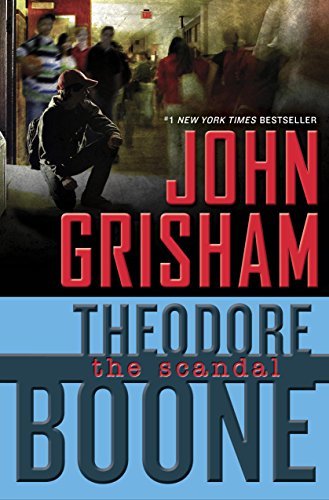
Book Review: The Accused

The Abduction
Theodore Boone #3
by John Grisham
read by Richard Thomas


My rating: 4.5 / 5
Genre: Middle grade fiction

When thirteen-year-old Theodore Boone begins to be harassed by an unknown person, he becomes a suspect in a crime himself.

The first thing I want to say is that, by this point, Theo’s uncle Ike Boone should really not still be described the way he is—as a somewhat sad, pathetic divorcee ex-con that Theo just visits out of obligation. He’s been such a help to Theo in all three books so far—someone that Theo can come to when his parents are too busy (which seems to be always), instrumental in both of the previous books in different ways. I’ve really come to like him, though I don’t envy some of the decisions he had to make in this book, so it’s kind of jarring for the author to still treat him as less than.

That being said, this was probably my favorite book in the series so far, though I’ve liked them all quite a bit. Theo gets a chance to find out what “innocent until proven guilty” is really supposed to mean, and what happens when the general public convicts a suspect before the trial. It’s an interesting parallel to what’s going on with the murder suspect first introduced in the first book, who is involved in this book a little bit too. I actually kept expecting Grisham to bring that up, for one of the adults in Theo’s life to point this out to him, but either he was keeping it subtle or it wasn’t an intentional parallel.

Richard Thomas continues to do a great job with the narration. At this point, it’s still probably not super important to read the books in order, though I do think it would be helpful to have at least read the first book in the series, since there are connections back to it in this book. Overall, I’d say whether or not a teenager or pre-teen will be interested in this book will depend on what kind of fiction they like—if fast-paced action is important, this probably won’t suit them. If they’re interested in realistic fiction about crime and law and trials, this could be fascinating for them.

Find out more about The Accused

See what I’m reading next.

If you’ve read this book, or read it in the future, feel free to let me know what you think!
Book Review: Brother Odd

Brother Odd
Odd Thomas #3
by Dean Koontz
Read by David Aaron Baker

My rating: 4.5 / 5
Genre: Paranormal thriller

While living in a guest house at a monastery in order to simplify his life, Odd comes across something completely new, even with his penchant for seeing ghosts and other paranormal connections. The bizarre creature seemingly made of bones, combined with the Bodachs that have appeared around the area, leads Odd to believe something bad is about to happen.

This was my favorite book in the series so far. There are a lot of amusing moments in the book, from Odd’s interactions with Elvis to his banter with the suspicious Russian man also staying at the monastery. I continue to enjoy Odd as a character—kind and modest almost to a fault with a strong desire to protect those who are weak. The mystery kept me engaged, though I have to admit that the reveal was a little confusing, even convoluted. But that was really my only issue with the book. I was sad about a chapter that closed at the end of the book, but I look forward to seeing where the series goes. Sadly, I’ll have to fit the rest into my normal reading schedule, because the rest of the audiobooks don’t seem to be available from any of the library services available to me. But I enjoyed this third book enough to be willing to continue on my own.

Find out more about Brother Odd

See what I’m reading next.

If you’ve read this book, or read it in the future, feel free to let me know what you think!
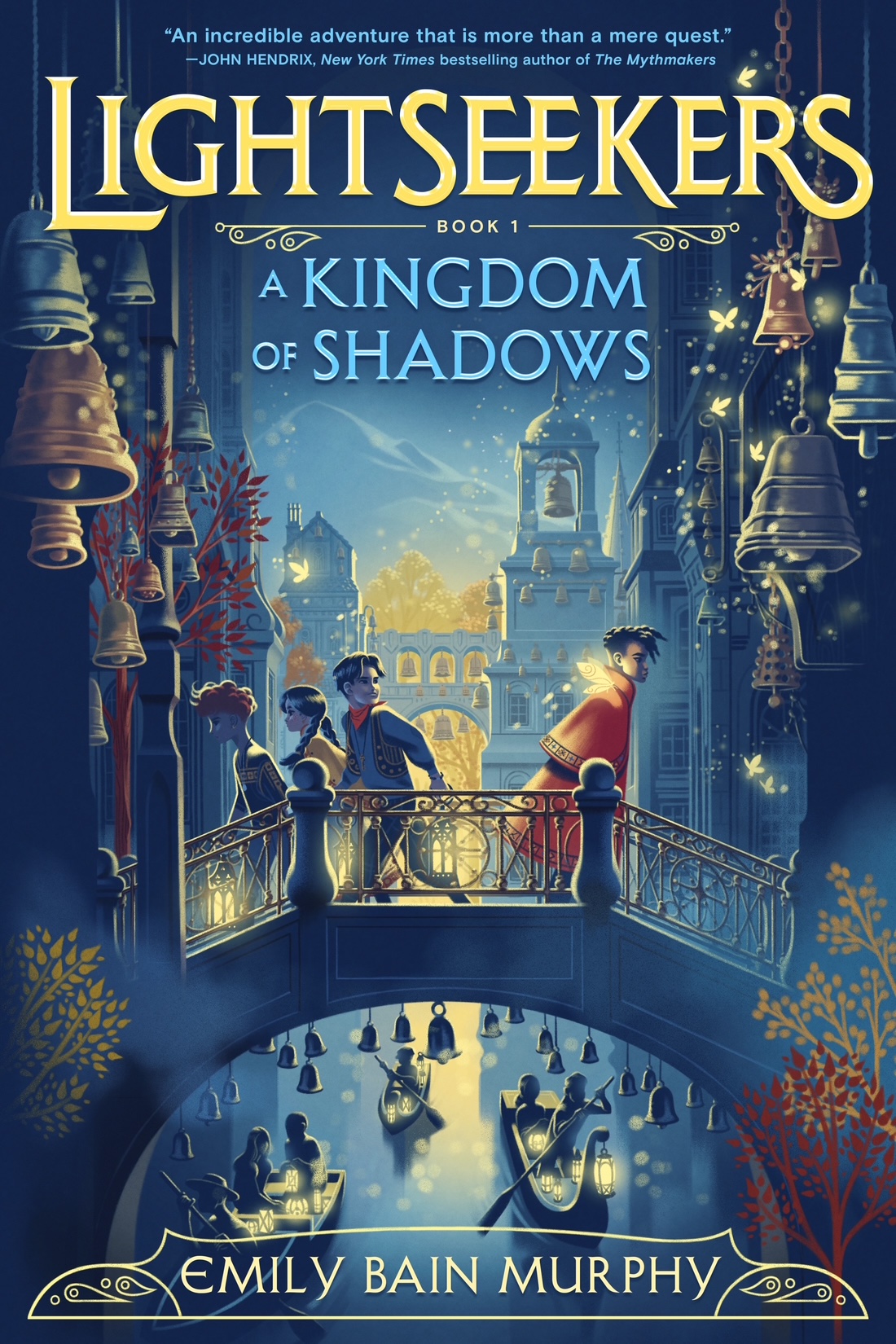
Book Review: The Disappearances

The Disappearances
by Emily Bain Murphy

My rating: 5 / 5
Genre: YA historical fantasy

When Aila’s dad is drafted to fight in WWII not long after her mom’s death, she and her little brother Miles are sent to live with an old friend of their mom’s in the small town where their mom grew up. The siblings quickly begin to notice some strange things about their new home, like the lack of mirrors in the entire house. And how the flowers in the backyard don’t have any smell. As it turns out, every seven years, the people in the town lose something, like the ability to smell or dream. It’s been happening for 35 years and no one knows what made it start or what might make it stop. And the next Disappearance is only days away.

This is one of those books that leaves me struggling to figure out where to start with my review. I was so caught up in the story that I had a really hard time putting the book down and ended up staying up an hour later than normal to finish it. The Disappearances, the way the town reacts to them, their attempts to counter them—all of it comes together in an intriguing story. Add to that Aila’s and Miles’s grief over their recent loss, worry for their endangered dad, and difficulty in settling into a new town, which is all really well done and feels authentic. 

As the main story is unfolding, we get glimpses of another plot that seems to have connections to the main story, though it isn’t immediately clear what those connections are. But as the story goes on, more and more hints are dropped. I actually looked something up online based on a clue from the book and made a connection before the book brought it up. I had no idea why it was significant, but the excitement I felt at my realization was just further proof of how invested I was in the book. I can’t say a lot due to not wanting to spoil anything, but I already mentioned how caught up I was in the last quarter or so of the book. There are some details that aren’t explained in the end, but nothing that was left unexplained bothered me. I don’t need to know how the “magic” worked. I just loved the way the author worked everything out. It actually reminded me of Holes, which is not really touted as fantasy, yet has a curse-related overall arc that is similar to this book. I also have to admit that the book doesn’t feel particularly historical, even though it’s set in 1942, but I just didn’t care enough to be bothered by it. I don’t give 5 stars easily, but I haven’t enjoyed a book of this genre this much in a while. If the book interests you at all, I strongly urge you to give it a read!

Find out more about The Disappearances

See what I’m reading next.

If you’ve read this book, or read it in the future, feel free to let me know what you think!
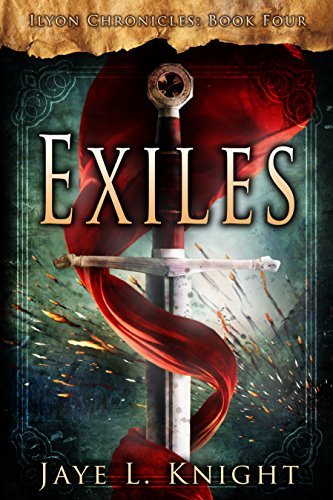
Book Review: The Infinite Glade

The Infinite Glade
The Maze Cutter #3
by James Dashner

My rating: 1 / 5
Genre: YA dystopian

Not only did this book have a lot of the same problems as the previous two—too many characters, too little to care about, too many factions and no clear understanding of who was good or bad—but on top of all of that, there was far too few answers given. Elements that were touted as super important throughout the trilogy (like the Cure and the Evolution) are seriously downplayed here and never come to fruition of any kind. More characters are added that end up being completely pointless and a POV character added in the previous book also really had no point by the end. I struggle to understand what Dashner was going for in general or why these books didn’t get stopped before publication. But here’s the thing that is probably important for anyone reading this review to know: I didn’t particularly care for the first trilogy either. I liked the first book and truly wanted to know more about the world set up within it. But it felt like Dashner had written himself into a corner and proceeded to pants his way through the rest of the series, which ended up a convoluted, shallow mess. It was probably my mistake to read this follow-up trilogy, but I really hoped that it would be more of a call back to The Maze Runner, something that could possibly redeem the world for me. Instead, it deteriorated even further. This means that I obviously don’t recommend this trilogy to anyone. And yes, a lot of people enjoyed the first trilogy more than me and thus might enjoy this follow-up more too. Beware, though, that the overall rating, at least on Goodreads, of this trilogy is quite a bit lower than for the original trilogy, and reviews I’ve read indicate that plenty of people who loved the original didn’t like these books nearly as much.

I received a free review copy from the publisher in exchange for my honest unedited feedback.

Find out more about The Infinite Glade

See what I’m reading next.

If you’ve read this book, or read it in the future, feel free to let me know what you think!
2025 in Books

2025 was a mostly standard year of reading. I did get minorly addicted to a game on my phone for a few months, and my reading suffered. Then I got rid of the game, and more than my reading benefited. My average rating of books was fairly low (see breakdown of ratings near the bottom), which is kind of sad, but hopefully I can get better at picking books I’ll like more this year.

I read 148 books in 2025, hitting my Goodreads challenge of 140 books on December 12th. My total page count was 42,731, making my average book length for the year 289 pages.

Below are the books I read in 2025. The link is to my review for that book, and a link to the book on Goodreads is at the bottom of each review.

January

God Loves Me and I Love Myself! by Mark DeJesus (1.5 / 5)
Three Act Tragedy by Agatha Christie (4.5 / 5)
The Emperor’s Code by Gordon Korman (4.5 / 5)
Anchor in the Storm by Sarah Sundin (4.5 / 5)
Shatterproof** by Roland Smith (4 / 5)
Unleashed by David Rosenfelt (4.5 / 5)
How to Thrive as a Pastor’s Wife by Christine Hoover (5 / 5)
On the Edge of the Dark Sea of Darkness** by Andrew Peterson (5 / 5)
Under Lock & Skeleton Key by Gigi Pandian (3 / 5)
Made to Be She* by Kristen Clark & Bethany Beal (5 / 5)
The Murder at the Vicarage by Agatha Christie (3 / 5)
United as One by Pittacus Lore (3 / 5)
Free* by E.B. Roshan (5 / 5)

February

Storm Warning** by Linda Sue Park (4 / 5)
Midnight on the Scottish Shore* by Sarah Sundin (5 / 5)
Do the Bright Thing by Bill Myers (4 / 5)
Jane Eyre by Charlotte Brontë (3 / 5)
Storm Warning* by Elizabeth Goddard (2.5 / 5)
Al Capone Does My Homework by Gennifer Choldenko (5 / 5)
Claudia and the Phantom Phone Calls** by Ann M. Martin (4 / 5)
Christy by Catherine Marshall (5 / 5)
Bittersweet Rendezvous in New England* by Diane Green (2 / 5)
Hounded by David Rosenfelt (5 / 5)
Trust No One by Linda Sue Park (4 / 5)
Reclaiming Quiet* by Sarah Clarkson (2 / 5)

March

The Kaiju Preservation Society by John Scalzi (3 / 5)
Disney at Dawn by Ridley Pearson (3 / 5)
The Shingle Weaver’s Picnic* by P.C. Smith (2.5 / 5)
North! or Be Eaten** by Andrew Peterson (5 / 5)
No Compromise by Melody Green & David Hazard (4.5 / 5)
Death in the Clouds by Agatha Christie (3 / 5)
The Unbreakable Code by Jennifer Chambliss Bertman (4.5 / 5)
Into the Gauntlet** by Margaret Peterson Haddix (4 / 5)
The Sisters of Corinth by Angela Elwell Hunt (5 / 5)
The Fugitive by Pittacus Lore (3.5 / 5)
Who Let the Dog Out by David Rosenfelt (4 / 5)
I See You’ve Called in Dead* by John Kenney (2.5 / 5)

April

The Guernsey Literary and Potato Peel Pie Society** by Mary Ann Shaffer & Annie Barrows (5 / 5)
The Martian** by Andy Weir (4.5 / 5)
World of Warcraft, Vol. 4 by Walter & Louise Simonson (3 / 5)
The Monster in the Hollows** by Andrew Peterson (5 / 5)
Framed* by John Grisham & Jim McCloskey (4 / 5)
Cards on the Table by Agatha Christie (3 / 5)
Day of Doom by David Baldacci (3 / 5)
Vespers Rising** by Rick Riordan, Peter Lerangis, Gordon Korman, Jude Watson (4 / 5)
Murder Between Friends* by Liz Lawson (3 / 5)
Outfoxed by David Rosenfelt (4.5 / 5)
When Tides Turn by Sarah Sundin (3.5 / 5)

May

The Inheritance Games by Jennifer Lynn Barnes (3.5 / 5)
The Warden and the Wolf King** by Andrew Peterson (5 / 5)
Face of Death by Blake Pierce (3 / 5)
The Navigator by Pittacus Lore (4 / 5)
The ABC Murders by Agatha Christie (4.5 / 5)
Night Swimming* by Aaron Starmer (3.5 / 5)
The First Fifteen Lives of Harry August by Claire North (4 / 5)
The Twelve Dogs of Christmas* by David Rosenfelt (4 / 5)
Misplaced Threats** by Alan Zimm (4 / 5)

June

Shell Shocked* by Kathleen Welton (1 / 5)
Dogged Pursuit* by David Rosenfelt (4 / 5)
The Alcatraz Escape by Jennifer Chambliss Bertman (4.5 / 5)
The Boxcar Children** by Gertrude Chandler Warner (4 / 5)
The Truth About Stacey** by Ann M. Martin (3 / 5)
Murder in Mesopotamia by Agatha Christie (3.5 / 5)
Stellar English* by Frank L. Cioffi (4 / 5)

July

Mary Anne Saves the Day** by Ann M. Martin (5 / 5)
The Hunger Games** by Suzanne Collins (5 / 5)
Beauty in the Least by Bill Myers & Robert West (3 / 5)
Alcatraz Versus the Evil Librarians by Brandon Sanderson (3.5 / 5)
Cloaked in Beauty* by Karen Witemeyer (2 / 5)
Collared by David Rosenfelt (4.5 / 5)
Murder in the Mews by Agatha Christie (4 / 5)
The Collector of Burned Books* by Roseanna M. White (3 / 5)
Surprise Island by Gertrude Chandler Warner (2 / 5)
Moonleapers* by Margaret Peterson Haddix (4 / 5)
The Secret Blend by Stan Toler (4 / 5)
Catching Fire** by Suzanne Collins (5 / 5)

August

Disney in Shadow by Ridley Pearson (1.5 / 5)
Rescued by David Rosenfelt (4 / 5)
The Yellow House Mystery by Gertrude Chandler Warner (3 / 5)
Dawn of Grace* by Jill Eileen Smith (2.5 / 5)
Dumb Witness by Agatha Christie (4 / 5)
The Hawthorne Legacy by Jennifer Lynn Barnes (3 / 5)
A Spell to Wake the Dead* by Nicole Lesperance (3 / 5)
Mockingjay** by Suzanne Collins (4 / 5)
The Guard by Pittacus Lore (3 / 5)
Deck the Hounds by David Rosenfelt (3.5 / 5)
Mystery Ranch by Gertrude Chandler Warner (2 / 5)
I Know What You Did Last Summer by Lois Duncan (3 / 5)
Al Capone Throws Me a Curve by Gennifer Choldenko (4.5 / 5)
Death on the Nile by Agatha Christie (4.5 / 5)
The Daughter of Rome by Angela Elwell Hunt (4 / 5)
Lava* by E.B. Roshan (4 / 5)

September

The Ballad of Songbirds and Snakes** by Suzanne Collins (4 / 5)
Harry Potter and the Sorcerer’s Stone** (MinaLima version) by J.K. Rowling (4 / 5)
Very Dangerous Things* by Lauren Muñoz (2 / 5)
Bark of Night by David Rosenfelt (4.5 / 5)
The Wedding Bond by Lee Tobin McClain (2 / 5)
How to Train Your Dragon by Cressida Cowell (4 / 5)
Theodore Boone: Kid Lawyer by John Grisham (4 / 5)
True Life in Uncanny Valley* by Deb Caletti (1.5 / 5)
Mandie and the Secret Tunnel** by Lois Gladys Leppard (4 / 5)
Howl’s Moving Castle by Diana Wynne Jones (4 / 5)
Appointment with Death by Agatha Christie (3 / 5)
Forward As Always by Olan Rogers & Jake Sidwell (3 / 5)
Legacy by Clifford Riley (4 / 5)
Beyond the Far Horizon* by Carolyn Leiloglou (5 / 5)
The 5th Wave by Rick Yancey (2.5 / 5)

October

Edgeland by Jake Halpern & Peter Kujawinski (2.5 / 5)
Dachshund Through the Snow by David Rosenfelt (4 / 5)
How to Be a Pirate by Cressida Cowell (3 / 5)
The Maze Cutter by James Dashner (2 / 5)
Hercule Poirot’s Christmas by Agatha Christie (3.5 / 5)
The Final Gambit by Jennifer Lynn Barnes (4 / 5)
Ms. Pennypickle’s Puzzle Quest* by Chris Grabenstein (5 / 5)
Castle in the Air by Diana Wynne Jones (2 / 5)
The Lost Causes of Bleak Creek** by Rhett McLaughlin & Link Neal (4.5 / 5)
Seven Things I Wish Christians Knew About the Bible by Michael F. Bird (3 / 5)
And to All a Good Bite* by David Rosenfelt (5 / 5)
Not If I Save You First** by Ally Carter (1.5 / 5)
Mr. Lemoncello’s Library Olympics: The Graphic Novel* by Chris Grabenstein (4.5 / 5)
The Lost Lieutenant** by Erica Vetsch (5 / 5)
Sunrise on the Reaping by Suzanne Collins (5 / 5)

November

How to Speak Dragonese by Cressida Cowell (4 / 5)
Finding Phoebe* by Ellie Katz (3 / 5)
The Minor Rescue* by Meredith Davis (3.5 / 5)
Odd Thomas by Dean Koontz (4 / 5)
Resistance by Jaye L. Knight (3.5 / 5)
House of Many Ways by Diana Wynne Jones (3.5 / 5)
The Sea Before Us** by Sarah Sundin (4 / 5)
Muzzled by David Rosenfelt (4.5 / 5)
Power** by Kristi Drillien (5 / 5)
The Godhead Complex by James Dashner (2 / 5)

December

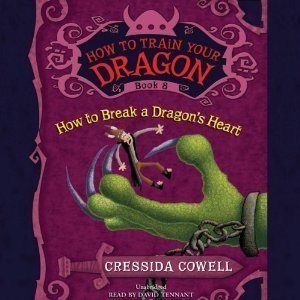
How to Cheat a Dragon’s Curse by Cressida Cowell (4.5 / 5)
In the Light of the Sun* by Angela Shupe (3 / 5)
The Crossover Graphic Novel by Kwame Alexander (4 / 5)
Mandie and the Cherokee Legend** by Lois Gladys Leppard (2 / 5)
Forever Odd by Dean Koontz (3 / 5)
A Scheming in Parliament by Erica Vetsch (5 / 5)
The Abduction by John Grisham (4 / 5)
A Christmas Cup of Joe by Kirsten Clark (4 / 5)
Dawn and the Impossible Three** by Ann M. Martin (4 / 5)
The K Team by David Rosenfelt (3 / 5)
The King’s Scrolls by Jaye L. Knight (4.5 / 5)
A Christmas Carol by Charles Dickens (4.5 / 5)
A Sea View Christmas* by Julie Klassen (3 / 5)
How to Twist a Dragon’s Tale by Cressida Cowell (4 / 5)
Holly and Nick Hate Christmas* by Betsy St. Amant (2 / 5)
The Lightning Thief by Rick Riordan (4.5 / 5)

This list includes 32 ARCs (marked with a *) and 28 re-reads (marked with a **). During the last year, I started 16 series and finished 15 series, caught up on 1 series (meaning the author plans to release more in the future), and decided not to continue 2 series (after being at least 2 books into the series). I currently have 14 series in progress.

Here is a break-down of the ratings I gave (minus some re-reads whose rating I didn’t count again):
1 star: 1
1.5 stars: 3
2 stars: 13
2.5 stars: 4
3 stars: 30
3.5 stars: 11
4 stars: 33
4.5 stars: 19
5 stars: 16
Average rating: 3.6

I don’t think I can pick one book as my favorite for the year, so here are my top 5 (in order of when I read them, not of preference):
Midnight on the Scottish Shore by Sarah Sundin
The Sisters of Corinth by Angela Hunt
Beyond the Far Horizon by Carolyn Leiloglou
Sunrise on the Reaping by Suzanne Collins
A Scheming in Parliament by Erica Vetsch

I’ve set my Goodreads challenge goal for 2026 at 150 books. I think it’ll be a bit of a stretch, but hopefully I can do it.

My ever-changing short list of to-be-reads, as well as a flag for the book I’m currently reading and an ongoing list of those I’ve read and posted about can be found here. I’m also keeping my Goodreads page updated with a more extensive list of to-be-reads, if anyone is interested in that.

What did you read last year? Let me know in the comments, and even feel free to link to your own summary post!

December in Review

I read 16 books last month, which was a tie for the most books I read in a month this year. Though I read quite a few really short books in December, so my total page count is more like 4th for the month. Still a pretty solid month of reading, considering how busy I was around the holidays. Also, I hit my Goodreads goal to read 140 books for the year on the 12th.

Here are the books I read in December:

How to Cheat a Dragon’s Curse by Cressida Cowell (4.5 / 5)
In the Light of the Sun by Angela Shupe (3 / 5)
The Crossover Graphic Novel by Kwame Alexander (4 / 5)
Mandie and the Cherokee Legend by Lois Gladys Leppard (2 / 5)
Forever Odd by Dean Koontz (3 / 5)
A Scheming in Parliament by Erica Vetsch (5 / 5)
The Abduction by John Grisham (4 / 5)
A Christmas Cup of Joe by Kirsten Clark (4 / 5)
Dawn and the Impossible Three by Ann M. Martin (4 / 5)
The K Team by David Rosenfelt (3 / 5)
The King’s Scrolls by Jaye L. Knight (4.5 / 5)
A Christmas Carol by Charles Dickens (4.5 / 5)
A Sea View Christmas by Julie Klassen (3 / 5)
How to Twist a Dragon’s Tale by Cressida Cowell (4 / 5)
Holly and Nick Hate Christmas by Betsy St. Amant (2 / 5)
The Lightning Thief by Rick Riordan (4.5 / 5)

This list includes 3 ARCs and 2 re-reads. My favorite book from December was A Scheming in Parliament. I started 2 series, continued 6 series, and finished 1 series. My ever-changing short list of to-be-reads, as well as a flag for the book I’m currently reading and an ongoing list of those I’ve read and posted about can be found here.

I’m also keeping my Goodreads page updated with a more extensive list of to-be-reads. Despite my almost too-long TBR list, I’m always looking for more to add. Feel free to offer suggestions of your favorites or just recent reads you enjoyed.