The Battlemage Summoner Trilogy #3 by Taran Matharu
My rating: 4 / 5 Genre: YA Fantasy
Spoiler notice: The following review will contain some spoilers for the previous books in the trilogy, The Novice and The Inquisition.
The Battlemage picks up immediately after the previous story’s end, with the main character, Fletcher, and what’s left of his unit jumping into the otherworldy ether to escape the enemy. They must find a way to return home, and then deal with the aftermath of their mission in the jungle, which ended in treachery and betrayal. Meanwhile, the orcs are poised to invade Fletcher’s country with an army that might be too large to overcome.
This book did a great job of wrapping up the entire trilogy, while being a full story on its own. I was a lot more excited going into this one than into the 2nd one, based on the cliffhanger at the end of the previous books, and the ether didn’t disappoint. The book was more distinctly 3 separate acts than any book I’ve really ever read, and the second act was also a lot of fun to read. By the third act, I knew what was coming, and it did end up being my least favorite part of the book. But that is purely personal preference, as I’ll explain further below.
It was great to see back some of the characters from the first book, and a little from the second. I was a little disappointed that we didn’t get to see much more of Arcturus, and overall, he wasn’t in the trilogy as much as I would have hoped and expected, especially considering that the prequel is about his history.
I enjoyed the middle act, where we really get to see Fletcher grow as a leader, and where the race warfare throughout the trilogy comes to a head, a lot more than I would have thought I would. But I knew what was looming–the big war with the orcs. I don’t personally care for large-scale, devastating wars in books, so that’s why the third act was my least favorite. It was made better by getting to see Fletcher’s ingenuity though, plus I like the addition of the demons during the fighting.
The ending of the book had some moments I was really happy to see, but also failed to wrap up some storylines in a way I would have preferred. However, I wasn’t left with the feeling that anything was completely neglected, so I can’t really complain. For some reason, I was just left with this feeling of it being anti-climactic, but I can’t explain why. I think it’s just because I would have liked more in the series in general. Overall, this entire trilogy was a solid 4 stars for me.
After reading the first book, I described it as a mix between Harry Potter and Pokemon, even though at the time, I hadn’t read any Harry Potter. I have read the first 2 in the series now, and I stand by my assessment, but only of the first book. The second and third books could better be compared to Warcraft, or even LoTR somewhat. In general, though, I would recommend this trilogy to anyone who enjoys magical fantasy books.
Harry Potter and the Chamber of Secrets Book #2 by J.K. Rowling
My rating: 4 / 5 Genre: YA fantasy
Continuing with my first ever reading of the Harry Potter books, it’s time for #2. As a reminder, even though these books/movies have been out for a while and are really well known, I’ll still warn in advance that my reviews will likely contain spoilers.
After the first book that set up the fantasy world and introduced us to Hogwarts, Harry’s 2nd year at the school was more comfortable and a smoother read. The plot was clearer and the danger more real. I also didn’t notice the grammar issues like I did in the first book, so either there were less of them, or I was engrossed enough not to notice (either way is a good thing).
There was a lack of characters that were established in the first book, though, which was a little disappointing. And some of the new characters were mostly just annoying. Colin was apparently just there to point suspicion at Harry. Lockhart was annoying, but at least there was a decent payoff. When he lost his memory, he became quite amusing to me. I was a little confused by Dobby. I guess he really did do everything he did of his own accord (rather than at the behest of his master, like they originally suspected), but his reasoning for it was weak.
My husband had warned me that there would be a possible spider-related issue for me in one of the books, but he couldn’t remember which one. I have fairly severe arachnophobia, so I’m going to have to be careful when watching the movie. At least I’ll know when to look away.
I’ve noticed that I seem to be in the minority of liking this book more than the first, but what can I say? It went in almost the opposite direction of my biggest gripes of the first one. And I liked the idea behind the antagonist being a memory, and even moreso, a memory of the big villain of the books. All in all, it was a fun read, and I’m looking forward to the next.
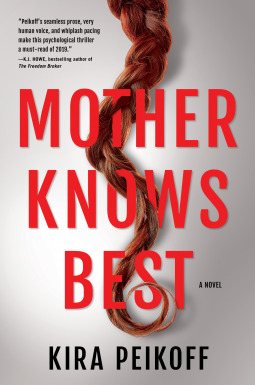
Eleven-year-old Abigail has a semi-normal life, except that her parents (especially her mom) are reclusive, she has absolutely no extended family, and she’s not allowed to have a smartphone or social media like her friends. She discovers through a DNA mapping site that she actually has a lot of distant relatives and even tries connecting with one, which she thinks will make her parents happy. It has the opposite effect. This sends her mom into an emotional tailspin, and before long, her life begins to unravel. Then she finds out that her parents are not who they claim to be, everything they’ve been hiding from is revealed, and it turns out that the danger is very real.
I had my ups and downs with this book, and wasn’t sure what to rate it, even while writing this review. The writing was clear and concise, and even the science presented in the book wasn’t difficult to follow. There were some specific moments in the last third of the book that I anticipated and enjoyed when they came to fruition. And there were a few small twists that I wasn’t fully expecting. Outside of that, though, the book was a bit of a miss for me.
I think a lot of what didn’t work for me about this book was personal preference, so keep that in mind as I continue. For starters, the book is told in 1st person, present-tense, which I thought was a strange choice, considering the POV changes, and that during the first half of the book, more than half of the story was showing what led up to the present time where the books starts. We see the story from 3 perspectives: Abigail, her mom Claire, and the antagonist Jillian, the threat from the past. The two time periods shown in the book are “present” time–Abigail is 11 and living with her mom and dad– and the past–the year or so before Abigail was born, right up until the point that she was born. It would have made a lot more sense to me if the book was at least past-tense during the past parts. And I don’t understand the reasoning behind 1st person if you want to head-hop as much as this book does. The only good thing I can say about it is that at least each time the perspective changes, it’s clearly labeled. But there were still times that, even with this, I would forget who the current “I” was and get confused.
My biggest disappointment was that I was unable to connect with any of the characters. I’m definitely a character reader and writer. An interesting, well-executed plot is important, but I am character-driven. I think the main character was meant to be Claire, but the story was told from Abigail’s perspective about as often, and I just couldn’t get into the right frame of mind to see things even a little bit from Claire’s perspective. Her single biggest driving point is the loss of her first son, due to a terrible genetic disorder, and her strong desire to have another child that is healthy, but her inability to do so, because of her genes. I have never experienced loss to this degree, and I’m not a terribly sentimental person, so I don’t think I would react remotely the same way as her if I did. Don’t get me wrong–I have 2 kids and I love them and would be devastated if either of them died! And perhaps I’d then discover that I would be the same as her. But in my current life, it’s difficult for me to connect with her reaction to her loss, and the fact that it drives literally everything she does. Also, she’s pretty terrible to her husband (Ethan), even calling him corrupt because of his ethical ideas about the genetic manipulation discussed in the story.
Abigail’s parts were generally my least favorite. For one thing, she didn’t come across as 11, but closer to 13 or more. Especially for someone who has been as sheltered as she has, she seems to understand and question a lot more than I’d expect. I get why she was written to be as curious and deceptive as she was, and without it, there would basically be no story, but again, my personal preference here, I didn’t like how she acted.
The antagonist is basically a big loon. I mean, Claire has some mental issues, but hers are understandable and addressed. Jillian is just delusional and psychotic, and I don’t know if that was on purpose, or if that was just how she had to come across in order to give the story suspense. Whichever the case, by the end, I just rolled my eyes at how stupid she had been.
For those who want to know about how clean a book is before reading–there are some sexual situations that are more detailed than I prefer, and a bit heavy on the language side (the f-word is used more than anything else, I’m pretty sure).
I don’t regret having read this book. It wasn’t terrible, it just didn’t hook me. Also, it is meant to be suspenseful, but I think that element is terribly done. The synopsis on Amazon, Goodreads, etc. gives away too much and I think the plot should have been structured differently to create more suspense. Too much of the backstory is told too soon, and the entire thing is just too predictable. I would recommend this book for those who enjoy drama and obsessive characters, but not for lovers of suspense novels.
Extra notes: If you prefer to read the book with a little more mystery going in, I suggest not looking for more information on this book before reading it. It really might have changed my opinion. Also, I thought this book was a bit sci-fi at first, then I did a little research. I found it interesting that the topic of this book has really happened, or at least is being seriously experimented with.
I received a complimentary copy of this book through Netgalley. Opinions expressed in this review are completely my own.
My rating: 4 / 5 Genre: Christian suspense, romance
Brenna and Nate were high school sweethearts, a relationship that ended in heartache when Nate’s father was convicted of killing Brenna’s father. Soon after, Nate left town amid accusations that he’d burned down the local church. Fast forward almost 15 years, and Nate returns to town an injured hero, and Brenna is fighting a bitter custody battle for her two children. Nate’s father has been released from prison, but most people still believe he is guilty, including Nate. While Nate tries to reconnect with his father and Brenna tries to fight her own demons while also fighting her ex-husband, Nate and Brenna realize that their flame is still burning.
This book gave me all the feels…I got angry, I smiled, and I shed some tears. Nate was incredible, Brenna was all too real, and their relationships with God were presented in a very real, positive way. I am very glad that I read this book.
The book is listed on Netgalley as a mystery/thriller, but it really isn’t either of those. It’s more drama & suspense, with a heavy romance. Yes, the mystery of who killed Brenna’s father, as well as who burned down the local church, are addressed in the book, but they are some of the smallest plot threads, at least until near the end. One of the biggest arcs is Brenna’s battle with her horrid ex-husband. That was the part that had me angry. I won’t pretend that things like this can’t happen in real life, but the way it all went down was just…so aggravating. And because of this situation, Brenna was struggling with alcoholism, which was a heavy element in the book as well. But it was difficult to blame her, considering how she was being steamrolled into not being able to take care of her children properly.
The relationship between Nate and Brenna was one of the sweetest romances I’ve read in a long time. It was not about the physical, but purely about the emotional & historical connection between them. That Nate was able to look past the effects of her currently terrible circumstances to see the real woman, and gave her a lifeline when she needed one the most, while allowing her to build her own strength, rather than relying purely on him, all makes him one of my favorite male romantic protagonists ever.
The book was told in first-person perspective, but switched back and forth between Nate’s and Brenna’s points of view, which I found a little disorienting. Each time we switch, or even just when there’s a new chapter, we are clearly told who’s perspective we’re in, but I still had a difficult time with it. And I’m not sure there was really a good enough reason to do it this way.
I think that one of my biggest issues was with the predictability and contrivances that I noticed. One of the things that happened near the end I basically assumed had to happen, though weirdly, even when it did happen, it turned out to not be for the reason I thought it was necessary. And a few events were a little too coincidental, happening purely to make sure the plot went where it was supposed to.
Overall, I really enjoyed this book. I was surprised by how quick and easy of a read it was, and would recommend it to all fans of Christian drama, suspense, and romance.
I received a complimentary copy of this book. Opinions expressed in this review are completely my own.
Find out more about Smoke Screen Publication date: November 5, 2019
I read a few less books this month than last month, but still not bad. A combination of homeschooling and starting a new part-time job are probably to blame, but I’m still happy with the amount I read. More importantly, all of the books I finished in September have already been reviewed, so that’s something!
This list includes 5 ARCs and 1 re-read. My favorite book from August was Holes (the re-read). My favorite previously unread book was Fatal Strike. My ever-changing list of to-be-reads, as well as a flag for the book I’m currently reading and an ongoing list of those I’ve read and posted about can be found here.
I’m also keeping my Goodreads page updated with a more extensive list of to-be-reads, if anyone is interested in that. (Note: The list of books I have read overall is not remotely complete there. When I created my Goodreads page 4 years ago, I added some of my favorite books over the years, but to add everything I’ve ever read would be very time-consuming, not to mention impossible to remember it all.)
Despite my almost too-long list of TBRs, I’m always looking for more to add. Feel free to offer suggestions of your favorites or just recent reads you enjoyed.
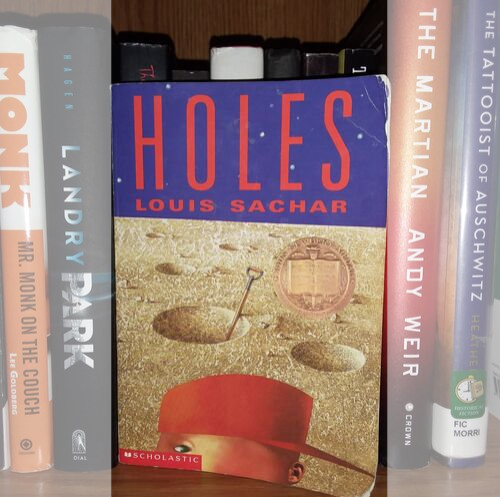
This is the story about 2 curses that come together in a place called Camp Green Lake, where there is no lake. Teenage boys are sent there for rehabilitation in the form of digging a hole the depth and width of their shovel every day. The camp’s newest inmate, Stanley Yelnats, quickly realizes there’s more to the hole-digging than character-building, but can he dig up the truth?
I like this book so much. I remember watching this movie about a year after it first came out, going into it without any clue what it was about. I was an adult, so not exactly the age group that the book was intended for, but I’ve never had a problem watching or reading things for a younger audience. I enjoyed the movie, and still do to this day. A few years after watching the movie, I found the book at a garage sale or thrift store or something like that, and picked it up. I’ve read it a few times, so this was a re-read, at least 10 years since the previous times I read it.
The way the author brought basically three different stories together, and in a really interesting and even believable way is so fun to follow along with. This book takes the idea of coincidence in storytelling (which is normally better to avoid) and embraces it to the point of being so well connected, you’re excited to see how the coincidences come together.
The kids are just trying to get by in conditions that definitely make it clear that the justice system has failed them, but they still have heart. The adults at the camp are apparently all terrible people, right down to the counselors who aren’t in the story much, which I think is a little unrealistic.
Since I saw the movie before reading the book, and have watched the movie several times now, of course I pictured the characters as they were portrayed in the movie, but I like the casting, so this isn’t a problem for me. There are some differences in the movie, a few things added to the movie, and of course some extra details removed, but overall, it is incredibly similar. My biggest issue with the book is that it is wrapped up awkwardly. There’s not a lot of closure. The movie did this better (even if a slight bit less realistically).
Overall, Holes is a fun, edgy book for kids approximately 8-12 years of age, but really can be appreciated by older people as well. The culmination of the different storylines in the latter half of the book is a lot of fun to discover, and I recommend it for all.
Cilka’s Journey by Heather Morris My rating: 4 / 5 Genre: Historical fiction
From a Nazi death camp to a Siberian gulag, we follow Cilka Klein, who was charged with spying for the enemy and conspiring, due to her role of senior officers’ mistress and death block leader in Auschwitz II-Birkenau. In the Russian prison camp, she faces 15 years of conditions not much better than they were in Auschwitz, plus the addition of frigid weather nearly year-round. She manages to stand apart yet again, but this time mostly because she shows herself to be a quick learner, which makes her valuable at the prison hospital.
This book is a sequel to The Tattooist of Auschwitz, but only in that Cilka is introduced in that first book, and some of the characters from the first book are brought up again in this one. I do recommend reading The Tattooist of Auschwitz first, for a more full experience, but you wouldn’t lose a lot if you didn’t. Click here to see my review of The Tattooist of Auschwitz.
I liked Cilka’s Journey a bit more than its predecessor, and I think that is because of the writing. I didn’t find it quite as stilted as in the first book. The subject matter is nearly as dark, especially since there are flashbacks to Cilka’s time at Birkenau, but we also get to see glimpses of her life before she went to the camp.
Cilka was very compassionate, even to her own detriment many times. I appreciated the way that her heart ached when a friend was hurt (physically or otherwise), or when a rift came between her and someone she cared about. She even managed to find a way to understand and forgive those who persecuted her, by acknowledging that they were simply trying to survive this place like she was. She may have been a bit on the Mary Sue side, somehow being the best at everything she did, but it wasn’t glaring.
There were a few events and situations that seemed unnecessary, or that were maybe only there to show again how wonderful Cilka was. I know that this book was even more fictionalized than The Tattooist of Auschwitz, with no first-hand account to draw from, so I did at times wonder how realistic certain things were.
In the end, it was a good read, and I would definitely recommend it to readers of historical fiction, especially of the WWII era.
Now if you’ll excuse me, I have to find something much lighter to read, especially since the book I had originally planned to read next (Priceless by Joel & Luke Smallbone) also involves sexual abuse, and between these 2 books, I’ve had enough of that for a while.
Thank you to Netgalley and St. Martin’s Press for providing me a copy of this book to review.
Find out more about Cilka’s Journey Publication date: October 1, 2019
Synapse by Steven James My rating: 3.5 / 5 Genre: Christian sci-fi
Set at a time in the future when robots (or Artificials) have been taught to not only think for themselves, but to have emotions, and even the option of pain, there is still a lot that is unknown about how similar robots are to humans. Do they have souls? Can they believe in and worship God? Kestrel Hathaway doesn’t know, and neither does her Artificial, Jordan. Amidst their discussions of these concepts, Kestrel is pulled into a plot to put an end to the advances in AI by people known as Purists. Working with federal agent Nick Vernon, Kestrel and Jordan do their part to help prevent a deadly attack.
This book was an interesting mash-up of theology exploration and sci-fi elements. For much of the book, Kestrel is simply trying to cope with a fresh tragedy, while being slowly dragged into a deadly cat-and-mouse game between federal agents and terrorists. Jordan was probably my favorite character, as he tried to figure out what hope there was for him, especially in eternity. And there were some twists near the end that I enjoyed. But overall, the book was mostly just okay.
The very beginning of the book shows Kestrel delivering a stillborn baby (that she didn’t know was stillborn). It’s told in 2nd-person perspective, so it’s describing the events as if they happened to you. I think this is important to know for those who have gone through this or something similar. She is a pastor, and spends most of the rest of the book idly questioning her faith in God. I say idly, because it’s as if she’d forget her questions now and then, and have to remind herself she was still uncertain about if God existed, or he was actually all-powerful, or if he cared about her. She also carries some PTSD from a tragedy 9 years old, and I was surprised by the way some of that played out as well. But I suppose PTSD is not a consistent syndrome (meaning it’s not the same from person to person, and probably difficult to pin down and define). I would say that maybe the way she does respond shows her strength, but I didn’t really get that characteristic from her otherwise.
I believe Jordan’s role in the book was to parallel humanity’s question of an afterlife. How can we ever know for sure if Heaven exists, if no one who has been there can return to tell us about it? Artificials are told that there is a manufactured afterlife where their consciousnesses will go when they “die.” Jordan’s mother “died,” and he is desperate to know if she’s in the afterlife. Where this parallel falls apart, though, is that Artificials are guaranteed this afterlife by a fallible man, while humans who follow Christ are guaranteed their afterlife by an infallible God. Some of the discussions that arise between Jordan and Kestrel about afterlife and the ability to believe in and worship God are interesting though. Except for the times that Kestrel is just mean to Jordan about his inhumanness.
As for the twists near the end, they did mostly catch me off guard. But there was a weird thing that happened that got my heart pumping about a possible twist coming, but instead, it turned out not to be true. It was a huge letdown, and I can think of a few ways that some dialog could have been written to avoid this letdown. I had some questions that were left unanswered–about Jordan’s mom, about some of the Purists’ involvements and questionable actions, and some other things that came out during the climax, but are never given any kind of explanation.
I think the sci-fi plot were simply a vehicle for the theology discussed in the book, which is why the plot was fairly weak. And for me, at least, some of the theology was weak too. Kestrel’s brother, an atheist, asks her some very good questions about God, and her replies are the type I often see from the token “religious character” in TV or movies. She does go deeper than the stereotype sometimes, but I still found myself wishing for more. And very likely, this can all be chalked up to the author and me having different views on some theological aspects, which will certainly happen. I just found myself very sad about Kestrel’s brother’s view of God, and wished her responses had been more fulfilling.
One more thing that adds to my lower rating, which I almost forgot, was the way the story was told. As I mentioned above, it starts out in 2nd person (“you”), then switches to 1st person out of the blue (“I”), but is only 1st person when the perspective is on Kestrel. When it’s on a plethora of other characters, it’s 3rd person. And to make it even more confusing, when the perspective is on Jordan, it’s 3rd person and present tense, when it’s past tense the rest of the time. There’s a reason jumping POVs, tenses, and even character perspectives is meant to be kept simple, and while it’s not completely impossible to try something different…it was just confusing in this case, and made the reading disjointed.
In the end, I would recommend this book for those who are interested in the exploration of how humans approach God and the afterlife, and what it means to have a “soul,” and understand that there is some sci-fi around that. I don’t think I’d recommend this for readers of sci-fi, unless they are willing to wade through the theology.
I received a complimentary copy of this book. Opinions expressed in this review are completely my own.
Find out more about Synapse Publication date: October 8, 2019
Set mostly in the concentration camp of Birkenau, Lale Eisenberg (later Lale Sokolov) tattoos numbers onto incoming prisoners for his captors. While tattooing a young woman, he finds himself captivated by her. He uses his position of tattooist, which is part of the political department in the camp, as well as some other savvy enterprises, to get extra food to help keep his fellow prisoners, including Gita, the woman who has stolen his heart, alive. This book is based on a true story.
First, let me make sure to stress that the book may be inspired by a true story, but it is not at all meant to be an accurate depiction of life in Auschwitz II-Birkenau. Various statements surrounding the book may make it seem like it is (including several pages of notes at the back of the book), but after being decried as very historically inaccurate, Morris stated that it’s “not meant to be an exhaustive history but rather the recollections of one man who survived the camp.” After doing some research, I could plainly see some of the inaccuracies, especially since I read a good amount of Holocaust literature in my high school days, while others were specific enough I wouldn’t have guessed at them. However, while reading the book, I didn’t notice, and even after researching, it doesn’t sour the book for me (much). If you choose to read it though, do so with this understanding.
For whatever reason, I have long been fascinated by stories of the Holocaust. I think that is the main reason that I did appreciate this book for what it was. Lale often tells others to keep their heads down and do as their told, and they might live another day, especially when first entering the camp. The longer he’s there, the more willing he is to bend some rules and basically game the system, to the benefit of himself and several other prisoners. The friendship between Gita and her friends is heartwarming, as they do everything they can to help each other in times of need, both physically and emotionally. The way these characters attempt to keep their humanity during such inhuman conditions is what this book is all about.
The issue with this book, besides that mentioned above, mostly revolves around the writing. It was originally written as a screenplay, then adapted to be a novel. They are very different types of writing, and it looks like Morris had little to no experience as a prose-writer before adapting her screenplay. The writing is stilted and shallow, and while it made for a fast read (especially for such a short book), there wasn’t nearly the depth of emotion one would expect in a book of this subject matter. There is a sequel, Cilka’s Journey, of which I have an ARC. I wanted to read this first, because I read that Cilka is introduced in this book (though I’m guessing the sequel will mostly include events that happened after Cilka left Birkenau). I assume that it was written directly as a novel, and I’m hoping it will be a better read.
The book isn’t bad, by any means, so as long as you go into it with the understanding that this is very much a fictionalized view of the most famous and deadly concentration camps in the Holocaust, I would recommend this book to those who read historical fiction, especially of this nature.
My rating: 3.5 / 5 Genre: Christian sci-fi thriller
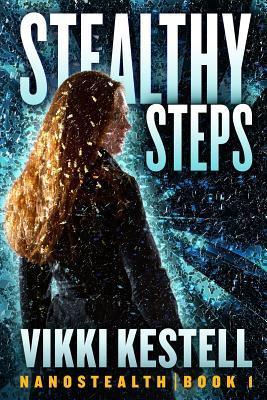
I didn’t fully understand the premise of this book going into it, because the synopsis is more like a boiled-down excerpt from part of the book, with a little extra character introduction. Most of the information is there, but it’s cryptic. Here’s my synopsis though: Gemma Keyes is a young woman fresh out of college, and takes a job as a project manager at a top secret lab. She mostly organizes things and takes meeting notes, but this makes her privy to some classified information. When she hears the wrong information (not her fault), she is fired. Months later, after an accident in the same lab claimed the lives of the 2 top scientists she was working for, she’s contacted covertly by one of those scientists, Dr. Bickel (obviously not dead). She ends up being asked to help him continue his work, which he’s keeping secret from everyone at this point. This work is in nanotechnology. When the government, and in particular, a nasty military general who has no scruples about how she gets information & technology for her military, closes in on Gemma and the man she’s helping, an unexpected incident leaves her invisible. Literally. (Some people see the invisibility aspect as a spoiler, but it’s how the prologue ends, so I see it as part of the set up.)
So…now Gemma has to figure out how to live life completely invisible, which presents all sorts of problems, especially since she practically lives in a fish bowl. Half of the book is about this, as well as her concern about being discovered by the general who went after Dr. Bickel. This half of the book is entertaining and interesting. I liked the relationships Gemma developed both before and after her invisibility. My favorite thing was the ways she tried to communicate with the nanotechnology that is responsible for her uncontrollable invisibility.
The first half of the book had some interesting parts as well–especially the relationships that began and/or developed between Gemma and Dr. Bickel, Gemma and the associate pastor of her old church (more on that below), and an established relationship between Gemma and an older neighbor. However, the first half of the book was bogged down heavily by a lot of exposition and repetition.
First, there is a long and tedious description of how Gemma first got into the secret, abandoned military based where Dr. Bickel directed her to meet him. It might not have been so bad, had we not already given given those steps (most of them), but backward. Then there are the 37-8 pages of Dr. Bickel talking and explaining. Explaining how he avoided dying in the lab explosion, explaining how he got himself set up in this mountain base, and longest of all, explaining how the nanotechnology works. In detail. That most of us reading aren’t going to really follow. Some of it did prove to be important to the rest of the story, but honestly, much of it wasn’t. (At one point, after about 33 pages of explanation, Bickel says, “‘Would you like to hear more about the nanomites before you go, Gemma?'” And I literally thought, “I wish I could say no.”) Since the book is told in 1st person, and Gemma didn’t understand a lot of what he said, I have a very difficult time believing that when she wrote this account some weeks or months later, she could remember all of the science that he spouted. It could have definitely been boiled down for us, and even more so, would have then fit in with the style of narration that the rest of the book has.
Much of the information in the first half of the book would have been okay on its own, but since it was all told together in the first half, it made it difficult to keep reading. I totally understand why the prologue is a long description of the point when Dr. Bickel is discovered in his secret lab by the general, ending with Gemma finding herself invisible. It needed that action and intrigue to get people hooked. Still, if I hadn’t been recommended this book series by my mom who has recently been very anxious for me to read it so she could hear what I thought, I might have at least set it down and come back to it later. As such, once you’re past that half of the book, it does get more interesting. It’s the first book in a short series, so some of the expositiony first part can be explained as set-up to an entire series, and it does have an ending that left me wanting to know more. Still, I think setting up an entire series isn’t an excuse for so much info-dump all at once.
The associate pastor I mentioned above, named Zander, is where the Christian aspect of the book comes in, for the most part. He’s invited to visit Gemma by her older neighbor, and he is a good example of a Christian in fiction. He is generous, compassionate, flawed, and complicated. Gemma sees a lot of sides of him, some of which draw her to him, but others of which push her away. His very Christianity is the biggest obstacle to their developing relationship, though, because Gemma is quite against Christianity. He speaks the truth in love, and shows Christ’s love through his action, while still being a believable human being. I look forward to seeing how this develops in the rest of the series.
I was particularly bothered by some of Gemma’s actions in this book, and the way she excused them, but I think that was intentional. She also got angry, or at least upset, at weird things, which made her seem like sort of a petulant child to me sometimes. I don’t know if that part of her personality was intentional or not. There were a few inconsistencies that stuck out to me (like why Dr. Bickel let Gemma take pictures in his secret lab, after the intense precautions he’d asked her to take in getting there, and in their communications). Also, I feel the need to give some trigger warnings: domestic abuse, child neglect and endangerment, descriptions of or allusions to gang violence.
So to sum up, yes, the first half of the book was slow, but the rest was good enough, and I have faith that the following books will pick up the pace, that I felt the book was worthy of 3.5 stars. I would recommend the book to fans of Christian mysteries & thrillers and lovers of this type of sci-fi.