Words/Time: 595 words of writing practice using a prompt. Though I didn’t plan specifically to do writing practice related to my 2015 NaNoNovel, it did end up being related. It was short, but I kinda liked it.
prompt
Daily Challenge Check-in: October 7, 2015
Words/Time: 613 words of writing practice I did. After a full day of work and a rough evening, I didn’t get to my writing time until 11:30. My brain wasn’t in the best space for quickly figuring out what to work on, so I pulled up a prompt and wrote for 15 minutes.
Daily Challenge Check-in: October 6, 2015
Words/Time: 2121 words, most of which was revising “Pithea” with two of my sisters over Skype. Also known as the 57th meeting of the Tri-County Sisterhood of the Traveling Book. We got through 5 pages of double-spaced text. There was less off-topic discussion tonight than we’ve had for a while now. But we came across more areas than usual that hung us up because we couldn’t come to agreements on how to fix them. More than one of them ended in the, “I’m the author so I’m just going to pull rank,” line. I don’t like doing that, because I’m sure it makes them feel like I’m dismissing their concerns. But when the concern isn’t a mistake but more of a difference of opinion, sometimes “pulling rank” is the only way to move on.
The rest of the words were from some writing practice I did. I’ve been trying to do a prompt every few days, partly because I’m still generating ideas to fill out the plot for my NaNoNovel, and partly to be in the groove of actual writing (instead of revising) before November comes. The prompt I pulled wasn’t one that I connected with, but I refused to let myself pass on it. I’ve been trying to stretch topics and themes that I can or will write about, so I’ve done some writing practice that was awkward or fell flat lately. This one, though, turned out rather interesting to me. So I’m going to do something I rarely do, and share what I wrote.
Keep in mind that this is raw (unedited) and I wrote it quickly without any forethought or pausing to think through where I wanted to go. The prompt came from 1000 Awesome Writing Prompts.
Prompt: Staging a fake kidnapping to get money out of your rich parents
Daily Challenge Check-in: September 28, 2015
Words/Time: 282 words and 10 minutes.
The words were free writing from the following prompt: “A fight breaks out between a muscular person and a much weaker person who is clearly being bullied. You decide to intervene. Describe the fight, your intervention into the fight, and the result of said intervention.” It’s from the book 1000 Awesome Writing Prompts, which I have on my Kindle and use for most of my free writing right now.
The time was spent working with Scapple on my possible NaNoWriMo project. I have a lot of notes, and plenty of details, but my biggest question right now is what kind of timeline there can be, and what all will happen in between the bigger plot points. I have no sub-plots.
Characters for NaNoWriMo
 If you’ve been planning your NaNoNovel, hopefully you have a solid bead on a plot by now. The big questions–who, what, where, why, and how?–have been answered, or maybe you’re working on that now. This could be a good time to focus in on the who? of it all.
(If you’re still stalled on the basic plot, don’t give up yet! I haven’t hit on the idea I’m hoping for either. Keep generating ideas by free writing. There are a lot of options out there for prompts. I have a few posts from earlier this year about ways to dream up new ideas for stories that you can find here. Or, if you haven’t already, go through the activities in my “Seeds for NaNo” posts from the last few weeks, which are listed on this page. Write down every nugget of something that you could turn into a plot, or that you think you’d like to use as part of a bigger story. Keep trying to tie those thoughts together, and always ask questions: “Why would someone jump in the sewer dressed in a ball gown?” Crazy things like that, worked backwards, can lead to places you’ll never expect to end up.)
A lot of times, my characters really come into their own while I’m writing the actual story. However, there are things that we can do during the planning stages to flesh out the characters.
1. List:
First, it would be helpful to see all of the characters you already have in mind, all spread out somewhere. Making a list of each character is a good starting point. You can add to the list things like, “Guy who beat MC out of the job she wanted and rubs it in her face,” “Person Joe goes to, to find answers when he’s suspicious,” or other roles that you know you need to fill, but don’t have any specifics in mind for yet.
Then, give each character their own page in a notebook, their own note card, their own document file, or their own section within a file (Scrivener and other writing programs work well for this kind of thing). List everything you already know about that character–age, physical descriptions, personality, background, role in the story, where they’ll end up by the end of the story, even how they may change by the end of the story.
Some people like to use character sheets/templates, and that’s okay too. I’ve already expressed my thoughts on character sheets in the past, so I’ll just say I don’t use them. They don’t work for me. However, that doesn’t mean they’re bad, and if you’ve never used one, it certainly can’t hurt to do so. I would at least suggest not using the first one you find, though. Read through the fields that are there for you to fill in and find one with categories that will actually give you insight into your characters.
2. Write:
To get to know my characters, give them their own voice, or discover why they are who they are, my favorite method is just writing. Write a scene unrelated to the plot, centered around the character in question, maybe even from the point-of-view of that character, even if the main story isn’t. Writing prompts can come in handy for something like this, if an idea doesn’t readily present itself. But the general idea is to write out a scene and let that character shine in their uniqueness, and it gives you a better feel for that character.
(Disclaimer: the above paragraph was copied right from a previous post I made about character creation. In fact, it’s the post I linked to in #1 above. Clearly I feel this point deeply.)
3. Ask:
This is an odd one for me to include. You know those people who say their characters are always talking in their head? Complaining about what the writer has done to them, or begging to be let out if they’re still pent-up? Yeah, I’m not one of those people. It seems like every other writer out there is, but I’m not.
However, I did something similar once–initiated by me, not a disembodied voice in my head. I was working at a menial task for several hours, and had forgotten my iPod. I was faced with a nice long time of silence and boredom. In those types of situations, I often do try to think of what areas of my current writing need attention, so I can be thinking through an issue while I’m doing something else. This time, I decided to have a conversation with one of my main characters. His name is Naolin, and he gets a pretty raw deal in “Pithea.”
I started by asking, “What do you think of the story?” And then I imagined what his response would be, based on his character and what happens to him in the story. After a few snarky answers on his part, I decided to start at the beginning by asking him about the motivations for some of his actions when he first appears in the story. Though all of the questions and answers came from me, when digging deeper into his psyche in relation to the scenes in the story, I actually did gain some insight into a few of the things that he’d done simply because I said he’d done them. There was more of a why than I otherwise would have had.
Later, I tried to start over when I had a notebook to write it in. It never quite went as well as that first time. From now on, I’ll record the conversation the first time, somehow–either by writing/typing it or by saying it all out loud while I’m, say, doing the dishes and recording myself talk (though that’s only if necessary…I hate listening to myself afterward).
4. Voice:
The last thing I suggest for working on your characters in advance is to work out their voices. I’ve found it to be a difficult task in the past, but making sure that every one of your characters doesn’t talk in exactly the same manner (and moreso, that they don’t all talk exactly like you) is important. Deciding how a character should talk can go hand-in-hand with figuring out who they are.
Where is he from? Different regions of the world, and even of the same country, have different dialects. (In the US, would they say soda, pop, or sodapop?)
What kind of education does she have? If she’s an English major, she should have pretty good grammar. If she didn’t finish high school, she may (not necessarily, but could) have poor grammar.
Perhaps someone rarely uses contractions, or someone uses ridiculous similes a lot, or someone only speaks in one-word sentences. All of these things can distinguish characters from each other. That doesn’t mean that every single character has to have a distinct way of talking. That could slow the story down too. But keep these things in mind and you can make your characters more memorable. Also, try to avoid outright stereotypes, but sometimes it can help to start with a stereotype and back off a bit, or change it to give that character more depth.
One final note: plan your characters now, but never be afraid to let them develop differently than you had planned while you’re writing your first draft. When they really start to come alive, they may tell us things we don’t realize until we actually see them in action.
Please feel free to share your thoughts on my ramblings, your own tips, or any questions you may have along the way.
Tools for NaNoWriMo: Scapple
I always say I learn something new every year of doing NaNoWriMo–something about myself as a writer, something about writing in general, or new tips or strategies for NaNoWriMo. This year, I’m already learning, and November hasn’t even arrived.
If you’ve been following my steps for preparing a story for NaNoWriMo from scratch, you may be doing the same thing I’m doing right now–trying to pull a plot together. I’m still in the early stages of that, and to be honest, I’m not sure that what I’m working on is going to be for NaNoWriMo.
I have maybe 2/3 of a completed outline for a story I was planning to write this year. But when I posted the first list of story seeds, I started thinking about how long it’s been since I’ve started a story from scratch. There can be a lot of joy in the discovery, and that’s something I haven’t had much lately. My current writing projects are all stories I started crafting years ago. Of course they’ve changed shape along the way, and plenty of new elements have been added recently. But that’s not quite the same as starting from scratch. Also, because I have two novels already written in the aforementioned story world, and both are still in revision stages, I figured there was no need to add another story that will just sit on the shelf for years while I finish the first two.
So I decided to take my own advice and do the activities in my own story seed posts, free writing in the hopes that a new idea would spark. After a few days of doing a few of those activities during my writing time, I realized that it was difficult to use my imagination on certain pictures in which I knew what was happening or who the people were. I still did my best, but I’m not sure it was as effective as it could have been. However, because of this issue, I went such an odd direction with one of the pictures that it just may have turned into something for me.
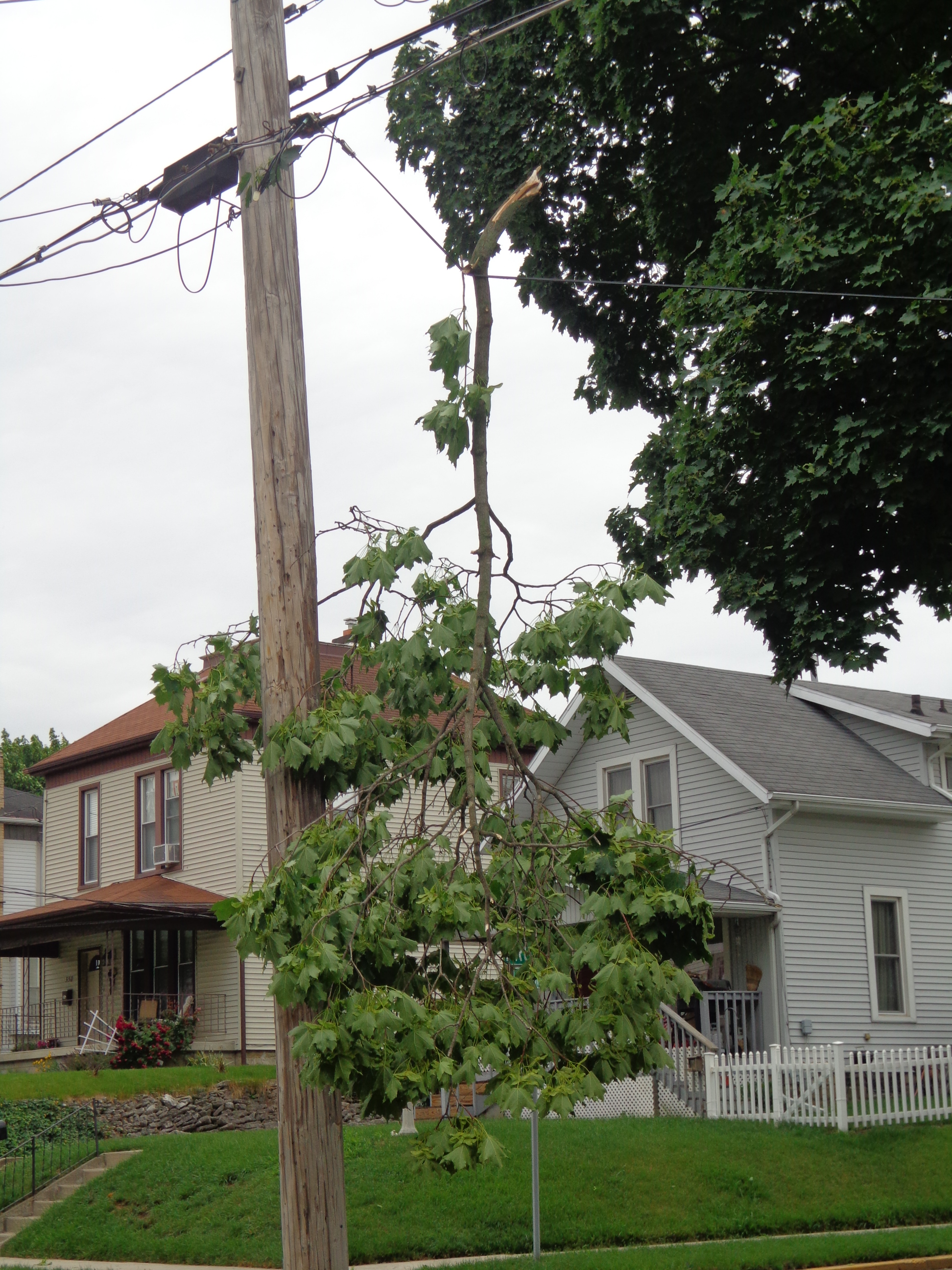
This is the picture in question…all because I was trying not to make it about the storm that actually caused that.
But where I had hoped to come up with ideas for a story that isn’t even in the same world as my others, this one really just ended up being an idea for events that would happen 1000ish years before my other stories. I really don’t seem to be able to get away from Pithea and its world (not that I mind too much).
So back to my original point, before I lose anyone, I discovered a new tool yesterday that has come in handy during this early stage. I have all sorts of ideas that have started to flow out of me since writing about the picture above. So I decided to give Scapple a try. It’s a free-form idea mapping program made by the same people behind Scrivener. I started putting my thoughts into it, and I really liked it.
So in my last NaNo post, I said that I thought the laying out of ideas and starting to form them into something coherent was best done on paper. Now, only a few days later, I’m suggesting that people download the free trial of Scapple and try it that way. It’s not that you can’t do everything on paper that you can do in Scapple, but…well, putting notes into the computer has its advantages too. (For one thing, I’ve already had to move notes around a lot and connect them differently after putting them in, so in that way, Scapple is better than doing it by hand.)
Here is a screenshot of Scapple in use:
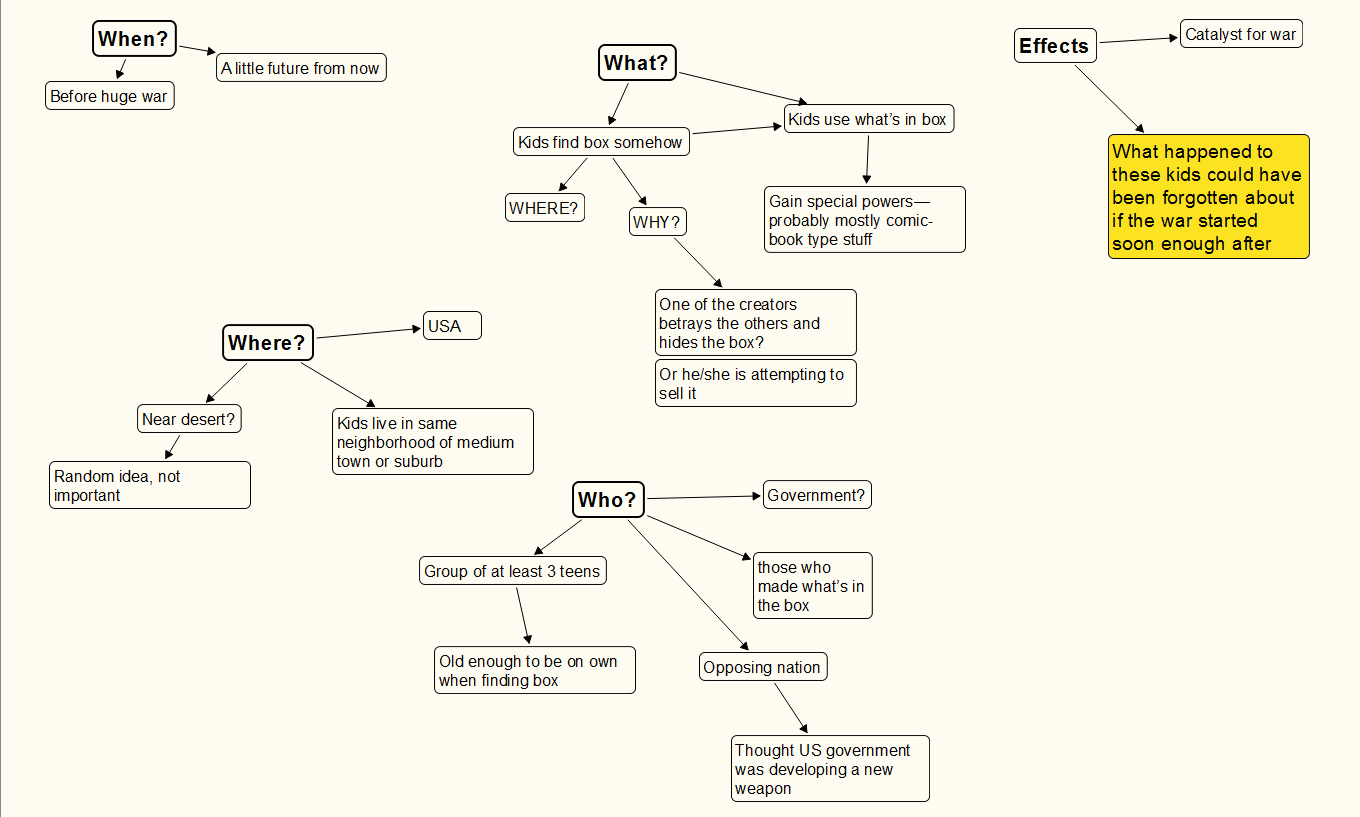
This is a slightly altered version of what I’ve been working on, with some things removed or changed to avoid spoilers.
How about you? Have you ever used Scapple before? Do you have other programs you use for organizing notes? Tools and tips are always helpful for writing in general, and NaNo in particular. Feel free to share your own.
Daily Challenge Check-in: September 22, 2015
Words/Time: 1 hour, 30 minutes, spent working on organizing the ideas I’ve been exploring for a possible NaNoWriMo project. I’ll post more detail about all of this tomorrow, but I will say that my free writing practice near the end of last week, using prompts from my story seed posts, have led me somewhere I did not expect to go.
Plots for NaNoWriMo
To sum up what I’ve been doing on my blog for the last two weeks: NaNoWriMo is coming, and I tend to get a little over-excited about it. In the past, I’ve talked to people who were interested in participating, but didn’t think they’d know what to write (amongst other problems, like lack of time). Since I’ve struggled with the worry of writing without an idea that came to me well in advance, I thought I might be able to help others with that issue.
To me, the best way to start is by generating various ideas using prompts of various fashions. I shared some of my own, but there are so many out there to be found online. Here are mine: Story Seeds 1, Story Seeds 2, Story Seeds 3, Story Seeds 4
Now it’s time to begin to develop the plot. I will be up front with you right now and tell you that this is the area of story planning that I am weakest with. Most of my plots have developed slowly over time. I do not normally compress it this much, so this will be as new for me as it may be for some of you.
If you already have an plot in mind, great. You’re well ahead of me! If not, here are some ideas for how to proceed:
First, lay out before you any and every story idea you have. By “idea,” I don’t necessarily mean every bit of writing practice you’ve done, but anything that struck you from that. For example, if I had written a scene in which a guy got stuck on the road during a blizzard and walked to a nearby house, where he was invited inside during a family game night, and ended up having feelings for the oldest sister, I may not care for much of what I wrote, but maybe I like the idea of a guy and girl meeting when one of them was stuck on the road and sought refuge in the other’s home. These ideas can also include a character that has started to form in your mind, or a setting you’d like to include somewhere.
Whether you have ideas you’ve been mulling over for a while, ideas you’ve generated recently with prompts, or anything in between, take the time to jot down a note for any idea you have. For this, I would suggest using pencil and paper, because it’s easier to see and manipulate when it’s all laid out in front of you; however, this can be done on the computer too.
Now spend some time musing over these notes. Think of which ones you like most and which you may set aside for now. Figure out if any of them could work together. Remember: stories don’t have to have one single plot from beginning to end. Sub-plots are often at work too, so ideas don’t have to directly relate to be able to go into the same story.
My suggestion for the next step would be to come up with a short synopsis for a plot that you would like to write. One or two sentences if possible. Keep it broad, yet descriptive. A good format is, “A certain type of main character has to accomplish a certain goal, so that something important will happen.” Or for example, “A group of teenagers find a lockbox buried in the desert and try to access the secrets within.” You can then go on to include the main conflict, like, “But when they find that several different groups of people want the box, how will they decide which group they should give it to–or if they should keep the box themselves?”
Okay, so that synopsis I completely just made up, so it may seem ridiculous. But hopefully you get the idea. For now, you can start with literally a skeleton. You don’t have to know your characters (well, at least a few general points about a main character or two is rather necessary for even the previous example sentences), your setting, what the climax will be, or much more. If you do know those things, or start to figure them out along the way, be sure to take notes.
So to boil it down: the core of any story includes at least one main character, a starting goal, and a conflict. If you are starting from scratch in planning a story, that’s where you need to begin.
Over the next week, if you are starting to prepare for November, set aside writing time every day possible, and work toward your story. Start with the one or two sentence skeleton. Then go on to write a longer synopsis that includes more info on who, where, why, or how. Don’t stress about details yet–fleshing out characters and outlining a plot is still down the road. First you need to have a good handle on that core.
Along with working on the beginnings of your plot, continue doing free writing exercises. Or if you’re not sold on even a skeleton plot yet, and still need ideas, keep doing writing exercises. Do the ones I linked to above, or go in search of more. There are tons of them out there; all you really have to do is Google “story prompts,” “story seeds,” or other key words along those lines.
One final note: if you find yourself often passing on prompts you find because they’re not your style, they’re boring, or you don’t think you could think of anything for them, you may need to force yourself to stop doing that. Just remember that not everything you write has to be brilliant, compelling, or the inspiration for a novel. This is good practice for the overall art of writing fiction, and it’s good to push the limits or write something that feels unnatural now and then. You may discover something completely new about yourself or writing in general, but you’d never know it until you tried it.
Please feel free to share your thoughts on my ramblings, your own tips, or any questions you may have along the way.
Seeds for NaNoWriMo Part 4
Below are today’s ideas to produce seeds for NaNoWriMo (or any writing project). Remember: the point is not to develop an entire plot. It’s simply to create inspiration. Write what is suggested for each numbered item, or whatever else may come to your mind. Then set that aside for now and do another one.

1. Write a detailed setting based on the above picture. Whatever your instincts or preferences for setting and detail, try to over-exaggerate the scene. Write it however you’re comfortable–with a person there to experience it, from a first-person perspective, or simply describe it from a distance.
2. This is modified from an exercise in the book Now Write! Science Fiction, Fantasy, and Horror : Using a playlist of songs that you like (if you don’t have one already, you can pretty easily create one on YouTube or such, if only for this exercise), set it to shuffle and write down the title of the first song that comes up. Then hit next and write down the next song. Do this until you have a list of songs–the original exercise calls for 30, but I found that amount to be a bit overwhelming. I’d suggest maybe 15. Then make each song title a chapter title. Try to find a way to encompass all of them into one novel.
Alternatives include using movie or TV show episode names.

3. Write a scene from this image. What has happened before this was taken? What else is going on around this? As a result of this? What emotions might be present in the people who live around here?
4. Think back to a dream you’ve had–one that stuck with you. Even if it’s one that has changed in your head since you actually dreamed it, write what you remember. And write what it has become. Sometimes when I have a particularly striking dream, I’ll spend the rest of the day imagining where it would have gone.
Also, consider keeping a dream journal if you don’t already. Any time you wake up with a dream fresh in your mind, write it down quickly before you start your day. It can be an unexpected source of inspiration, even later.

5. Write about these people. What are their names? What are they doing or talking about? What is their relationship to each other? How are they feeling? What’s going on around them? Be specific.
6. Go back to the pictures and find some way to make them all fit together. This doesn’t mean that they all have to somehow be worked into the same scene, or even the same day within the story. But find some way to connect them all to each other, some story that would encompass them all. Then write the synopsis (as broad or specific, long or short as you need it to be) that involves the three images.
You do not have to stick with what you already wrote for any of them; you can go different directions with any of them to make them fit together.
This is the last post like this I’m going to make. If anyone has been doing the suggested activities, I hope you got some interesting results. Don’t worry if you didn’t get through all of the activities. I didn’t either. I plan to keep working on them for the next few days though.
This weekend I plan to post about what I feel could be the next step from here–going from ideas to sketching out a plot. I will be gone all this weekend though, so I’ll have to prepare the post in advance. If I really manage my time this week, I’ll be able to do more story seed writing, work on my normal revision, and write that post.
In the meantime, if anyone came/comes up with anything from these 4 posts that you really liked, feel free to share!
Other posts like this one: Story Seeds 1, Story Seeds 2, Story Seeds 3
Seeds for NaNoWriMo Part 3
Below are today’s ideas to produce seeds for NaNoWriMo (or any writing project). Remember: the point is not to develop an entire plot. It’s simply to create inspiration. Write what is suggested for each numbered item, or whatever else may come to your mind. Then set that aside for now and do another one.
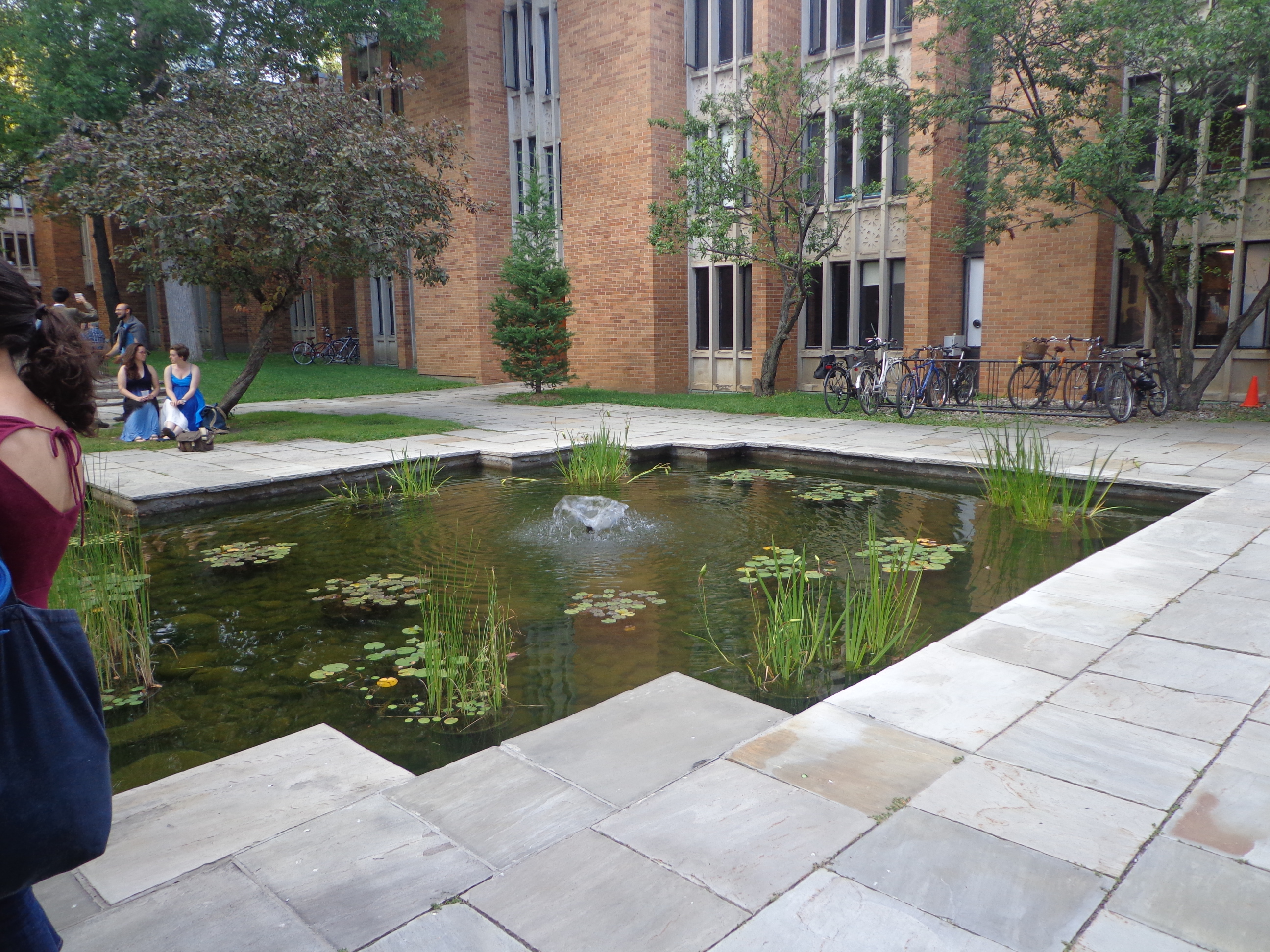
1. Write a detailed setting based on the above picture. Try to include all five senses. Whatever your instincts or preferences for setting and detail, try to over-exaggerate the scene. Write it however you’re comfortable–with a person there to experience it, from a first-person perspective, or simply describe it from a distance.
2. Visit an online plot generator site like this one. Play around with it until a plot or combo of elements shows up that strikes your interest. Then write a scene from the story that you think would result. (For this one, I suggest keeping both what you write and the item[s] generated that prompted it.)
3. Write a scene from this image. What has happened before this was taken? What else is going on around this? As a result of this? Look at the details, the background. What emotions might be present in the people who live around here?
4. Think of an event in your life that produced strong emotions–anger, fear, elation, etc. Write a summary of the event, making sure to include a lot of detail about the emotions you felt.
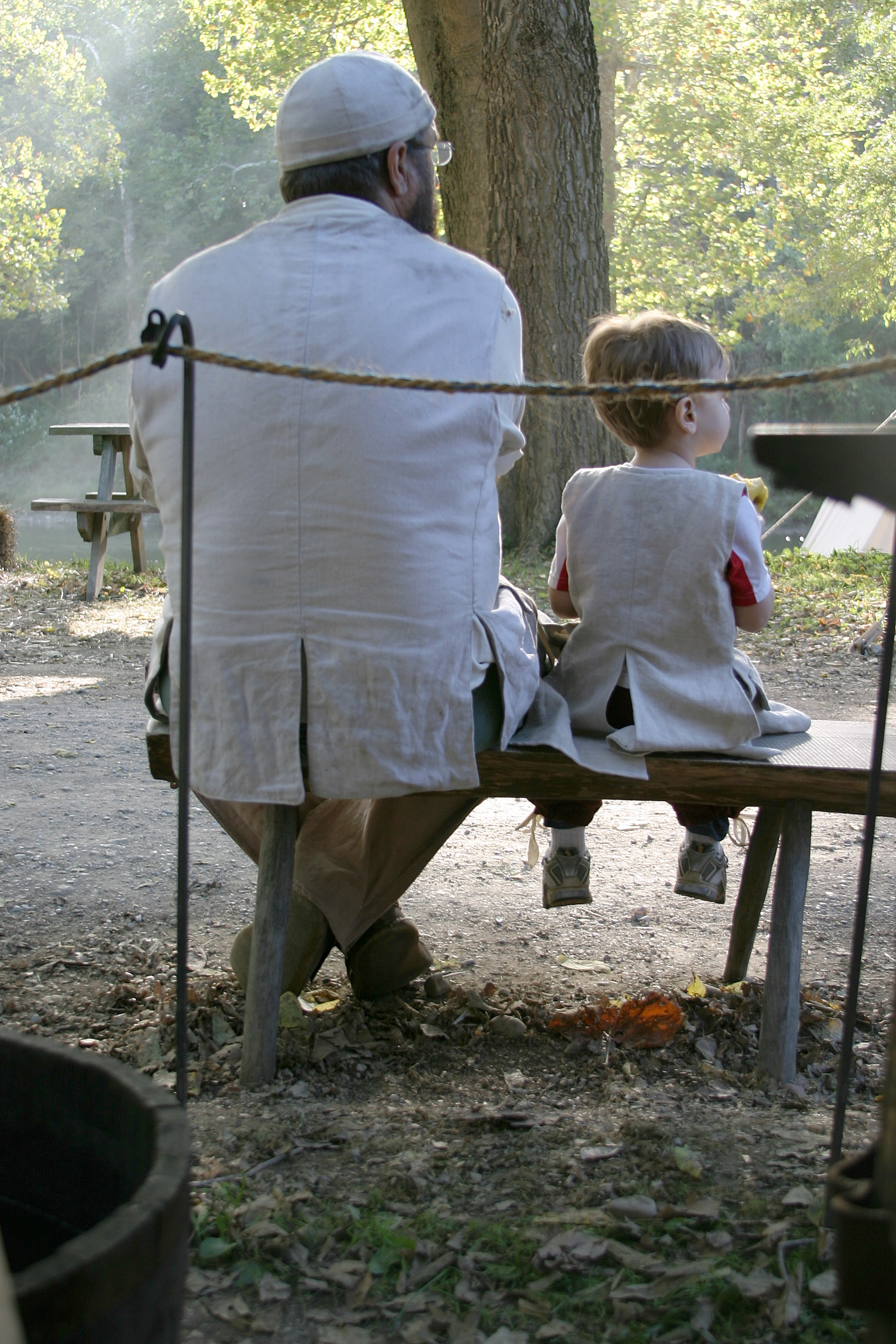
5. Write about these two people. What are their names? What are they doing or talking about? What is their relationship to each other? Find a way to include their clothing and their surroundings, either as what they’re meant for (if you know what that might be), or in a completely different way. Be specific.
6. Go back to the pictures and find some way to make them all fit together. This doesn’t mean that they all have to somehow be worked into the same scene, or even the same day within the story. But find some way to connect them all to each other, some story that would encompass them all. Then write the synopsis (as broad or specific, long or short as you need it to be) that involves three images.
You do not have to stick with what you already wrote for any of them; you can go different directions with any of them to make them fit together.
Other posts like this one: Story Seeds 1, Story Seeds 2, Story Seeds 4
 A Journey of Words