Book Review: Seven Things I Wish Christians Knew About the Bible

Seven Things I Wish Christians Knew About the Bible
by Michael F. Bird

My rating: 3 / 5
Genre: Christian nonfiction

In this book, Michael F. Bird explains how the modern Bible came to be, the need to take it in its proper context, and other nitty gritty details about the Word of God. It’s purported to be accessible to everyone, which means the fact that I struggled to understand some portions of it make me feel kind of stupid. Really, though, in a lot of ways it was similar to many other more intellectual, theologically deep books I’ve read, though not all the way through. Still, it makes me wonder why so many reviews talk about how easy it is to read.

As for the content, some aspects of this book were nothing new for me while others were quite new. For example, I’ve never before heard that the apostle John, the author of the 3 epistles named John, and the John who wrote Revelation might not all be the same John. My concern, though, lies in this book being read by new Christians or those who aren’t very strong in their faith. Even I, who 100% believe the complete accuracy of the Bible and the ability of God to protect His Word as it was handed down over the millennia, found myself beginning to question how accurate what I read can be when Bird gets into the details about how we got the Bible. Maybe that’s because he never quite touched on God’s sovereignty, that He had the power to guide the men who wrote, translated, edited, compiled, etc. the Bible and keep it intact to His wishes. On the other hand, He hasn’t stopped some translations and paraphrases from coming out that water down the truth, so therein likes the concern that this book could actually lead some people to question the Bible as a source of truth. His comments about learning about the historical and cultural context of the different parts of the Bible were intriguing though. I have no plans to try to read Josephus now, but there are more accessible options that I plan to look into. Overall, I can see the merit in this book, which my husband, who read a couple of chapters of it for one of his pastoral training classes, recommended to me, but I am not sure I’m the right audience for it. But I’m not really sure who is, since people who are newer to Christianity might not be able to follow some of it or might actually become confused about the authority of scripture and more mature Christians likely already know much of what is contained within.

Find out more about Seven Things I Wish Christians Knew About the Bible

See what I’m reading next.

If you’ve read this book, or read it in the future, feel free to let me know what you think!

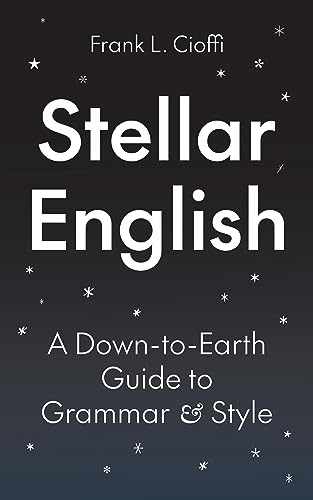
Book Review: Stellar English

Stellar English
by Frank L. Cioffi

My rating: 4 / 5
Genre: Grammar guide / sci-fi story

Part grammar guide, part sci-fi novel, Stellar English was a very different kind of read. For a few years after high school I often consulted a grammar guide I was given by my high school AP English teacher, and I definitely only opened it when I needed to remind myself of certain grammar rules while writing. (I guess books like that are pretty obsolete now, when one can simply look online for answers to grammar questions, assuming that one cares enough about their grammar to ask a question.) In some ways, this book reminds me of that guide that I had, but where that guide used sentences from other published works, this guide’s example sentences were written to form a new work of fiction—the story of an alien invasion on Earth.

Understandably, I never read the entirety of the grammar guide I got in high school. However, Cioffi seems to have a strong desire for people, even in our present age of the internet and AI, to have a good grasp of grammar, so the sci-fi narrative throughout the guide is intended to entice a reader to read through the entire book, not just look for info on an as-needed basis. I read the book as intended, though I have to admit to skimming some of the grammar section when the information was something I feel I have a good grasp on. Still, I picked up a few helpful tidbits and felt justified in having ignored the “don’t end a sentence with a preposition” rule that I have long felt makes little sense to follow so strictly anymore. The somewhat conversational tone made the grammar part of the book not as tedious as it might sound.

As for the narrative told in the example sentences, it is easy to follow and overall a brief, somewhat shallow story. Aliens land on Earth, and the focus is more on the human reaction to the perceived invasion than on the aliens themselves. At times the pace is very slow, and at times it jumps ahead quickly. Considering the nature and context of the story being told, I can’t really fault the pacing choices though. The story of the invasion and the aliens themselves were inventive, though a little less exciting in the end than I might have hoped for. And there was some unnecessary political commentary in the story that bugged me a little. Overall, though, the story did its job in giving me a reason to read through the book in its entirety (minus some skimming). Anyone who is interested in improving their grammar or simply in reading a unique take on a grammar guide or a sci-fi story should considering picking up a copy of Stellar English.

I received a copy of this book for free from the author in exchange for an honest review.

Find out more about Stellar English

See what I’m reading next.

If you’ve read this book, or read it in the future, feel free to let me know what you think!
Book Review: Framed

Framed
by John Grisham & Jim McCloskey

My rating: 4 / 5
Genre: True crime

This collection of 10 stories of innocent people who were convicted of terrible crimes was difficult to read. Though these incidents mostly happened decades ago and often involved the presence of bodily fluid that couldn’t be tested against suspects due to DNA testing not existing back then, I wouldn’t be surprised to know that these kind of injustices still happen now. After the first 4-5 stories, though, they became a little repetitive. I don’t want to diminish what these people have been through—and some are still going through—but I considered stopping partway through when I could too easily anticipate how the rest of the stories would go. 

Another reason I struggled to read the book was due to the matter-of-fact and graphic nature in which some of the terrible acts were described, particularly multiple sexual crimes, one of a child. So let that be a warning to anyone who is interested in the book but wouldn’t want to read about those kinds of things. I applaud both McCloskey and Grisham, though, for desiring to bring these terrible facts to light and appreciate that people like McCloskey work tirelessly to bring the truth to light. Most fans of true crime will likely enjoy this book, especially if they’re interested in organizations like the Innocence Project or Centurion Ministries (which was founded by McCloskey).

Thank you to Netgalley and Doubleday Books for providing me a copy of this book to review.

Find out more about Framed

See what I’m reading next.

If you’ve read this book, or read it in the future, feel free to let me know what you think!

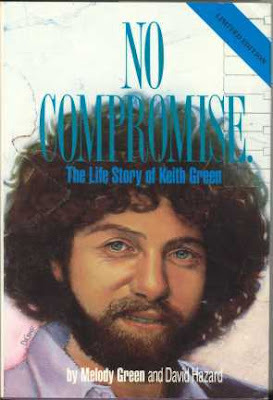
Book Review: No Compromise

No Compromise
by Melody Green and David Hazard

My rating: 4.5 / 5
Genre: Biography

Keith Green died a few months after I was born, so though his music wasn’t a huge part of my childhood, I do remember my mom liking his music when I was younger. I don’t generally base my rating of a biography on the content, because what the author chooses to provide about his/her (or in this case, her husband’s) life is really their choice. Based only on the writing and style here, the book is easy to read and gives some really interesting insight into the lives of both Keith and Melody Green before, during, and after their conversion to Christianity. She doesn’t sugarcoat their drug use and time spent following New Age or eastern mysticism practices as they both searched for spiritual truth. Lyrics of various songs written by Keith Green (again, before and after he became a Christian) as well as quite a few snatches of writing directly from his hand in the form of journal entries pepper the pages.

I have to admit that I didn’t agree with a lot of his philosophy or his approach to evangelism, but I appreciate how on-fire he was for God. As his own wife noted, when he became a believer, he didn’t hide away somewhere to learn about God before then presenting himself to the world as an evangelist. Maybe he should have, though, because some of the way he treated his audiences, both believers and nonbelievers, may have been more harmful than helpful. Going to a church, for example, and assuming that everyone there was a lukewarm Christian and needed to be confronted from the stage to repent of hidden sins really shocked me. I suppose if there were people in attendance who truly were right with God, they may not have been guilted by Green to confess unnecessarily, but it seems to me that Green made the assumption that every Christian he encountered (except select people he met in person and looked up to) was either a fake Christian or at least an apathetic one, simply because he could see that those types did legitimately exist in Christian communities.

Overall, I’m glad I read this book. Despite my concerns about both Keith and Melody Green’s understanding of God and the Bible, it was an interesting insight into the mind of someone who sought God before understanding exactly what it was he was seeking. Keith seemed to be working out his belief and understanding through his music, which might be a legitimate way to do so, except that by becoming more and more famous, he wrapped others up in his confusion. I do recommend this book to anyone who’s interested in biographies of famous musicians, especially fans of Keith Green, because I think knowing how he thought and believed might be an important lens through which to view his music.

Find out more about No Compromise

See what I’m reading next.

If you’ve read this book, or read it in the future, feel free to let me know what you think!
Book Review: Reclaiming Quiet

Reclaiming Quiet: Cultivating a Life of Holy Attention
by Sarah Clarkson

My rating: 2 / 5
Genre: Christian non-fiction

Ostensibly, this book is about turning our attention from the world—news, social media, etc.—and quieting our minds to focus more on God. I personally did not find it very insightful in that respect, though, for a few reasons. One is that I think Clarkson and I have a slightly different definition of the word “quiet,” as I found that what she talked about was more a focus on God, even in busy, chaotic times (for example, she has 4 young children, so she’s in a season of life where she doesn’t always have the ability to make or find quiet time in her day). She did, however, talk a lot about not letting her phone take so much of her time and focus. It seems like this is one of her biggest issues in her current life, whereas it is not really what distracts me from taking time to focus on God. It bothered me when she’d mention that she will sometimes only have time to read one verse out of the Bible before getting on with her day, but she seems to make reading poetry or other books a priority. That seems pretty backwards to me, and it’s also a segue to another issue I had with this book—very little scripture is referenced, but a whole lot of other authors are mentioned and quoted. If Clarkson hasn’t found the quiet (i.e. focus) she is looking for, maybe it’s because she’s looking in the wrong places.

I also struggled a lot with Clarkson’s style of writing. It’s often poetic or deep/complex, making it fairly inaccessible to someone like me and thus very difficult to follow. The book is also far more about the author’s personal journey than about giving actionable ideas for the topic at hand. Most chapters started with a page or two of some time in her life when she was really struggling to connect with God or to be content with her life. I usually skimmed those pages to get to the “epiphany moment” that would turn her thinking around, often instigated by reading a poem, book, etc., in the hopes of gleaning something helpful for my own life. I’m not sure that really ever happened, and part of it was due to not fully understanding what she was saying.

I am certain that some of this comes down to the author’s life and background being vastly different from mine. She’s educated in theology and a heavy reader of classics and theological books. She’s from America but lives in England, and her husband is a vicar in an Anglican church. I am quite plain and uneducated by comparison and have been an Evangelical Christian all my life. The traditions and sacraments are a bit lost on me, and I really can’t say I have ever connected much with prayers written by someone else. In the end, then, I think it’s safe to say I was the complete wrong audience for this book. You might be the right audience, though, especially if you can appreciate the following sentence, taken from one of the prayers that the author includes at the end of each chapter of the book: “Help us to nourish our inmost selves, to keep airy and clean that room where our dreams dwell and our hope waits and the doors to all creation are in our grasp. Help us to trust the great stories, to live the great songs, to fight the dragons and keep the feasts, through Christ, the Great Knight of heaven of our yearning hearts, Amen.

I received a free review copy from the publisher in exchange for my honest unedited feedback.

Find out more about Reclaiming Quiet

See what’s coming up.

If you’ve read this book, or read it in the future, feel free to let me know what you think!

Book Review: Made to Be She

Made to Be She
by Kristen Clark & Bethany Beal

My rating: 5 / 5
Genre: Christian non-fiction

In today’s culture, lines of gender and sexuality appear to be blurred, but that comes as no surprise at a time when truth is seen as relative and each person is told to follow his or her heart wherever it leads. But there is an absolute authority on truth, including a distinct line between man and woman. That absolute authority is the Creator of man and woman—and the entire universe—and He has given us everything we need to know about life, including the two different genders, in His written word (the Bible). In Made to Be She sisters Kristen Clark and Bethany Beal stand on that firm foundation as they share insight into how to sort through the noise and confusion to get to the truth of the question of what it really means to be female.

The first, and probably most important, thing I want to say about this book is that it is, indeed, completely biblically grounded. I really appreciate the authors’ commitment to the truth, unashamedly taking what will undoubtedly be an unpopular stand about gender, biology, and femininity. I believe this book could be a great resource for Christian women who don’t quite know how to respond to today’s culture or aren’t even sure what they should believe. I do not have any confusion about these matters myself, but I did still gain some valuable insight.

History of the feminist movements over the years is explored, and I found it interesting seeing how it plays a role in our modern culture, even when we don’t realize that some of what we think has its roots in feminism. Particularly fascinating to me was the idea that religion can also skew our view of womanhood, for example the way “purity culture” (a big movement in the 90s when I was a teen) gave young women a mission without a heart change or a biblical understanding of why they were keeping themselves pure. The authors challenge their readers to examine their own beliefs and possible feminist attitudes or ideals they may have without even realizing it. 

The Bible is not silent or unclear on gender or gender roles, and Christian women should not be either. I can see this book being read in church groups or other similar settings, even possibly mothers reading it and discussing it with their teenage daughters—though be aware that the authors go into some depth about sex and sexuality, completely within a biblical context. I considered suggesting it to my daughter and discussing it with her as she read, but as she is only 14, by the time I finished reading the book, I knew I’d prefer to wait a few years on that. With that in mind, I do recommend this book to every Christian woman, especially those who are overwhelmed by today’s tumultuous, truth-denying culture.

I received a free review copy from the publisher in exchange for my honest unedited feedback.

Find out more about Made to Be She and Girl Defined Ministries

See what’s coming up.

If you’ve read this book, or read it in the future, feel free to let me know what you think!

Book Review: How to Thrive as a Pastor’s Wife

How to Thrive as a Pastor’s Wife
by Christine Hoover

My rating: 5 / 5
Genre: Christian non-fiction

My husband picked up this book for me just based on the title, since he’s currently working toward becoming a pastor and I have told him, multiple times, that I don’t feel adequate to be a pastor’s wife. We’re both in our early 40s, and this was a sudden, out-of-nowhere decision on his part, at least initially. What we’ve come to see throughout the journey so far (8 months) is that God definitely put us on this path. And for me, that means that if He put my husband on this path…He must have meant for me to be on it too, since we’re a package deal.

This book definitely addresses more of the traditional pastoring journey—the young couple who are starting their lives together around the same time as the husband is starting his pastoring life—whether the reader is in the early stages of that life or the later, which makes sense, since it’s by far more common than our situation. However, much of Hoover’s advice and discussion about what a pastor’s wife’s life looks like is universal enough to be very helpful for me as I anticipate this future change. She does even mention at least once the very scenario I’m currently living. And actually, some of what she talks about addresses issues I’m having currently as the head of a particular ministry in my church (butting up against people with a different idea of how things should go, dealing with self-doubt and expectations of myself that are too high, etc.). That has actually helped me to step back and re-assess my initial, knee-jerk reactions and think through a better response to differing opinions.

The understanding that, though “pastor” has a pretty specific biblical job description, “pastor’s wife” really has none is a huge help to me, as I did question whether I’d be able to fill the role with my particular giftings. I’m sure many of us have a specific idea in mind of what a pastor’s wife is/does, usually based on a pastor’s wife at a church we attended at some point in our lives, whether one that we respected or perhaps didn’t. I even asked our church’s pastor’s wife about if she ever felt that she was expected to fill a role that she couldn’t (this pastor is retired now, and I asked her about this a few weeks before his last Sunday). She told me that she was blessed to be at a church that let her serve where she was best suited, and this book reinforced the idea that that is really how it should be. We don’t all play the piano, sing well, enjoy working with children, or whatever pastor’s wives might traditionally be thought of as doing well. But that shouldn’t be a source of friction, either on the part of the wife or of the congregation.

I may have spent a lot of my review on that one topic, but this book has so much more insight and useful tools than this. Creating boundaries to protect the home life, for example. The importance of not neglecting our own spiritual health while doing so much to help others with theirs. Not looking for a fellow broken human to fill the role that only God can. And so much more.

I also really appreciate the chapter that Hoover addresses to the pastor himself, the husband of the woman reading this book, giving him insight into what his wife is most likely going through and tips on how he can help her to thrive in her position alongside his ministry by creating boundaries and recognizing her difficulties. I will definitely have my husband read that chapter at some point in the near future as he finishes his schooling, gets licensed as a pastor, and looks for a position in ministry. This book makes it clear that being a pastor’s wife can be difficult but rewarding, and my hope is that going into it with some foreknowledge and a foundation of 25 years of marriage will help me to avoid some of the major pitfalls. Or at least provide tools to navigate them. I have no doubt I’ll revisit different parts of this book in the future as different situations arise, and I can see it being a great help to other women who are married or engaged to pastors or married to pastors-to-be.

Find out more about How to Thrive as a Pastor’s Wife

See what’s coming up.

If you’ve read this book, or read it in the future, feel free to let me know what you think!
Book Review: God Loves Me and I Love Myself!

God Loves Me and I Love Myself!
by Mark DeJesus

My rating: 1.5 / 5
Genre: Christian non-fiction

I’m not going to pretend that I went into this book with an open mind. The subject matter and the little bit I heard from the author in a video threw up so many red flags, but I read the book because my sister told me she was reading it to help her through some difficulties in her life. The author posits that a lack of self-love is at the root of many (even most) people’s mental health struggles and relationship issues. This is a super-boiled-down explanation, but I don’t want to take a long time to explain, nor do I want to spend much time on this review, lest it turn into a rant. The truth is, it is very difficult for me to put words to my concerns about this point of view and this book, but I felt uneasy throughout most of it. The author does quickly lay to rest the immediate thought that telling people that they need to love themselves more will lead them to become self-centered, but on the other hand, when he gets to the part about putting the ideas from this book into action, it’s very self-centered.

One of the biggest things I questioned by the end of this book is where God really fits into this. Sure, the author talks about God and about the Bible plenty, even quoting some verses. But it’s almost exclusively about God loving us (it’s right there in the title), and almost zero mention of us loving God. In fact, while I was reading, I highlighted this quote: “God will love you, even if you decide to never serve him!” and asked, “Though if that’s the case, does the person really love God?” Yes, God doesn’t require us to serve him in order for us to be saved—that’s the entire basis of salvation by grace vs. works. But if we truly love God, we will want to serve Him, and at no point is that really discussed in this book. It’s also contradictory, in that one of the ways the author says to start loving yourself more is by helping others, yet multiple times the book says that helping others when you don’t love yourself enough can lead to burnout.

The author also quotes Ephesians 5:28 (“In this same way, husbands ought to love their wives as their own bodies. He who loves his wife loves himself.”) but conveniently stops without ever addressing verse 29 (“After all, no one ever hated their own body, but they feed and care for their body, just as Christ does the church…”). The author maintains that it’s difficult to love others as we love ourselves when we don’t or don’t know how to love ourselves, yet Paul states that we generally love ourselves enough to keep ourselves alive. DeJesus actually sees the “as you love yourself” part as a command, but it seems more like a given to me. I understand that some people do harm themselves and that there are plenty of people with psychological issues that involve self-hate, but I think this whole thing is more nuanced than the author allows for in this book. In fact, so much of this book was repetitive and thus felt shallow.

I don’t know if the intended audience for this book is everyone or specifically Christians. It seemed like it was targeted at Christians most of the time, but when it tells us that we need to “[position] ourselves for being filled up with God’s love,” I question why I wouldn’t already be filled with God’s love, if I’ve accepted Christ as my savior. Maybe what the author means is that we need to let ourselves “feel” God’s love more, but that opens up a whole new argument for me, since “feeling” God’s love is not always possible or easy for me, but that doesn’t mean I don’t believe 100% that God loves me. I’m also not really sure where sin enters into this, since more than once, DeJesus posits that self-love means accepting yourself with no strings attached. While I understand that God doesn’t want us to constantly live in shame over past sins, I feel like this removes the conviction of current sins. Even “lawlessness” as referenced in Matthew 24:12, NKJV (“And because lawlessness will abound, the love of many will grow cold.”) is attributed to broken hearts that cause us to fall into “darkness and destructive behaviors.” Maybe I’m nitpicking, but it feels like we’re glossing over sin here.

Some of DeJesus’s suggestions for how to begin to love oneself more made alarm bells ring in my head, since it feels too close to being New Age practices for me. At the very least, the suggested meditating, breathing in the spirit while breathing out toxicity, even words of affirmation, almost completely leave God out of the equation, instead focusing on myself.

Sadly, I completely understand why this book speaks to some people in their need, but I would have a difficult time believing that this way of thinking can affect lasting change. There is a chapter or so that I thought made some good points, but for the most part, it just felt empty to me. Granted, I’m definitely not its target audience, because though I don’t think I’d ever have described myself as being full of self-love, when I struggle with feeling worthless or unloved, I don’t hesitate to seek God through prayer and Bible reading. This book reminded me a lot of what I don’t care for about modern worship music. Generally speaking, there are a lot of songs about how broken we are, how God loves us right where we are, etc., and while none of that is false, I don’t think we’re meant to camp in that mindset. It’s important to spend time loving God, praising God, not just for what He has done for us, but for who He is—the power, wonder, majesty of His being. Maybe focusing more on how awesome He is, is really what we need to put things into perspective and boost our own moods. Like Job said in the depths of his despair, wishing he’d never been born, after God put things into perspective for him: “I am unworthy—how can I reply to you? I put my hand over my mouth. I spoke once, but I have no answer—twice, but I will say no more.” Job’s circumstances hadn’t gotten better (yet), but he knew that God was so much bigger than he could ever understand, and maybe that’s something we have forgotten in our modern world.

I guess I did end up spending a while on this review. There was just too much I wanted to say, and this only includes a portion of the highlights and notes I made while reading. It probably goes without saying, but I don’t recommend this book to anyone; I simply don’t think there’s enough substance, or the right substance, to be worthwhile.

Find out more about God Loves Me and I Love Myself!

See what’s coming up.

If you’ve read this book, or read it in the future, feel free to let me know what you think!
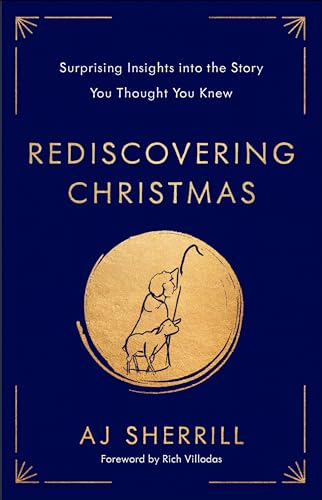
Book Review: Rediscovering Christmas

Rediscovering Christmas
by AJ Sherrill

My rating: 3 / 5
Genre: Christian non-fiction

After being a Christian for many years, it’s nice now and then to attempt to slow down and take a look at a well-known, often-heard or portrayed account from the Bible in a new light. That’s what this book promises to do. And indeed, are were several different deep dives into historical context and translation in this book that give insight to aspects of the “Christmas story” that most people may never have heard before. Much of it I have, however, from various sources, including my own recently retired pastor, in his attempts to not preach the same sermons every year at Christmas time. This is not a fault of the book or author, of course, it only means the book is probably better for someone who is newer to Christianity or has simply only viewed the surface of the events surrounding the birth of Christ.

The author makes some assertions about the intentions of biblical writers (Luke in particular) that I have never heard before; he may have taken some liberties and made some assumptions, but he often states some of these things as fact. I couldn’t help but question some things as I read (which of course we’re supposed to do as Christians). As an example, this quote from chapter 1: “Jesus is brought into being by the creative breath of God’s Spirit.” It seems to imply that Jesus did not exist before Mary conceived, but of course that isn’t true. He was/is God and has existed for eternity. Giving the author the benefit of the doubt, perhaps he only meant to say that Jesus was brought into “earthly existence” by the creative breath of God’s Spirit, and I was nitpicking without intending to. Whatever the case, between this and my notes in the previous paragraph, this book did not quite resonate with me like it was intended to. Because of some of the uncertainties I had about some of what I read, I don’t know that I could, in good conscience, recommend this book to anyone, but I will say that if you do read it, be sure to go to the Scriptures to verify anything you’re not certain of (which, again, you should do with anything that a fallible human professes about God or the Bible).

Thank you to Netgalley and WaterBrook & Multnomah for providing me a copy of this book to review.

Find out more about Rediscovering Christmas

See what’s coming up.

If you’ve read this book, or read it in the future, feel free to let me know what you think!
Book Review: Trust + Follow

Trust + Follow
by Maddie Joy Fischer

My rating: 4  / 5
Genre: Christian devotional

This book has 60 devotionals, which I read as intended, over the course of 60 days. The focus is on learning how to completely trust and follow Jesus, presuming that the reader is already a Christ-follower. I don’t have a lot to compare it to, since I haven’t read a lot of devotionals in the past (I generally prefer a more self-driven reading/studying of the Bible). I was surprised by how short the devotionals were, generally requiring only about 2 minutes to read each entry, but that might be common and certainly might be what some people prefer. They also seemed a bit shallow and repetitive for my taste. There were some here or there that hit home, though, so I don’t mean to sound like I didn’t appreciate the devotionals overall. Not that it’s her fault, but the author is a lot younger than I would expect, considering how much she talks about her experience and difficult things she’s gone through. I had no disagreements with any theology found in these pages, and overall, I’d say it would be a good daily devotional for a newer Christian or one looking to deepen their faith in Christ. I would, however, suggest supplementing it by reading more of the Bible yourself, maybe using one of the verses contained within each day’s devotional as a launching point.

I received a free review copy from the publisher in exchange for my honest unedited feedback.

Find out more about Trust + Follow

See what’s coming up.

If you’ve read this book, or read it in the future, feel free to let me know what you think!