Book Review: An Echo in the Darkness

An Echo in the Darkness
Mark of the Lion #2
by Francine Rivers

My rating: 4.5 / 5
Genre: Christian historical fiction
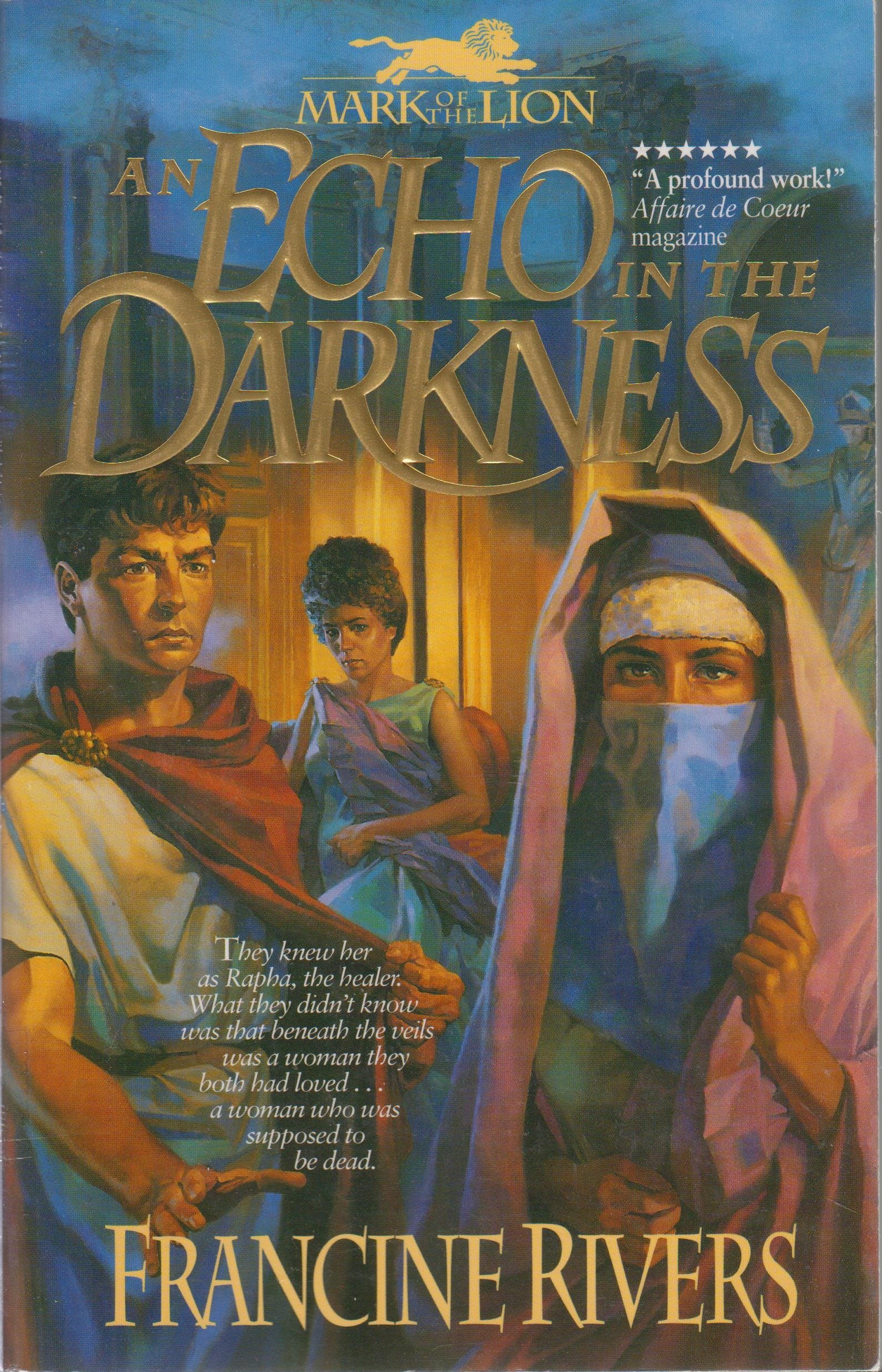
After nearly dying in the arena, Hadassah was nursed back to health by a physician whom she works with for a while afterward. She wears veils over her face to cover the scars that tend to make those who see them uneasy and eventually comes to be known as Rapha, the healer, by people she has helped. When she encounters Julia, the troubled Roman woman who sent her to the lions in the first place, she is compelled to go back and work for her. Meanwhile, Julia’s brother Marcus is devastated after witnessing Hadassah’s presumed death and travels to Judea to try to make God answer for letting her suffer and die so horribly.

There was a lot that I liked about the book, but man was it a lot of work to get there. The previous book, A Voice in the Wind, was so dark, discouraging, and full of depravity, ending with little hope or payoff for the gloom and debauchery we had to go through for most of the book. But then in this second book, glimmers of hope begin to shine and the promised payoff is particularly sweet after the long haul to get there. I still think a lot of detail could have been cut out of both books, especially detail about one particular character’s sinful life, but maybe Rivers was worried that the culmination wouldn’t have been quite so fulfilling without all of it.

There are some new characters in this book, and I came to really like some of them. Hadassah herself sometimes comes across as too perfect, especially when contrasted against the other Christian characters, one of whom is new to the faith and definitely has some work to do on his/her attitude and treatment of others (trying to be vague to avoid spoilers). My favorite parts of the story were any time we’d go back to Marcus in Judea as he tries to feel closer to Hadassah, whom he believes to be dead, and trying to force God to reveal Himself and His reasons for allowing her death. His search was well written; I agonized with him. In fact, the emotional payoff in the last quarter or so of the book hit so hard that I found myself tearing up multiple times.

Fortunately, there was a lot less graphic content in this book than the previous one had. Unfortunately, I wouldn’t really recommend skipping book #1 and going right to this one, because despite my issues with book #1, the reader would miss a lot of the depth that makes this 2nd book so rich and enjoyable. So while yes, I did enjoy this book, it’s difficult to recommend the series to anyone in particular or warn anyone away from it. Feel free to check out other opinions at the link below. (There is a 3rd book in the series, which I still plan to read, but it takes a bit of a turn. Most of the storylines are wrapped up by the end of this one.)

Find out more about An Echo in the Darkness

See what I’m reading next.

If you’ve read this book, or read it in the future, feel free to let me know what you think!
Book Review: A Voice in the Wind

A Voice in the Wind
Mark of the Lion #1
by Francine Rivers

My rating: 3.5 / 5
Genre: Christian historical fiction

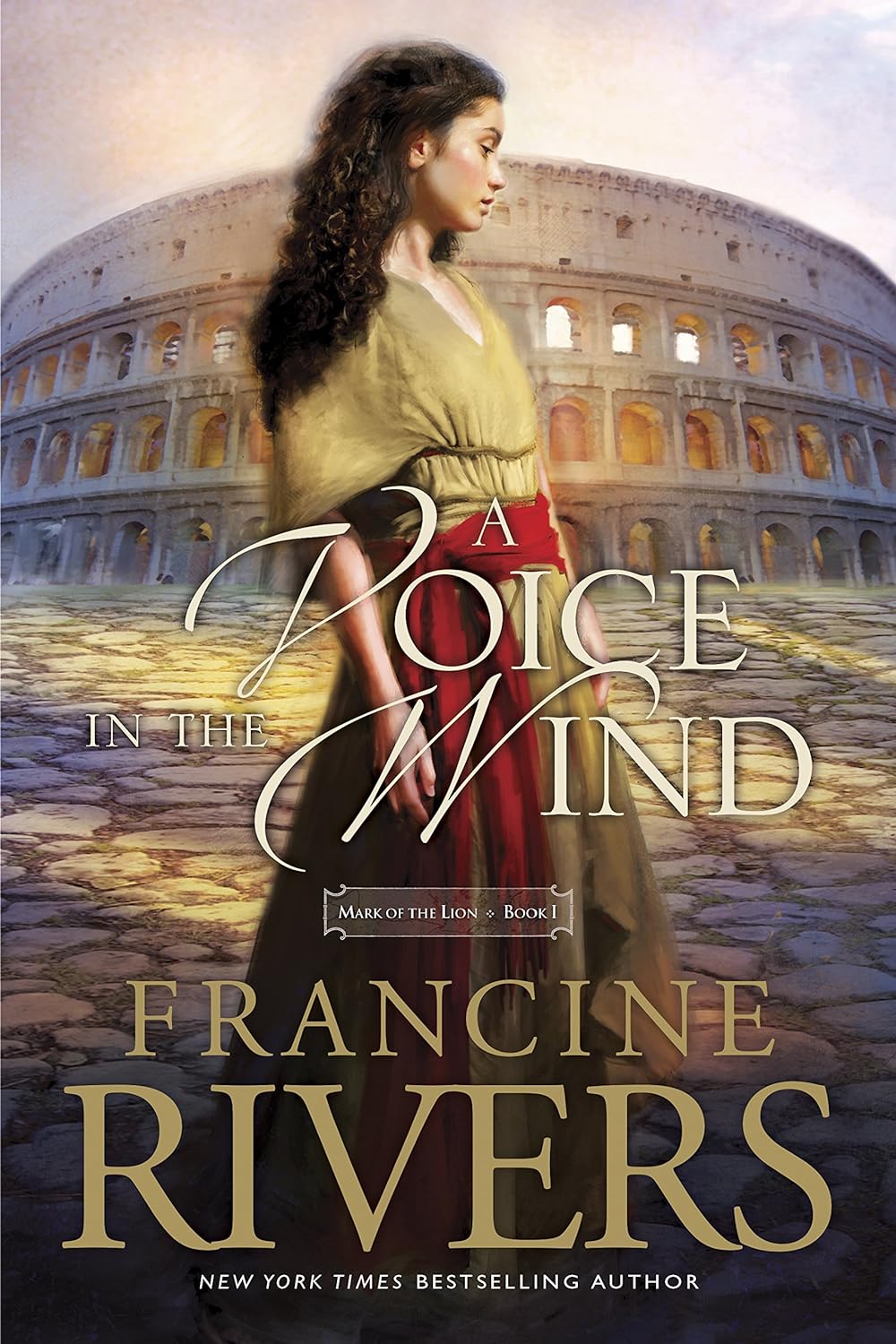
When Jerusalem falls to Rome, Hadassah is taken as a slave after losing her entire family, and eventually ends up in Rome as a  personal maid for a young woman named Julia. Hadassah is Jewish by heritage, which makes her hated enough in Rome, but she also follows Christ, which is punishable by death. Julia and her family—mother, father, and older brother Marcus—become dependent on Hadassah, and she in turn falls in love with them, praying that she could somehow be a light in the darkness of their lives. 

I’ve heard of this book for a while but wasn’t sure about reading it, partly because the length was daunting. But since I ended up with a copy of the book (and the rest of the series), I figured it was time to give it a try. And yeah, I think the length was more than it needed to be. For one thing, I didn’t even mention an entire POV character in my synopsis, because he’s so far removed from the rest of story. He’s a Germanic warrior who was captured in battle and forced to become a gladiator, and he does intersect with the main story by the end, but it takes a long time, and I couldn’t help but wonder how much of his story was necessary. There’s also a lot of detail about the debauchery that pretty much all of the characters (minus Hadassah, of course) participate in throughout this book that I think was wholly unnecessary. I understand that this is a fact of life and was very common in Rome during this time, and I am not saying that even Christian writers should pretend it didn’t happen or shy away from it. But I also don’t think it needs to be focused on as much as it is in the book to get the point across. It made the book start to feel repetitive and was also at times unpleasant to read. Seriously, I brought the book to church when my husband had to be there early for worship practice, and as I saw reading in the pew, I thought about how awkward it would be if the pastor (or anyone, really) walked by and caught a glimpse of the page. I think there needs to a balance that this book is pretty far from.

Still, I was invested in the family fairly quickly. I expected to not care at all about Artretes whenever it went back to his POV (that’s the barbarian gladiator), but as long as I skimmed the bloody fight scenes, I was fairly interested in his parts too. Hadassah seems almost too perfect as a character, but I appreciated her fears and frustrations and don’t have too hard a time believing that her persecution helped her to be more than she otherwise might have been. It’s pretty clear that God can work that way. I was really rooting for Hadassah to realize that she was doing more than she thought, but to be honest, the book didn’t quite go how I thought it might and really wanted it to. I obviously didn’t love it, but I did like it enough to want to see how the lives of these characters play out and continue the series.

I am nowhere near an expert on this time in history (or any time, really), but I’ve read a few books set around this time, and this felt real to me. Except for the couple of times that Hadassah used more the modern Christian verbiage of having Jesus in our hearts, which is not only theologically muddy at best but almost definitely not an expression that would have been used in this time period. As for recommendations, fans of Christian historical novels or romance would probably enjoy this, but please keep content warnings in mind (there’s more than I mentioned, but here’s a review with more than I shared). It’s not something I’d recommend for teens, for sure.

Find out more about A Voice in the Wind

See what I’m reading next.

If you’ve read this book, or read it in the future, feel free to let me know what you think!