Book Review: Cranford

Cranford
by Elizabeth Gaskell
read by Nadia May

My rating: 3.5 / 5
Genre: Classic Victorian literature

Having greatly enjoyed Wives and Daughters and North and South by the same author, and seeing this billed in some places as Gaskell’s best-loved work, I went into this expecting something very different. Maybe this is just another example of classic writing that I simply don’t get, but I spent at least half of the time listening to this wondering what I was missing. It wasn’t completely uninteresting, but there isn’t much of a plot—at least not one that is discernible until far into the book. Even then, it’s thin.

On the other hand, some of the vignettes are amusing or interesting, and when a somewhat more involved plot emerged near the end, I was invested enough to really like it. I just think that there weren’t as many solid, distinct characters around which this book was written. I realized partway through that I probably should have approached this book the same way I did the other two (though it was not intentional with those two). I watched the BBC mini-series for both of them before I ever read the books, and maybe that allowed me to stay more interested as the plot meandered its way to the end (especially in Wives and Daughters). My husband bought me the mini-series of Cranford recently, so I’ll watch that soon, and who knows, maybe it will inspire me to listen to the audiobook again in the future with a different mindset going in.

Find out more about Cranford

See what I’m reading next.

If you’ve read this book, or read it in the future, feel free to let me know what you think!

Book Review: The Great Gatsby

The Great Gatsby
by F. Scott Fitzgerald
read by Sean Astin

My rating: 2 / 5
Genre: Classic literature

I read this book in high school and did not like it. I remember telling my teacher that I was disappointed she would condone the lifestyle presented therein. She was offended. Now that I’ve read it again, I can see that misinterpreted the story. However, I also think that my teacher should have been a little more forgiving of a high schooler’s difficulty in fully understanding this book. Even now, I had to go read a few sections over again, and even look up ideas from other people online, to fully follow along.

Though I can see now that the book is not exactly advocating the way of life of the characters within, I can understand why I thought that way. And I didn’t like the book any more now than I did in high school. I did appreciate the vivid and beautiful writing and the immersion in the 1920s, but the story itself was simply unpleasant overall. Whatever commentary it’s trying to make on greed, power, social mores, etc., there’s nothing here but sad, depraved, depressing, unhappy people and lives. Nothing good comes about at all (which may well be exactly the point, but that doesn’t mean I have to like it).

I’m not sure exactly who, if anyone, I’m meant to feel for along the way. The narrator himself is the only one who seems remotely down to earth, though he has his own issues. Tom is the very definition of a misogynist. Gatsby is controlling and unable to handle being anything other than the primary focus of the affections of the woman he desires. And Daisy made some bad choices, but that doesn’t excuse the men in her life from treating her completely terribly. Whatever merit fans of the book, those who study classics and literature, and high school/college English teachers may see in this book, I personally don’t see it as the Great American Novel, nor would I call it a must-read.

I listened to the audiobook read by Sean Astin, and while he’s a great actor and did some of the dialog really well, he wasn’t so great with the narration at times. And overall, he didn’t vary his voice with the characters, the main ones especially, nearly as much as I would have liked.

Find out more about The Great Gatsby

See what I’m reading next.

If you’ve read this book, or read it in the future, feel free to let me know what you think!

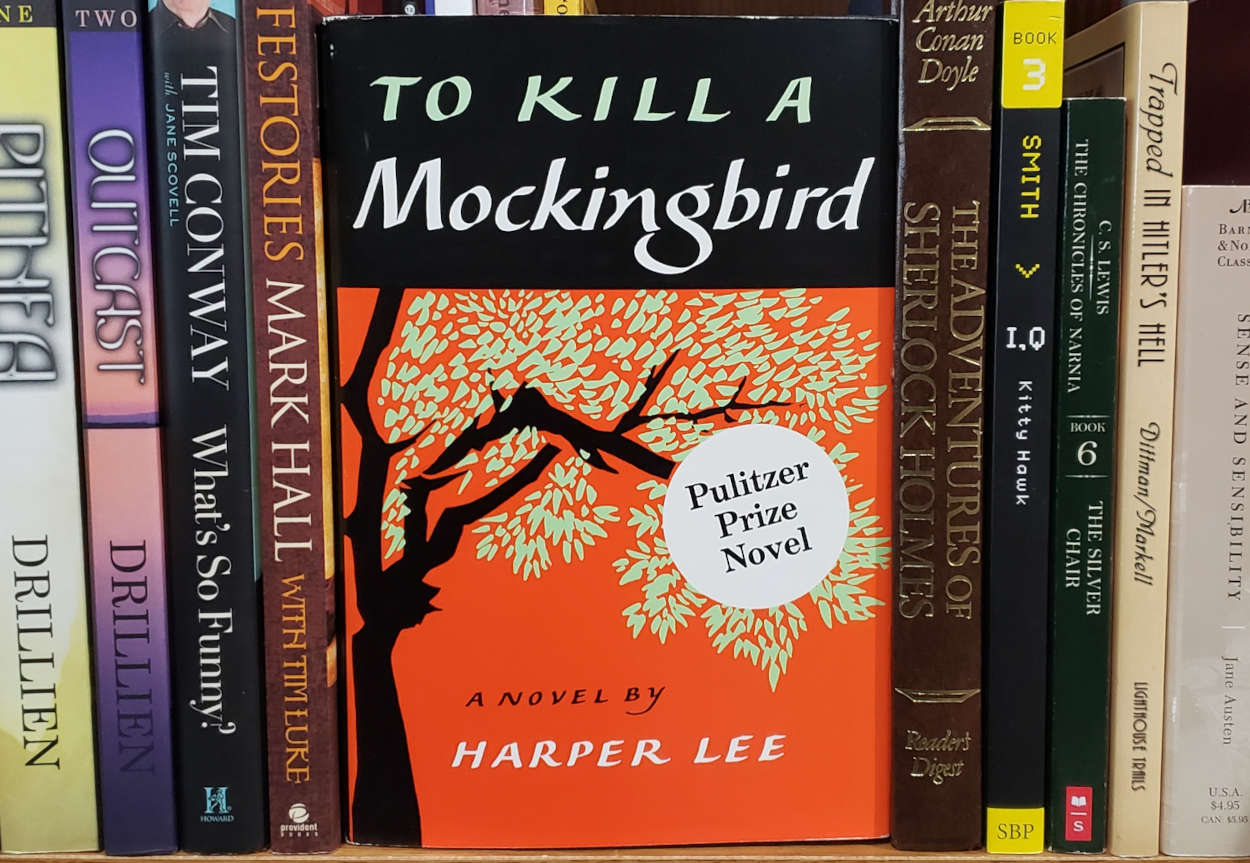
Book Review: To Kill a Mockingbird

To Kill a Mockingbird
by Harper Lee

My rating: 4 / 5
Genre: Literary classic

Like so many people, I read this book in high school. Unlike most of the other books I read for assignments then, I liked this one and remember being able to understand the symbolism and themes better than I could in most of the others. This is the first time I’ve read it since then and the first time reading it for fun, rather than for an assignment, and I doubt that, as a teenager, I was as frustrated by the society presented in this book as I was when reading it this time.

Atticus Finch is shown to be a man who bucks society, making it clear to his children and community that he will do the right thing, no matter what others say, and that he does his best to love everyone, no matter the color of their skin. It’s clear that he doesn’t like things the way that they are and would change them if he could. But why he doesn’t stand up to his sister more, I don’t understand. Why it’s never addressed that she is the one who gave her grandson terrible things to say about Atticus, which were then repeated to Scout, causing Scout to react, I don’t know. I understand that Atticus is a single parent just trying to do the best he can to raise two kids and work a difficult job, and that might be enough reason to still allow is sister to move into his house and help with the kids. Perhaps he never fully understands that any of that is happening, since the kids try to protect him by not telling him everything, but on the other hand, it’s also clear that he knows more than they think he does.

That’s the extent of my rant for this book, and it’s not really a complaint about the book (much). It’s frustration at how slowly things change in a society. The book itself is beautifully written, though, and really immerses the reader in the 1930s south. While some of part 1 seems unnecessary at the time, it all goes into building the characters and the town (which is like a character itself), and much of it comes back up again in some way in part 2. I do wish that both Boo Radley’s arc and the aftermath of Tom Robinson’s outcome had been expanded on a bit more by the end, though.

If you haven’t read this book and aren’t sure if you should, I suggest you check it out. If you haven’t read it since high school, consider reading it again some time, without the assignments to go along with it.

Find out more about To Kill a Mockingbird

See what I’m reading next.

If you’ve read this book, or read it in the future, feel free to let me know what you think!
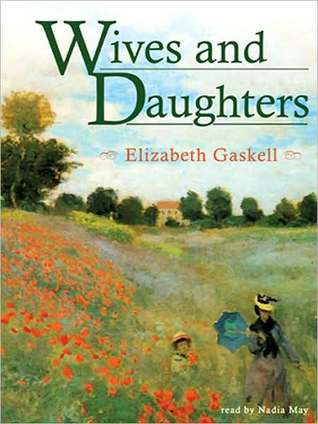
Book Review: Wives and Daughters

Wives and Daughters
by Elizabeth Gaskell
read by Nadia May

My rating: 5 / 5
Genre: Classic Victorian literature

When 17-year-old Molly Gibson’s long-widowed father remarries, she gains a step-mother and step-sister, the latter of which is near her age. However, she now has to share her father and defer to her new mother, both things that are completely foreign to her. There are some clashes beyond that, though, as step-sister Cynthia, who becomes Molly’s dear friend, is keeping secrets that will shock the entire town of Hollingford. As Molly matures into a woman, she befriends the Hamley family with their two young, eligible sons, and Lady Harriet, much to the chagrin of Molly’s new mother.

This book is long, originally written as a serial of shorter parts for publication in a magazine, and it does tend to meander a bit, without seeming like there’s much of a central plot at first. However, once things pick up a few chapters in, I found almost every bit of it interesting, even if it didn’t seem to add to a main plot. There are so many things happening, probably because the story was meant to be more of a snapshot of everyday life at the time, rather than a single, solid novel. Yet with all of that, I was never bored (well, maybe when someone’s style of dress was described or when Molly’s step-mother Hyacinth’s thoughts about someone or something was explained). I think that is mostly because the characters were so well written, I enjoyed following them through this life they were living. I really liked Molly, but also loved her father, the town doctor who was an incredibly wise and caring man. And Squire Hamley, for all his blustering and cultural prejudices, found his way into my heart.

Cynthia is probably the most complex character–I’m not sure she knew her own mind for more than a moment at a time. The exploration of what a child who was raised by a single mother who showed no love or affection would grow into was fascinating, even as she drove me crazy. But I felt for her. While she did make her own choices, and as she grows older will be held more and more accountable for them, she didn’t enter into womanhood with a very good example. Hyacinth was a selfish, uncaring individual, bordering on sociopathy, really. Her utter lack of empathy and penchant for manipulation were very well written, though, and are a large part of the reason it seems, in a way, that Cynthia never had a chance to be normal.

I know that if I had been reading the text, rather than listening the audiobook, it would have taken me a lot longer to finish this book. However, of all of the audiobooks I’ve listened to in the last several months that I’ve started opening myself up to them more, this was the first one that I felt a strong desire to come back to whenever I could, rather than simply putting it on when doing the activities that allow me the chance to listen. This is mostly because of the story itself, of course, but I also want to be clear that Nadia May did a superb job with the narration. The way she differentiated all of the larger characters was astounding, and I especially loved her voice for Mr. Gibson (Molly’s dad). There were times that I’d get so caught up in it that I’d completely forget this was one person doing all of the voices. This is my second read by Elizabeth Gaskell, and I think I liked it a little more than North and South, which really surprised me. Though I do still prefer the North and South mini-series to the one based on this novel, but I’m probably biased there for reasons I won’t get in to right now.

Find out more about Wives and Daughters

See what I’m reading next.

If you’ve read this book, or read it in the future, feel free to let me know what you think!