Book Review: The Bride of Ivy Green

The Bride of Ivy Green
Tales from Ivy Hill #3
by Julie Klassen

My rating: 4.5 / 5
Genre: Historical Christian fiction

In this culmination of the trilogy, the women who have been in focus so far are joined by another—a mysterious, new, possibly French dressmaker. More secrets will come to light as some old relationships are mended and others are just beginning.

In a way, this trilogy reminds me of Elizabeth Gaskell’s Wives and Daughters, in that it sometimes seems to meander through daily life, weaving a story of a small group of characters, rather than having a focused plot. However, by the time you get to this third book, it’s clear that all of that meandering was deliberately wending its way toward this final book. Even with the wrapping up that happened here, new plots were introduced. I’ll admit I didn’t care much about the dressmaker, probably because adding a brand new character, after so many pages of being engrossed in the lives of others already, made that new character’s life seem shallow by comparison.

I was quite happy with how things turned out, and the way they got there (though the “near misses” started to wear on me), for each of the main characters save one. I don’t want to spoil anything, but I really wish Mercy’s story had gone differently. I sometimes write down my thoughts as I read—when I want to make sure I remember something for the review or simply when I feel strongly about something. In this case, I wrote down a couple of predictions (or, rather, hopes and wishes) for Mercy, even though I had good reason to believe they would not happen. My reason for assuming that, though, was simply due to the nature of the romance (especially Christian romance) genre. And while I was correct in my assumption that what I hoped for Mercy would not happen, the conclusion of her story did include an offer that I did not predict and was pleased to see happen.

Overall, I thoroughly enjoyed my time in Ivy Hill—so much so that after I finished this book, I immediately re-read the follow-up Christmas novella, An Ivy Hill Christmas, in the hopes of “catching up” with the main characters in this trilogy, even though I knew the focus had moved on. I don’t think this is the kind of series I will decide to re-read some day, but I am all the more excited to read more books by Julie Klassen.

Find out more about The Bride of Ivy Green

See what I’m reading next.

If you’ve read this book, or read it in the future, feel free to let me know what you think!

Book Review: Number the Stars

Number the Stars
by Lois Lowry

My rating: 5 / 5
Genre: Classic children’s historical fiction

Annemarie Johansen doesn’t really understand why she has to pretend that her friend Ellen is her sister. Or why Ellen’s parents have to leave without her. But when Annemarie’s parents and uncle try to help Ellen’s family and some other Jewish people in Denmark flee to a safer country, Annemarie knows it’s important and will do anything she can to help, even if it’s dangerous.

I really appreciate that in so few pages and in language kids can understand and get into, Lowry not only paints a vivid picture of the danger and fear that those who lived in Nazi-occupied countries dealt with, but also touches on the resistance offered by non-Jews living in Denmark. I also liked seeing the love and loyalty the Danes had for their king, which is something most American’s can fully understand, and the way the scientific community pulled together to help save lives.

Many of us remember reading this book for school, though I didn’t remember it nearly as well as I thought (or maybe I was thinking about a different book the whole time, though if so, I can’t pin down what it was). Required reading or not, this is a good book to introduce young readers to the darkness that many in Europe faced during WWII.

Find out more about Number the Stars

See what I’m reading next.

If you’ve read this book, or read it in the future, feel free to let me know what you think!
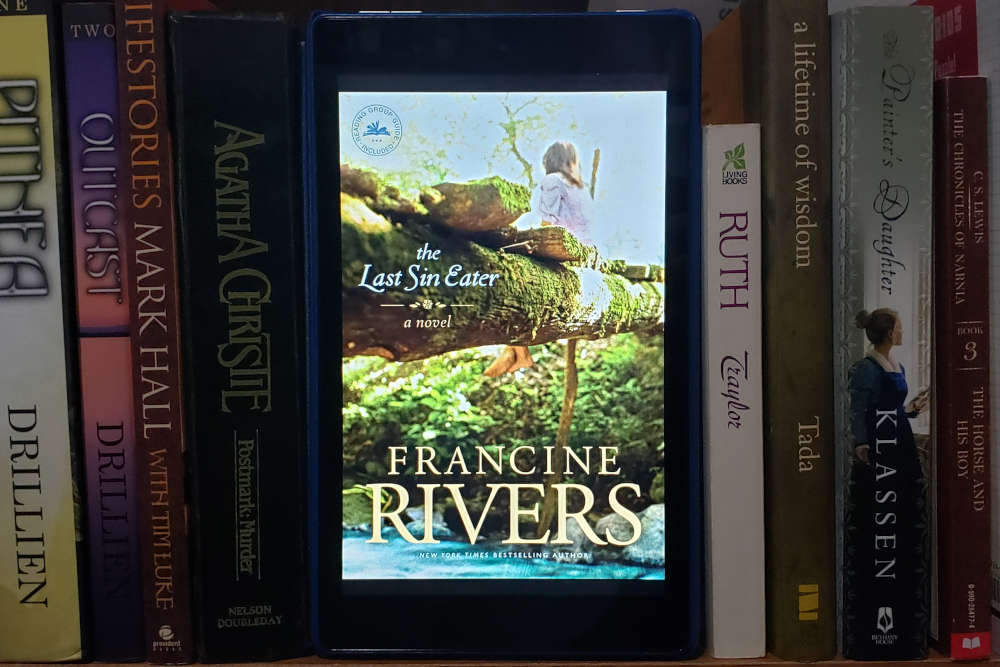
Book Review: The Last Sin Eater

The Last Sin Eater
by Francine Rivers

My rating: 4 / 5
Genre: Historical Christian fiction

Appalachia, 1850s – Cadi Forbes is a 10-year-old member of a clan of Irish immigrants who have resurrected a tradition of their ancestors. Upon the death of a clan member, a ritual is performed to summon the sin eater, who will eat the sins of that person so that the deceased can go to heaven. The sin eater, being a man himself, takes the sins of hundreds, sacrificing his own soul to save the souls of others. Weighed down with the guilt of her own sin, Cadi seeks out the sin eater in the hopes that he can eat her sin now and give her some rest.

Let me start by saying that the setting in this book is top-notch. The way the characters talk took a little getting used to, but that adds to the immersion. Though that makes it all the more strange when a new character shows up partway through the book and talks like a KJV Bible. And stranger still that the other characters seem to have no trouble understanding him.

The story that revolves more directly around Cadi and the sin eater is what I liked most about the book. Her quest to be absolved of her sins and his desire to better understand his role are heartbreaking, yet allow for maximum hopefulness as the story unfolds. I’ll admit I didn’t care for the way the preacher’s storyline plays out though. The book overall feels really allegorical, with a character that is clearly not “real” in the strictest sense of the word and the instantaneous way that the characters know entire passages of the Bible by heart. Not that I’m against an allegory, but there was one particular element in the story that it would have been really nice to get even a partial explanation for that was completely left unaddressed. Overall, though, this was an engaging read, and I think most fans of historical Christian fiction, especially those with a missions-type storyline, would like it.

Find out more about The Last Sin Eater

See what I’m reading next.

If you’ve read this book, or read it in the future, feel free to let me know what you think!
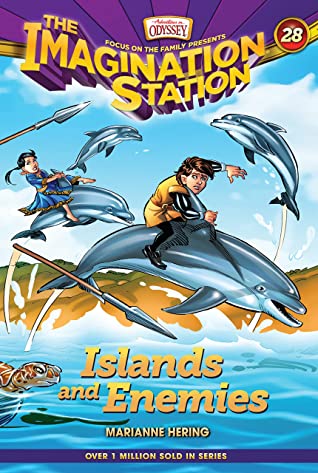
Book Review: Islands and Enemies

Islands and Enemies
The Imagination Station #28
by Marianne Hering

My rating: 3.5 / 5
Genre: Historical children’s fiction, Christian

After cousins Beth and Patrick have an argument about loyalty and betrayal, Whit sends them on an adventure in the Imagination Station. They arrive in 1521 and become part of Magellan’s expedition to circumnavigate the globe for a few days and along the way learn a little something about loyalty and betrayal.

I like the idea of the Imagination Station so much more when it’s more like a holodeck adventure. Since it’s apparently meant to be actual time travel in this series, some of the things that happen are just a bit too unbelievable to me. Still, I like the way it brings moments of history to life for young readers, and this one was no exception. Some of the details shared by Beth (who may know more than makes sense for her age, even after having just done a report about one of Magellan’s ships) were interesting to learn about.

The time travel aspect and historical characters aside, the actual characters of Beth and Patrick took a hit in this story, in my opinion. While it certainly makes sense that they wouldn’t be perfect kids and would even sometimes get into fights with each other, Beth did not know when to keep her mouth shut, and Patrick was just a little jerk at times. Overall, though, it’s a fun look at historical accounts, written for kids, from a Christian viewpoint.

Thank you to Netgalley and Tyndale House Publishers/Focus on the Family for providing me a copy of this book to review.

Find out more about Islands and Enemies
Publication date: April 5, 2022

See what I’m reading next.

If you’ve read this book, or read it in the future, feel free to let me know what you think!

Book Review: The Mayflower Bride

The Mayflower Bride
The Daughters of the Mayflower #1
by Kimberley Woodhouse

My rating: 2 / 5
Genre: Historical Christian romance

Mary Elizabeth Chapman, along with her father, younger brother, and other Separatists, prepare to sail to the New World aboard the Speedwell, companion ship to the Mayflower. On the latter ship, William Lytton is a carpenter looking for a new life in the New World, but before departure, he’s hired to keep an eye on the colonists and report back to the company that is financing the journey. When the two ships are funneled onto one, Mary Elizabeth and William have a chance to get to know each other, but the trip across the ocean will be long and difficult. And reaching the New World is just the beginning.

There was a lot going on in this book that never quite seemed to mesh into a coherent, interesting story. The main female character got on my nerves right away because even though her dad and brother, as well as her best friend and family, were going on the journey as well, she was unhappy and lonely. She’d somewhat recently lost her mother, which I get would affect her, but it was leaned into a little too much, given what she did have, and she spends a lot of time moping. Plus, later in the story, she made some stupid decisions that I really doubt a woman in her position would have made given the circumstances. Then when we meet the main male character, his story starts off ambiguously. The whole side plot about him “spying” for the Company was weak, and that was clear from the moment it started. I don’t understand the inclusion of that arc at all, nor the fact that the POV switched to a “villain” now and then that was part of that arc. The POV also switched to Mary Elizabeth’s little brother a few times, which also seemed unnecessary to me.

While the historical details of the voyage were interesting, most of the plot involving the trip to the New World and attempts to find a place to start their colony seemed fairly shallow. They were often viewed through the lens of the budding relationship between the two MCs, which I felt was portrayed in a way that was not likely very accurate to how it would have been for two people in their time period, especially with one of them being part of a religious congregation like Mary Elizabeth was. Personally, I don’t need the author to interject unlikely physical contact to add to the romance; for me, the mental aspect of a developing romance is much more important anyway. But their initial attraction was mostly physical, considering they were both instantly drawn to one another after an interaction that involved no real conversation.

As the book that kicks off a series of historical romance novels set in different time periods, I had hoped for a stronger start. This book, unfortunately, did not whet my appetite for the rest of the series. However, since the series has various authors, I still plan to continue on to see what the next one holds.

Find out more about The Mayflower Bride

See what I’m reading next.

If you’ve read this book, or read it in the future, feel free to let me know what you think!

Book Review: Crocodile on the Sandbank (take 2)

Crocodile on the Sandbank
Amelia Peabody #1
by Elizabeth Peters
read by Barbara Rosenblat

My rating: 4.5 / 5
Genre: Historical cozy mystery

As a female during the Victorian era in England, Amelia Peabody is ahead of her time. Unmarried and independently wealthy, she has no need for a man or most of societal conventions. With a passion for Egyptology and a thirst for adventure, she decides to journey to less-traveled parts of Egypt, taking into her company along the way a young woman whose reputation has been tarnished. Amelia gets the adventure she’s looking for, and more, when a missing mummy begins to terrorize the women.

I listened to this book a year ago with a different narrator and did not care for it (see original review here, which I will refer to as I compare the two versions in this review). My sister, who recommended the book in the first place, convinced me to try again with a different narrator, and it really did make a huge difference. Things that irritated me about the main character weren’t nearly as pronounced, and I think that’s simply due to the sound of the two different narrators’ voices. Yes, Amelia is still arrogant and aggressive, and Rosenblat certainly did put that into her inflection, but it didn’t seem as over the top this time. It might have helped, too, that Rosenblat’s Amelia actually had a British accent. Even Amelia’s companion, Evelyn, I realized while listening this time, felt less breathy and weak in this version. I hadn’t even realized how much that had bothered me with the other version. Emerson was the one character I liked the first time around, and I was more able to enjoy the humor he and his interactions with Amelia bring to the book on this second listen. Also, Rosenblat’s voice for Lucas, Evelyn’s cousin who follows her to Egypt, is perfect.

Overall, I was able to enjoy the story more, and frankly, I think I paid closer attention, as I remember my attention wandering more the first time around. Now that I’ve given it another chance, I’m looking forward to continuing on to the next book with this narrator. I’m also glad to be able to recommend this book to people who like cozy mysteries or Egyptology. But if you’re considering listening to the audiobook, I highly suggest finding Barbara Rosenblat’s version, if you can.

Find out more about Crocodile on the Sandbank

See what I’m reading next.

If you’ve read this book, or read it in the future, feel free to let me know what you think!

Book Review: Swept into the Sea

Swept into the Sea
The Imagination Station #26
by Chris Brack & Sheila Seifert

My rating: 3 / 5
Genre: Biblical children’s fiction

In this second of a 3-part story arc, cousins Beth and Patrick are tasked with finding a mystery liquid for the Imagination Station as they’re thrown onto a ship during a storm at sea. The ship is carrying the apostle Paul, as he’s on his way to stand trial in Rome. Besides the storm, the cousins will have to face angry sailors and Roman soldiers if they hope to get back to their time.

I actually read part 3 of this story arc (which, in turn, is part of a much larger series) first, then decided to go back and read the preceding stories. This is my least favorite of the 3 books in this trilogy of stories. All 3 show some snapshot of history, but this is the only one that is an account from the Bible. While the authors added some fictional characters for the two (also fictional) main characters to interact with, and I assume some of that was meant to provide extra excitement and human connection, overall, I felt like they added little to the story. All of these books are quite short, but this is the only one that felt so light and shallow. I didn’t feel any kind of connection to the story or characters.

On its own, I don’t know that I could recommend this book to readers, though kids 12 and younger, the age group that it’s meant for, might enjoy it more than I did. The other books in the series I’ve read so far were good, but I honestly don’t think much would be missed by skipping this one.

Find out more about Swept into the Sea

See what I’m reading next.

If you’ve read this book, or read it in the future, feel free to let me know what you think!
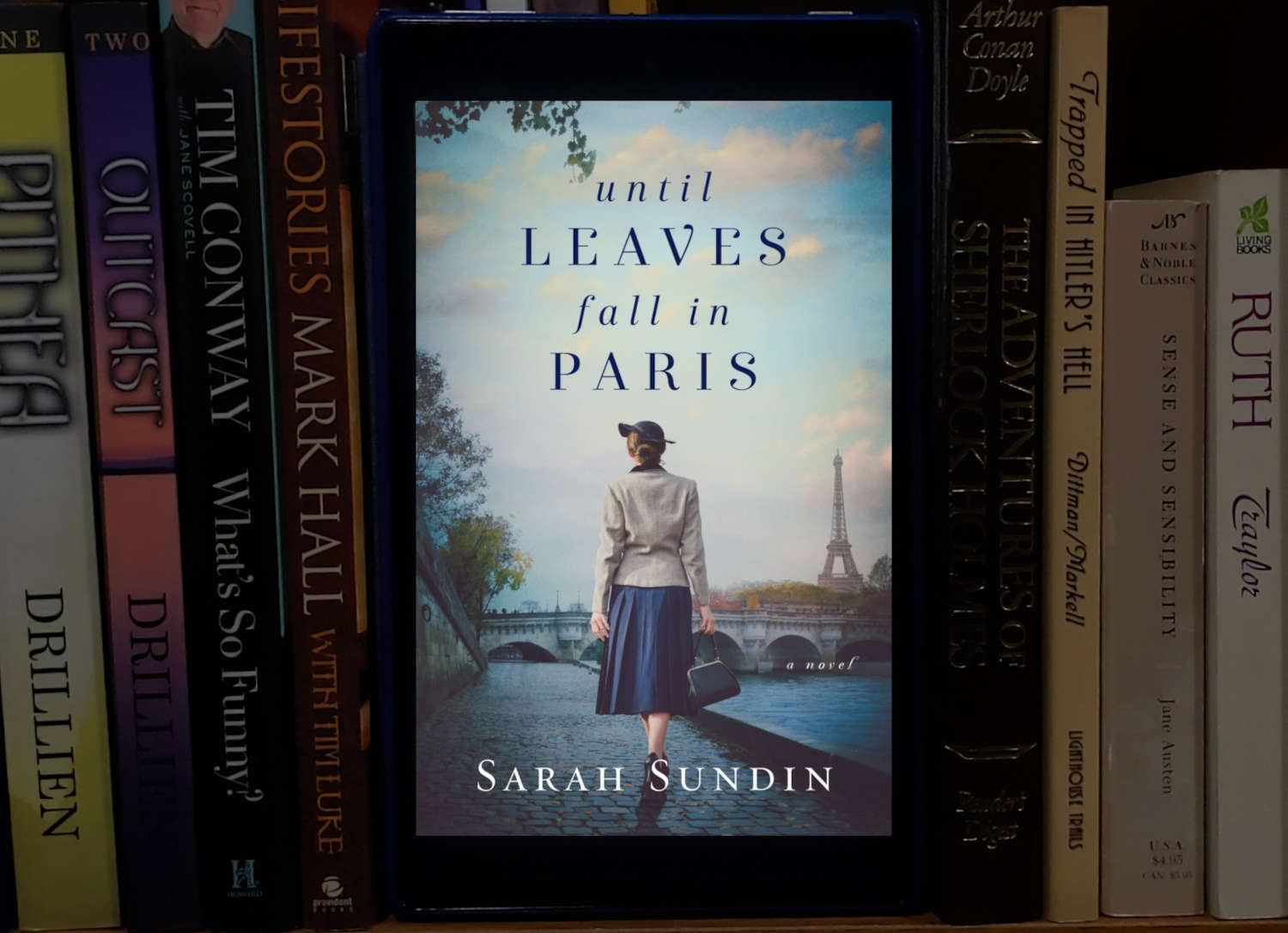
Book Review: Until Leaves Fall in Paris

Until Leaves Fall in Paris
by Sarah Sundin

My rating: 5 / 5
Genre: Christian historical romance

Lucie Girard, American ballerina living in Paris, decides to quit ballet and buy the English-language bookstore run by her Jewish friends, allowing them to escape to America before Hitler’s noose closes around them. While she struggles to keep the store running with so many English speakers fleeing France or being interned, she discovers that members of the local resistance are using her store to pass messages, and she wants to help. Meanwhile, Paul Aubrey, widower with a very creative 4-year-old daughter named Josie, runs a factory that produces trucks for civilian use. Because he sells those trucks to the Germans, he’s seen as a collaborator by all of his friends, who shun him and his daughter. He can’t tell them about the work he’s doing to help the US military, especially after it grows into other work for the local resistance. When the time comes for American’s to flee or be interned as well, Paul and Lucie will have to trust each other in order to get themselves and little Josie to safety.

This book was beautiful and touching, heartbreaking and uplifting, and I don’t think I can say enough about how much I loved it. The symbolism of leaves and the color green is woven throughout the entire book in a way I enjoyed—not always subtly, but I still appreciated how the author built a theme around it all. I adored Josie and the relationship between her and Lucie, as well as Paul’s attempts to understand his daughter better. Josie and Feenee are a major highlight of the book.

It seems like it’s been a while since I’ve given a fiction book 5 stars, but this one deserves it. The two main characters are both likeable and interesting. The ballet angle was a new one for me, and while it’s not something I know much about, I really enjoyed reading about it. Paul’s integrity, even in the face of undeserved hatred, and the way he relies on God to help him through it, is wonderful. The relationship between the two builds in a believable way, without much angst, and it’s not the only focus of the book, all of which I appreciate. The first meet between these two is one of the best I’ve ever read.

Tension builds as the war ramps up, and the last third or so of the book is filled with pulse-pounding, tear-jerking scenes. I loved everything about it, and know without a doubt I will re-read this book in the future. My only real complaint is that Lucie and Josie’s names are similar enough in style and appearance that a few times I was confused about what was going on in a scene or who was talking. But other than that, this book has cemented Sarah Sundin as one of my favorite authors (a distinction I don’t assign easily). And though it doesn’t appear to be part of any series, it is clearly connected to Sundin’s previous release, When Twilight Breaks, as the two MCs from that book appear briefly in this one. And it appears that her next book, which I’m excited to read, will be connected as well! In case it’s not clear, I definitely recommend this book to anyone who likes historical fiction from this time period in the Christian romance genre.

Thank you to Netgalley and Revell for providing me a copy of this book to review.

Find out more about Until Leaves Fall in Paris

See what I’m reading next.

If you’ve read this book, or read it in the future, feel free to let me know what you think!

Book Review: The Ladies of Ivy Cottage

The Ladies of Ivy Cottage
Tales from Ivy Hill #2
by Julie Klassen

My rating: 4 / 5
Genre: Historical Christian fiction

In this return to the village of Ivy Hill, we shift focus a bit to Rachel Ashford, who has recently been removed from her family home and is now living in Ivy Cottage with the two Miss Groves, who run a girls’ school in the cottage. Rachel isn’t much of a teacher, but she also has no income and wants to contribute to the household. Thanks to some advice and a lot of help, she opens a subscription library. Unfortunately, neither the library nor the girls’ school may last when Mercy, the younger Miss Grove, is given an ultimatum that will likely result in the loss of her way of life, not to mention her plans for the future, no matter which choice she makes.

It’s a little difficult to boil this book down to a succinct summary, because there’s so much going on. I believe Rachel Ashford’s POV is shown the most, with Mercy Groves second, but Jane Bell, the main character from the previous book, might have as much “screen time” as Mercy. While we do see a continuation of Jane’s story, the fate of the two younger women of Ivy Cottage is definitely the focus of the book. The downside to all of this is that it can get a little difficult to keep everyone and their situations (and their suitors) straight. When perspectives changed, it was always made clear soon enough which character’s head we were in, but sometimes I had to take a moment to remember what the story was with the current character. Not to mention which man/men was/were possibly interested in her.

That aside, however, I really enjoyed my time spent in Ivy Hill. So much so that when the book was finished, I felt a little bit of loss, which is not a common thing for me after finishing a book. Though some storylines were tied up in this book, there is clearly more to come, and I particularly want to see where Mercy’s story goes. I anticipate another difficult decision ahead for her. I continue to appreciate that, while there certainly is some romance in this book, it’s not a focal point. One thing that could be a detractor, though, is that there are an awful lot of illegitimate relationships uncovered in this book. If you’re a fan of historical Christian fiction, keep that in mind when considering this book. I do recommend it, and am looking forward to finishing the series.

Find out more about The Ladies of Ivy Cottage

See what I’m reading next.

If you’ve read this book, or read it in the future, feel free to let me know what you think!
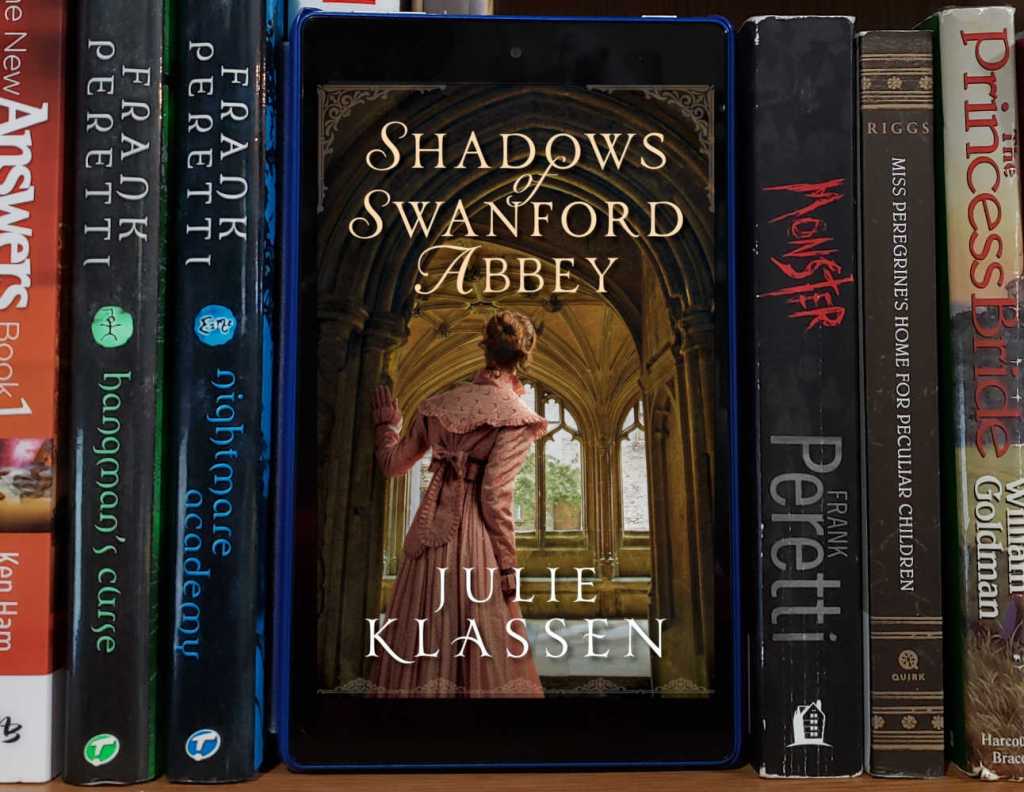
Book Review: Shadows of Swanford Abbey

Shadows of Swanford Abbey
by Julie Klassen

My rating: 4 / 5
Genre: Historical Christian mystery, romance

Tasked by her brother to present his manuscript to a well-known author, Rebecca Lane takes a room in the monastery-turned-hotel Swanford Abbey, where the author is also staying. And so is Frederick Wilford, an older man Rebecca once had a huge crush on. When the famous writer is murdered, Frederick, as local magistrate, is determined to find the guilty party, even if the investigation shines a light on secrets Rebecca is hiding.

As a Regency-era romance, the story here is pretty good. As a mystery, it’s only okay. My biggest issue is that it takes quite a while to really get going; so much of the first half is spent describing the abbey, hinting at things from the past that affect the present (which we won’t know more about until much later), and setting up the mystery around the murder, which doesn’t even occur until over halfway through the book. I don’t mind a mystery taking so long to get started if I spend that time trying to figure out who the victim might end up being, along with who the murderer will be, but in this case, the synopsis tells us who the victim will be. All of this led the book to feel slow for a while.

I mostly liked the characters. Rebecca had her issues in the story, mostly stemming from the task her brother insists she help him with, but this seems to lead her to not care at all about the societal conventions of her time or about her reputation. That leaves Frederick to be the most understanding man ever. He ends up having to help her in a lot of different ways, more times than I might normally prefer in a story like this, but it didn’t bother me this time, I think because it didn’t seem as contrived as it could have.

I raised my eyebrows during part of a scene that seemed to be straight out of North and South by Elizabeth Gaskell, and found out while reading the author’s note at the end of the book that I was correct. She also mentioned other classics that she took some direct inspiration from, though those others I either haven’t read or don’t know well enough to have recognized the way she used that inspiration. Overall, I enjoyed the book and the characters and recommend it to fans of historical romance. Fans of mystery books may like it, too, if they’re not bothered by what I described above.

Thank you to Netgalley and Bethany House for providing me a copy of this book to review.

Find out more about Shadows of Swanford Abbey

See what I’m reading next.

If you’ve read this book, or read it in the future, feel free to let me know what you think!