Book Review: This Light Between Us

Finished Reading: This Light Between Us
by Andrew Fukuda

My rating: 3.5 / 5
Genre: YA historical fiction

This Light

As a Japanese American during WWII, teenage Alex Maki’s life begins to deteriorate until his family is sent to a detainment camp. Up to and during this time, he is pen pals with a Jewish girl in France, who is seeing the growing persecution of Jews around her. This friendship is his one bright spot in an otherwise scary, unpleasant time. They share their hopes, dreams, fears, and ideas about acceptance vs. revolt through their many letters back and forth. As the war rages on, both of their lives change in ways they can’t imagine, and their strong friendship might not be enough to keep hope alive.

This book was incredible in some ways, and problematic in others. I really liked the history that was presented in this book, as well as the relationships. However, I had a difficult time with the style of writing and with the pacing.

I’ll start with what I liked, which is plenty. I loved the juxtaposition of the two teenage pen pals, who most readers will understand going in are being set up for intensely difficult times ahead. While I have seen and read many books about the Jewish side of this, the Japanese American side was a fresh topic for me. It’s easy to see the Nazis as evil because of what they did, but it’s also easy to forget that America put their own citizens into camps (though not heinous as the Nazi camps, as is clearly recognized in this book).

There was a pivotal scene not far from the end that I was curious enough about to look up and found that it was historically accurate, which was really neat to me. And the author’s notes at the end said it was one of 2 sources of inspiration for this book! Overall, I appreciated the history in this book.

I think my favorite parts of the book were the letters between Alex and his pen pal Charley. I would have been okay if more of the story had been told through those letters. I also liked the way a few other relationships developed throughout the story, particularly those between Alex and his brother Frank, and Alex and Mutt. Thinking of these, though, make me realize how light the book is on deep characters. Overall, those 4 are the only characters with any real depth, and none of them are particularly deep, besides maybe Alex and his brother.

This might be largely related to one of my biggest dislikes with the book. The story, which is presented as a personal narrative, has some strange inconsistencies in writing style. It fluctuates often between 3rd person limited and 3rd person omniscient (especially in the last third), which can at times make me feel like I have mental whiplash. Some of these sections easily could have been shown from the limited POV of Alex, rather than the broad POV of everyone involved. The story is also written in present tense, which, to me, is a strange choice for the omniscient POV. This caused the book to not flow as well as it could have.

Similarly, during the omniscient sections, there’s a lot of telling, instead of showing. I’m really not a big stickler for the “show, don’t tell” adage, but even I have my limits. I also would have preferred some translation for the French in some parts. This is a small gripe, because it didn’t come up often, and most of the time I could guess what was being said from context. But during a pivotal scene near the end, I had to use Google to translate some phrases to make sure I knew what was being said, and I’d rather not have to leave the book in a moment like that. (There was also something said in German that the reader is led to believe was some kind of German curse, and it’s not translated or even hinted at otherwise. I know enough German to know it was not a German curse, and was really quite emotional.)

So, overall, I did enjoy the book. It wasn’t a favorite, but I also think that most of what bothered me was more personal preference than normal. I think most people will not be bothered by the writing style, especially. It is listed as YA, but I’m not sure how much it works for that crowd. Though I will say that the dialog at times is pretty immature, so that might work out well (it’s also a little too modern, in my opinion, but I’m no expert). If you’re a fan of historical fiction, especially related to WWII, you will probably like it.

Thank you to Netgalley and Tor Teen for providing me a copy of this book to review.

Find out more about This Light Between Us

See what’s coming up.

If you’ve read this book, or read it in the future, feel free to let me know what you think!

Book Review: The Land Beneath Us

The Land Beneath Us
Sunrise at Normandy #3
by Sarah Sundin

My rating: 5 / 5
Genre: Historical Christian romance

Land Beneath

Clay Paxton is training to be a U.S. Army Ranger in advance of the Allied invasion of France in WWII. Leah Jones is a librarian on the military base where he’s training. He has no future, due to a recurring dream that he sees as a premonition of his death during the invasion. She has no past, orphaned at the age of 4 and torn away from her baby sisters, with no familial connections. A marriage as friends gives them both something they need, and shortly thereafter, Clay ships off for further training, expecting never to return. Neither can anticipate what will happen in the months leading up to D-Day.

This book is just so beautiful in so many ways. The main characters are both so kind and compassionate, so often willing to put others before themselves, and yet both have flaws to try to overcome. The events throughout the book meld together so well, and yet, not everything turns out perfectly. And the writing itself is clear, with a style that I found I particularly enjoyed.

I am not a history buff at all, so understand I have very little basis to say this, but I felt that the book was very well researched. With real events, real locations, and even some real people from history who were participants in this part of the invasion, it all felt very real for me.

As far as the romance goes, I know everyone has their preferences–what they like and don’t like in romance. This one hit all of the right buttons for me. I requested the ARC specifically because of 3 words in the synopsis: “marriage of convenience”. I have always loved stories where a romance develops between two people who married because they felt they had to. And it absolutely did not disappoint. There was something in the last quarter of the book that started to bug me a bit (being vague to avoid spoilers), but it paid off in the best scene ever!

I also love the fact that the romance isn’t right there in your face the whole time. It’s not the main plot, while a few other things happen as a vehicle for it. The rest of the story is full in its own right, and the romance is interweaved into that so wonderfully. I also love how both characters are so incredibly faith-driven and turn to God for help and strength constantly. Both of these characters are paralleled with Biblical characters–Leah with her namesake who was unloved by her husband. And Clay even more strongly with Joseph, who was cast into a pit by his brothers, which is how Clay feels about his own situation.

When I first requested this ARC to read & review, I saw that it was #3 in a series, but it looked to me (with a quick glance) that the novels were stand-alones. While reading, I quickly realized that they aren’t really. The three books in this series are about 3 brothers, and the other two appear in this book in some form too. This book ties up a storyline that I’m sure must thread through the first two books in some way. I’m a little sad that I read the last one first, but I loved this one so much, I’m going to have to read the others very soon! And then I’ll probably go on to try a different series by this author. This book will be the standard by which I measure all Christian romances in the future, and I don’t see it getting much better than this.

In case it’s not clear from my review, I absolutely recommend this book to all who enjoy Christian romance, Christian historical novels, and/or books with a strong focus on forgiveness and finding a place to belong.

Thank you so much to Netgalley and Revell for providing me a copy of this book to review!

Find out more about The Land Beneath Us

See what I’m reading next.

If you’ve read this book, or read it in the future, feel free to let me know what you think!

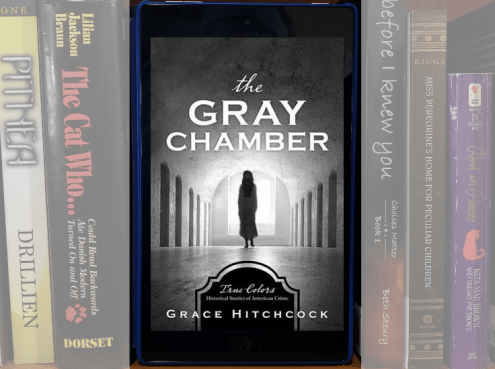
Book Review: The Gray Chamber

The Gray Chamber
by Grace Hitchcock

My rating: 3.5 / 5
Genre: Historical Christian romance, crime

Gray Chamber

In a time period where women are expected to marry well in order to secure their future, Edyth Foster is fortunate enough to be self-sufficient, due to an inheritance that her late parents left her. Unfortunately, it is left in her uncle’s care until she turns 25. Not long before that happens, he realizes that he can steal her money if he gets her declared insane and sends her off to a lunatic asylum–which is just what he does. Edyth must figure out a way to escape or prove her sanity before the asylum takes her mind for real.

I enjoyed this book for the most part. The characters were mostly interesting, though this is the type of situation where I liked some of the side characters more than the main characters. The way the plot unfolded was fairly predictable, but there were enough surprises to keep it interesting.

This is the second book I have read in the True Colors series, and like the other one, despite being written by a different author, this one was far more focused on the romance than on the true crime plot line. Edyth’s plight to escape the asylum and her uncle’s grasp wasn’t just a vehicle for the romance, fortunately, but I still felt that the crime part of this book could have been stronger. I think this is further reflected in the fact that Edyth was not at the asylum long enough for her to be quite how she was later in the book (trying to be vague to avoid spoilers). This particular issue really may have just been my own opinion, and I am not saying that what she did suffer in the asylum would have been easy to handle. It just didn’t seem to be as severe as it was portrayed later.

I enjoy a good romance, especially if it’s clean and sweet. I prefer subtle, but with a romance-genre book, I rarely get that. This, however, is barely billed as a romance, yet was so far the opposite of a subtle romance plot, I got to a point where I didn’t care that much about the relationship between Edyth and Bane. It was so over-the-top sappy sweet, and just about all either of them seemed to ever think about was each other…it was just too much for me.

The official synopsis mentions a woman that Edyth meets in the asylum and her true identity, which frankly, I think was a mistake to explain in the synopsis. Her true identity is revealed so late in the story that it made little sense to me that I knew it the entire time, simply because of the synopsis. I realized by the end that she was based on a real person who reported on the state of this asylum, but I’m sure I won’t be the only person who has never heard of her, and thus it seems like a bad addition to the synopsis.

As I said at the beginning of the review, the book wasn’t bad. I ended up scanning through some of the repetitive declarations of feelings between the two lead characters and didn’t feel like I missed much. The ending did drag on a bit, but I enjoyed it enough to say that I can recommend it for fans of Christian romance (heavy on the romance), but I wouldn’t recommend it too strongly for fans of crime novels.

Thank you to Netgalley and Barbour Publishing, Inc. for providing me a copy of this book to review.

Find out more about The Gray Chamber

See what’s coming up.
If you’ve read this book, or read it in the future, feel free to let me know what you think!

Book Review: 12 Days at Bleakly Manor

12 Days at Bleakly Manor
Once Upon a Dickens Christmas
#1
by Michelle Griep

My rating: 4 / 5
Genre: Christian historical mystery, romance, Christmas fiction

With Christmas 2 days away, this will be my last Christmas review for the year! So sad, and yet, I had so much fun focusing on holiday-related fiction and will definitely do it again next year! Now, onto the review!

When seven people are invited to spent the 12 days of Christmas at Bleakly Manor and offered some sort of reward for staying the entire time, the clash of personalities, not to mention the lack of food and heat, provide the backdrop for the re-igniting of a relationship. Clara Chapman is offered enough money to save her from the poor house. Her ex-fiance Ben Lane is offered his freedom from a prison sentence that he doesn’t deserve. They’ll have the chance to discover the truth behind what broke them up, but only if they can survive the other guests–especially after the revelation that only one of the guests can get the prize.

This is a nice Christmas-adjacent mystery with some romance, set in 1850. I enjoyed the way the guests interacted, for the most part, and while the mystery elements were fairly predictable, I still liked the way it all came together at the end. I liked the atmosphere that was built both with the descriptions and in the writing itself.

One of my biggest disappointments with this book was the way both Ben & Clara were so quick to assume the worst of each other. Even when they began to understand their misconceptions, they still took longer to let go of them than I thought they should. I know that 9 months of believing the worst of someone else can sour the mind, but…in the end, 9 months isn’t really all that long. And even later, without spoiling anything, both of them had opportunity to trust in the other after they have had a chance to get past their issues, and both failed, at least to some degree. It’s not the most solid basis for a relationship.

There was one particular guest that I really didn’t like–both his personality and how he acted, but also how he was described and portrayed in the text. And in the end, he was barely involved in much and left without making much of an impact. There were a few other things here or there that never ended up making much sense for the story, but they were mostly minor things.

Overall, it was a fun read, short and sweet. I liked the old-fashioned traditions involving Christmas that were shown, and there was one particular thing that was revealed at the end that I felt like I should have guessed, and think many would, but I didn’t, which made it better for me. It definitely has some Christian elements scattered throughout, and the romance is clean (there are some physical desires brought up, but not acted upon). I recommend this book for anyone looking for a quick Christmas read, for a historical book with mystery elements, or for a Christian romance.

Find out more about 12 Days at Bleakly Manor

See what I’m reading next.

If you’ve read this book, or read it in the future, feel free to let me know what you think!

Book Review: The End of the Magi

The End of the Magi
by Patrick W. Carr

My rating: 4 / 5
Genre: Biblical historical fiction

Myrad is the adopted son of a Hebrew magi in ancient Persia. After having a dream of a star in the sky that didn’t move throughout the night, Myrad is brought into the order of the magi, just in time for a massacre. Barely escaping, Myrad now must outrun his pursuers while also attempting to discover the meaning of his dreams about the star and the prophecy of the Hebrews Messiah that his father taught him about.

With Christmas looming, I loved the idea of reading a book about the advent of Christ from the perspective of the magi that visited Him not long after his birth. This book really hit the spot, easing me into the season. With great characters and some fun relationships, following the star with Myrad was an adventure that highlighted some important Biblical truths.

Myrad himself is a decent protagonist, young and inexperienced, learning everything around him along with us. He has a clubfoot, which gets in his way quite often. Walagash is now one of my favorite characters ever. And the relationships between Myrad and Walagash, Roshan, and Aban are enjoyable to watch develop along the way.

One of the main reasons for 4 stars, instead of 5, is that there was a lot of politics in the book, which is the main thing that caused the story to drag in parts. It does make sense, given the state of the empires in that region at the time. But it wasn’t terribly interesting to read the characters discussing it.

(Warning: the following paragraph contains spoilers.) What I loved most about the book, though, was that it went past the birth of Christ to the real root of Christianity–His death and resurrection. We see the rift form between those Hebrews who believe that Jesus is the Messiah and those who don’t, because he didn’t conquer the Romans like they thought he should (or because he died and they left before his resurrection). And when the magi who stayed in Jerusalem even after the resurrection because they felt there was more for them there got exactly what they were looking for, they left changed.

For me in particular, the book really drove home the importance of trusting that God’s way is the best way, even when we can’t see what He’s doing. It’s a reminder that He can and does use anyone He chooses for his plans, even those people who think that they are worthless–even those people who don’t follow Him. We can only do our part and accept His will in our lives, and in this, we can have peace in stressful times. This has been really important for me lately.

While this book could easily be pigeon-holed as a Christmas book, it is so much more than that. I recommend it for all fans of Biblical fiction. In truth, I think it should be read by anyone who enjoys historical fiction or quest-driven stories, because the message contained within is important and should be heard by everyone.

Thank you to Netgalley and Bethany House for providing me a copy of this book to review.

Find out more about The End of the Magi

See what I’m reading next.

If you’ve read this book, or read it in the future, feel free to let me know what you think!
Book Review: Cilka’s Journey

Cilka’s Journey
by Heather Morris


My rating: 4 / 5
Genre: Historical fiction

From a Nazi death camp to a Siberian gulag, we follow Cilka Klein, who was charged with spying for the enemy and conspiring, due to her role of senior officers’ mistress and death block leader in Auschwitz II-Birkenau. In the Russian prison camp, she faces 15 years of conditions not much better than they were in Auschwitz, plus the addition of frigid weather nearly year-round. She manages to stand apart yet again, but this time mostly because she shows herself to be a quick learner, which makes her valuable at the prison hospital.

This book is a sequel to The Tattooist of Auschwitz, but only in that Cilka is introduced in that first book, and some of the characters from the first book are brought up again in this one. I do recommend reading The Tattooist of Auschwitz first, for a more full experience, but you wouldn’t lose a lot if you didn’t. Click here to see my review of The Tattooist of Auschwitz.

I liked Cilka’s Journey a bit more than its predecessor, and I think that is because of the writing. I didn’t find it quite as stilted as in the first book. The subject matter is nearly as dark, especially since there are flashbacks to Cilka’s time at Birkenau, but we also get to see glimpses of her life before she went to the camp.

Cilka was very compassionate, even to her own detriment many times. I appreciated the way that her heart ached when a friend was hurt (physically or otherwise), or when a rift came between her and someone she cared about. She even managed to find a way to understand and forgive those who persecuted her, by acknowledging that they were simply trying to survive this place like she was. She may have been a bit on the Mary Sue side, somehow being the best at everything she did, but it wasn’t glaring.

There were a few events and situations that seemed unnecessary, or that were maybe only there to show again how wonderful Cilka was. I know that this book was even more fictionalized than The Tattooist of Auschwitz, with no first-hand account to draw from, so I did at times wonder how realistic certain things were.

In the end, it was a good read, and I would definitely recommend it to readers of historical fiction, especially of the WWII era.

Now if you’ll excuse me, I have to find something much lighter to read, especially since the book I had originally planned to read next (Priceless by Joel & Luke Smallbone) also involves sexual abuse, and between these 2 books, I’ve had enough of that for a while.

Thank you to Netgalley and St. Martin’s Press for providing me a copy of this book to review. 

Find out more about Cilka’s Journey
Publication date: October 1, 2019

See what I’m reading next.

If you’ve read this book, or read it in the future, feel free to let me know what you think!

Book Review: The Tattooist of Auschwitz

The Tattooist of Auschwitz
by Heather Morris

My rating: 3.5 / 5
Genre: Historical fiction

Tattooist

Set mostly in the concentration camp of Birkenau, Lale Eisenberg (later Lale Sokolov) tattoos numbers onto incoming prisoners for his captors. While tattooing a young woman, he finds himself captivated by her. He uses his position of tattooist, which is part of the political department in the camp, as well as some other savvy enterprises, to get extra food to help keep his fellow prisoners, including Gita, the woman who has stolen his heart, alive. This book is based on a true story.

First, let me make sure to stress that the book may be inspired by a true story, but it is not at all meant to be an accurate depiction of life in Auschwitz II-Birkenau. Various statements surrounding the book may make it seem like it is (including several pages of notes at the back of the book), but after being decried as very historically inaccurate, Morris stated that it’s “not meant to be an exhaustive history but rather the recollections of one man who survived the camp.” After doing some research, I could plainly see some of the inaccuracies, especially since I read a good amount of Holocaust literature in my high school days, while others were specific enough I wouldn’t have guessed at them. However, while reading the book, I didn’t notice, and even after researching, it doesn’t sour the book for me (much). If you choose to read it though, do so with this understanding.

For whatever reason, I have long been fascinated by stories of the Holocaust. I think that is the main reason that I did appreciate this book for what it was. Lale often tells others to keep their heads down and do as their told, and they might live another day, especially when first entering the camp. The longer he’s there, the more willing he is to bend some rules and basically game the system, to the benefit of himself and several other prisoners. The friendship between Gita and her friends is heartwarming, as they do everything they can to help each other in times of need, both physically and emotionally. The way these characters attempt to keep their humanity during such inhuman conditions is what this book is all about.

The issue with this book, besides that mentioned above, mostly revolves around the writing. It was originally written as a screenplay, then adapted to be a novel. They are very different types of writing, and it looks like Morris had little to no experience as a prose-writer before adapting her screenplay. The writing is stilted and shallow, and while it made for a fast read (especially for such a short book), there wasn’t nearly the depth of emotion one would expect in a book of this subject matter. There is a sequel, Cilka’s Journey, of which I have an ARC. I wanted to read this first, because I read that Cilka is introduced in this book (though I’m guessing the sequel will mostly include events that happened after Cilka left Birkenau). I assume that it was written directly as a novel, and I’m hoping it will be a better read.

The book isn’t bad, by any means, so as long as you go into it with the understanding that this is very much a fictionalized view of the most famous and deadly concentration camps in the Holocaust, I would recommend this book to those who read historical fiction, especially of this nature.

Find out more about The Tattooist of Auschwitz

See what I’m reading next.

If you’ve read this book, or read it in the future, feel free to let me know what you think!

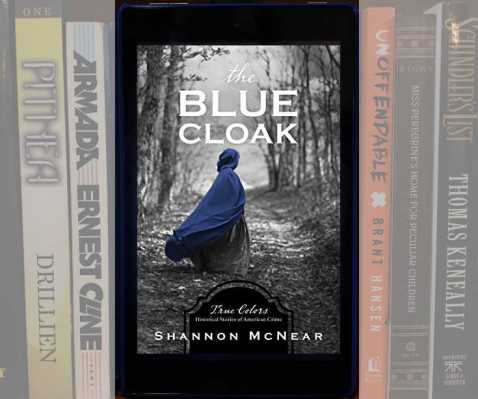
Book Review: The Yellow Lantern

The Yellow Lantern
by Angie Dicken

My rating: 3.5 / 5
Genre: Historical Christian romance, crime

53097056._SX318_SY475_

In this book of historical fiction, set in New England just before the beginning of the Victorian Era, a young woman named Josephine Clayton works for a doctor to pay her father’s way out of debtor’s prison. But when Josephine becomes sick and is presumed dead, her buried body is stolen by a man working for the same doctor. The story starts with her waking up, about to be dissected, and when the doctor sees she’s still alive, he plans to dissect her anyway. To save her own life, and to keep her father out of trouble, Josephine ends up embroiled in the doctor’s schemes of body-snatching. She is planted at a cotton mill in the next town over, to spy for the body snatchers and help with the actual snatching. But when the next victim is a loved one of the cotton mill’s manager (named Braham Taylor), a man to whom Josephine has become close, the gruesome business becomes a nightmare.

This book was a decent read overall. The setting was interesting. The bigger side characters had personality. I liked the back-and-forth POV between Josephine (or as we know her through most of the book, Josie) and Braham.

I was usually really happy when it switched back to Braham for a while, which tells me I connected with his character more than with Josie. I think that’s because his troubles seemed a lot more real and understandable to me. But it’s not that Josie doesn’t have serious issues. I just think her storyline was convoluted enough that I was only vaguely aware of the danger or of her reasons for going along with the body snatching plot. Her father was in trouble with…the doctor and some creditors, but I don’t know who they were, or if I’m even right about that. Alvin (Josie’s “handler”) was bad but sort of good (which isn’t bad in itself), but was owed money, yet still chose to hold back the first body he snatched in the story? It wasn’t until near the end that enough of this network of body snatchers was sorted out enough that I was at least able to appreciate the conclusion. This was probably my biggest problem throughout the book.

For the first quarter of the book, at least, I was reminded strongly of North and South by Elizabeth Gaskell. It’s set in a cotton mill, the male lead runs the cotton mill, and the female lead is not terribly happy about coming to the town. It’s also set in a similar time period. I love North and South, so that may have helped draw me into the book at first, but it did veer off to become a vastly different story, and a good one in its own right.

The other big downside, in my opinion, is that the body snatching was really not as big a part of the plot as it seemed like it should be. I mean, it haunted Josie throughout the book, and at the end, we can see an inter-connectedness that we didn’t necessarily know was there sooner, but it was supposed to be a twist, I think, that these things were connected. So they didn’t seem to play into the body snatching plot, except that it was predictable enough that I didn’t really see much shock factor in the reveal. Or maybe it wasn’t supposed to be a surprise, and in that case, it was just kind of bland.

Overall, I did enjoy the book. The book is listed as Christian, and it holds up well in that department. The romance was sweet and clean (just how I like it), and I would recommend this book for fans of Christian romance, though probably not for fans of crime novels.

Thank you to Netgalley and Barbour Publishing, Inc. for providing me a copy of this book to review.

Find out more about The Yellow Lantern

See what I’m reading next.

If you’ve read this book, or read it in the future, feel free to let me know what you think!