True Life in Uncanny Valley
by Deb Caletti
My rating: 1.5 / 5
Genre: YA contemporary
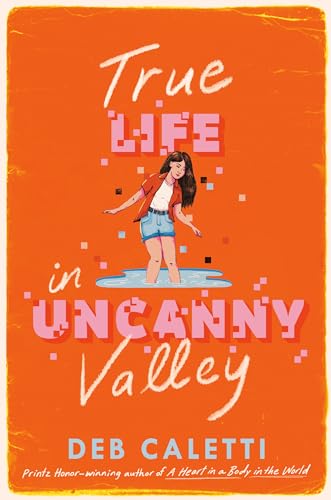
Eleanor has grown up with a single mom and always knowing that her dad is a wealthy, powerful tech/AI genius that doesn’t want anything to do with her, her sister, or their mom. But Eleanor can’t help but be obsessed with her dad and stalks him, both virtually and physically. When an opportunity comes up to work as nanny to her dad’s toddler son (her half-brother), Eleanor sort of falls into the job, but without revealing the truth about her identity and her connection to her charge or his father.
In case it’s not clear from my rating, I didn’t particularly enjoy this book. Humans are messy and creative and AI can never fully replicate them. That is the lesson that this entire book boils down to, which should be obvious to most of us. Of course, Caletti’s view of “messy” humans is downright terrible. Besides Eleanor’s deadbeat father, her mother is no peach either, fat-shaming Eleanor’s slightly chubby stomach, telling her how stupid she is, and making it clear that she’s always been an inconvenience. Eleanor’s older sister basically follows her mom’s lead, yet Eleanor often assures the reader that, “I know they really do love me.” I’m not buying it.
But on the plus side, Eleanor has two best friends who are basically perfect and perfect for her. The three of them have formed a book club through which they look down their noses at almost everyone else’s reading or book-reviewing habits. Seriously, I’m pretty sure that if I ever met these three, they’d absolutely hate me, and that’s considering that most of the specific things that Eleanor mentions the book club disliking aren’t even necessarily habits of mine. For example, they hate terms like “sickening thud” and seem to dislike half-star ratings (take that!) and constantly point out things that they think are cliché or tired tropes. Well, Soggy Bottom Book Club, to you I say that the inclusion of 3 best friends who don’t seem to ever fight and always understand each other perfectly is a cliché (and that!).
The main bright spot in this story is Eleanor’s connection to her little brother and even his mom, but even that comes with downsides. Like the fact that Eleanor is basically perfect as a nanny almost right away, despite some internal panic moments about really never having taken care of kids much in her life. And the fact that everyone is lying to everyone about everything pretty much through this entire book! (Except her best friends, because they’re perfect and always tell each other the truth.) There’s also a romance, which is nice at first, but then they start to make out all over Mexico and then there’s the super awkward sex scene—awkward meaning both that the characters are awkward and that I was incredibly awkward, because there are suddenly some very graphic descriptions. Though maybe it wasn’t as sudden as I thought at the time, considering the parade earlier in the book that I guess involves naked people and is just casually attended by people of all ages? Is this some Seattle thing I just don’t know about (and don’t want to know about)? I was also really thrown off by Eleanor saying (in the narration) that people of older generations, which in this case includes everyone from the toddler’s 30ish-year-old mom to Eleanor’s grandma’s age, were all about sex, but Eleanor’s generation isn’t…really? Really?
On top of all of that, I didn’t really get along with the writing style, which is basically like stream of consciousness. For 400 pages. And Eleanor is obsessed with a comic book heroine named Miss Fury, Miss Fury’s author, and the villainous creator of Wonder Woman—a man who stole ideas from his wife. And by obsessed, I mean that she sees Miss Fury as inspiration, something to aspire to in her own life, and almost every situation she’s in, she thinks of how she’d act if she were Miss Fury. I learned way more about the creator of Wonder Woman (William Moulton Marston) than I would have ever wanted to know, especially while reading a fictional story.
This review has gone on quite long, but I think that, if nothing else, it showcases another problem with this book—there’s just TOO MUCH going on. I didn’t even touch on the AI aspect, beyond what I said at the beginning of the review. Eleanor seems to have far too little understanding of AI for her—you know what, no. I think I’ve said enough. If you’re still interested in reading this book, please check out the link below to see other reviews, though for once, I’m not as much in the minority in not enjoying this book too much, if that tells you anything (though yes, others did like it at least a little more than me).
Thank you to Netgalley and Random House Children’s for providing me a copy of this book to review.
Find out more about True Life in Uncanny Valley
If you’ve read this book, or read it in the future, feel free to let me know what you think!
 A Journey of Words