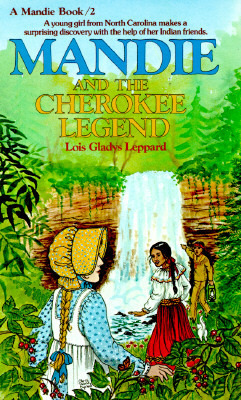
Book Review: Beyond the Far Horizon

Beyond the Far Horizon
The Restorationists #3
by Carolyn Leiloglou

My rating: 5 / 5
Genre: Christian middle grade fantasy

Spoiler notice: The following review may contain some spoilers for the previous books in the series, starting with Beneath the Swirling Sky.

Ravi may have chosen to side with the Restorationists, but that doesn’t mean he trusts them. All his life, he’s been used and had to look out for himself. So though he’s agreed to help Vincent, Georgia, and Ms. Arte take down the Distortionists, he has a secret escape plan in case things go bad. But the longer he works with them, the more he realizes that he might not want to be on his own anymore.

I am so sad to think about this being the last book in this wonderful, inventive world in which people can enter paintings and travel between them, interacting with the painted people, creatures, and other aspects within, and making changes that aren’t visible but affect the painting’s viewer, for good or for ill. Though I’m not much of an art lover, the author is clearly passionate about paintings, and I really enjoy the inclusion of different paintings and especially the various components within the paintings.

Each of these books spotlights a different teenager with the ability to Travel through paintings, and each one deals with some sort of baggage throughout the story. Vincent’s resulted in a moment that I will never forget. Georgia’s kind of paled in comparison. I felt this book brought back a lot of the sympathy and enjoyment I felt in the first book. I felt for Ravi so much, I just wanted to hug him through most of the story. 

The plot is exciting, and the ending is a satisfying conclusion to the 3-book arc. I didn’t like this book quite as much as the first, but it was still a 5-star read. I recommend this book (and series—and really, you should start at the beginning if you’re interested) to anyone, young or old, interested in fantasy fiction with a Christian worldview.

Thank you to Netgalley and WaterBrook & Multnomah for providing me a copy of this book to review.

Find out more about Beyond the Far Horizon

See what I’m reading next.

If you’ve read this book, or read it in the future, feel free to let me know what you think!
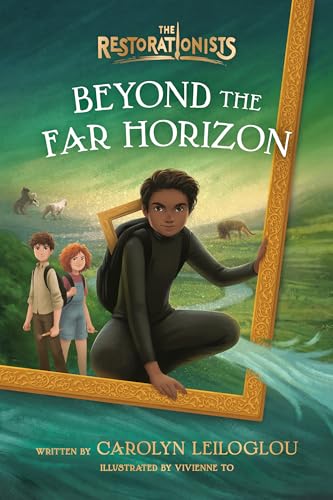
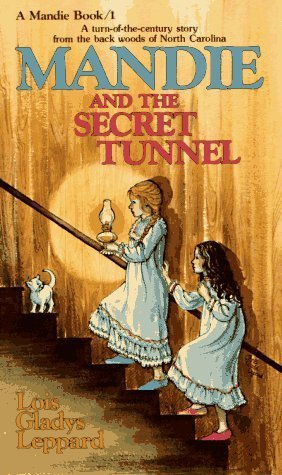
Book Review: Mandie and the Secret Tunnel

Mandie and the Secret Tunnel
Book #1
by Lois Gladys Leppard

My rating: 4 / 5
Genre: Children’s Christian historical fiction

For complete transparency, I’ll say up front that I read a lot of this series when I was a kid/pre-teen, and I read some of them to my now-teen daughter when she was younger. Nostalgia will hugely affect my reviews for this series, and I have no plans to try to be objective.

Written in the 80s and set in 1900, the book begins with the death of 12-year-old Mandie’s father. Her mother clearly has no love for her and sends her away to work for an equally unkind family that needs help taking care of a baby. But through Uncle Ned, an old friend of her father’s and a Cherokee, Mandie learns of her father’s brother, who she’d never known existed, and with Uncle Ned’s help sets out to find a better life with her uncle (her real uncle, because “Uncle” Ned isn’t really her uncle).

This introduction to Mandie and her heritage is charming. There’s a mystery involving the will of a relative of Mandie’s, and it’s not exactly a deep mystery, but for the age group, I think it’s intriguing enough. Uncle Ned is a comforting presence for both Mandie and me, to be honest, as I seem to recall a feeling that when he’s involved, everything is going to be okay. I’m not a huge fan of Polly, a new friend of Mandie’s in this book, but overall, this is the kind of book where the good people are really good and the bad people are quite (sometimes over-the-top) bad. Not that they’re all villains, but their personalities are pretty sour.

I can’t pretend that this book holds up really well for me as an adult—Mandie’s friend Joe is domineering, and it’s super awkward when Joe and Polly meet and are attracted to each other (these kids are all 12-14, don’t forget). The Christianity presented in this book is shallow at best, maybe even somewhat works-based, which I couldn’t possibly have realized was incorrect as a kid. The preacher who talks at her dad’s funeral and visits her later only scares Mandie, rather than helping her through her difficult time. It’s unfortunate that Mandie doesn’t believe God cares about her until things end up working out well in the end, which is not a great message for kids.

My daughter read the entire series (which is more than I’ve read, but I plan to rectify that) when she was around 10 years old and loved them. Even now, at 15, she remembers them fondly and is planning to re-read them again some time soon. If that isn’t an endorsement, I don’t know what is.

Find out more about Mandie and the Secret Tunnel

See what I’m reading next.

If you’ve read this book, or read it in the future, feel free to let me know what you think!
Book Review: The Daughter of Rome

The Daughter of Rome
The Emissaries #3
by Angela Hunt

My rating: 4 / 5
Genre: Biblical fiction

Spoiler notice: This book will contain some mild spoilers from the previous two books in the series, The Woman from Lydia and The Sisters of Corinth.

Under Nero’s reign, Calandra helps her sculptor father create a piece for a very important Roman, who then commissions him for something greater. Meanwhile, that important Roman’s son Hadrian is tasked with visiting the imprisoned Christians regularly to make sure they’re not trying to cause a revolt. But when a fire sweeps through Rome and destroys more than half of the city, leaving many dead and others homeless, Nero places the blame on the Christians, despite their hospitality to the hurting and displaced. With friends amongst this persecuted group, both Calandra and Hadrian struggle to understand why Romans are so quick to accept this explanation.

I was expecting something quite different from this book, given the way the previous one ended. I knew there would be a new main character, but I thought we’d see more of the characters from the previous book, and I particularly thought we’d get more of a follow-up to the previous book’s main character’s sister, who ended on such a tragic note. Though Mariana and Marcus, as well as Euodia and Ariston from the first book, do appear in this book, they have pretty small parts. However, Calandra’s and Hadrian’s stories are engaging in their own rights. The explanation of how sculptures are crafted, especially large bronze sculptures, was fascinating (though eventually I did start to skim some of the details). Hunt’s author’s note puts some of that into perspective, but I really appreciate her research and her way of weaving it into a captivating story. And speaking of that, there are so many other historical elements that Hunt brings to play in this book, from speculation that Nero started or at least allowed the fire in order to make more space for his palace, political unrest in Rome, and specific well-known early church founders that are generally believed to have died in Rome during this time of persecution.

Hunt’s descriptions of the various deaths during the fire and the persecutions are vivid enough to bring them to life. Though let that be a warning to those who would struggle with the violence and bloodshed. Both of these sections of the book had me in tears, and the latter (the persecutions) left me thinking of how much I complain about petty things in my life, when I have it so very much better than many others even around the world now, who are persecuted for the very God that I am free to worship every day. It really puts things into perspective.

However, I feel like there is a pacing issue here. After the persecution, the story kind of takes a bit of a drop-off, and I don’t feel like it ever really comes back. More of interest does happen, but it feels like a really long conclusion after a climax, even though I’m sure it wasn’t intended to be the climax. Still, the story overall kept me hooked throughout, partly because, unlike the main characters in the previous two books, Calandra is not a Christ-follower at the start of this book, so I appreciated her arc. A few major moments happened near the end of the book that may have felt just a little too convenient, but really, when taking in the larger story, they actually make a lot of sense. And I would have been really disappointed without them.

Calandra’s POV is first-person and Hadrian’s is third-person. I’ve never been a huge fan of that kind of back-and-forth, but on top of that, there was at least once that I noted that Hadrian’s slipped into first-person for a line or two. It was a little jarring. In general, this book was my least favorite of the series, but I still highly enjoyed it, and I recommend both it and the series for those who like biblical fiction, especially from the time after Christ. The books could possibly be read out of order, but I think you’d lose a lot of the richness of the full story doing that.

Find out more about The Daughter of Rome

See what I’m reading next.

If you’ve read this book, or read it in the future, feel free to let me know what you think!

Book Review: Dawn of Grace

Dawn of Grace
by Jill Eileen Smith

My rating: 2.5 / 5
Genre: Biblical fiction

Dawn of Grace is the fictional story of Mary Magdalene, from the perspective of Mary herself, starting in her childhood, when the author imagines that she might have first become possessed by the demons that the Bible says Jesus cleansed her of, through the death and resurrection of Jesus. The first portion of the book, when Mary is possessed and dealing with that for years, is intentionally and understandably dark and depressing. Some readers may struggle with the details of the spirits that Mary lets in, so let that be a warning if that might be you. I didn’t have any issue with that, though I have to admit to being a little confused that Mary seems to believe that they are the spirits of her relatives, while also being fully aware that they are demons (does that mean she thinks her loved ones died and became demons?). And demonic possession is apparently rampant in her world (which makes sense, since Jesus and his disciples did cast demons out of a good amount of people in the Bible), so again, it seems strange that she didn’t know what she was getting herself into. But maybe she came to learn about other possessed people as she grew up and I just didn’t pick up on that. Outside of my confusion, though, I felt Smith does a great job here showing Mary’s desperation by the time she meets the “teacher who heals.”

Once Mary was cleansed and started to follow Jesus, I had two main issues with the story—one with the plot and one with the fictionalization. On the plot side, it just felt fairly slow to me. Because Mary is a woman, she spends a lot of her time (sometimes grudgingly, sometimes cheerfully) helping the other women prepare food. It’s just…not terribly interesting. And so many of Jesus’s teachings are re-hashed by “the men” and even Mary and the other women, as they try to make sense of what at the time must have truly been confounding, but again, in a fictional story, it’s just too much repetition to keep at least this reader engaged.

The other main issue I had was with the portrayal of Jesus. I’m not saying that Smith went against the Bible or included anything sacrilegious, but I think that we need to be really careful about any fictional portrayals of Jesus. Other biblical figures (humans themselves) are one thing, but this is God Himself in human form, and anything outside of what the Bible says He did or said is purely human invention. Smith does use Scripture for a majority of his dialog, but the rest of his words, actions, or feelings made me a little uneasy. I worry that there are people who don’t necessarily know how to draw that line, and presenting extra-biblical portrayals of God or Jesus to people like that could cause trouble. This concern isn’t specific to this book, but something I realized as I read. And it made me realize why other fictionalized portrayals of Jesus have set me on edge in the past; I think what this tells me is that I need to avoid biblical fiction that is likely to include Christ himself as a character. (Though I did once read a biblical fiction book that showed Jesus in a private moment, and the author still used Scripture for his words, which I really appreciated.) Even beyond my concern about the character of Jesus having extra-biblical words and actions, there’s also the incongruity of all of the fictional dialog with what is directly out of the Bible. Though Smith’s dialog isn’t exactly modern, it’s different enough from NIV dialog to be a bit jolting to me. 

Overall, the book fell short of my expectations, but I think many people would easily overlook the things that brought the rating down for me. So as always, please check out the link below to see other reviews if you’re interested in reading this book.

Thank you to Netgalley and Revell for providing me a copy of this book to review.

Find out more about Dawn of Grace

See what I’m reading next.

If you’ve read this book, or read it in the future, feel free to let me know what you think!
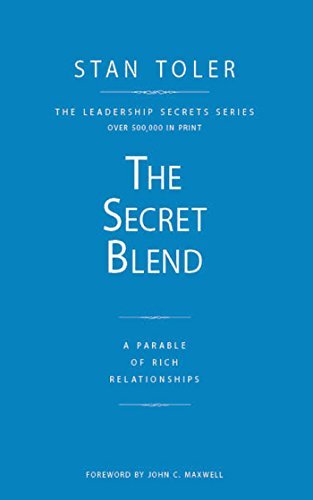
Book Review: The Secret Blend

The Secret Blend
by Stan Toler

My rating: 4 / 5
Genre: Christian living

My husband recommended this book to me after reading it for one of his pastoral training classes. Though it is a fictional story, it is one meant to teach, specifically seven lessons about acquiring true wealth in the form of fulfilling relationships. As one who has always struggled with friendships, I appreciated not only the lessons but also the starting point of the main character. I can see real merit in what is presented in this book. What the book doesn’t really account for, though, is people who are super awkward in social situations. The main character just didn’t really take the time or effort to make friends before starting to learn these lessons, but it comes fairly easy to him once he tries. It would not be so smooth for me. Also, I don’t actually encounter a whole lot of people on a daily basis. All of that being said though, the story is touching and biblically grounded, so not just an empty self-help book.

I have to say, though, that as a fiction writer and reader, Toler’s writing style grated on me. This may not be his normal genre, and maybe any editors or publishers involved are also used to non-fiction more than fiction, but someone really need to read this out loud before publishing it. The main thing that bothered me was the way that the characters constantly said each others’ names as they were talking. And entire conversation would occur where the characters would say each others’ names when they started speaking back and forth, and no one talks like that in real life. My husband didn’t notice this when he read it though, so it’s clearly personal preference (and probably has something to do with me being a much heavier reader than him). Those annoyances aside though, I do recommend this book for anyone who struggles with making or keeping friendships or feels that their life could be richer in this area.

Find out more about The Secret Blend

See what’s coming up.

If you’ve read this book, or read it in the future, feel free to let me know what you think!
Book Review: The Collector of Burned Books

The Collector of Burned Books
by Roseanna M. White

My rating: 3 / 5
Genre: Historical Christian romance

When the Nazis invade Paris, they also take over a library full of books that were banned in Germany. The man sent to catalogue and update this and other libraries in Paris is Christian Bauer, who is only a Nazi officer as a means for survival. Corinne Bastien, a neighbor of the library and regular frequenter, makes herself a target of Christian and some of his Nazi compatriots when she sneaks into the library to try to recover some secrets she’d left behind. But Christian doesn’t want to cause problems for her any more than he does anyone else. Will he be able to stay true to his beliefs when his superiors push for destruction?

I was excited to read this book, because I read and loved White’s The Imposters series, set in Edwardian England, and I enjoy WWII fiction. However, it felt a little off to me. Corinne was a pretty terrible resistance worker, leaving evidence sitting around and drawing so much attention to herself. By the end of the book, the Nazis involved felt a little too much like an idealized version of what I’m used to, both in fiction and non-fiction. I actually hoped for information in an author’s note explaining why White made some of the choices she did—factual evidence or anecdotes to explain why most of the German soldiers and authorities in this book are, frankly, more polite and forgiving than how they’re usually portrayed, but there was nothing. It just felt somehow like the stakes and consequences were lower than they should be, given the setting.

On the plus side, Christian is a very sympathetic male hero. My favorite moments in this book are related to his story. I appreciate that his faith and devotion to his homeland require him to walk a thin line between going along with the Nazi Party and doing what he believes is right. And yet, he questions whether he is sinning when he lies to protect a life. I’m not sure I would agree with the line drawn here in answer to that question, but I also can readily admit that none of us knows for sure what we would do in this kind of situation. The main characters in the book are Catholic and observe various practices that are extra-biblical at best. This is probably not the best platform to go into detail or start a debate, but I think some people would appreciate knowing this information in advance. Overall, the book fell short of my expectations, but I think many people would easily overlook the things that brought the rating down for me.

Thank you to Netgalley and Tyndale House Publishers for providing me a copy of this book to review.

Find out more about The Collector of Burned Books

See what I’m reading next.

If you’ve read this book, or read it in the future, feel free to let me know what you think!

Book Review: Beauty in the Least

Beauty in the Least
McGee and Me! #12
by Bill Myers & Robert West

My rating: 3 / 5
Genre: Children’s Christian fiction

This was my least favorite book in the series, which is a shame, since it’s also the last, leaving me on a not-so-high note. It just doesn’t have the same feel as the rest of the series. The entire family is so put out by these visiting foreigners, and I’m not really sure anyone learns much of a lesson in the end. The father and son duo provide the only real heart in the story, and it’s overall pretty brief. Considering all of the growing Nicholas has done throughout these books, I just think he should be beyond the petty, immature behavior he displays here—or at least that he should get past it a little more quickly. So sadly, I wouldn’t recommend this book on its own, but the rest of the series is still great. These books may not be easy to find anymore, but if you do have the chance to read any of them or procure them for an 8-10-year-old child, I recommend it.

Find out more about Beauty in the Least

See what I’m reading next.

If you’ve read this book, or read it in the future, feel free to let me know what you think!

Book Review: Cloaked in Beauty

Cloaked in Beauty
by Karen Witemeyer

My rating: 2 / 5
Genre: Historical Christian romance

Scarlett Radcliffe is heir to a fortune left to her by her late father. But her father’s brother wants the inheritance for himself and is willing to kill to get it. To keep her safe from her uncle, Scarlett’s mother sends her away from the age of 6 until her 21st birthday, when she will be able to fully inherit the fortune and hopefully give her uncle no more cause to pursue her. When that time comes, Pinkerton agent Philip Carmichael is sent by Scarlett’s mother to bring her home safely.

It was difficult to find much to like about this book for me. A lot of it is personal preference, the most glaring one being that the romance was far too big a part of the plot and steamier than I prefer, especially in Christian fiction. I’ll address that last part first for others who are like me and want to know about this kind of thing before deciding to read a book. Other reviewers will call the romance sweet and clean, and I’m not disputing that there was nothing graphic or even all that physical involved. But the bulk of the plot seemed to consist of the author finding ways to put the two main characters (physically) close together so they could “notice” each other and have flutterings and such. I’m not going to go on at length about this, but I will just say that I was left with the feeling that the author really wanted to write mainstream romance but was stuck writing Christian romance for whatever reason and so skirts as close to the line as she can get away with. This may seem harsh and is probably completely untrue, but some scenes are close to the line, at least in my view. And even beyond those issues, physical attraction is not the same as romance. To me, it usually just means that the author doesn’t really know how to write real chemistry and connection between two characters and has to resort to physical sparks and even lust.

Now for the rest—the plot was fairly predictable and the characters were one-dimensional. I’d be hard-pressed to tell you a single flaw that either of the MCs had, other than maybe them both being stubborn, but even that trait is shown more as a strength than a weakness. The villain is ultimately an unnecessary, replaceable cliché, and I think that, had more time been spent on the rest of the plot and less on the time the two MCs traveled together, the story and characters could have been more fleshed out. This book, and the series it’s part of, is billed as a fairy tale retelling. I don’t read a lot of retellings, and I did see a lot of allusions to the two fairy tales mentioned (“Little Red Riding Hood” and “Sleeping Beauty”)—though much more the former than the latter—it didn’t seem like what I’d call a retelling. That didn’t bother me or affect my rating, but I thought it was worth mentioning. 

I don’t like to write reviews like this, and I did give the book 2 stars, mostly because the characters do trust God pretty unwaveringly in the story and because it just doesn’t feel like a 1-star book. But I was fairly bored during most of the middle and ended up doing a LOT of skimming. I wouldn’t personally recommend this book, but if you are not bothered by the things I mentioned in my review, please check out the link below to read the positive reviews and decide if this is a book for you.

Thank you to Netgalley and Bethany House for providing me a copy of this book to review.

Find out more about Cloaked in Beauty

See what I’m reading next.

If you’ve read this book, or read it in the future, feel free to let me know what you think!
Book Review: When Tides Turn

When Tides Turn
Waves of Freedom #3

written by Sarah Sundin

My rating: 3.5 / 5
Genre: Historical Christian romance, mystery

Tired of only being used as a saleswoman in her job and wanting to be useful to the war effort, Tess Beaumont joins the newly established Navy WAVES program for women. She knows her tendency to be outgoing and peppy makes her look shallow to someone like Lt. Dan Avery, a deeply serious man who hopes to make admiral someday. Unfortunately, he’s been taken off the sea and assigned to a position that he doesn’t feel is as helpful to the Navy or to his own career advancement. As both Tess and Dan struggle to make themselves more useful, they also struggle to not be distracted by each other.

I’d put this book somewhere between the first (3 stars) and the 2nd (4.5 stars) in the series. Tess is a fun, energetic character, though difficult for me to identify with, since she’s far more outgoing than I am. I appreciated her desire to be known as more than just a pretty face (though again, I can’t identify, because that’s not an issue I’ve ever had) and actually be useful. Dan drove me crazy for a while with his strict workaholic ways, but I think that just made his character’s progression in the book that much more satisfying to me. I liked the emphasis on rest and integrity in his arc.

The mystery in this book was less engaging than the mysteries in both of the previous books. I think that was at least partly because it’s really just Tess alone working it out. Dan helps a little when he’s on land, but I like the way the mystery stretched across both MC’s stories in the previous book, and that didn’t happen here at all. In fact, after a while, I tended to start skimming during the scenes when Dan was at sea. I struggled to understand or frankly care about the work being done to help the Allies be able to find and combat German subs–not that that wasn’t super important work during WWII, but I’ve known Sundin to make history much more interesting in the past than this book did. That’s probably just personal preference though.

Overall, this is not my favorite of Sundin’s books or series. Still, I think many others wouldn’t be as bothered by those things that detracted from the book for me, so I do recommend it for fans of Christian romance, especially those set during WWII.

Find out more about When Tides Turn

See what I’m reading next.

If you’ve read this book, or read it in the future, feel free to let me know what you think!

Book Review: The Sisters of Corinth

The Sisters of Corinth
The Emissaries #2
by Angela Hunt

My rating: 5 / 5
Genre: Biblical fiction

The new provincial governor’s son is an eligible bachelor, and the chief magistrate’s daughter, Prima, is intent on catching his eye. Unfortunately, Marcus prefers her step-sister, Mariana, who, as a new Christian, knows that it would be a bad idea for her to marry a man who worships the Roman gods. While she struggles with her options, Prima is determined to convince Marcus that she is the right choice after all.

For as much as I loved the previous book in this trilogy (I gave it 5 stars as well), this one even tops that! First of all, we have a sort of take on a marriage of convenience but with a twist, which is a trope I generally love in Christian fiction. The backstory of how Mariana and her mother became followers of Yeshua (Christ) is really interesting, and there’s the added suspense of their faith not being accepted by those in authority around them. Prima’s side of the story is shown alongside Mariana’s, and Hunt doesn’t shy away from the harsh realities of life during this time period—violence, idol worship, sexual immorality, etc., so let this be a warning to any who would have a difficult time with that being included.

There’s so much more that I liked about the story, but too much of it would involve spoilers. I’ll just say that I both cheered and cried while reading this book. It seems like it’s not nearly often enough these days that I’ll read a book that I get completely caught up in and don’t want to leave, even when it’s over, but that happened with this book. Another warning—it does end on a cliffhanger, but fortunately for me, the follow-up book is already out, so I can read it very soon! Overall, I earnestly recommend this book for those who enjoy biblical fiction, especially from the time after Christ.

Find out more about The Sisters of Corinth

See what I’m reading next.

If you’ve read this book, or read it in the future, feel free to let me know what you think!