Book Review: Cilka’s Journey

Cilka’s Journey
by Heather Morris


My rating: 4 / 5
Genre: Historical fiction

From a Nazi death camp to a Siberian gulag, we follow Cilka Klein, who was charged with spying for the enemy and conspiring, due to her role of senior officers’ mistress and death block leader in Auschwitz II-Birkenau. In the Russian prison camp, she faces 15 years of conditions not much better than they were in Auschwitz, plus the addition of frigid weather nearly year-round. She manages to stand apart yet again, but this time mostly because she shows herself to be a quick learner, which makes her valuable at the prison hospital.

This book is a sequel to The Tattooist of Auschwitz, but only in that Cilka is introduced in that first book, and some of the characters from the first book are brought up again in this one. I do recommend reading The Tattooist of Auschwitz first, for a more full experience, but you wouldn’t lose a lot if you didn’t. Click here to see my review of The Tattooist of Auschwitz.

I liked Cilka’s Journey a bit more than its predecessor, and I think that is because of the writing. I didn’t find it quite as stilted as in the first book. The subject matter is nearly as dark, especially since there are flashbacks to Cilka’s time at Birkenau, but we also get to see glimpses of her life before she went to the camp.

Cilka was very compassionate, even to her own detriment many times. I appreciated the way that her heart ached when a friend was hurt (physically or otherwise), or when a rift came between her and someone she cared about. She even managed to find a way to understand and forgive those who persecuted her, by acknowledging that they were simply trying to survive this place like she was. She may have been a bit on the Mary Sue side, somehow being the best at everything she did, but it wasn’t glaring.

There were a few events and situations that seemed unnecessary, or that were maybe only there to show again how wonderful Cilka was. I know that this book was even more fictionalized than The Tattooist of Auschwitz, with no first-hand account to draw from, so I did at times wonder how realistic certain things were.

In the end, it was a good read, and I would definitely recommend it to readers of historical fiction, especially of the WWII era.

Now if you’ll excuse me, I have to find something much lighter to read, especially since the book I had originally planned to read next (Priceless by Joel & Luke Smallbone) also involves sexual abuse, and between these 2 books, I’ve had enough of that for a while.

Thank you to Netgalley and St. Martin’s Press for providing me a copy of this book to review. 

Find out more about Cilka’s Journey
Publication date: October 1, 2019

See what I’m reading next.

If you’ve read this book, or read it in the future, feel free to let me know what you think!

Top Ten Tuesday: Books On My Fall 2019 TBR

It’s time for another Top Ten list from That Artsy Reader Girl. This one was easy for me because I had the next 9 books I’m going to read planned, and was easily able to add a 10th. I recently went a little crazy requesting ARCs from Netgalley, so I’m trying to get caught up (I don’t know how others do it without letting the pile of ARCs awaiting reviews drive them mad). But I wanted to space out the ARCs with other books from my TBR, so in the below list, every other book is an ARC. This list should take me through most of the fall (I’ll probably slow down in November because of NaNoWriMo), and I suppose they’re not necessarily fall-oriented…I don’t usually think in those terms when it comes to reading (except I probably will at Christmas time).

So without further ado…the ones near the end of the list may change as I get closer to them, but I think the order will be mostly this:

1. Priceless by Joel & Luke Smallbone
2. Smoke Screen by Terry Blackstock
3. Harry Potter and the Chamber of Secrets by J.K. Rowling
4. The Passengers by John Marrs
5. The Battlemage by Taran Matharu
6. Mother Knows Best by Kira Peikoff
7. The Martian by Andy Weir
8. Claiming T-Mo by Eugen Bacon
(Not technically an ARC, I won it in a Goodreads giveaway, and have gotten a couple of emails requesting that I review it soon.)
9. Anne of Green Gables by L.M. Montgomery
10. On the Edge of the Dark Sea of Darkness by Andrew Peterson
(This book was released in 2008, but was re-released in hardcover with new illustrations, so is still an ARC.)

Have you read any of these? What do you plan to read over the next few months?

Book Review: Synapse

Synapse
by Steven James


My rating: 3.5 / 5
Genre: Christian sci-fi

Set at a time in the future when robots (or Artificials) have been taught to not only think for themselves, but to have emotions, and even the option of pain, there is still a lot that is unknown about how similar robots are to humans. Do they have souls? Can they believe in and worship God? Kestrel Hathaway doesn’t know, and neither does her Artificial, Jordan. Amidst their discussions of these concepts, Kestrel is pulled into a plot to put an end to the advances in AI by people known as Purists. Working with federal agent Nick Vernon, Kestrel and Jordan do their part to help prevent a deadly attack.

This book was an interesting mash-up of theology exploration and sci-fi elements. For much of the book, Kestrel is simply trying to cope with a fresh tragedy, while being slowly dragged into a deadly cat-and-mouse game between federal agents and terrorists. Jordan was probably my favorite character, as he tried to figure out what hope there was for him, especially in eternity. And there were some twists near the end that I enjoyed. But overall, the book was mostly just okay.

The very beginning of the book shows Kestrel delivering a stillborn baby (that she didn’t know was stillborn). It’s told in 2nd-person perspective, so it’s describing the events as if they happened to you. I think this is important to know for those who have gone through this or something similar. She is a pastor, and spends most of the rest of the book idly questioning her faith in God. I say idly, because it’s as if she’d forget her questions now and then, and have to remind herself she was still uncertain about if God existed, or he was actually all-powerful, or if he cared about her. She also carries some PTSD from a tragedy 9 years old, and I was surprised by the way some of that played out as well. But I suppose PTSD is not a consistent syndrome (meaning it’s not the same from person to person, and probably difficult to pin down and define). I would say that maybe the way she does respond shows her strength, but I didn’t really get that characteristic from her otherwise.

I believe Jordan’s role in the book was to parallel humanity’s question of an afterlife. How can we ever know for sure if Heaven exists, if no one who has been there can return to tell us about it? Artificials are told that there is a manufactured afterlife where their consciousnesses will go when they “die.” Jordan’s mother “died,” and he is desperate to know if she’s in the afterlife. Where this parallel falls apart, though, is that Artificials are guaranteed this afterlife by a fallible man, while humans who follow Christ are guaranteed their afterlife by an infallible God. Some of the discussions that arise between Jordan and Kestrel about afterlife and the ability to believe in and worship God are interesting though. Except for the times that Kestrel is just mean to Jordan about his inhumanness.

As for the twists near the end, they did mostly catch me off guard. But there was a weird thing that happened that got my heart pumping about a possible twist coming, but instead, it turned out not to be true. It was a huge letdown, and I can think of a few ways that some dialog could have been written to avoid this letdown. I had some questions that were left unanswered–about Jordan’s mom, about some of the Purists’ involvements and questionable actions, and some other things that came out during the climax, but are never given any kind of explanation.

I think the sci-fi plot were simply a vehicle for the theology discussed in the book, which is why the plot was fairly weak. And for me, at least, some of the theology was weak too. Kestrel’s brother, an atheist, asks her some very good questions about God, and her replies are the type I often see from the token “religious character” in TV or movies. She does go deeper than the stereotype sometimes, but I still found myself wishing for more. And very likely, this can all be chalked up to the author and me having different views on some theological aspects, which will certainly happen. I just found myself very sad about Kestrel’s brother’s view of God, and wished her responses had been more fulfilling.

One more thing that adds to my lower rating, which I almost forgot, was the way the story was told. As I mentioned above, it starts out in 2nd person (“you”), then switches to 1st person out of the blue (“I”), but is only 1st person when the perspective is on Kestrel. When it’s on a plethora of other characters, it’s 3rd person. And to make it even more confusing, when the perspective is on Jordan, it’s 3rd person and present tense, when it’s past tense the rest of the time. There’s a reason jumping POVs, tenses, and even character perspectives is meant to be kept simple, and while it’s not completely impossible to try something different…it was just confusing in this case, and made the reading disjointed.

In the end, I would recommend this book for those who are interested in the exploration of how humans approach God and the afterlife, and what it means to have a “soul,” and understand that there is some sci-fi around that. I don’t think I’d recommend this for readers of sci-fi, unless they are willing to wade through the theology.

I received a complimentary copy of this book. Opinions expressed in this review are completely my own.

Find out more about Synapse
Publication date: October 8, 2019

See what I’m reading next.

If you’ve read this book, or read it in the future, feel free to let me know what you think!

Book Review: Fatal Strike

Fatal Strike
by DiAnn Mills

My rating: 4 / 5
Genre: Christian suspense, romance

A pair of FBI agents partner up to investigate a string of murders involving law enforcement officials. They have never worked together before, and but fall into a professional rhythm to work the case. What ensues is a police-procedural-type story involving a gang that kills with rattlesnake venom, a mother desperately trying to protect her son, missing persons, faith, trust, and a few interesting turns thrown in.

I read this book in 2 days, and really enjoyed it. The main characters, Leah & Jon, were smart, compassionate, and professional. They both had back stories that provided depth without being overly emo and cliched. And both had phobias that they were determined to overcome, and that they had the chance to face in the book.

I liked the way the case unfolded, with some developments that kept me guessing. I did figure out who the kingpin was, but wasn’t bothered by figuring it out in advance. In fact, I remember thinking that if didn’t go that way, I was going to question some of the author’s choices. There were a couple of smaller elements that were presented that seemed to be left hanging, but they didn’t bother me too much. I also had a very difficult time following the action in the climax, and didn’t understand why some of the things happened.

Some of the dialog seemed kind of stilted, especially between the main characters. Most of the time I couldn’t really tell who was talking, because they were so similar to each other. I’m not sure that’s a fault in the characterization, because it was clear from the beginning that they WERE similar, so maybe it was an issue with dialog tags and narration as much as anything. I also did not care for the kingpin’s dialog near the end of the book. It made him seem a lot less intelligent and dastardly than I think he was supposed to be.

The romance is a slow-burn, which is my favorite type. The characters are completely respectful of each other and of their situation (partners working a case), and the romance that develops between them is understated, almost to a point of coming from out of left field, but I prefer a little bit of a leap to the in-your-face type of romances.

And finally, the Christian aspect is well-presented. Most of the faith that is presented in the book comes from a priest who is involved in the investigation. He is wise and insightful, and even clearly shown to be a human with some flaws, but kind and devoted. Through this influence, as well as some others, both of the main characters individually begin to examine their belief in God and what it might mean for them. I even appreciated the way that the too-familiar question of why a loving God would allow bad things to happen to good people is addressed.

Overall, I enjoyed this fast-paced read and would recommend it to all fans of suspense or crime dramas, with a little faith thrown in.

Thank you to Netgalley and Tyndale House Publishers for providing me a copy of this book to review.

Find out more about Fatal Strike

See what I’m reading next.

If you’ve read this book, or read it in the future, feel free to let me know what you think!

Book Review: The Yellow Lantern

The Yellow Lantern
by Angie Dicken

My rating: 3.5 / 5
Genre: Historical Christian romance, crime

53097056._SX318_SY475_

In this book of historical fiction, set in New England just before the beginning of the Victorian Era, a young woman named Josephine Clayton works for a doctor to pay her father’s way out of debtor’s prison. But when Josephine becomes sick and is presumed dead, her buried body is stolen by a man working for the same doctor. The story starts with her waking up, about to be dissected, and when the doctor sees she’s still alive, he plans to dissect her anyway. To save her own life, and to keep her father out of trouble, Josephine ends up embroiled in the doctor’s schemes of body-snatching. She is planted at a cotton mill in the next town over, to spy for the body snatchers and help with the actual snatching. But when the next victim is a loved one of the cotton mill’s manager (named Braham Taylor), a man to whom Josephine has become close, the gruesome business becomes a nightmare.

This book was a decent read overall. The setting was interesting. The bigger side characters had personality. I liked the back-and-forth POV between Josephine (or as we know her through most of the book, Josie) and Braham.

I was usually really happy when it switched back to Braham for a while, which tells me I connected with his character more than with Josie. I think that’s because his troubles seemed a lot more real and understandable to me. But it’s not that Josie doesn’t have serious issues. I just think her storyline was convoluted enough that I was only vaguely aware of the danger or of her reasons for going along with the body snatching plot. Her father was in trouble with…the doctor and some creditors, but I don’t know who they were, or if I’m even right about that. Alvin (Josie’s “handler”) was bad but sort of good (which isn’t bad in itself), but was owed money, yet still chose to hold back the first body he snatched in the story? It wasn’t until near the end that enough of this network of body snatchers was sorted out enough that I was at least able to appreciate the conclusion. This was probably my biggest problem throughout the book.

For the first quarter of the book, at least, I was reminded strongly of North and South by Elizabeth Gaskell. It’s set in a cotton mill, the male lead runs the cotton mill, and the female lead is not terribly happy about coming to the town. It’s also set in a similar time period. I love North and South, so that may have helped draw me into the book at first, but it did veer off to become a vastly different story, and a good one in its own right.

The other big downside, in my opinion, is that the body snatching was really not as big a part of the plot as it seemed like it should be. I mean, it haunted Josie throughout the book, and at the end, we can see an inter-connectedness that we didn’t necessarily know was there sooner, but it was supposed to be a twist, I think, that these things were connected. So they didn’t seem to play into the body snatching plot, except that it was predictable enough that I didn’t really see much shock factor in the reveal. Or maybe it wasn’t supposed to be a surprise, and in that case, it was just kind of bland.

Overall, I did enjoy the book. The book is listed as Christian, and it holds up well in that department. The romance was sweet and clean (just how I like it), and I would recommend this book for fans of Christian romance, though probably not for fans of crime novels.

Thank you to Netgalley and Barbour Publishing, Inc. for providing me a copy of this book to review.

Find out more about The Yellow Lantern

See what I’m reading next.

If you’ve read this book, or read it in the future, feel free to let me know what you think!

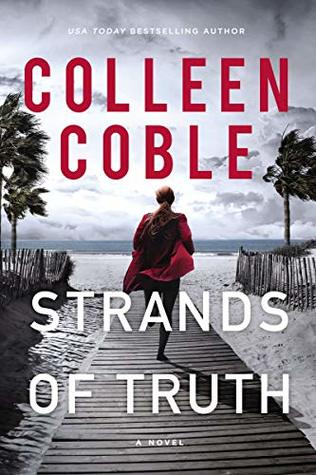
Book Review: Strands of Truth

Strands of Truth
by Colleen Coble

My rating: 2 / 5
Genre: Christian mystery, romance
42757881._SY475_

Harper’s mother died just before Harper was born, and she never knew her father. At the age of 15, a man named Oliver took her under his wing and became like a father to her in many ways. His own children detested Harper, though, because of how much attention their father paid to her, and assuming that Harper was only after their father’s money. As an adult, Harper looks up to Oliver as a mentor, and now works with him as a business partner. At the start of the story, a DNA registry site has found a likely half-sister for Harper, and upon meeting, Harper realizes that both sisters have a similar story, with their mothers dying when they were infants, and neither knowing their father. At the same time, both women become the target of attempted kidnappings. Oliver is also attacked, and his son Ridge is determined to find out why, while also attempting to expose Harper for the fraud he believes her to be.

This book was a jumbled mess, and my mind feels a bit jumbled when trying to organize a review. I will start with what I did like. The premise was intriguing, and the mystery did hold my attention for the first half of the book. The descriptions of the Florida setting were good, and it was easy to imagine a warm, humid environment. The book brought some subjects to my attention that I otherwise might never have known about (for example, sea silk and other things related to pen shells).

However, this also leads me to my first issue. Many things came up in the book that were completely foreign to me, and I was left to figure out on my own what on earth it even was. Or the explanation would come so late that I was confused for a while. At one point early in the book, it says a character was in the “Weeki Wachee parking lot,” but really never actually says what Weeki Wachee is. My first guess was that it was a common supermarket chain in the region. Or maybe restaurant. But after Googling it, it’s apparently a state park and spring in Florida. It would have been really easy to explain this in the book, along with many other things, but instead, I had to Google more than I would prefer while reading a book.

Speaking of Google, there was a lot of mention of food and restaurants in the book that weirdly came across like name-dropping. As if, to make the book feel more authentic to the location, the author had done an internet search for popular restaurants in the real-life town in which the book is set, and even went to the online menus so that the characters could mention specific dishes that really do exist in those restaurants (I looked one up; it’s real!). Maybe this shouldn’t seem like a big deal, but it got to a point where it was just a bit too much, and took me out of the narrative enough to bother me.

And then there was the really weird part where the narration compared the main male character (Ridge) to “Chris McNally from Supernatural a bit, right down to the thick black hair.” I had to stop right there and look him up. I’ve seen Supernatural quite a bit, but I didn’t recognize the name, so I looked him up. He was in two episodes, 6 years apart, as basically bit roles! I have my theory about why Coble included this bit of obscure trivia, but no matter the reason, it was completely out of left field and made no sense. This reference is not going to help anyone envision the character and is indicative of what I felt was a greater issue in this book—it really could have done with another round of intensive editing.

This book was half-mystery, half-romance. The mystery half was the only thing that kept me going, because the romance was half-baked at best. For one thing, I really didn’t care about either of the two main characters. I did not connect with them at all. Also, the main characters strongly disliked each other for a while, then started to warm to each other. Then Ridge tells Harper that he misjudged her and wants to start fresh, making it clear that he has some sort of feelings for her. But two days later, she’s panicking over an idea that maybe he just thinks of her as a sister. And since the turn in their relationship came halfway through the story, it was very predictable what the bump in the romance was going to be, and even that turned out to be weakly done.

As for the mystery half of the story, it really fell apart in the 2nd half as well. For one thing, there are flashbacks throughout the book showing the life of a woman who was murdered around 1970 in the year leading up to that event, but by the end of the book, I realized that the flashbacks added basically nothing to the story. Spoiler: And to make things worse, Ridge was able to watch some video taken by the murdered woman, that ended right before the murder. After the video is described, the same moment is shown in a flashback, and it didn’t even match up with the video!

This review is getting very long, so I’ll try to be more brief in the rest of my notes. Clues to the mystery were given in an order that did not maximize suspense for the reader. The main characters investigated more than the authorities (who didn’t really seem all that concerned about the abductions), and yet the main characters are constantly questioning if these obviously related events are even related. Most of the mystery was fairly obvious (to me) early enough in the book to make any twists near the end fall flat. Several things happen that make no sense and are never explained. Spoiler: There’s a bomb that never goes off and is never mentioned again, that I forgot about until right now!

All in all, this half-mystery, half-romance didn’t deliver in either department. And this time, I don’t think I can chalk my biggest issues up to personal preference. The book has many flaws that clearly others were able to overlook, but I couldn’t. I would not be able to recommend this book to anyone, and again I’d state that with further revision, it could have been a much more enjoyable read.

I received a complimentary copy of this book. Opinions expressed in this review are completely my own.

Find out more about Strands of Truth

See what I’m reading next.

If you’ve read this book, or read it in the future, feel free to let me know what you think!

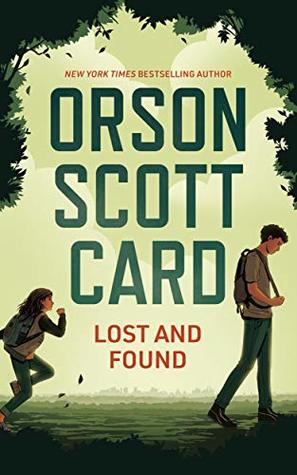
Book Review: Lost and Found

Lost and Found
by Orson Scott Card

My rating: 2.5 / 5
Genre: YA speculative fiction

I was pretty excited when I was approved to read an advance copy of this book, since Orson Scott Card is a big name author. I haven’t read anything else by him (though Ender’s Game is on my TBR short list), but fortunately, I’ve read other reviews that say this isn’t like his other, especially earlier, work. Because this could have turned me off to his writing otherwise. I struggled a lot with various aspects of this book.

My biggest issue was the dialog. Not just the dialog itself, but the way it was framed. I’m a huge dialog person, both in my reading and my writing. And this book was something like 75% dialog. Because outside of the actual events that occurred surrounding the lost girl (and even during that), it felt like the characters were always either standing around or sitting around talking. And there was very little in the way of action happening during the talking, but while this worked in Lock In, it just didn’t work the same in this book. I’m not sure if I can explain why though. Maybe because the MC in Lock In is more of a mind at work, then a physical person? Maybe because it wasn’t 75% of the book?

But then, it might be because of the actual content of the dialog. There was so much snark and snappiness, it was just overwhelming. Almost like it was trying too hard to be witty and intelligent. Most of the characters talked nearly identically, even the minor ones, so it was really difficult to get a sense of who was talking. The only thing that really led me to understand that Ezekiel was particularly smart was that the detective said as much to him. But sometimes, the detective talked just like him, except without the constant need to correct people, so I guess that’s what made Ezekiel smarter? Some dialog scenes actually read as if the characters were doing nothing but one-up’ing each other in being more and more correct about what they were trying to say. And I really didn’t buy either Ezekiel or Beth as early teens due to their dialog.

Ezekiel’s micropower is analyzed to death, right up until the end of the book. On the other hand, a few certain elements (that I won’t detail for the sake of spoilers) were left completely unexplained. And there were certain things that happened in this book that reminded me of my 10-year-old self writing about a girl who got her best friend adopted alongside her simply because she was plucky enough to ask. It just felt a bit too unlikely in several spots (including what would likely be allowed in police work). But maybe Card has done some research and knows some things I don’t (I am definitely not an expert).

As far as the plot goes, it got off to a bit of a slow start, and then started to get interesting. And then went a surprising direction right at about the halfway point, and then became too predictable because of that. I know this is vague, but I don’t want to spoil anything. And a warning: it’s fairly dark and gritty for a YA book, dealing with things like (spoilers) kidnapping of young children, child pornography, parent death, and even one death scene (not a parent) described a bit graphically.

Now, the positives. Because I did give this book some stars. Ezekiel’s dad. I really like seeing a parent portrayed in such a great light, especially a father, because let’s face it, they’re pretty beat up in fiction of various mediums these days. I also liked the way the detective treated Ezekiel, for the most part, outside of the unlikely things. I really did like the premise, and even the plot, for the first half of the book. Then it felt like a rinse and repeat for the second half.

I struggled with how many stars to give this book. While I was reading it, I was hovering around 3-3.5. But by the end, I couldn’t figure out what I was seeing that gave it even that much redeeming value. I hate writing a review like this, and I will sum up by saying that a lot of this is personal preference. But it really didn’t suit my preference. I think there are plenty of people who would enjoy the quick, snarky dialog though, considering that the writing actually reminded me of a few people I know. So for those who enjoy that type of writing, it’s probably worth a read.

Thank you to Netgalley and Blackstone Publishing for providing me a copy of this book to review.

Find out more about Lost and Found
Publication date: September 10, 2019

See what I’m reading next.

If you’ve read this book, or read it in the future, feel free to let me know what you think!

August in Review

In my second month of reading with more intention, I picked up the pace at first, and then seemed to slow back down at the end of the month. Now that school has started (I homeschool), it remains to be seen how much time I have to read, but I will definitely make as much time for it as I can.

Here are the books I read in August:

The Curious Conspiracy on Gamma Ceti by Nemo West (2.5 / 5)
Light from Distant Stars by Shawn Smucker (1.5 / 5)
Thr3e by Ted Dekker (4.5 / 5)
Things You Save in a Fire by Katherine Center (4 / 5)
Tilly by Frank E. Peretti (3.5 / 5)
Lock In by John Scalzi (4.5 / 5)
#NotReadyToDie by Cate Carlyle (2.5 / 5)
The Inquisition
by Taran Matharu (4 / 5)
Lost and Found by Orson Scott Card (review pending)
Illusion by Frank E. Peretti (review pending)
Harry Potter and the Sorcerer’s Stone by J.K. Rowling (review pending)

This list includes 5 ARCs, my first ever, and 1 re-read. My favorite book from August was Illusion. The rest of reviews from last month will go up in the next week and a half. My ever-changing list of to-be-reads, as well as a flag for the book I’m currently reading and an ongoing list of those I’ve read and posted about can be found here.

I’m also keeping my Goodreads page updated with a more extensive list of to-be-reads, if anyone is interested in that. (Note: The list of books I have read overall is not remotely complete there. When I created my Goodreads page 4 years ago, I added some of my favorite books over the years, but to add everything I’ve ever read would be very time-consuming, not to mention impossible to remember it all.)

Despite my almost too-long list of TBRs, I’m always looking for more to add. Feel free to offer suggestions of your favorites or just recent reads you enjoyed.

Book Review: #NotReadyToDie

#NotReadyToDie
by Cate Carlyle

My rating: 2.5 / 5
Genre: YA suspense

43976341

A school shooting at a high school in Canada is shown from the perspective of one of the students. She’s forced to think past her perceptions of other students to do the best she can to help others trapped in the classroom with her.

I didn’t find very many redeeming qualities about this book. My favorite thing was the way that each chapter ended with a tweet from various sources–usually either the local news station or one of the students in the school. I liked reading the updates as time went on (and missed them when they weren’t there), though I wished I could see reactions from the characters to some of them. They were mostly removed from the narrative. The writing was clear and easy to follow. And I liked the relationship between the narrator, Ginny, and her mom. That’s the extent of my positive notes. These are the main reasons I gave the book 2.5 stars.

There was a secondary main character named Kayla who, frankly, would have made a much better main character. She was compassionate, brave, forgiving, and had knowledge of medicine. I don’t mean to say side characters can’t be better at anything than the main character, of course, but in contrast, Ginny was judgemental, a bit harsh, and too often focused on the entirely wrong things during this crisis. The main character doesn’t have to be the “best,” but for a story to land well, it certainly helps for the reader to be able to identify with the MC…and I just didn’t. Ginny spends the entire book calling Kayla by an insulting nickname, but it’s okay, because she says it “with love” after the two start to become friends. Just…no. There are other things that happen with Ginny that either don’t make sense to her character or are pretty big personality flaws.

And speaking of characters, the book is so full of cliches. In the classroom during the lockdown, there are only 3 main groups of people identified: jocks, cheerleaders, and nerds. I get the over-simplification of background characters in a setting like this, but maybe go against the trend of those commonly used groups? The main person who acts selfishly and is disliked by the MCs is a jock. Maybe change it up, make him something less cliched.

This might count as a spoiler, so be warned, but one specific thing that really bugged me was later in the book, Ginny makes a comment about one of the other students that leads Kayla to tell her maybe she should work on not judging people so much. After initially snarking back to Kayla about this comment, she admits to the reader that Kayla had been right (yeah, we know…considering that you have been calling Kayla, who is supposedly becoming your friend now, “Barbie” since the beginning of the book). Then later, when talking about the “jerk jock”, we’re told that Ginny prides herself on having a pretty good feel for people. Except she’s spent half the book finding out that she’s misjudged at least 3 different people in her class. But since we all agree that the jerk jock is a bad guy, I guess we’ll let that little contradiction slide.

Here are a few other stray thoughts, which contain some spoilers (which I’ll try to cover with black): From my limited knowledge, I’m pretty sure most school shootings are a lot shorter than the time it went on for in this book. The shooter weirdly taunted this classroom, which I never really understood. There wasn’t much suspense for me, considering the final chapter title, the book’s POV and tense, and the fact that I wasn’t really connected to the MC (note: I am not at all saying that I didn’t care if she died, especially considering the subject matter of this book). Finally, I don’t think it would have bothered me to not be told the motivations behind the shooting if the students hadn’t speculated on it so much along the way. Because of that, I did find myself wanting to know, which we don’t find out. I know that the motivations aren’t always clear in real life either, but this is fiction, so I would have hoped for at least a more definitive speculation from someone in authority by the end.

The subject of a school shooting intrigued me, which is why I chose to read this book. Though I know there are other books like this out there, I haven’t read any. However, so much of the characterization was just so off to me, I had a difficult time finding it very much of an exploration into the minds of students in this terrible situation. I don’t think I can come up with any types of readers I would specifically recommend this book to. It was short, so I should have read it much more quickly than I did, but instead found myself stopping and going back to my other book that I was really enjoying, and it’s not because of the difficult subject, but because…it just didn’t hold my attention very well.

Thank you to Netgalley and Common Deer Press for providing me a copy of this book to review.

Find out more about #NotReadyToDie
Publication date: October 1, 2019

See what I’m reading next.

If you’ve read this book, or read it in the future, feel free to let me know what you think!

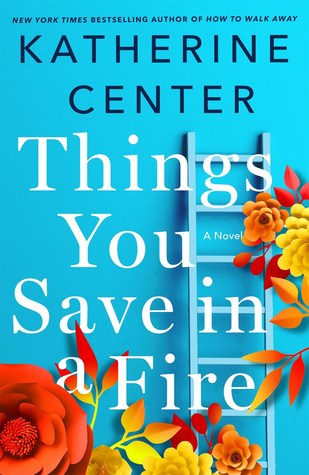
Book Review: Things You Save in a Fire

Things You Save in a Fire
by Katherine Center

My rating: 4 / 5
Genre: Women’s fiction, romance

41150382

Multiple events conspire together to cause Cassie Hanwell to move away from the city in which she’s just received an award for her service as a firefighter to a new city where, she’s told, they don’t even think women should be firefighters. But Cassie has taught herself how to overcome almost anything–by keeping emotions and feelings at bay and always following a schedule and a plan. This method serves her well, but also poorly, in her new life. A very strained relationship with her sick mother and a crush on the rookie at her new fire station both lead to changes she could never have expected.

This book was a fun read for me, and I think it is interesting that it isn’t quite as much of a pure romance as I thought it would be. The romance is a key factor, but it’s not the only factor. Other important elements include recovering from past trauma (or lack thereof), mother-daughter relationship (focusing on abandonment of the daughter), surviving in a not-entirely-friendly workplace, and most of all, forgiveness.

I really liked the fact that the book had that last angle in it, because I think it’s something that many people don’t really take the time and effort to try to do. The book may have taken a fairly simplistic approach, but for what it was, I appreciated it.

There are a lot of tropes wrapped up in Cassie, but at the same time, she had some traits that I really connected with. For example, I watched as she pushed another character away, and then was truly disappointed that the other character left. She wanted this person to push harder to reach her, help her, get her to open up, whatever, even while at the same time knowing that she would never let that person in. I am like that as well, especially with my husband, though with his help, I’ve identified it and am working on it.

One thing that bugged me throughout the book was Cassie’s mother. I had a really hard time sympathizing with her, for reasons that I won’t explain, because it would broach spoiler territory. But in the end, I decided that I didn’t have to agree with Cassie’s assessment of her mother or the situation. It wasn’t my mother, so I just let it be.

The ending had a few wrap-ups that were a little strange to me, but I enjoyed the book overall. I recommend it to fans of romance, especially those where the romance isn’t quite so in-your-face.

Thank you so much to Netgalley and St. Martin’s Press for providing me a copy of this book to review!

Find out more about Things You Save in a Fire

See what I’m reading next.

If you’ve read this book, or read it in the future, feel free to let me know what you think!