Book Review: First Degree

First Degree
Andy Carpenter #2
by David Rosenfelt
read by Grover Gardner

My rating: 5 / 5
Genre: Mystery

Defense attorney Andy Carpenter is reluctantly brought into a case when a man confesses to murder under the protection of attorney-client privilege. The case takes a turn when Andy’s girlfriend ends up being accused of the murder, and it’s up to him to unravel a conspiracy and prove her innocence.

Frame-ups and high-reaching conspiracies are the common ground in this series so far. I like that these stories look at both the investigation and the trial, because even when Andy knows his client isn’t guilty, he still has to be able to prove it. And that’s when discovering the real culprit(s) comes in. I’m not remotely an expert in what goes on in a courtroom, but Rosenfelt makes those scenes seem much more real that what I normally see on TV. Maybe it’s just because he includes so many details that others leave out. I also really liked the bits of the previous book that continued into this one, especially Andy helping his previous client with a lawsuit against those who caused him to be incarcerated for years. The question of whether or not Andy will win the trial is probably not as suspenseful as it could be, since solving the mystery is pretty tied up in proving his client innocent, and I suspect that will be the case throughout the series, but it doesn’t make the mystery less interesting.

Only two audiobooks in, Gardner is already the definitive voice of Andy Carpenter for me. Gardner really brings Andy’s wit and sarcasm to life. I’m definitely sticking with the audiobooks for this series as much as possible. Fans of mystery, crime fiction, and courtroom dramas should consider reading this book.

Find out more about First Degree

See what I’m reading next.

If you’ve read this book, or read it in the future, feel free to let me know what you think!

January in Review

I read 13 books last month, which is a great start to the year! Though sadly, my average rating for the month was lower than I’d like, due to reading quite a few books that I didn’t enjoy a whole lot. But there were still some gems, and I started some really great series!

Here are the books I read in January:

Open and Shut by David Rosenfelt (5 / 5)
A Beautiful Disguise by Roseanna M. White (5 / 5)
A Winter by the Sea by Julie Klassen (3.5 / 5)
Tasty by Victoria Grace Elliott (3.5 / 5)
The False Prince by Jennifer A. Nielsen (3.5 / 5)
The Cat Who Had 60 Whiskers by Lilian Jackson Braun (2 / 5)
The Lassoed by Marriage Romance Collection by various authors (3.25 / 5)
Joy in the Morning by P.G. Wodehouse (3.5 / 5)
Once a Queen by Sarah Arthur (3 / 5)
The Traitor by Richard Paul Evans (1 / 5)
The Mysterious Affair at Styles by Agatha Christie (4 / 5)
Masterminds by Gordon Korman (5 / 5)
The Mistletoe Countess by Pepper D. Basham (2.5 / 5)

This list includes 4 ARCs and 0 re-reads. My favorite book from January (by a slim margin) was A Beautiful Disguise. I started 6 series, continued 2 series, and finished (or caught up on) 3 series. My ever-changing short list of to-be-reads, as well as a flag for the book I’m currently reading and an ongoing list of those I’ve read and posted about can be found here.

I’m also keeping my Goodreads page updated with a more extensive list of to-be-reads. Despite my almost too-long TBR list, I’m always looking for more to add. Feel free to offer suggestions of your favorites or just recent reads you enjoyed.

Book Review: The Mistletoe Countess

The Mistletoe Countess
Frederick & Grace Mystery #1
by Pepper D. Basham

My rating: 2.5 / 5
Genre: Historical Christian romance

When Gracelynn’s older sister can’t fulfill her obligation to marry an English earl, threatening to scandalize both families involved, Grace offers to save all parties and marry Lord Astley herself. The earl, Frederick, takes some convincing, but soon enough, they’re on their way from America to England as husband and wife—and virtual strangers. Grace will rely on her extensive reading background to infuse some romance into their marriage and also to try to solve the mystery of why so many accidents happen around her new husband, whose elder brother, the first earl, died of slightly questionable circumstances.

I read this book because I like mysteries and historic fiction, but the mystery was just relegated to too small a part of the story. It was solved a little too easily and wasn’t hard at all to figure out. And it was bogged down by the building of the relationship, both emotional and physical, between the main characters and the author’s drawn-out writing style. We’ve all heard the adage “show, don’t tell” for authors, but if you’ve ever wondered if it’s possible for too much show and not enough tell, this is that book. It’s okay to sometimes just say someone smiled instead of saying that the corners of their mouth turned up (or something like that) every single time someone smiles.

I can’t believe I’m at a point where I feel like there needs to be “steam” levels given for a Christian romance novel. Marriage of convenience stories in particular seem to make authors feel like it’s okay to describe the physical relationship between the main characters far more than would otherwise seem acceptable in Christian fiction. This is one of the worst I’ve read, with a lot of description given as the couple ramped up to their first time together as husband and wife, as well as subsequent desires and flirtations. I realize the couple is married, so what they are doing is okay for them…not for me to be part of. And even outside of the graphicness of the physical aspects of their relationship, there’s such a focus in general on kissing (especially from Grace’s naïve perspective) and repetitiveness in the descriptions of what each thought of the other, especially physically speaking and smells…okay, Frederick smells like amber…we get it… 

Moving past these issues (which is hard to do, because they permeate the story), the characters were okay. I liked Frederick’s understanding that the poor choices he’d made in the past would affect his future with his wife. He had a sort of redemption arc, though the focus seemed to be more on being redeemed by Grace’s love than Jesus’s sacrifice. Grace, on the other hand acts like a 15-16-year-old, so I was surprised to find out about a quarter into the book that she’s almost 19. I’m not sure if we’re ever told Frederick’s age, but the difference felt weird to me. Grace is a heavy reader and tends to live her life as if she’s living out a story, to what felt like an unrealistic degree. She reminds me a lot of Anne of Green Gables, except that where Anne matured as she grew up, apparently Grace didn’t. It smooths out a little later on, but she really just seemed so childish. 

This is the first book in a series marketed as mysteries. I’m hoping that the newlywed intensity of this first book will smooth out, though given that the next two books involve the couple trying to go on or actually going on their honeymoon, my hopes are low. Still, I’ll give the series another try. As for recommending this book, if you are interested in the genre and aren’t bothered by the mostly personal-preference issues above, please check out the link below to see what others thought. You might like it more than I did (experience tells me that you will). Though don’t expect much of a Christmas atmosphere to this book, because it’s only barely related to the season.

Find out more about The Mistletoe Countess

See what I’m reading next.

If you’ve read this book, or read it in the future, feel free to let me know what you think!

Book Review: Masterminds

Masterminds
Book #1
by Gordon Korman

My rating: 5 / 5
Genre: YA sci-fi adventure

Serenity, New Mexico may seem like the perfect small town, but five teenagers are about to discover that there’s a lot more going on, both in their town and in the rest of the world, than they ever knew. 

This is the kind of book that is difficult to explain the premise of without giving too much away. There are five main teenagers, and each of them has their turn as the POV character. That is a lot of different perspectives to keep straight, and while so often that many doesn’t work out, Korman did a good job of keeping them all different. In fact, the story is in 1st-person from each of these perspectives, yet their voices are all unique enough to keep me from being confused (for the most part). I really enjoyed the way everything played out, though, and how the five teens got started on their investigation. While the main catalyst for the teens’ investigations comes from the main character, Eli, having bizarre symptoms when he rode his bike out of town with his friend, the other teens basically start on their own questioning and digging in other ways. When their individual quests come together, the story really picks up. The synopsis compares the book to Stranger Things, and unlike the last book I read that had that comparison, this one works.

I didn’t realize this was the start of the series until I got to the end, and while it’s not an outright cliffhanger, it definitely left me wanting more! My 13-year-old daughter read this book before me, and she and I are both excited to continue the series. We also both recommend this book for teens and even adults who enjoy suspenseful teen books.

Find out more about Masterminds

See what I’m reading next.

If you’ve read this book, or read it in the future, feel free to let me know what you think!

Book Review: The Mysterious Affair at Styles

The Mysterious Affair at Styles
Hercule Poirot #1
by Agatha Christie
read by Hugh Fraser

My rating: 4 / 5
Genre: Classic mystery

This is the first Agatha Christie book I’ve ever read, and now I’m wondering what took me so long, especially since I’ve been a fan of mystery books all my life. I think when I was younger, I figured older books would just be boring, but as an adult, I definitely appreciate the simplicity of books written or set in historical time periods. Though I think the narrator, Hastings, needed more development as a character, Poirot is an interesting detective-type character, and I look forward to getting to know him more. I had some theories about the mystery, though I don’t know that the clues to the true answer are really given to the reader. Poirot plays things pretty close to the vest, allowing Hastings, who acted as his sidekick, to go down quite a few wrong paths. Though some say it’s not the best idea to start with this book if you’ve never read any in this series before, because Christie was still figuring out who Poirot is or for other reasons that might keep someone from liking the series enough to want to keep going, to me, that just means it’ll get better from here. And though Poirot may have over-explained after the mystery was solved, I enjoyed the story overall. I listened to the audiobook narrated by Hugh Fraser and thought he did a great job. I’m looking forward to continuing on in this series!

Find out more about The Mysterious Affair at Styles

See what I’m reading next.

If you’ve read this book, or read it in the future, feel free to let me know what you think!

Book Review: The Traitor

The Traitor
Michael Vey #9
by Richard Paul Evans

My rating: 1 / 5
Genre: YA sci-fi adventure

Spoiler notice: The following review may contain some spoilers for the previous books in the series, starting with The Prisoner of Cell 25.

The Electroclan has to decide how to stop the Chasqui from destroying a town, free their friends, and deal with their friend who betrayed them.

I can’t pretend to know Evans’s motivation in opening this series back up again after a clear ending, but this book in particular made me feel like he doesn’t really care about the series anymore. The bad guy has (no surprise) turned out to be pretty much a slightly different version of Hatch. Multiple major side characters die, which might not seem like a big deal, but it’s quite different for this series. And the big kicker, to me, is that it appears that Evans completely forgot that he’d killed off an entire tribe of people way back in book #3. While, yes, the news that the Amacarra tribe had been wiped out could have been false, it has never been revealed to us that any (or apparently all) of them survived. Yet when they suddenly appear again in this book, no one is surprised, confused, happy, anything (except me). To me, that kind of huge continuity issue smacks of apathy.

Books 1-7 of this series have an overarching plot—the Electroclan trying to stop Hatch’s schemes and eventually bring down the Elgen. Whatever issues I had with those books, the desire to see the Electroclan triumph was basically what kept me going through 7 books. No matter what the real reason is that Evans continued the series after neatly wrapping it up, after only 2 books, I’ve lost my motivation to keep reading. I don’t care enough about the new bad guy, because he’s far too much like the old bad guy (plus, spoiler, he’s already stopped by the end of this 2nd book), and the new threat just doesn’t seem as globally dangerous. 

Rather than continue to complain about style issues, Evans’s weird pacing decisions, and other things that I’ve mentioned in multiple previous reviews already, I’m just going to say that this is the end for me, and be done with it. This is the last published book to date, but since it came out only 4 months ago, given what was left hanging, I assume at least one more is planned. I won’t put myself through the frustration of reading any further, though. As for recommendations, though I mildly enjoyed much of the first 7 books, I don’t know that I’d recommend this series, especially for adults. Teens are probably better able to overlook some of the shallow characterization and style issues I had with it.

Find out more about The Traitor

See what I’m reading next.

If you’ve read this book, or read it in the future, feel free to let me know what you think!

Book Review: Joy in the Morning

Joy in the Morning
Jeeves
#8
by P.G. Wodehouse
Read by Jonathan Cecil

My rating: 3.5 / 5
Genre: Classic British humor

If I could forget a lot of what I had read in previous books in this series, I think I would have enjoyed this installment a lot more. The problem is that the problems that arise around Wooster tend to not be different enough to be interesting. A friend’s engagement is in danger, so Wooster takes it upon himself to help them reconcile. A woman he doesn’t care for randomly decides that he must want to marry her, so he finds himself engaged, despite his utter lack of desire for such. And he’s too much of a gentleman to say, “No, thank you,” so he has to plan some scheme to get out of it or, oops! He might just find himself married! I will say, at least, that the intricacies of how some of these mostly unrelated messes are twined together so that one solution can somehow fix them all is usually clever enough to provide some fun while I’m listening. And Wooster’s trademark humor, combined with Jeeves’s straight-man wit, still makes me laugh, even amongst the feeling that we’ve “been there, done that.” Jonathan Cecil is a great narrator for these books (though I still miss Kevin Theis).

Find out more about Joy in the Morning

See what I’m reading next.

If you’ve read this book, or read it in the future, feel free to let me know what you think!

Book Review: Once a Queen

Once a Queen
by Sarah Arthur

My rating: 3 / 5
Genre: YA fantasy

When fourteen-year-old Eva Joyce visits her grandmother in England with her mom who’d left home after getting married and never returned before now, she doesn’t expect to find out that her grandmother might have been the subject of one of Eva’s favorite fairy tales growing up. The manor might even contain a portal to another world, but no one is willing to talk about it much, her grandmother least of all. Tragedy in her grandmother’s past overshadows the wonder and magic, and Eva begins to believe it’s her job to help her grandmother heal.

Packaged as a portal fantasy, this book is more about Eva’s grandmother’s past trauma, after losing someone close to her when she was a young adult. It’s difficult to separate what is part of the fantastical element of the other world(s) and what is just a reflection of the grandmother’s brokenness. There are questions about all of that that I never really understood and questions about whether Eva’s mom believed any of the tales or not, considering that she doesn’t want to talk about it now, doesn’t seem to believe it now, yet Eva grew up with the stories.

It’s clear that the author is heavily influenced by The Chronicles of Narnia books, though she makes no secret that she’s a major fan. I’ve only just recently read all of that series for the first time, and I saw some pretty obvious parallels. This book takes place almost exclusively in our world, though, with references to the other world(s), which wasn’t what I was expecting at all. Some history from the other world is told between chapters, but I wasn’t completely sure how much of it was important. In the end, this feels a lot more like a book for older teens or adults than teens around 14, with more of an emphasis on grief and trauma than fantasy adventure. The writing is poetic and elegant (and dialog and history related to the other world(s) is basically KJV-type writing, to put it simply), which is not really my preferred style and might be lost on the teens it’s meant for. Considering that the book is in 1st-person from the perspective of a 14-year-old girl, I question the style choice; perhaps if the narrator were to mention that she wrote down her memories decades after it happened, it would make more sense when she describes old manor houses using terminology I’d be surprised an American teen would know. The language also added to the slow feeling of the book as a whole. In the end, not much really happens, and while it sets up a series, it didn’t leave me wanting more. However, the other reviews for this book are generally positive, so please check them out if you’re interested. I wonder if people who have long been fans of Narnia would enjoy this more than I did or if they’d actually enjoy it less.

Thank you to Netgalley and WaterBrook & Multnomah for providing me a copy of this book to review.
Publication date: January 30, 2024

Find out more about Once a Queen

See what I’m reading next.

If you’ve read this book, or read it in the future, feel free to let me know what you think!

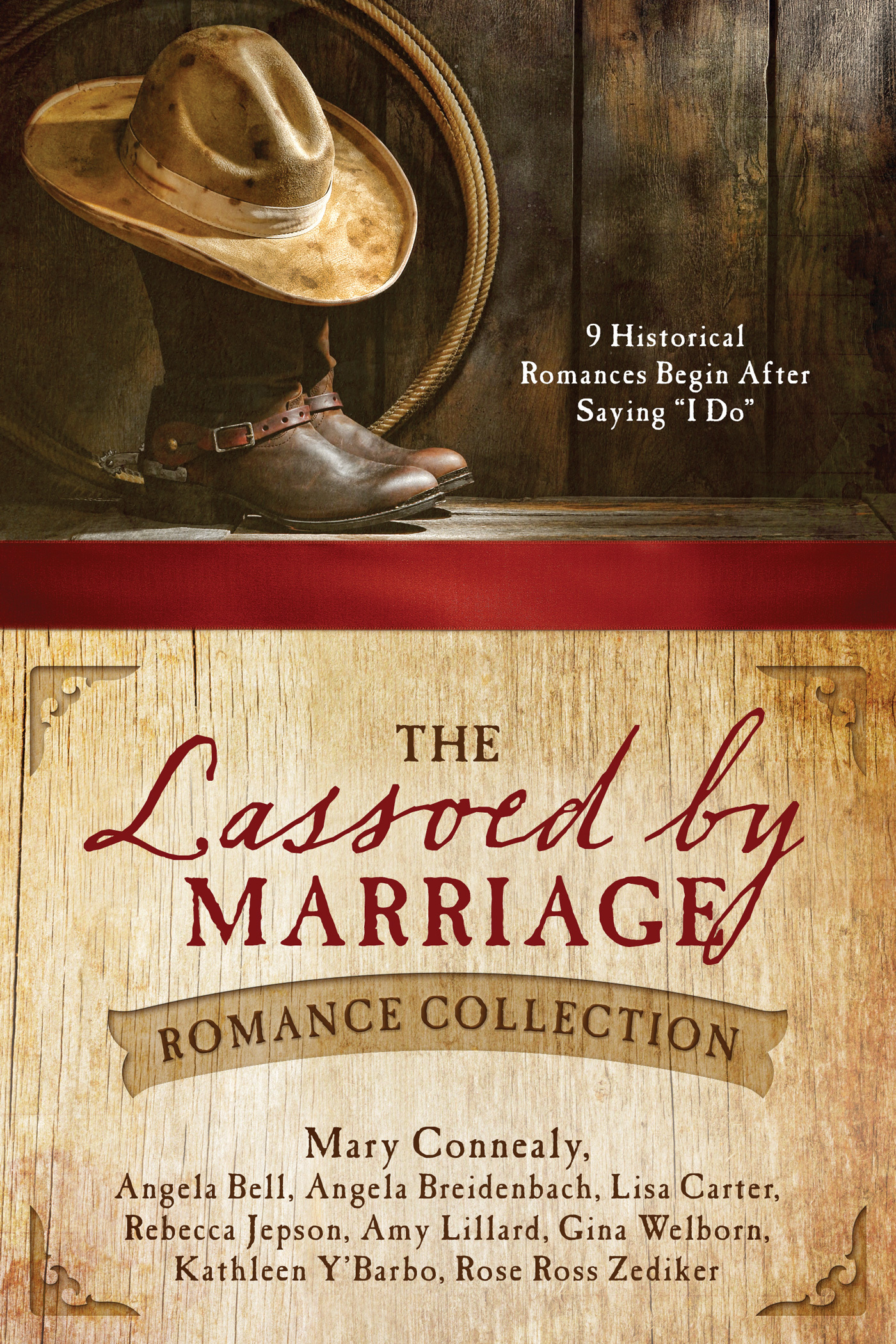
Book Review: The Lassoed by Marriage Romance Collection

The Lassoed by Marriage Romance Collection
by multiple authors (see details below)

My rating: 3.25 / 5
Genre: Christian historical romance, short stories

This book contains short stories from 9 different authors, taking place in the late 1800s, mostly in the western USA. Each story contains a marriage-of-convenience-type romance, which is my favorite kind, when done well. My overall rating for the book is an average of my ratings for each story, shown below. Below the ratings is a brief review for each story.

“Substitute Bride” by Angela Bell – 5 / 5
“Bridal Whispers” by Angela Breidenbach – 4.5 / 5
“Mule Dazed” by Lisa Carter2 / 5
“Sweetwater Bride” by Mary Connealy1 / 5
“A Highbrow Hoodwink” by Rebecca Jepson4 / 5
“Not So Pretty Penny” by Amy Lillard  – 2.5 / 5
“All’s Fair” by Gina Welborn – 3.5 / 5
“The Colorado Coincidence” by Kathleen Y’Barbo3 / 5
“Railroaded into Love” by Rose Ross Zediker3.5 / 5

“Substitute Bride” (5 / 5) is the only story that takes place in England, diving right into a story patterned after Jacob and Leah (from the Bible). It’s short enough not to get too much into the deceit that brought Elliott and Gwen together, but if too much time had been spent dwelling on it, it might have gotten annoying. The culmination of Gwen’s self-perception and Elliott’s odd hobby was very well done and the only moment in this book that brought tears to my eyes.

“Bridal Whispers” (4.5 / 5) is full of bad assumptions and misunderstandings, but not so much to make me roll my eyes (and that’s considering I have a low tolerance for these things). In fact, they were probably completely understandable in this story of a widower marrying the cousin of his late wife. I have to say, though, that the long shadow of the first wife would have been a huge problem for me, especially when Burton took her portrait into his bedroom so it wouldn’t hang over his new wife.

“Mule Dazed” (2 / 5) contains one of the worst male leads in the book, the local sheriff forced to marry a woman he was locked in his own jail with overnight. He spends most of the story lusting after his wife, Hattie, while still meanly telling her that he can’t wait to be rid of her when the judge returns and they can annul their marriage. Then he blames her for his own rash outburst in bidding higher than necessary at a basket auction. He’s just a jerk!

“Sweetwater Bride” (1 / 5) has the one male lead that’s worse than the one in the previous story. He’s not quite so rude overall, but he hogties an isolated woman who lives alone in a secluded valley so that he can take her to his parents, because she’s afraid to leave her valley, even though he first offered to bring his parents to her. Then he kisses this girl that he knows is innocent and naive and knows nothing of men or the world in general. How creepy! On top of that, this woman who has barely seen anyone but her dad for years somehow knows that the eyes of the guy who kidnapped her are an unusual color, plus she stops talking like someone who’s been stunted socially far too quickly. Add the author’s writing style that is full of poor grammar and confusing dialogue, and it’s my least favorite in the collection.

“A Highbrow Hoodwink” (4 / 5) is nice and sweet with an overall theme of forgiveness and leaving the past behind. I wasn’t a huge fan of the plan to lie and say that Katie’s son was Henry’s, rather than his brother’s, in a Christian setting, since at no point do they regret or repent of this. But I did like the way everything ended up with this small family.

“Not So Pretty Penny” (2.5 / 5) is not bad, but not great either. The romance part wasn’t bad, but the rest of the plot was weak. Wash, the male lead, was wrongfully convicted of killing his sister, framed by the actual killer. And Wash’s plan now is to find Wash and somehow get him locked up for the crime, neat and simple, even though the man had already convinced everyone that Wash was the guilty one based on only his own testimony? There was a major unexplained coincidence in the climax, and I just do not buy this happy ending.

“All’s Fair” (3.5 / 5) is the first story in this collection that I felt like would have been better with room to expand. A quickie marriage of a man and woman on opposite sides of a family feud to keep members of both side out of prison calls for a bit more depth than this story was able to get into, and there really wasn’t much resolution. On the other hand, though the story starts with an incident that leads to strong hatred between the two MCs, and by the time the bulk of the story starts 4 years later, it’s been mostly resolved on both sides (independently of each other), so the only obstacle to this couple’s happiness is weak and feels contrived.

“The Colorado Coincidence” (3 / 5) was an overall forgettable story for me. I struggled to remember much about the story for the review. So it wasn’t bad, but since I’m not a fan of major coincidences and this story hinges on one, it wasn’t destined to be a favorite. I was at least relieved that Mack didn’t trick Gloree into marrying him by letting her believe that he was the man who’d been sent by her late husband to marry her. I also liked Gloree challenging Mack to ask God to show up.

“Railroaded into Love” by Rose Ross Zediker – (3.5 / 5) is another one where I feel like there needed to be at least a little more time to explore part of the story. I like the way that Molly took to the street urchin, and he clung to her kindness. But since Molly’s brother’s guilt or innocence was a big part of both the marriage of convenience and the rest of the plot, it didn’t get enough resolution, in my opinion. I think this feeling in more than one of these stories is due to the fact that I always prefer a romance be more in the background of a solid plot, and by necessity, the romance in stories as short as these tends to be pushed to the front.

In the end, though my overall rating for this collection isn’t great, there were a few gems in there that I’m really glad I read. The Old West setting isn’t my favorite, and I’m not a huge fan of short stories, but my husband brought the book home from the library for me, thinking I’d like it, and I always give his random book finds a try. I’m glad I did in this case, and I think that others who enjoy Christian romance from this time period will probably like more of these stories than I did.

Find out more about The Lassoed by Marriage Romance Collection

See what I’m reading next.

If you’ve read this book, or read it in the future, feel free to let me know what you think!

Book Review: The Cat Who Had 60 Whiskers

The Cat Who Had 60 Whiskers
Book #29
by Lilian Jackson Braun

My rating: 2 / 5
Genre: Cozy mystery

I’m not sure I have the motivation to write an actual review for this book. It’s feeling like deja vu anymore, since I don’t have much different to say than I did for the last few books in this series. I’ll get to a few specifics from this book in a little bit, but first I just want to say what an overall pleasure it’s been reading through this series. Though the last few weren’t spectacular, and overall, there were some duds (for me), in a series of 29 books, one thing Braun did well throughout this series is give me a sense of community. Once Qwilleran arrives in Moose County for the first time in book #5, the county and especially the town of Pickax becomes a character unto itself, growing and changing, going through tragedy and triumph, like a well-rounded addition to the family. After almost 30 books, I feel connected to the county and its people and am sad to bid them farewell.

My biggest issue with this book isn’t that the mystery was light or that Qwilleran again has the solution sort of handed to him. It’s the way Braun seemed to thumb her nose at long-standing institutions from her series. (Warning, spoilers ahead.) It feels like the intentional end of a series, but evidence shows that she had a 30th book planned to follow this one. So why did she destroy both Qwilleran’s relationship and home, to start anew in the next book, this late in the series? If she was bored with them, then considering her advanced age, a better solution would have been to call this the end, and leave us happy, knowing that Qwilleran would continue with his life as we have known it. And even worse, Qwilleran doesn’t seem particularly bothered by either of these losses. I kinda get the barn being almost a relief, since he expressed frustration in this book at having a home that people always wanted to tour and gape at. But minimal effort is given to make it believable that he not only didn’t care that Polly was moving to Paris but also was ready to move on within days.

After all is said and done, I do recommend the overall series to fans of mystery, especially with a somewhat old-fashioned mindset, but definitely start at or near the beginning. I can see myself re-reading this series again someday, but I’ll probably stop at about #24, the last one I remember liking much at all. After that, even the love of the community around Qwilleran isn’t enough to sustain me through lackluster mysteries.

Find out more about The Cat Who Had 60 Whiskers

See what I’m reading next.

If you’ve read this book, or read it in the future, feel free to let me know what you think!