Book Review: The Wedding Bond

The Wedding Bond
by Lee Tobin McClain

My rating: 2 / 5
Genre: Contemporary romance
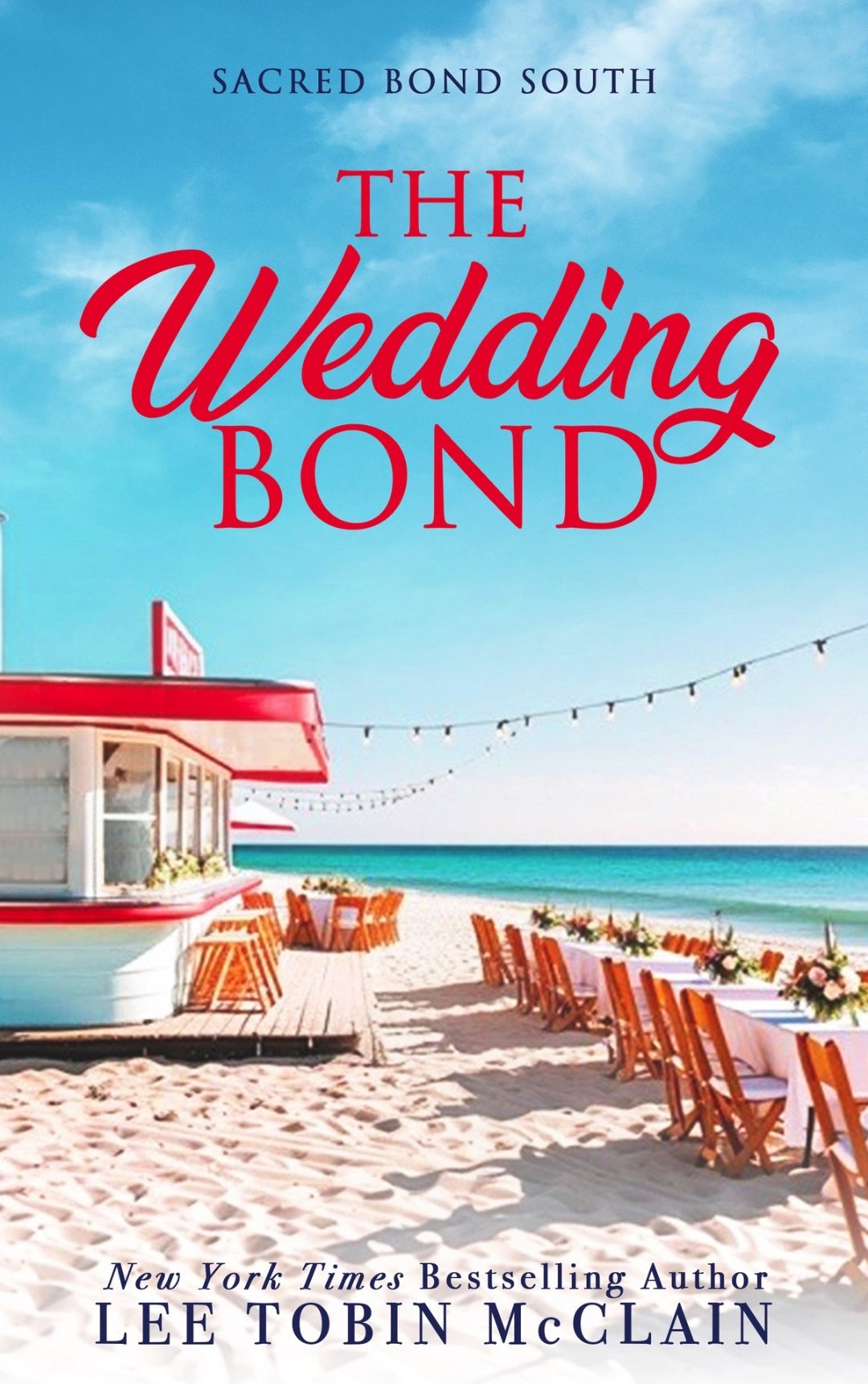
When 29-year-old Kaylee publicly declares that she plans to be married in one year, despite not having had a long-term relationship in her entire adult life, she thinks that pretending to be in a relationship with the man who broke her teenage heart might help her be ready for marriage. After all, Phelan will only be in town for a month, so it’s safe, right? But Phelan has a big secret that threatens even a fake relationship, not to mention the feelings that are being rekindled by being close to Kaylee.

So much about what I expected from this story is not what I got. I wouldn’t say that “fake dating” is a normal preference of mine, but for whatever reason, I still decided to pick up a story that supposedly contained it. However, the fake relationship didn’t start until far into the book and was overall a very minor aspect. I can live with that, since I’m not necessarily a fan anyway. But the relationship in general was far too fast-burn for my preferences. Kaylee and Phelan had a history that turned out to be actually a little less involved than I thought, though that doesn’t stop them from being super attracted to each other as soon as they see each other again and practically unable to keep their hands off each other. I was certain this relationship was going to end up in bed—heck, I was certain they must have had a physical relationship back when they were teenagers, until the author casually drops that they hadn’t slept together when they were younger.

The book is billed as Christian romance, but to me, it could be called clean romance at best. Characters attending church “as often as they can” does not make a book Christian any more than attending church makes a person (in real life) a Christian. These characters do not make their decisions based on what God would want, what the Bible says, anything like that. One of them does get advice from a pastor (or priest? I was a little confused on that), but he ignores the advice. I guess it’s something that he later acknowledges that he should have followed the advice, but even that is mostly just because ignoring it caused a rift between him and the woman he wanted to have his hands all over. Then near the end of the book, Kaylee has suddenly started to rely a little more on God, which comes out of nowhere and is explained too quickly, almost like an afterthought.

The one star I gave this book (yes, I rated it 2, but because Goodreads doesn’t allow a 0 rating, that makes 1 star the worst possible rating, thus 2 stars is giving a book 1 more than 0) was mostly due to the story arc involving Phelan’s twin brothers and the deadbeat dad he was trying to track down. In the end, it may have been a little too convenient, but sometimes convenient can be nice. Outside of that, though, neither of the main characters or their arcs really stood out to me as anything interesting or different. And I just…didn’t really care if the ended up together or not (not that there’s much suspense involved in a story like this).

This is not a series or an author that I will read any more of, and I really don’t recommend it to anyone—it would probably be too “Christian” for people who don’t like Christian fiction, and though others who do like Christian fiction might not be as bothered by the physical aspect of the relationship as I was, I still wouldn’t recommend it for other reasons.

Find out more about The Wedding Bond

See what I’m reading next.

If you’ve read this book, or read it in the future, feel free to let me know what you think!

Book Review: Bark of Night

Bark of Night
Andy Carpenter #19
by David Rosenfelt
read by Grover Gardner

My rating: 4.5 / 5
Genre: Mystery

When a dog whose owner was recently murdered is brought to a vet by a man who pays to have it euthanized, Andy Carpenter is suspicious. Someone has been arrested for the murder, and it wasn’t the man who brought a perfectly healthy dog to the vet to be put down. So he once again dusts off his defense attorney skills and assembles the team for another case.

This was a great installment in the series, with a little bit of a different take on the formula I always enjoy. The story this time is more focused on the investigation than the trial, allowing the different facets of the crime more room to breathe. It was a little complex, but it didn’t feel as convoluted as others have, and I think that’s because Rosenfelt expanded on it enough to keep that from happening. I always enjoy the inclusion of Andy’s team, and this time, we get to see the softer side of Marcus, which is fun. Overall, I felt like it was one of the stronger books in an overall great series! I especially recommend the audiobook, as Grover Gardner was clearly made to voice Andy Carpenter and brings his wit and sarcasm to life as wonderfully as ever.

Find out more about Bark of Night

See what I’m reading next.

If you’ve read this book, or read it in the future, feel free to let me know what you think!

Book Review: Very Dangerous Things

Very Dangerous Things
by Lauren Muñoz

My rating: 2 / 5
Genre: YA mystery thriller

When a murder game at a private school specializing in criminology is preempted by the real murder of a high school student, the victim’s ex-girlfriend is the prime suspect. But Sierra insists she didn’t do it and tries to enlist her ex-best friend Dulce in clearing her name. Dulce may be intrigued, but it’ll take more than the pleas of the girl she now considers her nemesis to get her involved.

The idea of a real crime being committed during a murder mystery game at a school for people studying criminology (though I really can’t say how realistic a school like this is) greatly intrigued me. And in some aspects, the mystery was good. There are a lot of clues, many of which are unrelated to the case, and the author throws in a lot of herrings to keep the reader guessing. (Other reviewers say the culprit was obvious from the beginning, but I did not guess it until close to the reveal.)

However, in many other aspects, the plot, mystery, and characters fell flat for me. The book had very strong Veronica Mars vibes to me, even before the show was outright mentioned, and I don’t know how intentional that was. From the horrible, corrupt sheriff, to the whole town turning against Dulce and her dad, to Dulce and Co. breaking into all sorts of places they shouldn’t be, it brought the show to my mind a lot. Everyone in this story is lying to everyone all the time. And the absolute worst of it comes from Dulce’s (current) best friend Emi who does whatever she wants, no matter who she might upset, lies to her best friend constantly, and then has the gall to accuse Dulce of being a bad friend because she resisted helping with the case for a long time. And that’s just one example of the terrible people in this book making stupid decisions.

There are background flashbacks peppered throughout the story, which aren’t really a bad way to introduce extra information, except that the bulk of the story is written in 1st-person, present tense from Dulce’s POV, and most of the flashbacks are 3rd-person, past tense (unless the person the flashback is about is Dulce, then they’re 1st-person, past tense). It’s a little jarring. What really threw me off, though, was when, in one of these flashbacks, Dulce is stated to be 13 and is making out with a high school guy and drinking alcohol. At 13! But it’s for a case for a detective agency that she and her then-best friend ran together (at 13!), so it’s okay. Then I realized that the flashback was said to be 2 years previous to the rest of the book, which meant that Dulce is still only 15 when the rest of the book happens, as would be most of the other major characters (maybe early 16), which still just feels so young to me, considering what these kids are already into. But to be fair, I’m pretty old-fashioned, so pretty much any age in high school feels too young for what these kids are into, something that is probably worth noting for anyone reading this review.

That brings me to the rest of what bothers me, which I know won’t bother everyone, but I also know that some people who read my reviews will probably be happy to know about this kind of content: multiple on- or off-screen characters are LGBT, and there is mention of religious people who are against this kind of behavior in a negative way (how dare they pray for them!). It made me consider DNFing the book. But since I don’t give a star rating when I don’t finish a book, feeling like it’s not really fair to the book or the author, and I had an ARC of this book and can’t really not give it a rating, I kept going. And in the end, it’s actually overall fairly tame compared to other anti-Christian/religious views in this area (though it’s interesting to note that the religious people actually came around to be okay with the LGBT behavior, so there’s that).

I think this story had huge potential, and the author writes well (minus the jarring POV and tense changes). But it’s pretty clear to me that I was never going to be the right audience for this book or probably for this author. I don’t personally recommend this book to anyone, but please do consider looking into it more if you’re interested.

Thank you to Netgalley and Penguin Young Readers Group for providing me a copy of this book to review.

Find out more about Very Dangerous Things

See what I’m reading next.

If you’ve read this book, or read it in the future, feel free to let me know what you think!
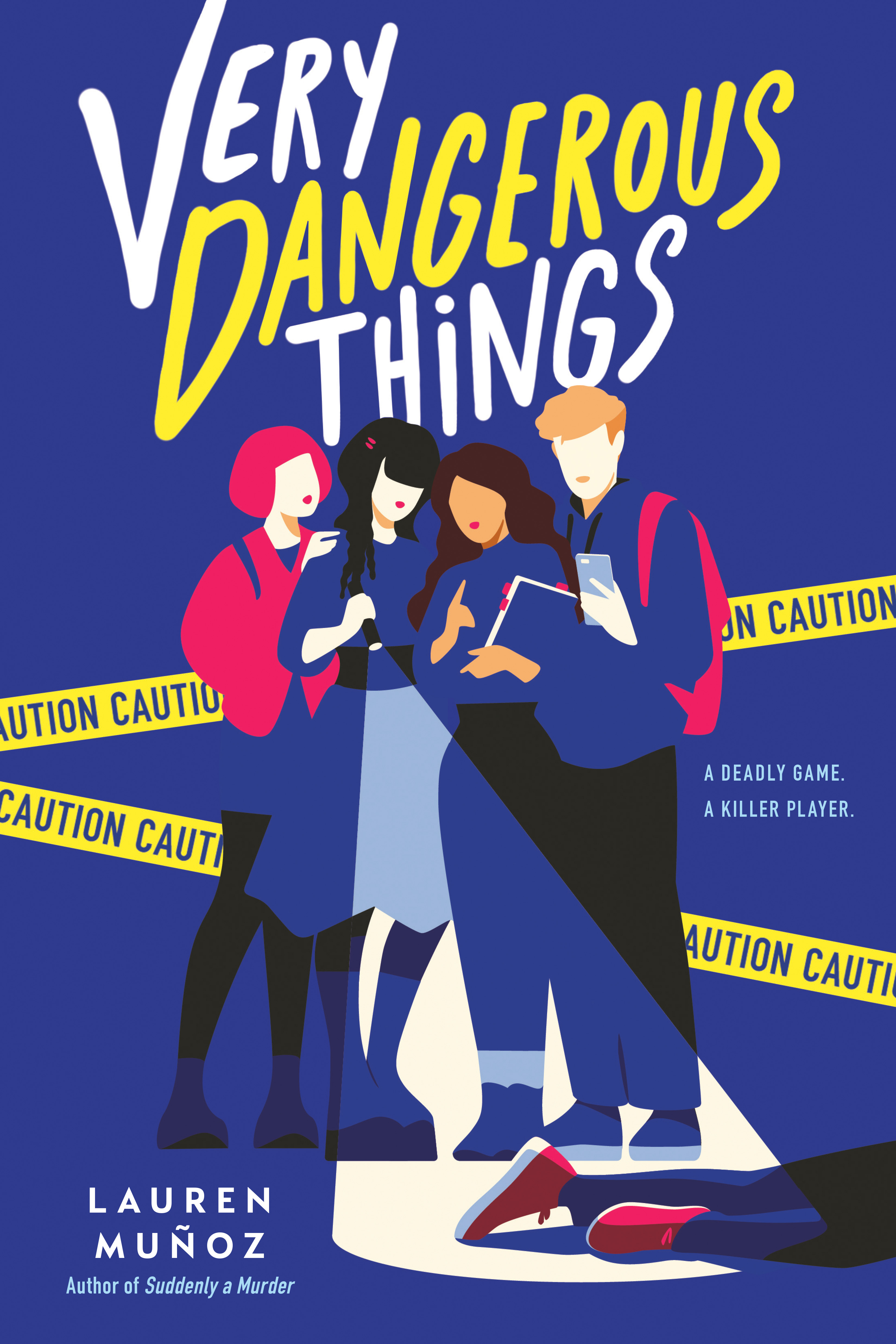
Book vs. Movie: I Am Number Four

I watched this movie years ago, before I read the book or even knew a book existed. I remember enjoying it overall. Now that I’ve read the book, I re-watched the movie, and didn’t particularly like it as much this time. Of course, that has a lot to do with the deviations the movie makes from the book, some of which I just don’t even understand the reason for. Of course some things have to be cut out for the sake of time in a movie, and movie makers often want to make their movie more exciting and add more action and such. Below is a list, not by any means exhaustive, of the things that stuck out to me the most, for good, bad, or neutral (mostly for bad, in my opinion).

Spoiler notice: Since it’s too difficult to explain these differences without spoiling the book, I’ll just say that if you haven’t read it or watched the movie and don’t want to be spoiled, don’t read on.

  • I definitely read “Henri” as the French version, since in the book, he has an accent that is reminiscent of French and chose his name to match. In the movie, he’s just “Henry.” This probably bothers me more than it should.
  • Henri is…cold, gruff, not at all like the firm but kind Henri in the book. His relationship with Four is also not close and father-and-son-like.
  • Sarah is also pretty cold when she meets John, which is unlike the book.
  • In the movie, Henri doesn’t want John to go to school when they move to Ohio; John insists. This kind of just adds to the feeling I get that these don’t care as much about each other as they do in the book.
  • We know from the beginning that Bernie Kosar was the gecko in Florida, though not that he’s a protector. I liked the reveal of him being special (though I had begun to suspect anyway), but at least there’s (so far) suspense for the viewer about him being alien, but not knowing if he’s good or bad.
  • There is no explanation of the scars (which I’m pretty sure are supposed to be stripes, not spirals) as something they expect, no charm that forces them to be killed in order. The movie  Mogodorians are apparently just OCD.
  • He doesn’t know about his Legacies until the first one hits!!! And his ability to throw really hard is…new and surprising? In the book, he and Henri are anticipating his Legacies, and super strength, speed, etc. are common to all Garde, yet it’s clearly not something he expected in the movie.
  • The Lumen turned off so much more quickly in the movie than in the book. Like, it really wasn’t even all that hard on him. And in the end, he has flashlights on his hands, but he never becomes fireproof. But apparently Six is fireproof?
  • And then he sneaks out like someone who has no regard for his or his guardian’s life…and suddenly he can perform acrobatics and is quickly figuring out all sorts of stuff he can do randomly…there’s just no real logic behind any of it, and he doesn’t really have to work for any of it.
  • John in the book makes some mistakes, but generally understands the stakes and listens to Henri. Movie John is willfully disobedient and just stupid, like blowing out lights along the street for fun.
  • Sam gets an answer about his dad in the movie…that really surprised me!
  • Henri tells John to bring others together, which in the book was a huge decision John had to make on his own, since doing so would break the charm that kept them mostly safe. Though I guess it’s not as scary of a prospect in the movie, since the charm doesn’t exist.
  • Henri dies much earlier in the movie.

There’s more involving Number Six and their abilities and powers that was different, but it was mostly minor in comparison and seemed more neutral if anything. It’s a little sad that I liked the movie before, but after reading the book, it just didn’t feel right. I’m glad they didn’t make more like they had originally planned. I’ve seen that there might be a reboot, and I’d certainly give that a chance too, but this first one just didn’t do the book justice, in my opinion.

Have you read the book? Seen the movie? What are your thoughts on either, or both?

August in Review

I read 16 books last month, which is the most I’ve read in a month this year. And it’s definitely not just due to reading a lot of shorter books, because it was also the highest page count for the year—3rd highest since I started blogging reviews in 2019, in fact (yes, I do love tracking my reading stats). It is at least partially related to listening to a lot of audiobooks, but I don’t really feel like I read/listened that much more last month than almost any other month. Crazy!

Here are the books I read in August:

Disney in Shadow by Ridley Pearson (1.5 / 5)
Rescued by David Rosenfelt (4 / 5)
The Yellow House Mystery by Gertrude Chandler Warner (3 / 5)
Dawn of Grace by Jill Eileen Smith (2.5 / 5)
Dumb Witness by Agatha Christie (4 / 5)
The Hawthorne Legacy by Jennifer Lynn Barnes (3 / 5)
A Spell to Wake the Dead by Nicole Lesperance (3 / 5)
Mockingjay by Suzanne Collins (4 / 5)
The Guard by Pittacus Lore (3 / 5)
Deck the Hounds by David Rosenfelt (3.5 / 5)
Mystery Ranch by Gertrude Chandler Warner (2 / 5)
I Know What You Did Last Summer by Lois Duncan (3 / 5)
Al Capone Throws Me a Curve by Gennifer Choldenko (4.5 / 5)
Death on the Nile by Agatha Christie (4.5 / 5)
The Daughter of Rome by Angela Elwell Hunt (4 / 5)
Lava by E.B. Roshan (4 / 5)

This list includes 3 ARCs and 1 re-read. My favorite book from August was Al Capone Throws Me a Curve. I started 0 series, continued 3 series, and finished 4 series*. My ever-changing short list of to-be-reads, as well as a flag for the book I’m currently reading and an ongoing list of those I’ve read and posted about can be found here.

*This includes 2 series I didn’t reach the end of, but decided not to continue reading, after being at least 2 books into the series.

I’m also keeping my Goodreads page updated with a more extensive list of to-be-reads. Despite my almost too-long TBR list, I’m always looking for more to add. Feel free to offer suggestions of your favorites or just recent reads you enjoyed.

Book Review: The Daughter of Rome

The Daughter of Rome
The Emissaries #3
by Angela Hunt

My rating: 4 / 5
Genre: Biblical fiction

Spoiler notice: This book will contain some mild spoilers from the previous two books in the series, The Woman from Lydia and The Sisters of Corinth.

Under Nero’s reign, Calandra helps her sculptor father create a piece for a very important Roman, who then commissions him for something greater. Meanwhile, that important Roman’s son Hadrian is tasked with visiting the imprisoned Christians regularly to make sure they’re not trying to cause a revolt. But when a fire sweeps through Rome and destroys more than half of the city, leaving many dead and others homeless, Nero places the blame on the Christians, despite their hospitality to the hurting and displaced. With friends amongst this persecuted group, both Calandra and Hadrian struggle to understand why Romans are so quick to accept this explanation.

I was expecting something quite different from this book, given the way the previous one ended. I knew there would be a new main character, but I thought we’d see more of the characters from the previous book, and I particularly thought we’d get more of a follow-up to the previous book’s main character’s sister, who ended on such a tragic note. Though Mariana and Marcus, as well as Euodia and Ariston from the first book, do appear in this book, they have pretty small parts. However, Calandra’s and Hadrian’s stories are engaging in their own rights. The explanation of how sculptures are crafted, especially large bronze sculptures, was fascinating (though eventually I did start to skim some of the details). Hunt’s author’s note puts some of that into perspective, but I really appreciate her research and her way of weaving it into a captivating story. And speaking of that, there are so many other historical elements that Hunt brings to play in this book, from speculation that Nero started or at least allowed the fire in order to make more space for his palace, political unrest in Rome, and specific well-known early church founders that are generally believed to have died in Rome during this time of persecution.

Hunt’s descriptions of the various deaths during the fire and the persecutions are vivid enough to bring them to life. Though let that be a warning to those who would struggle with the violence and bloodshed. Both of these sections of the book had me in tears, and the latter (the persecutions) left me thinking of how much I complain about petty things in my life, when I have it so very much better than many others even around the world now, who are persecuted for the very God that I am free to worship every day. It really puts things into perspective.

However, I feel like there is a pacing issue here. After the persecution, the story kind of takes a bit of a drop-off, and I don’t feel like it ever really comes back. More of interest does happen, but it feels like a really long conclusion after a climax, even though I’m sure it wasn’t intended to be the climax. Still, the story overall kept me hooked throughout, partly because, unlike the main characters in the previous two books, Calandra is not a Christ-follower at the start of this book, so I appreciated her arc. A few major moments happened near the end of the book that may have felt just a little too convenient, but really, when taking in the larger story, they actually make a lot of sense. And I would have been really disappointed without them.

Calandra’s POV is first-person and Hadrian’s is third-person. I’ve never been a huge fan of that kind of back-and-forth, but on top of that, there was at least once that I noted that Hadrian’s slipped into first-person for a line or two. It was a little jarring. In general, this book was my least favorite of the series, but I still highly enjoyed it, and I recommend both it and the series for those who like biblical fiction, especially from the time after Christ. The books could possibly be read out of order, but I think you’d lose a lot of the richness of the full story doing that.

Find out more about The Daughter of Rome

See what I’m reading next.

If you’ve read this book, or read it in the future, feel free to let me know what you think!
Book Review: Lava

Lava
by E.B. Roshan

My rating: 4 / 5
Genre: Children’s sci-fi graphic novel

Lava is a short graphic novel the E.B. Roshan made with her kids in mind. It’s the story of a  medical doctor from a large organization trying to earn the trust of the locals on an out-of-the-way planet, but an unfortunate turn of events causes a rift. I have to admit, I wish the author delved a little more deeply into the background of the doctor or shown more of an ending. I don’t know if there will be a continuation for Kone or not, but I hope so. The interesting thing about the story is that, though there seems to be a villain and a victim, it’s not really that simple. And I might have wished for more in a reconciliation, but what is shown here is probably much more realistic. I do wonder if Roshan intends for kids to choose sides, and if so, which side. The graphics were well-done, especially when taking into account that this graphic novel is self-published. I appreciated the way that flashbacks were made clear with a sort of hazy look to the panels. It allowed the author to show more in a smaller space of time. I could definitely see this being a book that young readers (maybe around 8-10 years old?) would enjoy and a nice early delve into space-based sci-fi.

I received a copy of this book for free from the author in exchange for an honest review.

Find out more about Lava

See what I’m reading next.

If you’ve read this book, or read it in the future, feel free to let me know what you think!